


Filter by Categories

The Bread and Wine of Passover
Sermon by David C. GrabbeBread in Scripture stands for food in general and above all for what sustains life, yet physical bread cannot truly satisfy; man lives by every word from God's mouth, and the bread that satisfies comes from God, as Isaiah 55 shows. Jesus explains the Passover bread in John 6 as a symbol of His flesh, and it is consistently a symbol of life rather than death. He is the bread of life and the living bread that came down from heaven, and He gives His flesh for the life of the world. That means His complete, sinless life is a gift everyone can receive, and eating the bread joins us to that pure life. Eating is a continual, present-tense activity that pictures an ongoing relationship: He abides in us and we in Him, and He lives His life in us and teaches us how to live. Forgiveness alone does not give eternal life; the righteousness imputed to us must become real, and the living Savior sustains us toward the resurrection. The bread also strengthens us spiritually, as a peace offering does, so that we can serve, as Christ served by washing the disciples' feet. The bread unites us with God and with all who share that one bread, which is Christ. Partaking in an unworthy manner, or on autopilot, brings judgment, as at Corinth.
Was Jesus Christ's Body Broken? (Part Three)
CGG Weekly by David C. GrabbeThroughout Scripture bread symbolizes the substance of life, the source of vitality and strength, and even the bread of adversity points toward life, though a less pleasant one. In John 6 Jesus calls Himself the bread of life and the living bread that came down from heaven, and He says that whoever eats His flesh and drinks His blood has eternal life, abides in Him, and will be raised at the last day. Unlike the manna, whose eaters died, this bread gives life forever. Verse 51 shows that His flesh within this metaphor is living, so the bread pictures a living body, not a dead or broken one. Christ's body was not broken. His death was a victory, and He remained unbroken. The bread is broken only so that it can be shared, and Paul teaches in I Corinthians 10:16-17 that the many who partake are one bread and one body, an undivided body joined to Christ in communion. A sacrificial meal unites the participant with the one to whom it is offered, so eating the Passover bread joins us to Christ. While the wine and the slain lamb picture death, the bread symbolizes the life He gave through sinless, devoted service for the world. Baptism joins us to His death, but we are saved by His life. Eating the bread means taking in His sinless life, with the living Savior abiding in us and we in Him. We are accepted by God on the basis of His undefiled flesh, and we must keep eating the living bread to remain connected to Him and to one another.
Is the Passover Just a Sin Offering? (Part Four)
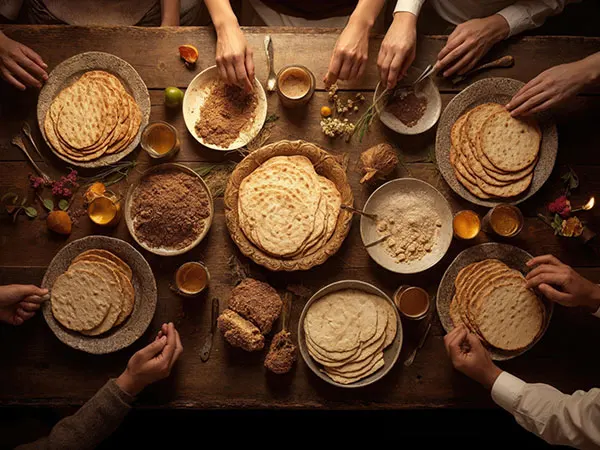
Article by David C. GrabbeThe bread of Passover symbolizes Christ's living body, not His dead one. In Scripture, bread consistently pictures life: it was the staple of ancient Eastern diet, a heavenly gift, and the substance of life itself. Yet physical bread cannot truly satisfy, as Deuteronomy 8:3 and Isaiah 55 teach, since man lives by every word of God. When Jesus declares, "I am the living bread which came down from heaven" (John 6:51), His flesh is living flesh, given so the world could experience the abundant, eternal life He lived. The bread therefore represents His sinless life, which grants access to the Father and is the basis of our acceptance. His death pays the penalty for sin, but forgiveness alone does not give eternal life. We are reconciled by His death and saved by His life (Romans 5:10). Eating the unleavened bread at Passover joins us to that perfect life and pictures the living Savior abiding in us and we in Him. Through symbolically eating at Passover, and in reality through taking in and applying His Word, Christ lives His life in us, sustains us now, and will give everlasting life in the resurrection. This ongoing relationship will culminate when the Passover is fulfilled in the Kingdom, when redemption is completed and the faithful take on incorruptible nature. Many people try to fill an inner spiritual hunger with things that do not satisfy, but only this bread sustains and satisfies.
Was Jesus Christ's Body Broken?
Sermonette by David C. GrabbeWas Jesus Christ's body actually broken? If so, it would have symbolized disqualification and a broken covenant. Only the bread of Passover was broken.

His Bones Were Not Broken
Sermon by Ted E. BowlingJesus identifies Himself as the living bread which came down from heaven, declaring that anyone who eats of this bread will live forever and that the bread He gives is His flesh for the life of the world. On the Passover evening He took physical bread, broke it, and gave it to the disciples while stating that this bread represented His body given for them, thereby conveying the sharing of His life rather than any breaking of His own body. The bread therefore symbolizes His living flesh and the sinless life He offered, standing in contrast to death and serving as a symbol of life that enables oneness with Him and the Father. This living bread connects directly to the unbroken bones of Jesus Christ, which fulfilled the requirement for the Passover lamb and confirmed that His sacrifice was accomplished through the shedding of blood rather than the breaking of His frame. The same unbroken integrity extends to the church as members of His body, of His flesh and of His bones, so that the saints remain united rather than shattered, mirroring the oneness He shares with the Father and preparing the bride for the Marriage Supper of the Lamb.

Passover: An Extraordinary Peace Offering
Sermon by David C. GrabbeThe Passover sacrifice is basically unconnected with atonement, but represents the peace and security which attends fellowship with God because of His acceptance.
Filling the Void
Sermonette by Austin Del CastilloMore important than putting out sin is the vital need to continually ingest unleavened bread, that is, the Bread of Life, namely the words of Jesus Christ.
Go Forward
Sermon by Mark SchindlerAre we ready to sacrifice as was Moses, realizing that our precious calling is far more than the imaginary quest of Don Quixote?
Maintaining Good Health (Part 8)
Sermon by John W. RitenbaughA poor spiritual diet will bring about a weak spiritual condition. What the mind assimilates is exceedingly more important than what the stomach assimilates.

A Hidden Mystery in God!
Sermon by Martin G. CollinsBefore anyone can have fellowship before God, the obstacle of sin must be eliminated, which is a permanent barrier between us and God.
Feed on the Vine
Sermonette by Austin Del CastilloEven though removing leaven from our homes has importance, the far greater spiritual emphasis is on the eating of unleavened bread, internalizing Christ.
Forms vs. Spirituality (Part 6)
Sermon by John W. RitenbaughChrist emphasizes that the internal, weightier matters, which change the heart, take precedence over external ceremonial concerns that don't change the heart.