


Filter by Categories
The Law of the Firstborn
Article by StaffThe firstborn of all clean, male animals were God's, and they were to be sacrificed to Him. Amazingly, these animals appear to represent the Egyptian firstborn, and thus represent a sin offering for us. The Israelites were to redeem or buy back the firstborn of their children by offering a lamb in its place. God's immediate answer to the curious Israelite child's question ties this act to the deliverance from Egypt, emphasizing that by strength of hand the Lord brought them out of the house of bondage.
The Lamb of Revelation
Sermonette by David C. GrabbeIn Revelation, John refers to Christ as the Lamb more than any other designation because of His role of Redeemer, which is different from a sin offering.
Is the Passover Just a Sin Offering? (Part Two)
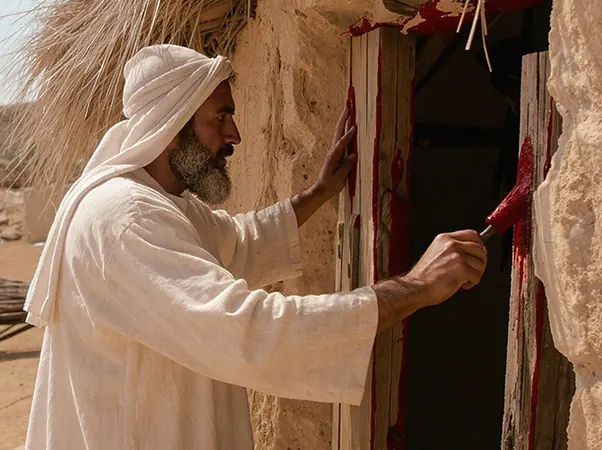
Article by David C. GrabbeGod declared that He would strike all the firstborn in the land of Egypt, both man and beast, executing judgment against the gods of Egypt while passing over the houses marked by the blood of the lamb. This judgment fell from the firstborn of Pharaoh on his throne to the firstborn of the female servant at the handmill and all the firstborn of the animals. The threat extended to every firstborn within Egypt's borders, placing even the Israelite firstborn under the same sentence of death unless the blood served as the required sign. God had earlier announced to Pharaoh that Israel was His son, His firstborn, and that refusal to release this son would result in the death of Pharaoh's own firstborn. The Passover instructions therefore positioned the blood on the doorposts as the means by which Israelite households were exempted from the destroyer. With the blood, life remained; without it, the Israelite firstborn would have shared the fate of Egypt's firstborn. This event accomplished the redemption of Israel as God's firstborn nation, purchasing the people from Pharaoh's legal claim and delivering each family's firstborn. The same principle later required a lamb to redeem both unclean animals and human sons, tying the original Passover directly to the ongoing redemption of the firstborn. The striking of Egypt's firstborn thus served as the decisive act that freed God's firstborn while demonstrating His covenant faithfulness to Abraham, Isaac, and Jacob rather than any provision of atonement for sin.
Remember Me (Part One)
CGG Weekly by Ronny H. GrahamFor the most part, Passover is not about us: It is a solemn assembly to remember Jesus Christ and what He has done for us in laying down His life.
Passover (Part Four)
Sermon by John W. RitenbaughThe proponents of a 15th Passover discount clear scriptural details and instead speculate. One cannot build doctrines on implication, distortion, and traditions.

The Elements of Motivation (Part Four): Obligation
'Personal' from John W. RitenbaughUnderstanding our obligation to Christ leads to a deeply held loyalty to Him. Our redemption should make us strive to please Him in every facet of life.
The Wavesheaf and the Selfsame Day
Sermon by John W. RitenbaughThe wavesheaf offering is reckoned from the weekly Sabbath within the Days of Unleavened Bread. It had specific requirements that were not met in Joshua 5.
Elements of Motivation (Part Four)
Sermon by John W. RitenbaughBecause we have been bought with an awesome price, we have no right to pervert our lives, but are obligated to look upon our bodies as vessels in His service.
How Do We Keep God's Festivals?
'Ready Answer' by Richard T. RitenbaughHere are the foundational principles to keep in mind in observing the Feasts of God throughout the year.
Conviction and Moses
Sermon by John W. RitenbaughOur conviction reveals itself in living by faith. Moses is a stunning example of how a convicted Christian should live — with loyalty and faithfulness to God.