


Filter by Categories
Struggling to Coexist
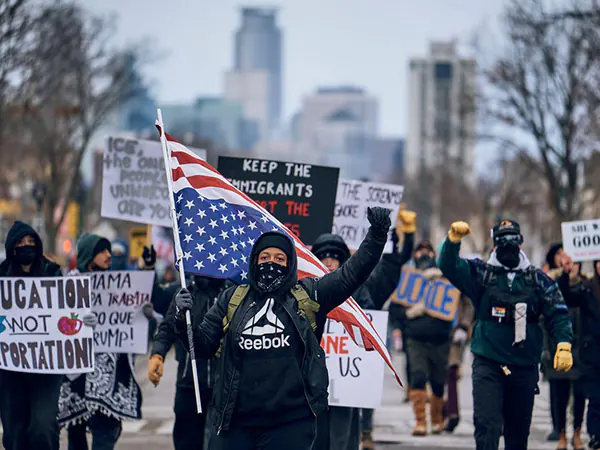
'WorldWatch' by Joseph B. BaitySince its founding, the United States has grappled with disagreement, debate, and division among its leaders and constituents. Rarely, however, has the vitriol between opposing sides reached the intensity seen in recent times. From the early years of nationhood through the Civil War and into the tumultuous 1960s, America faced deep national disunity, with each side in these disputes viewing their ideological struggles as existential, questioning how to define the nation, determine right and wrong, and govern effectively. These periods strained the body politic, yet compromise and cooler heads often prevailed, allowing the nation to endure despite tragic losses and violent confrontations. Fast-forward to 2026, and America once again finds itself in great civil turmoil. The debates seem less ideological and more purely divisive, with no easy compromise in sight. Radical elements on both sides show a stiffer refusal to coexist, exemplified by events like the assassination of Charlie Kirk and attempted assassinations of President Trump. Compromise is welcomed only if the other side yields, with less talking and more shouting, and little willingness to consider opposing views. The primary divide today falls between Nationalists, who favor traditional governance within defined borders and values, and Globalists, who seek to blur national boundaries, promote unfettered immigration, and abandon traditional values and sovereignty. From 2021 through 2024, an unsustainable influx of illegal immigrants, estimated at eleven to twenty million, crossed the southern border, facilitated by policies of globalist-leaning politicians. This has led to immense costs and alleged widespread fraud within the immigration industry, further fueling division. The current administration's push to deport many of these immigrants and investigate fraud has intensified animosity from the opposition, while allies demand persistence. States and municipalities declaring themselves sanctuaries for illegal immigrants obstruct federal deportation efforts, escalating political vitriol and legal battles. Lawsuits mount, and calls for violent upheaval grow, with some observers warning of a constitutional crisis rivaling the Civil War. Fierce clashes unfold on America's streets between federal agencies like the Border Patrol and Immigration and Customs Enforcement and illegal immigrants alongside their political and civilian allies. Some speculate that a violent conflict, potentially weakening America, might be the desired outcome for Globalists, easing the path toward a one-world government. Others argue globalism is faltering in America. The question remains whether Americans possess the will for a protracted, bloody conflict to resolve these differences or if cooler heads will once again prevail.
America at 250
'WorldWatch' by Richard T. RitenbaughAmerica's internal condition at 250 years reveals a nation marked by significant disunity, standing in stark contrast to its outward appearance of strength, wealth, and global influence. While the country's economic engine, military power, and cultural reach remain formidable, this external image masks an internal reality of division, bankruptcy, and immorality. The roots of this disunity trace back to the very freedoms bequeathed by the Founders, which came with few constraints. John Adams recognized that such freedoms required a moral people who would willingly supply the restraints necessary to prevent excess, since these freedoms were not accompanied by inherent limitations on behavior. The erosion of Christian morality over the past century has exposed what is described as the putrid underbelly of the American experiment. This moral dilution has undermined the nation's unity and strength across political, cultural, and religious dimensions, manifesting in the ultimate expression of unrestrained human freedom: everyone doing what is right in his own eyes, a condition paralleling Judges 21:25. This fragmentation has not yet resulted in total collapse only because the rule of law remains intact; without this restraining principle, the disastrous combination of freedom without personal or social responsibility would have already fractured the nation into dozens of warring states, creating a Balkanized America consumed by chaotic self-destruction. This pattern of national disunity finds a historical parallel in ancient Israel, whose rise and fall offers insight into America's condition. Isaiah 1:4 diagnoses Israel's fall as stemming from a sinful nation laden with iniquity, a people who forsook the Lord and provoked Him through their corruption. Since a nation is composed of individuals, when citizens abandon God and the truth He reveals about righteous living, their personal corruption spreads to affect others and eventually the whole nation. Each person who follows his own path into evildoing adds to a cumulative weight of sin until the burden of iniquity becomes so great that national doom is sealed, with no recovery possible short of wholesale repentance. Isaiah further describes this condition as one where the whole head is sick and the whole heart faints, with wounds and sores left unclosed and unsoothed, ultimately resulting in desolation as strangers devour the land. This disunity, however, is not presented as irreversible. The prophetic remedy involves ceasing to do evil, learning to do good, seeking justice, and defending the vulnerable, with God's promise that even sins like scarlet can become white as snow if the people are willing and obedient. Other prophets convey similar messages: a people who forsake righteous living face destruction unless they repent and return to God's teachings. God typically extends patience over many years before His judgment falls, though that patience eventually reaches its limit. While it cannot be known where America stands on this timeline, the pattern established through Israel's example suggests that national repentance, like national iniquity, begins in individuals and could potentially spread into a groundswell of repentance among the people, offering the only viable solution for reversing such deep-seated national disunity.

Watershed Moment
Commentary by Richard T. RitenbaughThe tragic murder of Charlie Kirk feels like a watershed moment. our society has reached a cultural turning point where civil discourse has collapsed.
In Our Time of Need
Sermonette by Austin Del CastilloWhen we accepted God's calling, we trusted in His ability to fend off the evil influences of the world as well as our deadly carnal nature.
Waving the White Flag
Commentary by Joseph B. BaityThe radical Islamic forces, like hungry sharks, are circling America and the West, smelling blood in the water and the scent of fear from a defeated nation.
There Was No King in Israel
Sermon by Mark SchindlerIn the days of Israel, as recorded in Judges 21:25, there was no king, and everyone did what was right in their own eyes. This state of national disunity marked a profound departure from the obedience seen under Joshua, leading to disobedience, idolatry, and a lack of peace in the land God intended as a place of rest. As emphasized in Judges 17:6, 18:1, 19:1, and again in 21:25, the absence of recognized authority resulted in each person following their own moral compass, fostering division and depravity. This persistent theme throughout the book of Judges illustrates how far the people had strayed from God, losing sight of the true King who was always present. Their failure to remember and honor God's Word led to pain, suffering, and warfare, starkly contrasting with the peace promised in Deuteronomy 12:8-9, where Moses instructed that they should not continue doing what was right in their own eyes upon entering the land of inheritance. Instead, they were to seek the place God chose for His name and dwell there in unity and obedience. The disunity plaguing society then mirrors the challenges of today, where men continue to decide right and wrong for themselves, further deepening division. God has established His memorials and days of remembrance with specific purposes to foster unity under His sovereign authority, and failing to observe them as intended leads to a loss of focus on His truth and peace.
Loyalty
Sermon by James BeaubelleNational division emerges as a present-day illustration of what happens when liberty is severed from loyalty. The observation that "this country is divided" is presented as true, and the explanation offered is direct: liberty without loyalty is disruptive and it separates people from one another. This principle is not treated as a new idea but as the culmination of a broader argument traced throughout the discussion of freedom and its proper use. The foundation for understanding national disunity rests on the idea that liberty was "born a twin" with duty, and that to possess one without the other always ends in ruin. Society's abandonment of moral standards is described as the direct cause of the fractured condition observed in the culture. As society has dropped its standards of decent behavior, many people have followed suit, rejecting any voice that calls for a traditional moral code. This rejection is characterized as a kind of intoxication with liberty and personal rights, one that has caused people to leave duty and service to others far behind. A contrast is drawn between the prodigal son, whose conscience was awakened by his suffering and who chose to repent and return to structure and loyalty, and those in the present culture who want no part of such awakening. These individuals have built up habits of rejecting truth and resisting calls for decent behavior, much like an alcoholic who once could stop drinking if he chose to, but has now reached a point where he cannot stop even if he wanted to. This entrenched habit of self-reliance produces what is called a kind of psychological slavery, comparable to the "strong city" and "high wall" that the rich young ruler built for himself through his wealth. National disunity, then, is portrayed as the collective result of many individuals each rejecting godly structure and pursuing liberty solely for the self. The remedy offered is not political but spiritual, rooted in the humility taught in Philippians 2:3-4, which instructs believers to do nothing through selfish ambition or conceit, but to esteem others better than themselves and to look out for the interests of others rather than only their own. This standard is presented as the goal for every believer and, ideally, for the world as well, with the acknowledgment that until people return to such a structure, division will not improve. This treatment of national disunity connects directly to the larger message concerning liberty and its necessary companion, loyalty. Just as Eve's misuse of free choice led to ruin, and just as the prodigal son's unstructured liberty led him to want and suffering, so too does a nation's collective abandonment of moral loyalty lead to fragmentation and division. The call throughout is for liberty to be exercised within the framework of law, wisdom, and loyalty to God, since liberty alone stresses only independence and the self, while liberty joined with loyalty teaches both independence and a proper dependence on God. National disunity thus stands as a societal-scale demonstration of the same principle at work in the individual soul: freedom without duty inevitably fractures relationships, whether within a family, a person's own life, or an entire country.
Everything Is Political
CGG Weekly by Richard T. RitenbaughThis politicization is doing nothing but tearing the country into shreds. Each shred has its agenda, and none of them is working for the good of the whole nation.