


Filter by Categories
Searching for Israel (Part Six): Israel Is Fallen, Is Fallen
Article by Charles WhitakerThe Ephraimite Jeroboam led a successful tax-revolt against Solomon's son, Rehoboam, resulting in the division of Solomon's kingdom into two nations. The northern ten tribes formed the Kingdom of Israel under Jeroboam, while Judah, Benjamin, and Levi remained under Rehoboam's Davidic monarchy. To strengthen his control over the northern tribes, Jeroboam instituted religious changes that became a sin for Israel, as noted in I Kings 12:30. He created a designer religion with its own traditions, shrines, and a priesthood loyal to the government, which was the sin of the house of Jeroboam, leading to its extermination from the earth, as stated in I Kings 13:34. Due to his disobedience, Jeroboam forfeited the conditional promise from God in I Kings 11:38 to build him an enduring house as He did for David. Jeroboam's son, Nadab, was assassinated after a brief two-year rule, and Baasha from Issachar took the throne, slaughtering all of Jeroboam's progeny, according to I Kings 15:25-30. The consequences of Jeroboam's apostasy extended beyond his family, as II Kings 17:22 states that the children of Israel walked in all the sins of Jeroboam and did not depart from them. Subsequent kings of the northern kingdom adhered to his apostasy, never seeking to correct his errors, which angered the Lord, leading to Israel's removal from His sight, as mentioned in II Kings 17:18. Despite witnessing Israel's idolatry and fall, Judah refused to repent, and God judged that backsliding Israel was more righteous than treacherous Judah, as noted in II Kings 17:11. Through prophets like Hosea, God warned Judah not to follow Israel's path, yet with few exceptions, Judah's kings were more corrupt, stumbling in iniquity alongside Israel, as described in Hosea 5:5.
Searching for Israel (Part Twelve): The Sign
Article by Charles WhitakerThe apostasy of Jeroboam I marks the beginning of the Kingdom of Israel's departure from God, recorded in I Kings 12:25-33. Fearing that the ten tribes' religious ties to Jerusalem, capital of the Kingdom of Judah, would eventually cost him political control, Jeroboam instituted a state religion designed to serve his people's convenience and his own need for power. He built two shrines, one at Bethel on the southern edge of his kingdom and another at Dan near its northern border. He effectively exiled the Levites, the priestly tribe God had established, replacing them with a priesthood of his own making. Most significantly, he moved the fall holy day season from the seventh month to the eighth, which amounted to setting aside the Sabbath commandment, since God's holy days are themselves Sabbaths. Scripture explicitly identifies this restructuring as sin for Israel. This apostasy proved deeply rooted and permanent rather than a temporary lapse. II Kings 17:21-23 records that Jeroboam drove Israel from following the Lord and led them into great sin, and that the house of Israel never departed from these practices until the Lord removed them from His sight. Because the Sabbath was the God-given sign marking Israel as His people, abandoning it meant abandoning the very mark of their identity. This explains why the descendants of the northern tribes eventually lost all knowledge of their true identity—their forefathers forsook the sign that connected them to God. Since the Sabbath serves as a memorial to creation and, by extension, to the Creator God, the loss of Sabbath-observance meant more than losing a marker of ethnic identity; it meant losing knowledge of God Himself. Failure to recognize who Israel is thus becomes failure to recognize the God who made Israel. The secularism prevalent among the modern descendants of these scattered peoples traces its roots directly back to this ancient Sabbath-breaking initiated by Jeroboam. This account stands in contrast to the Kingdom of Judah's experience. Though Judah initially followed Israel's example, a portion of its people, chastened by the Babylonian exile and taught by leaders like Ezra and Nehemiah, returned to Sabbath-keeping, however imperfectly. Because they maintained this sign, the Jews retained knowledge of their identity and their connection to the God of Abraham, Isaac, and Jacob throughout centuries of dispersion and persecution. The stark difference between Israel's permanent loss of identity and Judah's preserved recognition of their patriarchs demonstrates that the Sabbath does indeed function as God's sign, identifying a people as belonging to Him—and that Jeroboam's apostasy, by severing Israel from this sign, ultimately severed the northern tribes from the knowledge of their own God.
Deception, Idolatry, and the Feast of Tabernacles
Sermon by John W. RitenbaughJeroboam, pragmatic and fearful, established a more convenient idolatrous festival to prevent his people from keeping the real Feast of Tabernacles in Judah.
Hosea, Gomer, God, and Israel
Sermon by Kim MyersTo dramatize the perennial harlotry of Israel and the incredible love God exhibits toward His people, He commands Hosea to marry a harlot, Gomer.
What Is 'My Way'?
Sermonette byEven though we may claim to follow God's way, there is a considerable measure of selfishness in our pathways, a tendency to be dismissive of other people.
The High Places (Part Two)
CGG Weekly by David C. GrabbeKing Jehoash (or Joash) of Judah, though he overcame much and did many good things, did not quite have the fortitude to rid the kingdom of its high places.
Amos (Part One)
Sermon/Bible Study by John W. RitenbaughAmos gives a series of dire warnings, beginning with Israel's enemies, but concluding with a blistering indictment on Israel herself for her hypocrisy.

Prepare to Meet Your God! (Part One)
Article by John W. Ritenbaugh and Richard T. RitenbaughPreaching to the ancient Israelites, Amos' indictments parallel today's spiritual decline. God wants His people to repent and avoid impending judgment.

Prepare to Meet Your God! (Part Seven): The Prophesied Blow Falls
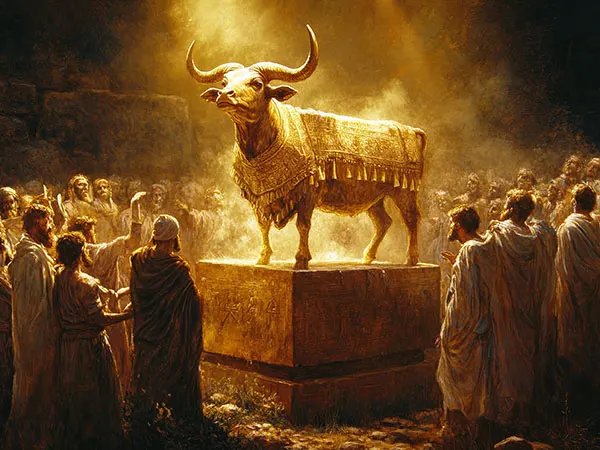
Article by John W. Ritenbaugh and Richard T. RitenbaughJeroboam I, in his apostasy, turned away from the law of God, leading the people of Israel into sin. Chosen by God to be king of the northern ten tribes after Solomon, his dynasty's continuance was contingent upon obedience. Yet, lacking trust in God, Jeroboam feared that religious festivals and sacrifices would draw Israel back to David's line in Judah. To prevent this, he established counterfeit shrines in Bethel and Dan and altered the Feast of Tabernacles from the seventh to the eighth month, devising a sinful blend of religion and politics. This sin of Jeroboam became a custom, with kings standing by altars to burn incense to golden calves, further entrenching Israel's spiritual decline. Amos later prophesies the fall of the house of Jeroboam through war, highlighting that both the religious and political leadership, as primary motivators of this decline, would be the first to feel God's wrath. In a vision, Amos sees not Jeroboam but the Lord standing beside the altar, not to officiate but to destroy, crushing everything in sight as a direct judgment on Israel's persistent disobedience and rejection of God's way.
Prepare to Meet Your God! (Part Five): Religion and Holiness
Article by John W. Ritenbaugh and Richard T. RitenbaughThe prophet Amos exposes the ancient Israelites' religion as syncretic, a blend of God's way and paganism, corresponding to this world's Christianity.
Amos (Part Seven)
Sermon/Bible Study by John W. RitenbaughGod, through His prophets, warns that He will chasten His people with increasing severity until they repent and begin to reflect His characteristics.
Amos 5 and the Feast
Sermon by John W. Ritenbaugh (1932-2023)Just because we keep God's feasts does not necessarily mean we are in sync with God's Law or intent. The Israelites kept the feasts in a carnal manner.
Hosea's Prophecy (Part Three)
Sermon by Martin G. CollinsModern Israel has a form of religion, but it is empty and unsatisfying because it refuses to obey God and substitutes the traditions of man in its place.
The Sin of Self-Deception
Sermon by John W. RitenbaughIn our relationship with God, we must emphasize principle over pragmatism. If we are led into deception, it is because our carnal nature wanted it that way.
Passover (Part Seven)
Sermon by John W. RitenbaughMajor reinterpretations have significantly distorted the meaning of Passover and Unleavened Bread, blurring the distinction between the two events.
Amos (Part Fourteen)
Sermon/Bible Study by John W. RitenbaughAmos indicts rampant, dishonest practices, placing gain above honesty, morality, or ethics, and arrogantly and covetously exploiting the needy for profit.
Elisha, the Young Men, and the She-Bears
Sermonette by Ted E. BowlingSome Bible commentaries call Elisha short-tempered for causing two female bears to maul 42 youths for making fun of him. There is more to the story.
Hosea's Prophecy (Part Six)
Sermon by Martin G. CollinsModern Israel is repeating the same sins as ancient Israel. God's metaphors of the promiscuous wife, stubborn heifer, and rebellious child all apply to America.
Amos 5 and the Feast of Tabernacles
Sermon by John W. RitenbaughIf we go to the Feast with the goal of physically enjoying, we may lose out on both the spiritual and physical benefits. 'Going through the motions' defiles it.
Living Among the Ruins
Sermon by Charles Whitaker (1944-2021)To tear down cherished institutions is to leave a nation culturally ruined. God's people, in choosing the old pathways, tread the roadway to eternal life.
Amos (Part Twelve)
Sermon/Bible Study by John W. RitenbaughGod will do what He must to bring Abraham's seed to repentance and salvation, including allowing crisis, hardship, humiliation, and calamity.

Elisha, the Young Men, and the She-Bears
'Ready Answer' by Ted E. BowlingSome see Elisha's encounter with the youths of Bethel and the she-bears in II Kings 2:23-24 as cruel and vengeful. The narrative tells a different story.
An Undying Love
Sermonette by Clyde FinkleaEven though Gomer proved unfaithful, Hosea still loved her, buying her back from captivity and restoring her as his wife, just like God lovingly forgives.
A Subtle Yet Devastating Curse
'Prophecy Watch' by David C. GrabbeAmos 8:11 speaks of 'a famine . . . of hearing the words of the LORD.' Such a famine is occurring today: God's words are available, but few hear them.
Amos (Part Four)
Sermon/Bible Study by John W. RitenbaughAmos, like a circling hawk, makes dire pronouncements on all of Israel's enemies but reserves the harshest judgment for Israel, who should have known better.