


Filter by Categories
Marriage and the Bride of Christ (Part Six)
Sermon by Martin G. CollinsMarriage is God's symbol of His covenant with His people, and the church as the bride of Christ is prepared far beyond outward appearance. The world fixes on the bride's looks on the wedding day, but God's design begins before the wedding and emphasizes character, harmony, and sacrificial love. Ephesians 5:25-27 shows Christ's love as practical: He gave Himself for the church, purchasing her with His blood while she was still sinful and ungodly, humbling Himself as Philippians 2 describes. His death is only the first step. He then sanctifies and cleanses her "with the washing of water by the word" to present her to Himself a glorious church, without spot or wrinkle, holy and without blemish. Sanctification is primarily Christ's own work, not the believer's, though it includes obedience and submission. If believers do not submit willingly, He chastens them, which proves they are legitimate sons (Hebrews 12). To sanctify means first to set apart for Christ's exclusive possession, as a bridegroom chooses one woman from all others, and then to make holy. The church, called out of the world, no longer belongs to herself or the world but lives for her Bridegroom, and should ask "Would Jesus do this?" Marriage is a testing ground of faithfulness, and husbands imitate Christ's sacrificial love in understanding it through atonement.
Marriage and the Bride of Christ (Part Two)
Sermon by Martin G. CollinsMarriage was created by God from the beginning as a reflection of Christ's relationship to the church, His bride, and it can be fully understood only in light of that doctrine. Paul's quotation of Genesis 2 in Ephesians 5 shows the husband-and-wife union to be modeled on Christ's union with the church as His body, part of the "mystery" of God's hidden plan fulfilled in Christ. Thus the commands to husbands and wives are God's ideal for all marriages at all times, not merely the culture of Paul's day. Wives submit and respect as the church is subject to Christ; husbands love, nourish, and cherish as Christ loved the church and gave Himself for her, to sanctify and cleanse her by the word and present her to Himself glorious, holy, and without blemish. Because the whole is governed by submission "in the fear of Christ," marriage is to be approached without an adversarial spirit, with problems brought to God in prayer. Sanctification, the carrying on of the work begun in conversion, is proved especially in marriage and family, the intimate proving ground for God's way of life, with the church as the other test. Marriage is God's ordinance, not a human contrivance, so only the Christian truly understands it.
The Bride of Christ (Part Two)
Feast of Tabernacles Sermon by Mark SchindlerThe seventh day of the Feast of Tabernacles, the greatest day, pictures the last step in Christ's preparation of His Bride to be His helpmate, just as a preparation day precedes a Sabbath. It finishes the work of making a select group ready before the next part of God's plan, pictured by the Eighth Day, brings the rest of mankind into the Family. Christ's cry on this day, "If anyone thirsts, let him come to Me and drink," promises the Holy Spirit, and that Spirit given to the called enables them to live like Christ and become His perfect helpmate for eternity. Preparation is a building process on the one foundation, Jesus Christ, and each one's work will be tested by fire (I Corinthians 3). Character is formed by countless small daily choices, and in crisis a person finds only what has already been put in through Christ. This is not predestination without free choice, so the Bride must use every tool Christ provides, offer herself as a sacrifice, and avoid distraction by the world. She must also wait on God's timing and expect to be hated as Christ was. After the Tribulation and the resurrection, she will be put to work immediately with Christ, perhaps preparing the holy city to receive the returning remnant of Israel. Proverbs 31's virtuous wife is the pattern: trustworthy, loyal, generous to the needy, clothed in strength and honor, wise and kind in speech, never idle, and praised by her Husband. Revelation 22:17 echoes the day: the Spirit and the Bride say, "Come."
The Bride of Christ (Part One)
Feast of Tabernacles Sermon by Mark SchindlerThe bride of Christ is a small, carefully chosen group called now to be Christ's perfect helpmate for eternity and a living witness of the perfecting work only God can do through Him. Revelation 19:7-8 says the wife has made herself ready, yet the fine linen of righteous acts is supplied by Christ, so readiness comes only through humble, cooperative submission to His training. Character is formed by the thousand small daily choices that determine what is inside when crisis comes, so the bride is learning to "pass the rope" to those who will come after her in God's order. Part of her preparation is putting on the fine linen of sincere empathy toward brethren and helping them face life's darkest moments with faith and courage. The Feast of Tabernacles is holy time set apart for both rejoicing and this intense training. Physical Israel is the type. God betrothed Himself to her at Sinai, adorned her in fine linen, and bound her in covenant, but she played the harlot and was divorced (Ezekiel 16; Jeremiah 3). This is a stern warning to the spiritual bride. Eve, taken from Adam as a helper like him, is the first promise of the bride, who, unlike Eve or Israel, will always be trusted because Christ will have worked with her to be like Him. Ephesians 5 shows Christ sanctifying and cleansing her to be holy and without blemish. Since God never fails in what He begins, the bride is to do her part, seeking first His Kingdom, and to rejoice in being called into the closest intimacy with Christ, "bone of my bones."
Preparing the Bride
Booklet by John W. RitenbaughThe Bride must make herself ready (Revelation 19:7), and the church's most important work in this age is helping her do so. God intends conversion to be a growth process aimed at becoming like Christ, so that His people will be without blemish at His return (Ephesians 4:13). Christ's letters to the seven churches in Revelation 2-3 consist largely of admonitions to repent and exhortations to overcome. His Olivet Prophecy stresses personal matters: watching, praying, being faithful, being ready for the Bridegroom, developing one's talents, and serving the brethren. Nowhere in Revelation does Christ commend evangelistic activity. Preparation also precedes witnessing. God spent thirty years preparing His Son, and Jesus spent three and a half years preparing the apostles. Israel failed as a witness because it did not live as God taught. Feeding the flock with the whole counsel of God therefore takes priority, giving every member an adequate supply of oil, as in the parable of the ten virgins (Matthew 25:1-13). Christ's words are spirit and life, and they give His people the resources to overcome and grow toward spiritual perfection. Each person is responsible for repentance, for holding fast to God's truth, and for loving the brethren, rather than looking for scapegoats. Busyness in an outward work must not be mistaken for righteousness, because the believer himself is the work: God's field, God's building, and His workmanship. God, who began the good work in each, will complete it until the day of Jesus Christ (Philippians 1:6).
The Marriage of the Lamb
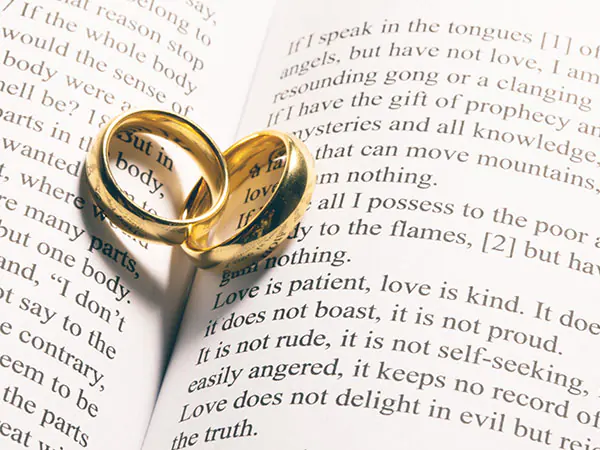
'Prophecy Watch' by StaffThe church collectively is the Bride of Christ, engaged to be married to the Lamb in a ceremony far greater than any physical wedding, which is only a symbol of it. Earthly weddings are honorable, but they can swallow time, money, and attention, and the Bride should be putting much more time, thought, and effort into preparing for her marriage to Christ than into any family wedding. Just as the people in Noah's day were diverted by marrying and giving in marriage, Satan will try to sidetrack God's people from their preparation. Near the end, feasting, mirth, and marriage will cease (Jeremiah 7:34; 16:9), so nothing should take the Bride's time or mind off readying herself. Revelation 19:7-9 says the Bride "has made herself ready" and is granted fine, clean, white linen, which is the righteous acts of the saints. This is the raiment of angels, royalty, and priests, and it is far more beautiful than any bridal gown. The five foolish virgins, who did not prepare adequately, will not be at the Marriage Supper, while those called will be blessed. The wedding likely takes place in heaven, between the first resurrection and Christ's descent with His armies, and it may take very little earthly time. The timing is secondary. The main point is to prepare diligently now, spending as much time as possible each day with the glorious Fiancé, and more as the day approaches.
Sacredness Of Marriage
Sermonette by James BeaubelleMarriage is of divine origin, created by God as the union of one man and one woman, and He has elevated it beyond its physical starting point as a symbol of Christ the Bridegroom and His church, the bride. Paul betrothed the church to one husband to present her as a chaste virgin to Christ (II Corinthians 11:2). Baptism is therefore a betrothal, carrying as much intimacy as any earthly engagement, and Ephesians 5 sets out the parallels: as the husband is head of the wife, Christ is head of the church, loving her and giving Himself to sanctify and cleanse her by the word so that He may present her holy, without spot or blemish. Just as a man and woman become one flesh, so Christ and His church are joined. All look forward to the day Christ comes to collect His bride, and all should use their time wisely to prepare. A bride preparing for a wedding works endlessly on invitations, meals, clothing, and countless other details, and those preparing as the bride of Christ can be no less busy. God's commands, especially the fifth, seventh, and tenth, protect the sacredness of marriage and also apply to the spiritual relationship with Christ. Adultery and covetousness begin in the heart, so faithfulness means guarding desire as well as conduct. Marriage is to be honored by all and kept undefiled (Hebrews 13:4), and the bride of Christ must hold fast to its sacredness as the world abandons it.
God's Real Transformation
Sermon by Mark SchindlerJesus Christ is transforming His called firstfruits from lowly "guttersnipes" into His bride, the precious jewel He knew she would become before the project began. Unlike Professor Higgins in My Fair Lady, who remade Eliza for his own vanity, Christ prepares His bride for the glory of the Father. The change is real and permanent, into the very image and likeness of God. Along the way the called may be uncomfortable and may regress, embarrassing their Teacher, yet He keeps at it, and so must they in pursuing righteousness. With only a small part of cooperation on their side, the unleavened life of Christ gradually becomes as natural to them as to Him, by God's grace alone. Their humble beginning (I Corinthians 1:26-31) ensures that all glory goes to God. The bride is the 144,000 of Revelation 14, who follow the Lamb wherever He goes, and of Revelation 19, whose fine linen is the righteous acts of the saints. Prepared as His perfect helpmate, she will join her Husband in the work the Father and Son have always been doing. Proverbs 31:10-31 may be God's description of this bride. The virtuous wife shares the word for "virtuous" with Ruth, a type of the church. Her worth "above rubies" is better rendered "pearls," recalling the Parable of the Pearl, in which Christ purchases the church with His own life. She is strong, honored, wise, kind, diligent, and praised, which refutes the worldly view of the wife as an oppressed slave.
Proverbs 31 and the Wife of Christ (Part One)
Sermon by Mark SchindlerThe wife of Christ is being prepared now, within the chaos of Babylon, to share completely in Christ's life for eternity, as Eve shared Adam's life. Revelation 19:7-9 teaches that she makes herself ready by dressing in fine linen, which is the righteous acts of the saints, the upright, godly living and conduct built through a lifetime of small daily choices. She must walk in unity with Christ rather than the world's mindset, and she is to complement (with an E) Christ by completing and perfecting God's work, and compliment (with an I) Him by praising Him. Proverbs 31:10-31 serves as her preparation manual, and its opening verses are the introduction. The rhetorical question "Who can find a virtuous wife?" calls for careful consideration, and like David rather than Lot, she looks beyond the physical to what pleases God. "Virtuous" translates chayil, meaning strength, excellence, and trustworthiness, and God Himself is the source of that strength, though she is responsible to live faithfully within it until it becomes her own. Her worth exceeds rubies or pearls, like the pearl of great price in Matthew 13:45, which Christ paid for with His sacrifice and which is formed under the pressures of this world. God sees in her Christ's own glory and moral excellence (arete, II Peter 1:3-4). Christ can safely trust her heart because she does Him good and not evil all her days, and only those who have followed this preparation will do so for eternity.
The Sacredness of Marriage
Article by James BeaubelleMarriage holds a sacred place in God's plan, established by Him as a union between one man and one woman, as seen in Genesis 2:18 and 24. This divine institution, meant to be permanent and binding, is a reflection of the profound relationship between Christ and His church. In both the Old and New Testaments, Christ is portrayed as the Husband or Bridegroom, with the church, or Israel as its type, represented as His wife or bride, as illustrated in Ezekiel 16:8-14, Jeremiah 31:1-4, Isaiah 54:5, and II Corinthians 11:2. For God's people, marriage transcends its human purpose, symbolizing the spiritual union with Christ. Our baptism into the body of Christ signifies a betrothal, carrying the same intimacy as a marriage covenant between a man and a woman. Ephesians 5:22-33 draws a parallel between a married couple and Christ and His church, emphasizing the love and order necessary for both physical and spiritual success. Just as a man and woman are joined as one flesh, so too are Christ and His church united in one Spirit. As we anticipate the day when Christ comes to collect His bride, we must diligently prepare for this spiritual marriage. If this union is of great importance to Him, it must hold equal significance for each of us. We should be actively engaged in readying ourselves, recognizing the depth of commitment and intimacy this betrothal entails.
The Perfect Marriage
Sermon by Richard T. RitenbaughMarriage, as a divine institution, carries profound spiritual significance, reflecting a higher purpose in preparing us for union with God. It is a blessed arrangement, sanctioned by God from the beginning, as seen in Genesis 1:27-28, where He created mankind male and female in His image and blessed them to be fruitful and multiply. This blessing endues the union with power for success, providing the authority and right to enter into marriage and produce what God expects. In Revelation 19:6-9, we see a parallel blessing on the ultimate marriage, the union between Jesus Christ, the Bridegroom, and the church, His Bride. This spiritual marriage gives context to our physical marriages, which serve as types preparing us for our role in that greater union. Just as God blesses the marriage of the Lamb, He endues our physical marriages with the ability to fulfill their purpose of becoming one with Him. The marriage relationship teaches us how to be one with God, mirroring the intimacy and unity we are to achieve spiritually. As Ephesians 5:31-32 emphasizes, the mystery of marriage reflects the relationship between Christ and the church, preparing us for the profound connection we will have as part of His Bride. Through the one flesh principle, described in Genesis 2:24 and reiterated by Paul in I Corinthians 6:16-17, marriage binds a man and woman together in a union of absolute togetherness, training us to work as a team and to be one spirit with God. This preparation is further illustrated in Song of Solomon 6:2-3, where the Shulamite realizes her complete commitment to her beloved, reflecting the ideal of mutual ownership and dedication in marriage. A perfect marriage, as Proverbs 5:18 suggests, is one of rejoicing and blessing, where each partner is fully committed to the other, striving to live according to God's will and develop divine character. Thus, marriage serves as a spiritual laboratory, equipping us to be the Bride of Christ, united in purpose and glory with Him.
Proverbs 31 and the Wife of Christ (Part Three): Esther
Sermon by Mark SchindlerThe wife of Christ shares completely in the life of Jesus Christ as an intrinsic part of God's work. Right from the beginning God created a type of the wife of Christ and marriage as the last thing that He did before He created the Sabbath. The very last thing He did on the sixth day of creation before He created the Sabbath for man's benefit was create woman out of the man and marriage with the complementary parts in perfect unity. This is all done by God and His strength to accomplish His purpose. The wife of Christ has responsibilities that she must do in preparation for this very privileged responsibility. The virtuous wife is the chayil wife and this word indicates strength and power that only comes from God Himself. God has given a unique opportunity and all the things needed to individually prepare to complement Jesus Christ as His wife. God has given a plumb line for preparation within the description of the perfected wife of Christ as set before us in Proverbs 31:10-31. It is the privileged responsibility of those called into this most intimate relationship with Christ now to spend a lifetime learning to live as Christ lives. The wife of Christ must be doing the things that complement God's plan to create man in His image and likeness. Complement with an e is something that completes or brings to perfection. Compliment with an i is an expression of praise or admiration. Both express the work that is to be done now in this lifetime of preparation for the return of Jesus Christ and the responsibilities that go with the privileged opportunity to be the very wife of Christ. The most important part of this training process will take place under the most adverse circumstances. Through this preparation those called become vessels of honor sanctified and useful to the Master prepared for every good work. The ultimate descriptor of the virtuous wife is as the one who fears the Lord. The book of Proverbs begins and ends with the key to everything which is deep abiding respect for God that shows up at the end in the perfected and virtuous wife of Christ. The proper fear of the Lord is the very essential truth regarding fearing the great and awesome sovereign God who has called to a very special privileged responsibility as preparation time is worked through with proper fear and trembling. This fear will be perfected in the life of Christ. There are a number of women of valor to be noted throughout the Bible. Both the book of Ruth and the book of Esther can be tied into the Proverbs 31 virtuous woman but each under very different circumstances that point to vital lessons that can be noted in the individual preparation process. The principles in Ruth are within the circumstances of living within the chosen physical people of God while the vital principles of preparation from Esther are within the circumstances of living and growing in the chaotic world the evil and the violent world where there is plenty of death sickness and political malfeasance. The single most important lesson to hold on to in the preparation process is in the book of Esther. Although God is not mentioned throughout the book of Esther it becomes obvious that under His sovereign authority all of this was happening for His purposes to be worked out. Mordecai and Esther were just people and God's power did all this but Mordecai and Esther both had responsibilities that God had given them the ability to do that they fulfilled. God turned Haman's cursed plan against Mordecai and the Jews back on Haman himself through the wisdom that Esther uses in patiently waiting on God in fear and respect for God that she had learned from her father Mordecai. Esther like the virtuous wife of Proverbs 31:30 recognized and waited on God to act because she feared the Lord with deep respect and she feared letting down Mordecai and God's chosen people. Mordecai as a father to her led her to greatly fear and respect God because she feared and respected Mordecai. The main take
David Was Ready
Sermonette byWe need to be preparing ourselves for whatever God has prepared us to do in His Kingdom, preparing for an office, but more importantly preparing in character.
Remembering Who We Are
Feast of Tabernacles Sermon by John O. ReidBelievers at this end time occupy the position of being prepared as the bride of Jesus Christ, both collectively as the church and individually as those betrothed to Him. This preparation requires making oneself ready through righteous acts that reflect brightness as glorification and cleanness as purity, loyalty, faithfulness, and character. The bride receives garments of fine linen from her Husband-to-be yet must actively respond in obedience, repentance, and faithful adherence to His will prior to the marriage supper described in Revelation 19. Physical marriages serve as the pattern for this future union, with husbands loving their wives as Christ loved the church by giving Himself for her and with wives submitting to their husbands as the church submits to Christ. These roles demand unity of purpose, longsuffering, kindness, empathy, and faithfulness so that the two become one flesh without allowing any outside influence to put the marriage asunder. A virtuous wife functions as a helpmeet who is trustworthy, diligent, energetic, and concerned for others, enabling her husband to fulfill his responsibilities while bringing him honor and joy, just as the bride of Christ will assist Him in His work. Preparation further involves leaving behind the former life, manner of thinking, and conduct to embrace the new life under the Husband-to-be, responding personally to His call as Rebekah did when asked if she would go with the servant. It requires guarding the mind against anything that could separate one from Christ, living by the spirit rather than the letter of the law, and producing the fruit of holiness. God values the institution of marriage highly, viewing it as a holy covenant that pictures the betrothal in righteousness, justice, lovingkindness, mercy, and faithfulness, and He corrects His people when they deal treacherously with it so that they may return and be restored. Through these steps the bride develops the strength of character, energy, and loyalty that will allow her to serve as a true companion, teacher, and helpmeet during the Millennium and White Throne Judgment, completing the purpose for which she was called.
Imagining the Garden of Eden (Part Eleven)
Sermon by Richard T. RitenbaughThe account draws a parallel between the beneficial companionship of skilled climbing partners and the intimate relationship God designed for the man and woman in Genesis 2. Just as the two climbers reached greater heights through mutual reliance on each other's strengths, God determined that it was not good for the man to remain alone and therefore created a helper comparable to him—one like him yet distinct, who would complement and supplement his abilities. This same principle extends to Christ, the second Adam. The church is described as His workmanship, created in Christ Jesus for good works that God prepared beforehand. Unlike Eve, who had no role in her own formation, the Bride of Christ participates in her preparation. Revelation 19 records that His wife has made herself ready for the marriage of the Lamb. The text concludes by urging husbands to dwell with their wives with understanding and honor, recognizing that both are heirs together of the grace of life so that their prayers are not hindered.
The Perfect Husband
Sermon by Richard T. RitenbaughThe preparation of the Bride of Christ begins with the betrothal established when God calls individuals into the Church, as the ministry acts to present members as a chaste virgin to Christ. This betrothal sets the stage for the marriage that occurs at His return, when the wife has made herself ready through righteous acts that clothe her in fine linen, clean and bright. Christ Himself sanctifies and cleanses her by washing her with the water of the word, removing every spot or wrinkle so that she stands holy and without blemish before Him. This preparation requires the cooperative work of Christ as Bridegroom, the ministry as instructor, and the Church as both student and teacher, all laboring to produce unity with God through obedience, imitation of Christ, and the indwelling of His life. Old Testament patterns reveal the same process, as the Lord redeemed Israel, entered a marriage covenant, matured her, provided for her, and promised to restore her after unfaithfulness by betrothing her again in righteousness, justice, lovingkindness, mercy, and faithfulness. The same sacrificial love that moved Christ to give Himself for the Church now guides husbands to nourish and cherish their wives, dwell with them in understanding, and give them honor as joint heirs of salvation. Through this pattern of selfless service and instruction, the Bride becomes fully prepared for the marriage supper of the Lamb.
Love and Works
Sermon by John W. RitenbaughGod's purpose is to reproduce Himself by transforming people into His image through holiness, and this goal is illustrated by the marriage analogy that runs from the Old Covenant into the New. Under the Old Covenant, God called Israel His wife, yet she proved unfaithful through idolatry, which He described as adultery and treachery, leading to divorce and captivity. God nevertheless declared His willingness to accept a repentant wife back, showing that mercy requires the returning partner to demonstrate renewed loyalty through conduct. Under the New Covenant the church is not yet married but is viewed as a bride preparing for the marriage of the Lamb. Revelation 19 states that the bride has made herself ready and is granted fine linen, which represents the righteous acts of the saints. These acts do not earn salvation, which remains a gift, yet they qualify her by proving love, intimate communion, joy, and fidelity. Preparation therefore demands that the bride overcome the flesh, the world, and Satan, keeping the commandments through the power of God's love deposited by His Spirit. This same requirement of loyal works appears in the messages to the seven churches, where Christ evaluates conduct and calls for overcoming. Only after such preparation does the weakness of the first covenant disappear, allowing the marriage to take place with a wife who has already demonstrated faithfulness. The process of becoming holy, putting off the old man, and walking in love is the very labor that readies the bride for union with Christ and fulfills God's intent to bring many sons to glory.