


Filter by Categories
Developing Spiritual Wanderlust
Feast of Tabernacles Sermon by David F. MaasDeveloping a spiritual wanderlust stirs a deep yearning for the journey, much like the anticipation we feel for the Feast of Tabernacles, reflecting a love for travel and exploration. This wanderlust is not merely a desire to roam, but a profound motif in the history of both physical and spiritual Israel, marking us as pilgrims and strangers on the earth, seeking a better, heavenly country. Our patriarchs exemplified this wandering spirit. Abraham, by faith, obeyed when called to leave his country for a land God would show him, dwelling in tents as a foreigner, waiting for a city with foundations built by God. Isaac and Jacob, heirs of the same promise, also lived as wanderers, moving through lands not their own, driven by faith in God's promises. As Hebrews 11:13-16 states, they died in faith, not having received the promises, but having seen them afar off, confessing they were strangers and pilgrims, desiring a heavenly homeland. This theme of wandering continues through the history of Israel, often moving from less desirable conditions to places of greater promise, sometimes willingly, sometimes reluctantly. Abraham's journey from Haran to Canaan, as described in Genesis 12:1-5, was a response to God's command to leave his family and country for a land of blessing. Isaac faced conflicts over wells and moved repeatedly to find peace, finally settling in Beersheba where God reaffirmed His promise. Jacob, too, was perpetually on the move, fleeing from Esau to Haran, experiencing divine visions along the way, as seen in Genesis 28:10-14. Joseph's journey into Egypt as a slave, and later Moses leading the Israelites out of bondage, further illustrate this legacy of wandering. Deuteronomy 26:5-10 recounts how a small family became a great nation in Egypt, only to be afflicted until God delivered them with a mighty hand to a land flowing with milk and honey. Yet, not all retained the vision to possess the promised land; only Caleb and Joshua, among the spies, held onto the spiritual wanderlust to continue the pilgrimage, as noted in Deuteronomy 1:34-36. For us, in the Israel of God, this inclination to wander and seek a permanent homeland remains our perpetual legacy. Hebrews 13:14 reminds us that we have no permanent city here, but look for the one to come. Our experiences, like those of our forebears in the wilderness, prepare us for responsibilities in the eternal kingdom we seek. God's desire has been for humanity to disperse across the earth, and in the future, His family will spread to the entire universe, traveling to new vistas never before seen by human eyes.

Wandering or Pilgrimage?
Sermon by John W. RitenbaughThe wilderness experience of Israel establishes a foundational principle that must not be confused with the common secular label of "wandering." Though commentators outside the truth frequently describe Israel's forty years in the desert as aimless wandering, this characterization is a distraction that diminishes what God was actually accomplishing. With God leading through the pillar of cloud and fire, Israel was not wandering at all; they moved in orderly ranks, following a deliberately chosen route designed to prevent war with the Philistines or Egyptians and to avoid losing the people through fear or retreat. God took the choice of direction away from the Israelites precisely because He did not want to lose any of them. Every step was purposeful, even down to carrying Joseph's bones for reburial in Canaan. This journey qualifies, by definition, as a pilgrimage: a purposeful journey to a sacred place, motivated by a goal rather than drifting without direction. Christian pilgrimage, like Israel's, began with Abram and Sarai, who were called out of Ur toward a land God would show them. Their calling established patterns later repeated with the Israelites and with every person God calls, including believers today. Jacob later described his entire life as "the days of my pilgrimage," demonstrating that pilgrimage encompasses the whole span of a calling, not merely isolated travels. The contrast between purposeful pilgrimage and wandering becomes a warning. Despite God's visible leading through cloud and fire, the overwhelming majority of Israelites never grasped that they were being led, and their hearts remained unchanged. Of the 603,000 men of war counted after leaving Egypt, only Joshua and Caleb entered the Promised Land; all others died in the wilderness because of recalcitrant, undisciplined behavior rather than any failure on God's part. The crossing of the Red Sea took only seven days, yet it took forty years to traverse the remaining short distance, illustrating how costly disobedience and lack of self-discipline became. Staggering mortality figures—well over a hundred deaths daily among the original population—underscore the severity of squandering God-given liberty through carelessness and spiritual laziness. This pattern directly applies to believers now understood to be on their own personal pilgrimage, begun at calling and continuing until reaching the "sacred place" of God's Kingdom. Like Abraham, who "did not know where he was going" yet obeyed by faith, and like Paul, who disciplined his body to avoid disqualification, believers must run their race with purpose, not uncertainty. Israel's wilderness experience stands as an object lesson against doubting God's faithfulness and against lusting after evil as they did. The call to avoid "wandering" in a spiritual sense becomes urgent preparation for difficult times ahead, urging deliberate discipline and unwavering trust that God, who handpicks and leads each person, is never directionless in fulfilling His purposes.
Living by Faith and God's Justice
'Personal' from John W. RitenbaughAmong the spiritual realities that a faithful Christian must understand is God's sense of justice. The deaths of Nadab and Abihu are a case in point.
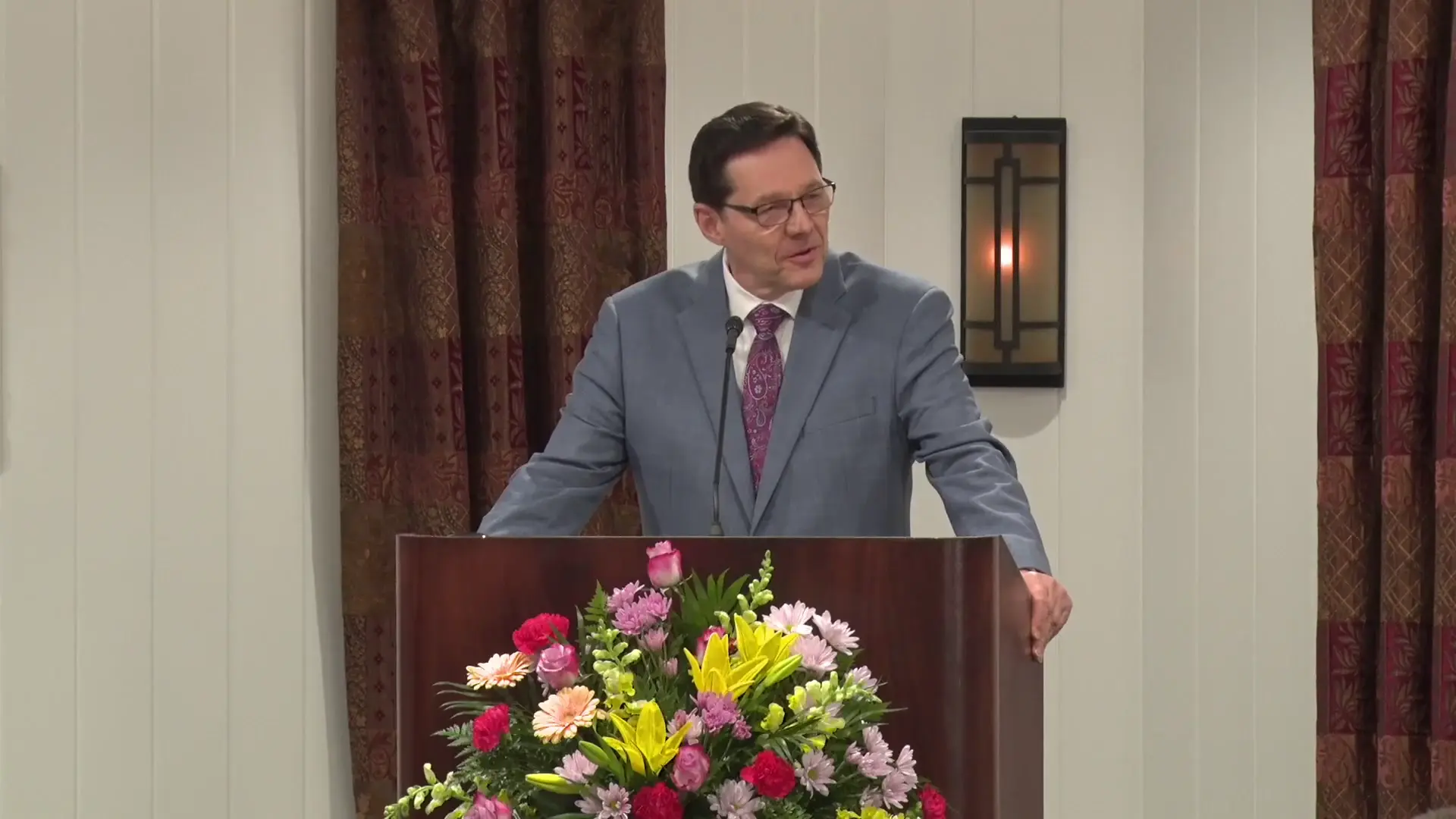
Faithful Travelers on a Spiritual Journey
Sermon by Martin G. CollinsLife is a journey filled with purpose, direction, and a glorious destination. As faithful pilgrims, we travel toward a Kingdom prepared by God Himself, moving forward with anticipation and hope despite a world full of distractions and uncertainty. Our journey is not random; it is guided by God, and our destination is promised. The concept of pilgrimage, though often absent from English translations of the Bible, remains central to being a follower of God. It signifies a journey to a sacred place, embodying faith and trust across all times. In both testaments, pilgrimage serves as a metaphor for earthly life as we move toward God's Kingdom, with a fixed, glorious goal motivating every step. The Feast of Unleavened Bread reminds us of Israel's pilgrim character, commemorating their hurried departure from Egypt and God's continuing deliverance to the Promised Land. This physical journey typifies the church's spiritual exodus from the world. Like the Israelites, our path to the Kingdom of God is often indirect, filled with challenges, requiring trust in God's guidance through uncertain circumstances. God actively leads, corrects, and refines us to promote spiritual growth, calling us to live set apart, maintaining a distinct, sanctified way of life focused on our divine purpose. The Exodus highlights the faith required to follow God's direction, trusting Him to manage the immense challenges of the journey, even when the path is unclear. As we walk by faith and not by sight, we must rely on God's continual guidance, confident that He directs both our individual lives and the whole church toward His intended purpose. The psalmist in Psalm 84 expresses the blessing of the journey, noting that those whose hearts are set on pilgrimage find strength in God, who supports them through difficult places. The highways to Zion are in their hearts, reflecting a genuine desire to worship God. Difficult times on this journey become opportunities to experience His faithfulness, as we move toward meeting God in His temple. Abraham's journey exemplifies this pilgrimage, obeying God's command to leave his homeland for a promised land, not knowing where he was going. Jacob, too, described his life and that of his ancestors as a pilgrimage, marked by struggle yet guided by faith. Isaiah's vision in chapter 35 speaks of a Highway of Holiness for the redeemed, a protected path leading to Zion with everlasting joy, as God prepares a way for His people to travel home. In the Gospels, Jesus' final journey to Jerusalem underscores the pilgrim nature of discipleship. The phrase "on the road" in Mark and Luke suggests a spiritual journey, where following Christ requires commitment without looking back, as Jesus warns that no one who looks back is fit for the Kingdom of God. Hebrews 11 portrays the Christian life as a pilgrimage, with heroes like Abraham dwelling as strangers and pilgrims, seeking a heavenly country. Many faithful endured wandering in deserts and mountains, afflicted and tormented, yet remained focused on God's promise, even without receiving it in their lifetime. This reminds us that this world is not our home, and we must not become attached to its desires, remaining ready to move forward at God's command. Peter, in I Peter 2, addresses believers as sojourners and pilgrims, urging them to abstain from fleshly lusts and live honorably, reflecting their status as exiles in a world opposed to God's way. Throughout the Bible, the faithful are pictured as pilgrims, people of the Way, journeying toward a spiritual place that will satisfy them, trusting and obeying God even when the road is difficult. As we reflect on this journey of faith, we are not wandering aimlessly; we are being led by God. Every step, trial, and moment of growth is part of His great work of deliverance. Like the faithful pilgrims before us, we may not always see the full path ahead, but we know the destination—a city prepared by God, a Kingdom of righteousness, peace,
Examples of Divine Justice
Sermon by John W. RitenbaughNadab and Abihu, Ananias and Sapphira, and Uzzah, all aware of the penalties for their actions, rebelled against God's clear and unambiguous instructions.
Faith and the Christian Fight (Part Four)
Sermon by John W. RitenbaughGod begins His spiritual creation by grace because the wages of sin is death. Consequently, God's people will exercise humility and faith in yielding to Him.
Pioneers: Our Job Is the Journey
Sermon by Mark SchindlerThough we have been given gifts to edify the Body of Christ, these gifts are of ancillary purposes only as they move everyone forward on the spiritual journey.
The Angel of God
Sermon by Richard T. RitenbaughThe Angel of the Lord is the pre-incarnate Christ, who appears at critical moments in history to deliberately move events toward their fulfillment.
Jude
Sermon by Richard T. RitenbaughThe book of Jude, a scathing indictment against false teachers, may be the most neglected book in the New Testament. False teachers twist grace into license.
Amos (Part Fourteen)
Sermon/Bible Study by John W. RitenbaughAmos indicts rampant, dishonest practices, placing gain above honesty, morality, or ethics, and arrogantly and covetously exploiting the needy for profit.
Eden, The Garden, and the Two Trees (Part One)
Feast of Tabernacles Sermon by John W. RitenbaughWe we follow God's patterns, Jerusalem becomes the likely location of the Garden of Eden and the likely location for the future, heavenly Jerusalem.
Wind and God's Spirit
Sermon by Charles WhitakerGod controls the invisible wind—powerful or gentle—making it an ideal symbol for His Spirit. God's breathing life into Adam foreshadowed giving the Holy Spirit.
We Can Make It!
Feast of Tabernacles Sermon by John W. Ritenbaugh (1932-2023)A disciple cannot escape the kind of persecution directed against his teacher. In the wake of this kind of abuse, people can succumb to depression.