


Filter by Categories
A GPS for our Spiritual Pilgrimage
Feast of Tabernacles Sermon by David F. MaasI remember watching a DVD of the Mormon anthem, Come, Come Ye Saints, in which the Mormon pioneers were shown in a series of covered wagon caravans moving from Missouri out to Utah. In one scene, a covered wagon tipped over in a river and the wife of one pilgrim and her two boys had to join another caravan. The concluding scene showed a joyful reunion with their father as the Mormon Tabernacle Choir sang the strains. The way, or that way was the term the early apostles described our spiritual journey, spiritual pilgrimage, or perhaps our wilderness wanderings. I replied that although we all seemed to end up in different campsites, we are all travelling the same spiritual journey and that if we travel into one another's campsite, we should make sure that we make one another welcome. In our current state of splintership or perhaps, I should say bobbing around in life rafts we should keep our docking mechanisms in good shape, offering help to lost fellow travelers whether they stay with us 24 hours, 2 years, or 10 years. Having lived in the Big Sandy area, I can assure you that floating has always taken place ever since the Church of God was blown apart. We cannot go into the mindset of our brothers and sisters who are with us on this journey, probing their comfort levels or motivations. Let us take comfort in the fact that the Lord knows who are His, and who the tares are. Remembering that Jesus washed Judas Iscariot's feet, we need to be kind even to those we suspect as tares. We should regard the Bible (inspired and designed by God Almighty) as more accurate and trustworthy for our spiritual pilgrimage than any GPS devised by man. God's Word illuminates the path of our lives. If we keep God's Word shining along the way, then we will be far less likely to trip. We will not be easily deceived. Because we are following the light, we will see what the light reveals in the path ahead of us. It is only when we turn the light off (before we have actually arrived at our destination) that something could spring up in the dark and trip us. Therefore, if we keep the light of God's truth shining brightly ahead of us, then we have a greater chance of avoiding deception. As we continue on our spiritual journey through a trackless wilderness, we need to learn that the process of sanctification could be described as a process of reinforcing positive spiritual habit patterns through making life choices and then interpreting the consequences of these life choices. If we look up over the sun, updating our maps and satellites through continuous prayer, study, and meditation, God promises us that He will put His Laws into the midst of our nervous systems leading us right into the promised land.

Five Major Problems of the Pilgrimage
Sermon by John W. RitenbaughLearning to judge is one of the most important qualities of a leader. Consequently, Christ warned that intemperance in judging will act as a boomerang.
Developing Spiritual Wanderlust
Feast of Tabernacles Sermon by David F. MaasWanderlust is the desire to travel and see new things. All of our patriarchs were pilgrims, seeking a more permanent homeland than the one they left behind.
The Handwriting Is On the Wall (Part One) (2007)
Feast of Tabernacles Sermon by John W. RitenbaughThe scattering of the church was God-ordained, providing a test for godliness. The isolating demonstrated by some groups is an abomination and an affront.
The Christian Fight (Part Seven)
'Personal' from John W. RitenbaughThe virtue of love gets the most attention, yet the life of Abraham illustrates how foundational faith—belief and trust in God—is to love and salvation.
Seeking A New Home
Sermonette byWe are seeking a permanent dwelling in God's Kingdom. In our on-going sanctification process, we are not yet home, but trudging along the way in our pilgrimage.
Five Major Problems in the Wilderness
Sermon by John W. RitenbaughGod did not take ancient Israel by a direct route, and our lives likewise may seem to wander. We must trust God in spite of the detours, following His lead.

Preparing for the Feast
'Personal' from John W. RitenbaughThe Feast of Tabernacles is far more than a yearly vacation. It is a time set apart for both rejoicing before God and learning to fear Him.
Looking Back to the Future
Feast of Tabernacles Sermon by John W. RitenbaughThe dwelling in booths and the sacrifices were the context for rejoicing at the Feast of Tabernacles. The booths depict our current lives as pilgrims.
Ecclesiastes and the Feast of Tabernacles (Part 1)
Sermon by John W. RitenbaughLove for this world will inevitably bring disillusionment. Because the world is passing away, our priorities should be to fear God and keep his commandments.
Prepare to Teach
Feast of Tabernacles Sermon by Martin G. CollinsWe will be kings and priests, responsible for those coming out of the tribulation. We must prepare now to fill the entire earth with the knowledge of God.
Trials and Suffering
Sermonette by James BeaubelleTrials and suffering are woven throughout God's purpose for humanity, shaping His people for their eternal inheritance. I Peter, the "wilderness epistle," portrays believers as pilgrims whose faith is tested through suffering so that perseverance, humility, compassion, and godly character may be developed. Trials are not merely hardships to endure but opportunities to actively apply faith—to choose trust and obedience when circumstances are difficult. As James demonstrated through Abraham, faith is perfected through action. Suffering also draws believers together, teaching them to care for, pray for, and strengthen one another. Though we may not fully understand why God permits trials, Scripture assures us that He remains near to the brokenhearted and uses temporary suffering for an eternal purpose. Our calling is to set our will to believe, act faithfully, and remain steadfast as God prepares us for His Kingdom.
Examine and Come Out
Sermon by John W. RitenbaughThe Old Testament examples were given to show us what God had to do to pave the way for our calling, sanctification, and ultimate glorification.
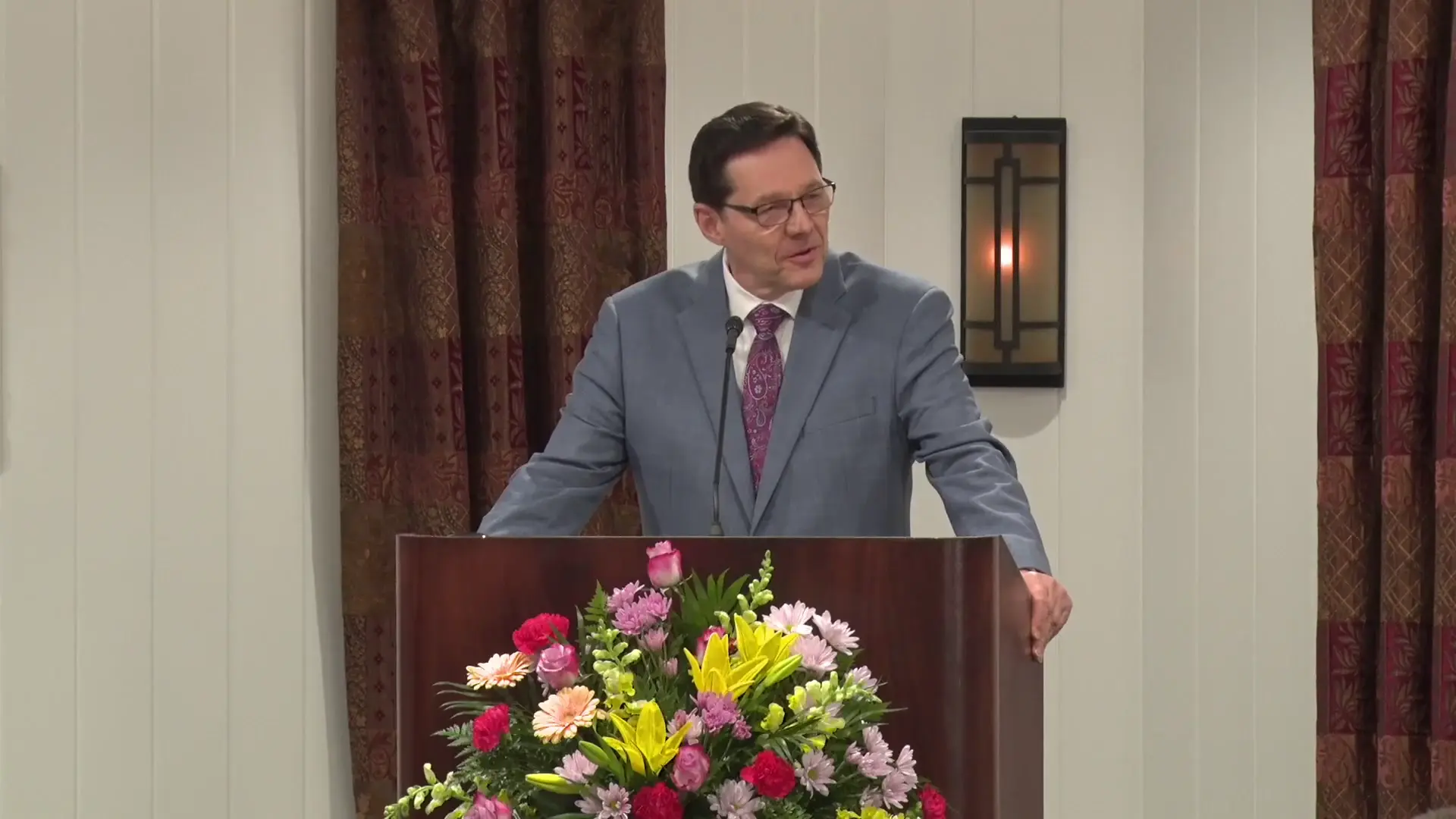
Faithful Travelers on a Spiritual Journey
Sermon by Martin G. CollinsLike faithful pilgrims of old, we are traveling towards something far greater than anything this world has to offer, a Kingdom prepared by God Himself. Although the words pilgrim and pilgrimage are missing from most English translations of the Bible, the concept remains central to being a follower and worshipper of God. A very simple definition: a worshipper and follower of God. Pilgrimage also signifies broader meanings of faith and trust that define God's people across all times. In both testaments, pilgrimage serves as a metaphor for the pattern of earthly life for anyone moving toward God's Kingdom. In all instances, the concept implies a journey to a sacred place. The pilgrim is always a traveler, but a fixed, glorious goal is always the destination that motivates the journey. The Feast of Unleavened Bread is a reminder of Israel's pilgrim character. It commemorates the hurried departure and rescue from Egypt and the continuing process of the Lord's deliverance of the Israelites to the Promised Land. Now it is a physical type of the church's spiritual exodus from the world, God's continuing deliverance of His church. Unleavened bread symbolizes both pilgrimage and judgment, as well as corruption. As a symbol of pilgrimage, it is associated, of course, with the Exodus. Now the Israelites, rushing to leave Egypt, took their dough before it was leavened, having their kneading bowls bound up in their clothes and on their shoulders, leaving slavery behind as a pilgrim people. The Days of Unleavened Bread represent the Israelites' eager anticipation of the Promised Land as a type of our looking forward to God's Kingdom. And we walk by faith, not by sight, which requires a deep reserve of faith. Christian pilgrims are to live in ways in which the old leaven is nonexistent. Now in God's plan of salvation, the seven-day period symbolizes the beginning of judgment on the church, emphasizing that we are pilgrims whose true citizenship is in heaven. Like the Israelites, our journey toward the Kingdom of God is often indirect, filled with challenges, requiring trust in God's guidance through uncertain circumstances. This draws a parallel between the Israelites' journey and our Christian life, emphasizing that while we know our destination the Kingdom of God we do not know the exact path to get there. And since we walk by faith rather than sight, we must trust God's continual guidance on our journey, confident that He is skillfully directing both our individual lives and the whole church toward His intended purpose, toward His will. The heartfelt pilgrim cries, Happy are those. . . in whose heart are the highways of Zion. The psalmist expresses the excitement and blessing of the journey, and those who journey to Zion to worship are blessed. So Zion is a symbol, a metaphor, or a code word for Jerusalem or God's throne, the Temple, God's Kingdom, God's government. So the pilgrims' strength comes from God, who supports them on their journey. The highways are in their hearts, which means they genuinely want to go. And God clearly states that pilgrimages to worship and make offerings on holy days in Jerusalem or wherever God places His name are required. The journey to the Promised Land that is God's Kingdom for us is filled with difficult times of struggle and tears that people must face on their way to meet God in His temple. The faithful traveler is strongly committed to worshipping God at the Temple. One reason for the strong sense of place in worship psalms is the tradition of pilgrimage which consistently guides travelers toward a desired destination, a sacred site. For the righteous, it is God's Temple in His Kingdom. So the faithful pilgrim Abraham begins his journey by obeying the command to leave his homeland and family in response to God's promise. This kind of travel is also typical of Abraham's descendants. Jacob describes his own life and that of his ancestors as a pilgrimage. From the beginning, then, the life of faith is vie
Wilderness Wanderings (Part Two)
Sermon by John W. RitenbaughThe spiritual journey of God's people is more difficult than the physical one of the ancient Israelites, requiring as it does more resources to navigate.
Numbers: The Book of Judgment
Sermon by John W. RitenbaughWe live daily in uncharted territory, but the sobering account in Numbers provides a roadmap, establishing God's pattern of judging our pilgrimage conduct.
Leadership and Covenants (Part Seventeen)
Sermon by John W. Ritenbaugh (1932-2023)Because the world is under the sway of the wicked one, if mankind were left to its own choices, the world would revert to the condition before the Flood.
Wilderness Wandering (Part Four)
Sermon by John W. Ritenbaugh (1932-2023)We share in Christ's suffering, realizing that glory follows suffering. It may involve enduring hardship, deprivation, duress, and outright boredom.
Faith and the Christian Fight (Part Eight)
Sermon by John W. RitenbaughAbraham embodied living by faith. Through perpetually living in a tent, he demonstrated his complete trust and reliance upon God.
The 'Rest' of Hebrews 4
Feast of Tabernacles Sermon by John W. RitenbaughIf we patiently endure, trusting in God's faithfulness to bring us to completion, there will be a time when we will attain the rest we desperately yearn for.