


Filter by Categories
Acts (Part Eighteen)
Sermon/Bible Study by John W. RitenbaughIn the Book of Acts, the journey of the apostle Paul on his second evangelistic campaign is detailed, beginning in the southern end of Turkey and moving westward. Despite attempts to travel north into other regions, Paul was repeatedly turned back, attributing these hindrances to satan. His path led him to Asos on the western edge of Turkey, where a vision of a man from Macedonia urged him to cross over. Arriving at Neapolis, the port for Philippi, Paul began preaching the gospel in Philippi around 50 AD. His first convert there was Lydia, a woman he met by the riverside where prayer was made, as there was no synagogue due to a small Jewish population. Lydia's home became the base for his operations in Philippi. In Philippi, Paul encountered a young woman possessed by a demon, and casting it out led to a riot, resulting in Paul and Silas being imprisoned. An earthquake that night led to the conversion of the Philippian jailer. Upon learning that Paul and Silas were Roman citizens, the city officials, fearing repercussions for their unfair treatment, personally released them but urged them to leave Philippi for safety. They departed and journeyed to Thessalonica, a major city of Macedonia with a population of about 200,000, situated on the Via Ignatia, a key east-west road. In Thessalonica, Paul preached in the synagogue, proclaiming the Kingdom of God and that Jesus of Nazareth was the Christ. He reasoned with the people, engaging in intense discussions that often became heated. His message focused on proving that Jesus fulfilled the Scriptures as the Messiah, addressing Jewish misconceptions about the Messiah's nature and mission. Resistance was strong, particularly over concepts of grace and law, which also fueled earlier persecutions and disputes recorded in Acts. Despite opposition, some were converted, likely including Gentile women who were proselytes to Judaism. Envy over Paul's success led to disturbances by the Jews, who accused him of proclaiming a king against the emperor, though lacking evidence. The city council dismissed the case, but required Jason, Paul's host, to post a bond ensuring Paul's departure. To avoid further trouble, Paul left at night for Berea, a less prominent city off the main road. In Berea, Paul again went to the synagogue, finding the people fair-minded and open to his message. They studied the Scriptures daily to verify his teachings, contrasting with the hostility faced elsewhere. However, Jews from Thessalonica stirred trouble, forcing Paul to leave for Athens, while Timothy stayed in Berea and Silas went to Philippi, later rejoining Paul in Athens and then Corinth. In Athens, a city steeped in pagan culture and philosophy with a small population of about 10,000, Paul faced a forest of idols and temples. Speaking at the Areopagus, he addressed the Epicureans and Stoics, starting with their concept of an unknown God, declaring Him as the Creator who needs no temple or ritual. He emphasized man's need for God and the irrelevance of idolatry, challenging their beliefs with the reality of a living God who controls history and destinies of nations. Paul urged them to seek God, revealing the mystery of His presence, and spoke of a coming judgment by God's agent raised from the dead, a concept met with scorn due to their disbelief in bodily resurrection. Moving on to Corinth, the most significant Gentile city Paul visited during his campaigns, with a population of about 200,000, it was a commercial hub known for wealth and decadence. Corinth housed a large Jewish population and temples to various gods, including Aphrodite with her sacred prostitutes. After facing beatings, imprisonment, and scorn in previous cities, Paul arrived in Corinth dejected, weak, and anxious, wondering how his mission would fare in this influential yet challenging city.
Acts (Part Thirteen)
Sermon/Bible Study by John W. RitenbaughIn the Book of Acts, chapters 13 and 14 serve as a bridge to the pivotal chapter 15, highlighting the initial concerted efforts to bring the gospel to the Gentiles, who had no prior commitment to Jewish customs. The apostles began their outreach in synagogues to establish contact with the community, yet they did not mandate circumcision or adherence to the Old Covenant for Gentile converts. Instead, they emphasized repentance and belief in the gospel, core elements of the New Covenant, setting the stage for the significant controversy addressed in chapter 15 regarding the spread of the gospel to Gentile regions. The church at Antioch emerges as a crucial base for this mission, rather than Jerusalem, becoming the starting point for the Apostle Paul's missionary journeys, including his travels to Cyprus and Asia Minor. From a group of prophets and teachers in Antioch, Paul and Barnabas were selected through communal worship, fasting, and prayer to undertake this outreach to the Gentile world. The Holy Spirit guided this selection, making it evident through the qualifications of these men, and the congregation laid hands on them, interceding with God for their mission. Their journey began from Seleucia, Antioch's port city, sailing to Cyprus, a strategically important island for the Roman Empire due to its location and resources. In Cyprus, at Salamis and later Paphos, they first approached the Jewish community before engaging Gentiles. In Paphos, they encountered Sergius Paulus, the proconsul, described as an intelligent man who sought to understand their message, possibly to assess its legality under Roman law. Here, Saul is first called Paul, marking a shift as he gradually takes a leadership role over Barnabas in their evangelistic efforts. Moving from Cyprus to southern Turkey, then Pamphylia, they arrived at Perga with no recorded preaching, before proceeding to Antioch in Pisidia. In this city, Paul spoke in the synagogue, tracing the lineage of the Messiah, Jesus of Nazareth, from David, and presenting Him as the fulfillment of prophecies. He outlined key events—crucifixion, burial, resurrection, and witnessing of Jesus alive—supported by Old Testament scriptures, urging both Jews and Gentiles not to reject this opportunity as some in Jerusalem had done. The response in Antioch of Pisidia was mixed; while many Gentiles and some Jews were eager to hear more, gathering in large numbers on the following Sabbath, jealousy and anger among some Jews led to opposition. They stirred up prominent citizens, resulting in Paul and Barnabas being expelled from the city by official action. Shaking the dust off their feet as a symbol of scorn, they moved on to Iconium, continuing their mission despite resistance.
Acts (Part Twelve)
Sermon/Bible Study by John W. RitenbaughThe Book of Acts chronicles the early spread of the gospel, beginning with the foundation of the church in Jerusalem and extending outward. Initially, the martyrdom of Stephen marked a pivotal moment, as the ensuing persecution scattered the Hellenists across the Roman Empire, carrying the gospel with them. In chapter 8, the message reached Samaria and, through Philip, an Ethiopian eunuch. Chapter 9 details the conversion of Paul, who became the apostle to the Gentiles, tasked with the significant work of spreading the gospel. In chapter 10, God used Peter to bring the gospel directly to Cornelius, a Gentile with no prior Jewish connection, confirming through signs that there was no distinction between Gentile and Jewish converts in God's eyes. Chapter 11 recounts the criticism Peter faced from some in Jerusalem for associating with uncircumcised men, but upon hearing his explanation, they glorified God for granting repentance to the Gentiles, though underlying tensions persisted. Further in chapter 11, the narrative shifts to Antioch, a major city in the Roman Empire, where the church likely began through Hellenistic Jews dispersed by the persecution following Stephen's death. Antioch became a central hub for outreach to the Gentiles, serving as the base for Paul's operations and missionary journeys, second only to Jerusalem in importance to the early church. Unlike in Jerusalem, there was no apparent resistance in Antioch to sharing the gospel with Gentiles, possibly due to the city's more cosmopolitan nature. Barnabas, a trusted and encouraging figure, was sent to assess the work in Antioch, and his positive report spurred further expansion into Gentile regions. He then recruited Paul from Tarsus to assist in Antioch, where the term "Christian" was first used to describe the followers of Christ. Additionally, during a famine around 46 AD, the largely Gentile church in Antioch sent aid to the predominantly Jewish church in Jerusalem, demonstrating early solidarity. Chapter 12 highlights ongoing persecution in Jerusalem, including the martyrdom of James and the imprisonment of Peter, who was miraculously freed by an angel during the Days of Unleavened Bread. This event, possibly a flashback, underscores God's intervention and the power of prayer within the church, while also showing divine retribution against Herod Agrippa for his opposition. The chapter also marks a transition in leadership, as Peter left Jerusalem, and James assumed a more prominent role in the headquarters church. Despite persecutions, God's work continued among both Jews and Gentiles. Chapters 13 and 14 depict the church's first organized effort to evangelize Gentiles directly, without a Jewish framework, through a deliberate strategy inspired by God's Spirit. This planned campaign, originating from Antioch with Barnabas and Paul, contrasts with earlier efforts driven by persecution, reflecting a new phase of intentional outreach guided by prayer and communal decision-making.
Acts (Part Twenty-Seven)
Sermon/Bible Study by John W. RitenbaughIn the Book of Acts, chapter 26 presents Paul recounting his conversion and ministry before King Agrippa and Festus. Paul had been under house arrest for two years under Felix, with no substantial legal basis for his detention, as both Felix and Festus sought to appease the Jews. Agrippa, considered an authority on Jewish matters by the Romans, was invited by Festus to hear Paul's case during a courtesy visit. Despite Paul's appeal to Rome, Festus chose not to acquit him, mirroring Felix's decision for political reasons, and sent Paul onward to Rome. In his address to Agrippa, Paul emphasized his obedience to Christ's call, detailing his journey from Damascus, where he regained his sight, to Jerusalem, and then to the Gentiles. He proclaimed that Christ would suffer, be the first to rise from the dead, and bring light to both Jews and Gentiles. Agrippa, struck by Paul's logic, questioned whether Paul thought he could persuade him to become a Christian in such a short time. Paul responded, wishing that Agrippa were like him, despite standing in chains. Chapter 27 describes Paul's perilous voyage to Rome, including a shipwreck and landing on Malta, where they spent the winter. As sailing weather improved, Paul was transferred to another ship, traveling to Syracuse in Sicily and then to Puteoli. By mid-February, though not ideal for sailing, Paul continued his journey northward along the Appian Way, meeting brethren at the Appii Forum and the Three Inns, which greatly encouraged him after his harrowing experiences. Upon arriving in Rome, Paul was permitted to dwell by himself with a guarding soldier, earning significant respect and privacy from the centurion Julius, despite remaining a state prisoner within the palace grounds. In chapter 28, the focus shifts to Paul's interactions with the Jews in Rome. Following his pattern of addressing Jews first, Paul explained his presence in Rome due to charges from the Jerusalem Jews, though Roman authorities found no reason for a death penalty. The Roman Jews, unaware of any charges against him, expressed interest in hearing about Christianity. An all-day session ensued, filled with proclamation, discussion, and debate over interpretations of the law, prophets, and writings, particularly concerning Jesus as Messiah, the resurrection, and the Kingdom of God. When some rejected his message, Paul declared their stubbornness, citing Isaiah, and freed himself of responsibility for their salvation. The narrative abruptly ends without detailing Paul's trial before Caesar or his relationship with the Christian church in Rome. Paul remained under house arrest in Rome for two additional years, during which his trial was delayed due to the slow Roman judicial system and communication challenges. It is likely that Jewish accusers took time to gather witnesses from across the Roman Empire to testify against Paul. During this period, Paul turned his cell into a place of evangelism, preaching the Kingdom of God despite his chains, and maintained care for the churches, operating as a form of church administration with companions like Luke, Timothy, Tychicus, Demas, Mark, Aristarchus, Epaphras, Epaphroditus, and Onesimus. He also wrote several epistles, including Philemon, Ephesians, and Philippians, the latter delivered by Epaphroditus after recovering from illness. Despite changing circumstances in Rome, including Nero's growing instability and court intrigues, Paul continued his work, influencing even the guards chained to him.
Acts (Part One)
Sermon/Bible Study by John W. RitenbaughThe Book of Acts holds a significant place as the longest book in the New Testament, containing a wealth of information vital to understanding the early church. Its length and depth suggest a purposeful inclusion, offering insights that can benefit both the church as a whole and individuals within it. There is a notable consensus among commentators that the author of Acts is Luke, often identified as the same Luke who wrote the Gospel bearing his name and who accompanied the apostle Paul on many travels. References in Colossians 4:14, Philemon 24, and various passages in Acts itself, such as Acts 16:10, 20:5, and 20:15, where personal pronouns like "we" and "us" are used, indicate that the author was a contemporary and eyewitness to many events, particularly from chapter 16 onward. However, for the earlier chapters, from 1 through 15, the author relied on accounts and manuscripts from others, as the personal pronouns do not appear in those sections. Regarding the composition date of Acts, three possibilities are often proposed. The first, between 115 AD and 130 AD, seems unlikely as it would exclude the Luke who was Paul's companion due to the time span, and the abrupt ending of the book, just before Paul's death around 66 AD, raises questions about why more history was not included. The second date, between 80 AD and 95 AD, also faces challenges, as it would make Luke a very old man and still does not explain the abrupt conclusion or the absence of references to Paul's writings. The third and most plausible date is between 64 AD and 66 AD, with a strong inclination toward 64 AD, supported by the book's ending with Paul in prison in Rome during his first imprisonment, suggesting it was written during that period. Acts is clearly a continuation of the Gospel of Luke, both addressed to a man named Theophilus, indicating a sequential delivery of the accounts. The purpose of Acts becomes clearer when considering who Theophilus might have been, possibly a Roman official or magistrate, perhaps involved in Paul's trial, with the book serving as a document to explain the church's origins and Paul's connection to it. This theory aligns with the abrupt ending at Paul's imprisonment. The Book of Acts serves multiple purposes. First, it continues the proclamation of the gospel from Luke, portraying the church in action following the resurrection of Jesus Christ, showing that His death and resurrection did not halt His work but expanded it beyond Palestine. Second, it demonstrates that Christianity posed no threat to the Roman Empire, countering Jewish accusations, as evidenced by repeated instances in Acts where Roman officials found no guilt in Paul or the church, such as in Acts 16:20, 17:5, 18:12, 19:31, 24-26, and 28. Third, it acts as a unifying factor for the church, addressing potential divisions by showing harmony between Peter and Paul, with the first half of the book focusing on Peter's works and the second on Paul's, highlighting their mutual respect and shared mission. Fourth, it provides instructional value, illustrating the gospel's spread throughout the Roman Empire, its transforming power, the kinds of people converted, and their sacrifices and triumphs, offering a sense of history and purpose for the church, though not written as a detailed historical account. The theme of witnessing is central to Acts, appearing 39 times, emphasizing the church's responsibility to testify to the life, death, and resurrection of Jesus Christ. This mission is underscored in Acts 1:8, where Christ's last words to the apostles commission them to receive power through the Holy Spirit and be witnesses from Jerusalem to the ends of the earth. The book's structure parallels that of Luke, with a geographical progression from Jerusalem through Samaria to the wider world, reflecting an outward expansion of the gospel message. The Holy Spirit's role is pivotal, mentioned 70 times in Acts, often in connection with empowering the apostles to perform m
Acts (Part Eleven)
Sermon/Bible Study by John W. RitenbaughThe Book of Acts traces the expansion of the gospel from Jerusalem outward, beginning with Stephen's preaching to the Hellenistic group in Jerusalem in chapter 7. In chapter 8, the message spreads to Samaria through those scattered by persecutions following Stephen's preaching, and Philip proclaims the gospel to the Ethiopian eunuch before moving along the Mediterranean shore to Caesarea. Chapter 9 introduces the conversion of the apostle Paul, a pivotal figure in the narrative, marking a significant step in the gospel's outreach beyond Jerusalem as he begins to preach Jesus as the Christ, stirring trouble and necessitating his flight from various places. Towards the end of chapter 9, Peter reenters the story in Lydda and Joppa, where he is used by God to resurrect Tabitha, also known as Dorcas, and stays with Simon the tanner, indicating a shift in his adherence to certain Jewish customs. This prepares for chapter 10, where Peter faces the conversion of Cornelius, a Roman centurion, an event so crucial that it is detailed across 66 verses in chapters 10 and 11, more than any other single story in Acts. This incident marks the first direct preaching of the gospel to Gentiles, highlighting a major realization within the church that Gentiles are to be accepted into full fellowship with Jews, a departure from previous peripheral conversions of Gentiles through Jewish or proselyte contexts. The account addresses the church's initial resistance to Gentile inclusion, demonstrates that God Himself orchestrated this understanding, and shows Peter, rather than Paul, as the instrument for this breakthrough, leveraging Peter's influence in Jerusalem. It also reflects the Jerusalem church's eventual acceptance of Gentile conversions without prior allegiance to Judaism. The conversion of Cornelius in Caesarea, a city on the Mediterranean, signifies the gospel's penetration into the Roman Empire, challenging the church's confinement to Judaistic converts. In chapter 11, the response to Cornelius' conversion reveals objections within the church, particularly to Peter's association with Gentiles, rooted in longstanding scruples and fears of renewed persecution. Though the leadership in Jerusalem accepts the event's validity, broader objections persist, posing ongoing challenges for the early church. Peter associates the outpouring of the Holy Spirit on Cornelius' group with the original Pentecost event, affirming that Gentile converts stand on equal footing with Jewish converts, with no second-class status, as God shows no distinction between Jew and Gentile in His sight. This landmark event underscores the church's compulsion to baptize Gentile believers, though many unresolved questions about customs and practices remain for future resolution.
Acts (Part Twenty-Six)
Sermon/Bible Study by John W. RitenbaughIn the Book of Acts, chapter 26 opens with the apostle Paul standing before King Agrippa, a Jewish authority under Roman rule and the last of the Herodian line. During a courtesy visit to Festus, Agrippa is introduced to Paul's case, providing Paul an opportunity to speak in his defense, which becomes a powerful proclamation of the Kingdom of God. Though the full extent of Agrippa's knowledge of Christianity remains unclear, Paul's address, summarized by Luke, conveys the essence of a much longer discourse. Paul recounts his conversion and subsequent travels from Damascus to Jerusalem and beyond, spreading the message of the Kingdom. Festus accuses Paul of madness due to excessive learning, but Agrippa is more favorably impressed, noting that Paul could have been freed if he had not appealed to Caesar. Paul's appeal to Caesar aligns with his commission to witness before kings and Gentiles, ultimately aiming to stand before the emperor in Rome. He also seeks the protection of Roman custody, fearing for his life if released in Palestine. Refusing Festus' suggestion to return to Jerusalem, Paul opts for Rome, perceiving it as the path God has opened for him. He believes his case, representing Christianity, is strong, having already been vindicated before Felix and Festus, though political considerations kept him in custody. By appealing to Caesar, Paul hopes for a favorable ruling that could grant official toleration for Christianity across the Roman Empire. However, Acts does not reveal the outcome of his appearance before Caesar, leaving the resolution of his case and its ramifications unknown. During his two-year imprisonment in Caesarea, questions arise about Paul's support, as the state did not provide for prisoners. It is likely that either the Jerusalem or Caesarean church sustained him, though no work or income is mentioned during this period. Felix's hope for a bribe suggests Paul had access to resources, though the source remains unclear. Companions like Silas disappear from the narrative, while Luke appears to have remained with Paul, and Aristarchus later joins him on the journey to Rome. In chapter 27, Luke, using the "we" perspective, details Paul's journey as a prisoner from Caesarea to Rome, escorted by the Augustan regiment, a military police unit. Despite his status, Paul exerts significant influence over the traveling party. The voyage, likely in 59 AD, begins in late summer, facing challenging winds and weather. Sailing from Caesarea, the ship, originally bound for Troas, requires a transfer to another vessel carrying grain from Alexandria to Rome. Adverse winds push them off course, south of Crete to Fair Havens, a poorly sheltered harbor. Despite Paul's warning against continuing due to dangerous seasonal conditions, the ship's owner and centurion Julius decide to press on, hoping to reach a better harbor. A violent northeaster storm, possibly gale force, soon engulfs the ship, forcing the crew to run before the wind, secure the skiff, and undergird the vessel with cables to prevent it from breaking apart. Fearing the Syrtis Sands off Libya, they lighten the ship by discarding cargo and tackle. After days without sun or stars for navigation, despair sets in among the passengers, including Paul's party. Paul, though initially discouraged, receives a vision reaffirming that he will reach Rome, and he encourages others with the assurance that all will survive, though the ship will be lost. After 14 days of minimal eating due to the storm's turmoil, Paul urges them to take food for strength, leading a prayer among a largely pagan company before they attempt to beach the ship. The ship eventually runs aground near Malta, south of Sicily, after being caught in conflicting currents. All 276 passengers survive, reaching shore through divine protection evident in Luke's account. The native Maltese, described as barbarians due to their unfamiliarity with Greek, show unusual kindness by building a fire for the cold, we
Acts (Part Fifteen)
Sermon/Bible Study by John W. RitenbaughThe Book of Acts provides significant insights into the early church's practices and challenges, particularly through the actions and teachings of the apostle Paul. In Acts 20:20, Paul speaks to the elders of the church in Ephesus, emphasizing his method of teaching in their homes. This was not an effort to reach the unconverted by going door to door, but rather to provide further instruction and refreshing to those already converted, aiding them in their responsibilities within local congregations. This context clarifies that Paul's house-to-house visits were among believers, not unsolicited outreach to strangers. In Acts 2:46, the early believers are described as continuing daily with one accord, breaking bread from house to house. This indicates they were already of one belief, sharing meals as friends rather than preaching to the unconverted. These gatherings followed the events of Pentecost, where many visitors to Jerusalem, lacking homes there, were taken in by brethren and shared meals, reinforcing fellowship among the converted. Paul's primary points of contact with the unconverted, as shown throughout Acts, were public spaces like synagogues and marketplaces. In Acts 17, he engages with people at the Areopagus, or Mars Hill, a public forum where he uses the statue to the Unknown God as a starting point for preaching. Similarly, in Acts 28, Paul invites people to hear him where he is held, ensuring his outreach is not intrusive but open to those who choose to listen. His approach avoids cornering individuals in their homes, respecting their freedom to engage or walk away. Acts 15 addresses a critical issue regarding Gentile converts and the requirements of the law, reflecting a pivotal council in Jerusalem. The discussion centers on whether Gentiles must adhere to the entirety of the law, including circumcision. Peter, speaking from his evangelistic experience with Cornelius, argues that God grants His Spirit to Gentiles without requiring them to first keep the law, emphasizing the heart and repentance over outward legal observances. James supports this by referencing prophecies and affirming that God is raising up a new spiritual body, the church, as a dwelling place for Him, including Gentiles without the burden of ceremonial laws. The council's decision outlines specific guidelines for Gentiles, focusing on abstaining from things polluted by idols, sexual immorality, things strangled, and blood, addressing moral and spiritual issues rather than mere ceremony. Throughout Acts, the narrative reveals the early church grappling with cultural and theological tensions, particularly between Jewish and Gentile converts. Persecution, initially from unconverted Jews and later from Gentiles, shapes the church's mission and decisions. The scattering of believers after Stephen's martyrdom in Acts 7 leads to the gospel spreading beyond Jerusalem into Samaria and Galilee, demonstrating how challenges inadvertently advance the church's reach. Paul's consistent method remains public proclamation, only entering private homes upon invitation by the converted, reflecting a respect for personal readiness to receive the message.
Acts (Part Twenty-Three)
Sermon/Bible Study by John W. RitenbaughIn the Book of Acts, the apostle Paul frequently found himself in perilous situations due to opposition from crowds who rejected his message. In Acts 21, Paul's journey to Jerusalem is marked by warnings of impending trouble, yet he resolutely proceeds, driven by the need to deliver a contribution from the Gentiles to the Jerusalem church and to further his mission towards Rome and Spain. Upon arrival, he faces a false accusation of bringing a Gentile, Trophimus, into the Temple, leading to a riot from which he is rescued by the garrison commander. In Acts 22, Paul addresses the crowd outside the Temple, speaking in Aramaic to connect with them. He recounts his Jewish upbringing in Jerusalem, his training under Gamaliel, and his initial zeal in persecuting Christians. He describes his transformative encounter on the Damascus Road, where a blinding light brighter than the noonday sun revealed Jesus of Nazareth to him alone among his companions. Paul emphasizes that this divine revelation, confirmed by the restoration of his sight through Ananias, a devout Jew, was not his choice but God's intervention. He shares a subsequent vision in the Temple, warning him to leave Jerusalem as his testimony would not be accepted, and directing him to the Gentiles—a statement that incites further outrage among the listeners, viewing it as blasphemy. The commander, unable to understand Aramaic and confused by the tumult, orders Paul to be scourged for clarity on the accusations. Paul halts this by revealing his Roman citizenship, which he was born into, unlike the commander who purchased his. This revelation prevents illegal punishment and prompts the commander to convene the Sanhedrin to understand the root of the conflict. In Acts 23, Paul stands before the Sanhedrin, asserting his innocence regarding the charges against him. The high priest Ananias orders him struck, prompting Paul to denounce the hypocrisy, though he later acknowledges his error in speaking against the high priest. Observing the division between Pharisees and Sadducees, Paul strategically raises the issue of resurrection, aligning closer to Pharisaic views and hoping to witness about Jesus Christ's resurrection. This sparks a dispute among the council, with the commander intervening as the situation escalates, unable to participate directly due to Jewish customs but ensuring Paul's safety amidst the chaos.
Acts (Part Twenty-Two)
Sermon/Bible Study by John W. RitenbaughThe book of Acts provides significant insight into the observance of the Sabbath among early believers, both Jews and Gentiles. In Acts 13:13-14, the apostle Paul, as was his custom, entered a synagogue in a Gentile city on the Sabbath to engage with those already keeping the day, using it as a starting point for his teachings. Later, in verse 42, after facing rejection from some Jews, Paul did not suggest meeting the following day on Sunday but waited until the next Sabbath to continue, showing his adherence to the Sabbath. In Acts 15, the discussion around Gentile converts does not mention the Sabbath or the Ten Commandments as being set aside. Instead, verse 21 indicates that Gentile converts were keeping the Sabbath in synagogues alongside Jews, where they would hear teachings on God's law, suggesting no need for additional instruction on these matters from the apostles. In Acts 16:12, while in Philippi where no synagogue existed, Paul waited until the Sabbath to seek out a place of prayer by the river, likely where Jews or Gentile proselytes gathered, demonstrating his commitment to observing the Sabbath even in the absence of formal structures. Acts 17 further reinforces this pattern, showing that it was Paul's custom to keep the Sabbath, aligning with the traditions of Christ as seen in other scriptures. This consistent practice across various cities indicates a clear continuation of Sabbath observance among early believers. In Acts 18, during an 18-month stay in Corinth, Paul kept the Sabbath week after week with his converts, working as a tentmaker on other days but dedicating the Sabbath to preaching, providing strong evidence of its importance in his ministry. Finally, in Acts 20 and 21, Paul's journey to Jerusalem reveals additional context of his dedication, including timing his arrival around Pentecost and facing warnings and plots against him. Despite these challenges, his resolve to fulfill God's will, including delivering a collection from Gentile churches to Jerusalem, underscores his commitment to unity and obedience, reflecting the broader themes of perseverance and faithfulness seen throughout the book of Acts.
Acts (Part Nineteen)
Sermon/Bible Study by John W. RitenbaughIn the Book of Acts, the journey of the apostle Paul through various cities reveals his persistent efforts to spread the message of Christ amidst numerous challenges. In Acts 17, Paul traveled from Philippi to Athens, encountering difficulties in Thessalonica where he left a small group of converted people under duress before moving to Berea. In Berea, he found individuals more noble, who searched the Scriptures daily to verify his teachings, but opposition from Thessalonica forced him to leave for Athens. In Athens, a city past its prime with a population of about 10,000, Paul engaged with Epicureans and Stoics, speaking at the Areopagus, though his efforts yielded little success, and he was not permitted to remain. Moving to Corinth, a prosperous city of 200,000 on a vital trade route, Paul arrived with hope for more fruitful work despite previous setbacks. His experiences of beatings in Philippi, limited success in Thessalonica and Berea, and minimal impact in Athens weighed on him. In Corinth, lacking funds and without a church to support him, Paul sought work as a tent maker and connected with Priscilla and Aquila, already converted individuals recently expelled from Rome under Claudius' edict in 49 AD. They became significant in Paul's life, likely continuing their leatherwork trade in Corinth. Initially, Paul's ministry in Corinth was not aggressive; he reasoned with people in the synagogue privately, possibly awaiting the arrival of Timothy and Silas from Macedonia. When they joined him, bringing encouraging news from Thessalonica, Paul's spirits lifted, and he began evangelizing more assertively. This shift led to the writing of I and II Thessalonians from Corinth, addressing concerns and clarifying teachings among the believers there. Despite renewed vigor, opposition arose, prompting Paul to symbolically shake his garments, breaking fellowship with resistant Jews. He found support from a convert, Gaius Titius Justus, who opened his home for Paul's use. Conversions, including that of the synagogue ruler Crispus, further encouraged Paul, though persecution persisted. God provided reassurance through a vision, promising protection and revealing many in Corinth whom He would call. True to His word, while trouble continued, Paul faced no physical attacks. A significant moment occurred when the Jews brought Paul before the new proconsul Gallio, hoping to expel him. Gallio, recognizing the matter as an internal Jewish issue, dismissed the case, indirectly granting legal recognition to Christianity within the Roman Empire. This precedent, set by a high Roman official, offered protection against legal actions in other regions under Roman jurisdiction. Later, Paul took a Nazarite vow, cutting his hair at Cenchrea to complete it, and traveled to Jerusalem, likely for the feast of Pentecost, indicating his continued observance of such practices. Accompanied by Priscilla and Aquila as far as Ephesus, he eventually returned to his home base in Antioch, spending several months there before journeying back through Galatia and Pisidia to check on churches en route to Ephesus. During this period, Apollos, an eloquent and zealous Jew well-versed in Scriptures, emerged in Ephesus. Though knowledgeable only of John the Baptist's baptism, he spoke accurately about Jesus as the Christ. Priscilla and Aquila provided further instruction, completing his understanding, and he proved helpful to the church through reasoned debates. Notably, there is no mention of Apollos being rebaptized, unlike other disciples of John in later accounts, raising questions about the acceptance of prior baptisms.
Acts (Part Twenty)
Sermon/Bible Study by John W. RitenbaughThe Book of Acts highlights significant moments in the apostle Paul's ministry, showcasing his impactful journeys and the growth of early congregations. In Acts chapter 18, Paul arrives in Corinth, where he spends a fruitful year and a half, leading to numerous conversions and the establishment of a congregation. Despite opposition within the city, Paul faces a trial before Gallio, the proconsul, who dismisses the case as an internal Jewish matter, refusing to let Paul even speak in his defense and driving the accusers from the judgment seat. Following this, the Greeks in the city attack Sosthenes, the synagogue ruler, reflecting underlying tensions. Paul remains in Corinth for a considerable time, during which he meets Apollos, a man mighty in the Scriptures, who, after being further instructed by Priscilla and Aquila, publicly refutes the Jews, demonstrating from the Scriptures that Jesus is the Christ. Moving to Acts chapter 19, Paul reaches Ephesus during his third evangelistic campaign, achieving notable success over a three-year stay, longer than any previous period in one place. This vibrant congregation in Ephesus, situated in the Roman province of Asia, becomes a significant center, though its prominence is later tied to the worship of Artemis and a declining harbor. Paul's earlier visit to Ephesus is brief, but his return yields substantial results with many conversions. During this time, he encounters disciples with incomplete understanding, who had received only John's baptism and were unaware of the Holy Spirit. Paul baptizes them anew into the name of Jesus Christ, lays hands on them, and they receive the Holy Spirit, speaking in tongues and prophesying, affirming his actions. In Ephesus, Paul also performs extraordinary miracles through the laying on of hands and even through cloths taken from him, which heal the sick and cast out evil spirits. His ministry faces opposition from itinerant exorcists and local craftsmen, like Demetrius, who feel their livelihood threatened by the decline in idol worship due to Paul's preaching. This leads to a riot in the theater, a large venue seating 24,000, where the city clerk eventually calms the crowd, warning of Roman intervention and affirming that the church operates within the bounds of legality under duly constituted authority. Paul's journey continues with plans to travel through Macedonia and Achaia, returning to Jerusalem via a circuitous route that includes revisiting churches in Thessalonica, Philippi, and possibly Berea. His determination to reach Rome, not as a tourist but to connect with the brethren there, underscores his mission, as a church already exists in the city. Throughout these accounts, Luke, as an eyewitness, documents Paul's travels and challenges, emphasizing the church's growth amidst adversity.
Acts (Part Seventeen)
Sermon/Bible Study by John W. RitenbaughIn the Book of Acts, following the significant council decisions in chapter 15, Paul, Barnabas, Silas, and Judas were tasked with spreading the word about these resolutions. As they journeyed to Antioch, Paul expressed a desire to revisit previously established churches. However, a sharp contention arose between Paul and Barnabas over whether to include Mark on this journey. Unable to reconcile, they parted ways, with Paul traveling with Silas and Barnabas taking Mark, thus forming two teams to further God's work. In chapter 16, Paul returned to cities like Lystra, previously visited in chapters 13 and 14, to check on the spiritual growth of the believers. During these travels, Timothy, whose mother and grandmother were converted, joined Paul. Despite the council's decision that circumcision was unnecessary, Paul had Timothy circumcised to avoid unnecessary offense among the Jews they would encounter in synagogues. Paul's journey faced hindrances when attempting to travel in directions other than westward toward Mysia and Troas, eventually leading to a vision of a Macedonian calling for help. This vision marked a significant turning point, directing the gospel into Europe around 50 AD. At Troas, Luke joined Paul's party, as indicated by the shift to first-person narrative. Arriving in Philippi, a Roman city in Macedonia, Paul encountered a small Jewish presence and spoke to women by the riverside, leading to the conversion of Lydia, the first convert in Europe. Her heart was opened by God, and she promptly offered hospitality to Paul. Another incident involved a slave girl with a spirit of divination, whose demon recognized Paul and Silas as servants of the Most High God. Annoyed by her disruptive proclamations, Paul cast out the spirit, angering her owners who profited from her abilities. This led to Paul and Silas being seized, beaten with rods, and imprisoned unfairly on charges of disturbing the peace. In prison, despite their severe beating, Paul and Silas prayed and sang, their faith unshaken. An earthquake subsequently opened the prison doors and loosened their chains, vindicating their status as God's servants. This event profoundly impacted the jailer, who, fearing for his life, sought salvation. Paul instructed him to believe in the Lord Jesus Christ, leading to the jailer and his household's conversion and baptism after tending to their wounds. Paul's assertion of Roman citizenship after their release provided protection for local Christians and future evangelists, correcting the local authorities' hasty judgment. Though not convicted of any crime, Paul's actions ensured a measure of safety for the burgeoning church in Philippi.
Acts (Part Sixteen)
Sermon/Bible Study by John W. RitenbaughThe Book of Acts, particularly in chapter 15, records a pivotal event in the history of the early church, marking a significant turning point in its development. This chapter captures a crucial council that addressed the question of whether Gentiles could become Christians without adhering to the entirety of the Mosaic law. The stage for this discussion was set through the preceding chapters of Acts, from chapter 1 to 15, as the church began to break out of its Judaistic mold, evolving into a worldwide spiritual organization not confined to a single area or people. At the council in Acts 15, initial discussions were heated, reflecting deep divisions over the application of the law. Peter recounted his experience with Gentiles, emphasizing that God granted them His Spirit through faith in Jesus Christ, without requiring circumcision or full adherence to the law. Paul and Barnabas supported this by sharing how God validated their ministry to the Gentiles through miracles and wonders, suggesting that such divine confirmation endorsed their approach to the law's application. James then summarized the discussion, aligning it with scriptural prophecy from Amos 9, affirming that God's plan included the Gentiles and indicating that God's purpose was known from eternity. The council's decision outlined specific guidelines for Gentile converts, focusing on abstaining from practices tied to idolatry, as detailed in Leviticus. These guidelines addressed moral and spiritual issues, demonstrating that laws, regardless of their context, could still apply to a Christian's life. The decision had far-reaching effects, freeing evangelists to reach Gentiles without imposing the full burden of the law and clarifying Paul's standing within the church as a called servant of God, in agreement with the apostles in Jerusalem. However, this decision also had challenging consequences, as it antagonized Jews outside the church in Judea and Galilee, setting Christianity apart from Judaism. This antagonism contributed to persecution and the eventual decline of the Jerusalem church's authority, which shifted to Antioch as the leading congregation in the first century. Over time, particularly between 66 and 68 AD, the Jerusalem church faced fatal challenges due to spiritual and political conflicts, leading to its members fleeing to Pella and becoming scattered. This event, beginning with Stephen's preaching and culminating in the Acts 15 council, marked a defining moment that reshaped the church's trajectory.
Acts (Part Ten)
Sermon/Bible Study by John W. RitenbaughThe Book of Acts chronicles the early spread of the gospel, beginning with the significant impact of Stephen's martyrdom, which propelled the message beyond Jerusalem. Initially, the apostles focused their preaching on the Jews in Jerusalem, but the persecution following Stephen's death, largely instigated by the Hellenists—Greek-speaking Jews of the Diaspora—caused many disciples to scatter into Samaria, where they began to preach. This scattering marked the beginning of a broader outreach, though there was no deliberate intent to convert Gentiles at this stage. The narrative progresses with Philip's encounter with the Ethiopian eunuch, a high-ranking official returning from worship in Jerusalem, likely non-Israelitish, indicating an early, albeit incidental, outreach beyond Israelite boundaries. Philip, directed by God, met this man on a desolate road near Gaza, explaining the Scriptures and leading him to baptism, demonstrating divine guidance in extending the gospel's reach. The conversion of Cornelius, a Gentile, stands as a pivotal event in Acts, orchestrated entirely by God, as the apostles were initially reluctant to preach outside Jerusalem or to Gentiles. This event marked a significant shift, opening the way for the gospel to be preached to Gentiles worldwide, a departure from God's exclusive work through Israelitish people since the time of Abraham, Isaac, and Jacob. The Book of Acts also details the dramatic conversion of Paul, who, while zealously persecuting Christians, encountered a blinding light and a voice revealing Himself as Jesus, whom Paul was persecuting through His disciples. This encounter, followed by Ananias laying hands on him, resulted in Paul receiving the Holy Spirit, regaining his sight, and being commissioned for a mission involving suffering for Christ's name, primarily to Gentiles, kings, and the children of Israel. Paul's immediate preaching of Jesus as the Christ in Damascus, after a period in Arabia, and his subsequent challenges in gaining acceptance among disciples in Jerusalem, highlight his unique preparation and role in spreading the gospel. Key figures like Peter, Stephen, and Paul, alongside Philip, played crucial roles in extending the gospel from Jerusalem westward to the Mediterranean, setting the stage for a broader explosion of the message. Peter's actions, such as staying with a tanner in Joppa despite Jewish regulations, indicate a widening understanding within the church regarding traditional laws, further facilitating the gospel's outreach.
Acts (Part Two)
Sermon/Bible Study by John W. RitenbaughThe Book of Acts serves as a vital historical account of the early church, chronicling its development from the ascension of Jesus Christ to the spread of the gospel across diverse regions. It begins with the empowering of the church by God's Holy Spirit in chapter 2, detailing the early preaching in and around Jerusalem. The book illustrates the church's organization, with the selection of Matthias as the twelfth apostle in chapter 1 and the appointment of the first deacons in chapter 6. It traces the expansion of the gospel to the Gentiles in chapters 10 and 11, and from chapter 13 onward, focuses on Paul's commission to preach, following his missionary journeys from Jerusalem to Samaria, Asia Minor, Macedonia, Greece, and ultimately to Rome, where the book concludes with the gospel being proclaimed. Acts is not merely a historical record but contains significant theological material within its narrative, laying the foundation of the New Testament church. It presents the church as a continuation of God's acts recorded in the Old Testament, showing that the events, opposition, and purpose of the church align with His will. The book highlights key elements such as the mission and message of the church, as seen in Acts 1, where the disciples are commissioned to be witnesses to the ends of the earth, empowered by the Holy Spirit. This empowerment is vividly depicted in Acts 2 on the Day of Pentecost, marking the church's birth as a fulfillment of Old Testament prophecies. The narrative also underscores progress despite opposition, illustrating that the church faced constant challenges yet overcame them through faithfulness, with the gospel being preached despite mockery, imprisonment, beatings, and martyrdom. Acts further details the expansion of the gospel to the Gentiles, showing divine intent in including them in the church, despite initial resistance within the community, as seen in chapters 10 and beyond. Additionally, it provides insight into the life and organization of the church, emphasizing the essential role of the Holy Spirit, alongside the leadership of apostles, elders, and deacons, offering a guide for church operations through the ages. As a literary work, Acts stands out for its storytelling, attributed to Luke, who is seen as a master storyteller consciously writing with purpose. It is considered a completion of the Book of Luke, forming a two-volume work, though written in the style of the Greek Old Testament, possibly reflecting its intended audience or purpose. The book is not merely an evangelistic tract but a fine piece of literature, telling the story of the church's beginnings more effectively than other New Testament works. Its purpose extends beyond a historical or legal document, aiming to increase the faith of the church across generations, showing the continuation of Jesus Christ's work through the Spirit and His church.
Acts (Part Nine)
Sermon/Bible Study by John W. RitenbaughThe Book of Acts holds a significant place in recording pivotal moments that shaped the early church, particularly through events like Stephen's speech in chapter 7. This speech, whether deemed a sermon or address, played a crucial role in the church's trajectory due to the ensuing persecution that scattered believers, thereby spreading the gospel far beyond its initial boundaries. The importance of this event is evident in its inclusion in Acts, highlighting its impact on the dissemination of the message. Two central themes emerge from Stephen's discourse. First, God consistently raised deliverers for Israel, from Moses through the judges, Samuel, David, and the prophets, yet Israel repeatedly rejected these deliverers, turning to idols and ultimately facing captivity. Second, despite having the Tabernacle and later the Temple as centers of worship, Israel still succumbed to idolatry, showing that physical structures could not prevent spiritual failure. Stephen also addressed three sub-themes tied to the pillars of Judaism post-captivity: the land, the law, and the Temple. Regarding the land, he emphasized that while it was a divine gift to Abraham and his descendants, many deliverers were raised outside it, illustrating that a relationship with God transcends territorial attachment. Examples include Abraham's origins in Mesopotamia, Jacob and Joseph in Egypt, and Moses' upbringing outside the land, urging a broader perspective beyond mere geography. On the law, Stephen confronted the Jewish resolve to avoid captivity by enforcing strict obedience through numerous regulations, which led to a belief in justification by law-keeping. The early church, however, clarified that the law's role was not to justify but to reveal sin, a perspective misunderstood by many as abolishing the law, though it was instead placed in its proper context. Concerning the Temple, Stephen challenged the almost superstitious view that it guaranteed salvation or protection as God's dwelling place. He argued that God cannot be confined to a building, referencing Isaiah's declaration that heaven is His throne and earth His footstool, pushing for an expanded understanding of God's presence beyond physical structures. In chapter 7, Stephen's strong accusations culminate in a direct rebuke, summarizing his message by charging the listeners with following their ancestors' path of rejecting deliverers, evidenced by their treatment of Jesus of Nazareth, the greatest deliverer, whom they not only rejected but killed. This provoked intense rage, contrasting with the repentance seen in Acts chapter 2 during Peter's speech, leading to Stephen's summary execution outside the city, an act against all legal standards of the time, yet permitted by God. Stephen's martyrdom, as detailed in Acts, marks a turning point, introducing Saul, later Paul, who consented to the killing, setting the stage for his dramatic conversion and significant impact on the church. Stephen's final prayer for his persecutors reflects his pastoral concern, seeking their forgiveness despite his strong denouncement, showing his heart was not in condemnation but in hope for their spiritual well-being. The persecution following Stephen's death, as seen in chapter 8, targeted the church broadly, scattering believers who then preached wherever they went, significantly advancing the gospel's reach. This scattering, though aimed at Hellenist converts like Stephen and Philip, left the apostles relatively safe in Jerusalem, possibly due to their closer affinity with traditional Judaism. Further in chapter 8, the encounter with Simon Magus in Samaria reveals his desire for spiritual power, offering money to gain the ability to confer the Holy Spirit, a request Peter sharply rebuked, discerning Simon's selfish intent. This incident underscores the solemn responsibility of possessing God's Spirit and the danger of seeking it for personal gain, contrasting with its true purpose of service. Acts also illustrat
Acts (Part Twenty-Five)
Sermon/Bible Study by John W. RitenbaughThe Book of Acts presents a detailed account of the apostle Paul's trials and defenses before various authorities. In Acts 24, Paul appears before Felix, the governor of Samaria and Judea, alongside his wife Drusilla. Paul seizes the opportunity to witness about the gospel of the Kingdom of God. Despite recognizing Paul's innocence, Felix, under political pressure to appease the Jews, holds Paul under house arrest for two years, allowing him some liberty within the palace grounds but not freedom to leave. As Acts 25 opens, a change in governorship occurs with Festus taking over. Unlike Felix, Festus demonstrates more wisdom and justice, managing to keep control during his two-year tenure. However, the Jews remain intent on pursuing justice against Paul. Festus, facing similar political pressures as Felix, initially considers sending Paul to Jerusalem for trial, despite the repetitive nature of the testimony. Paul, recognizing the danger, appeals to Caesar, leveraging his Roman citizenship for protection and a chance to reach Rome. Festus, after conferring with his council, grants the appeal, seeing it as a way to resolve the political dilemma, though he must now formulate a substantial charge to send with Paul to Rome. King Agrippa II visits Festus, providing an opportune moment to discuss Paul's case. Agrippa, a Jewish king with authority over the Temple and well-versed in Jewish affairs, expresses curiosity and desires to hear Paul personally. This sets the stage for another defense by Paul, which occurs in a grand state occasion attended by high-ranking officials, emphasizing Roman authority. Paul's defense before Agrippa, detailed in Acts 26, is autobiographical, focusing on his Jewish heritage and the hope of Israel, particularly the resurrection, as the reason for his imprisonment. He recounts his past opposition to Christianity, his conversion experience, and the divine command to witness, adjusting his narrative to suit the audience, which includes many Gentiles unfamiliar with Jewish theological disputes. Through these accounts in Acts, Paul's interactions with Roman authorities and Jewish leaders are highlighted, showcasing his persistent efforts to proclaim the gospel even under trial. His innocence is acknowledged by both Roman and Jewish figures, reflecting the broader acceptance of his message within the Roman Empire during this period.
Acts (Part Fourteen)
Sermon/Bible Study by John W. RitenbaughThe people of Lystra and Derbe mistake Paul for Hermes and Barnabas for Zeus. When Paul convinces the crowds that he and Barnabas are not gods, they are rejected.
Acts (Part Seven)
Sermon/Bible Study by John W. RitenbaughThe Book of Acts provides a detailed account of the early New Testament church, beginning with the events of chapter 5, which opens with the deceit and subsequent deaths of Ananias and Sapphira. This distressing event contrasts with the positive depiction of church life in chapter 4, where everything appeared harmonious and the church was growing. However, chapter 5 reveals human carnality within the church, as Ananias and Sapphira conspired to gain acclaim for a sacrifice they did not fully make, lying about the proceeds from a property sale. Their deceit was uncovered, leading to their shocking execution by God, highlighting the seriousness of sin against His government. Peter is portrayed as having profound insight into their deception, almost as if he could discern their intentions, showcasing his spiritual perception alongside his power to heal. The narrative underscores that such deceit could not be allowed to take root at the church's inception, paralleling a similar Old Testament event with Achan, where God also acted decisively to maintain purity. The fear and dread resulting from these events, coupled with the apostles' healings, drew people to the church despite their apprehension. The account progresses with the apostles' second appearance before the Sanhedrin, who could not ignore the church's growing influence. An angel intervened, freeing the apostles from prison and commanding them to stand firm in their preaching. The Sanhedrin, unaware of their escape, was forced to act cautiously due to the apostles' popularity, arresting them peaceably to avoid inciting the crowd. The apostles, following Christ's example, did not resist arrest, affirming their commitment to obey God over human authority. Gamaliel, a Pharisee, offered moderating counsel to the Sanhedrin, suggesting they refrain from harsh action against the apostles, reasoning that if their movement was not of God, it would fail on its own. His advice, based on the assumption that Christianity was merely a sect within Judaism, temporarily spared the apostles, though later events would reveal significant differences. Chapter 6 introduces internal church challenges, such as the neglect of Hellenist widows by Hebrew-speaking Jews, reflecting cultural and linguistic divisions. The apostles, recognizing their inability to manage both spiritual and administrative duties, appointed seven men of spiritual quality from the Hellenist group to address these needs, ensuring both physical and spiritual responsibilities were met. This resolution led to the spread of God's Word and growth in the church, even drawing priests into the fold. The narrative bridges to broader themes, including Stephen's martyrdom and the expansion of preaching beyond Jerusalem, highlighting Christianity's distinct identity apart from Judaism. Stephen's blunt proclamation of these differences cost him his life but propelled the church's message into new regions, fulfilling a greater purpose under God's guidance.
Acts (Part Twenty-One)
Sermon/Bible Study by John W. RitenbaughIn the Book of Acts, particularly in chapter 20, verse 7, a gathering on the first day of the week is mentioned, but it does not establish this day as a regular day of worship. The meeting occurred at night, beginning after sunset, which, by biblical reckoning, marks the start of the first day of the week, aligning with what would be considered Saturday evening in modern terms. This timing indicates the service likely started on what we would call Saturday night, extending until midnight, as evidenced by the many lamps in the upper room. There is no indication in Acts that this was a regular practice or commanded by God as a day of worship. Additionally, the context shows Paul and his companions treating the following daylight hours of the first day as a common workday, with Paul walking 20 miles from Troas to Assos and his companions traveling by boat, further suggesting that the first day held no special significance as a holy day. The Book of Acts also details Paul's activities in Ephesus in chapter 19, where he spent nearly three years, marking one of his most successful periods. Despite a disturbance caused by economic impacts on the local idol trade, Paul was not forced out but left due to the pressures of continuing his work elsewhere. His journey took him through Macedonia, Achaia, and back toward Jerusalem, with plans to avoid returning to Ephesus, likely due to emotional ties or other concerns. In Acts 20, at Miletus, Paul delivered a farewell address to the elders of Ephesus, entrusting them with the spiritual responsibility of the congregation, emphasizing his faithful service and warning of future challenges from external persecution and internal apostasy. This address marked his last evangelistic campaign recorded in Acts, as subsequent chapters focus on his journey to Jerusalem, imprisonment, and eventual house arrest in Rome, where he continued to speak but not in the same campaign style as before.
Acts (Part Six)
Sermon/Bible Study by John W. RitenbaughThe Book of Acts serves as a foundational narrative, with each chapter introducing elements that shape the subsequent events. Chapter 1 acts as a bridge between the crucifixion and ascension of Jesus Christ and the arrival of the Holy Spirit. Chapter 2 stands as the pivotal chapter, marking the arrival of the promised Comforter, the birth of the church, and the empowerment of believers to witness to the world, a mission that continues to the present day in anticipation of Christ's return. Chapter 3 initiates the theme of persecution, which continues through chapters 3 to 5, driven by the miracles performed and the preaching in the name of Jesus Christ, which provoked opposition despite the undeniable nature of the miracles. In Chapter 3, the healing of a man at the Beautiful Gate and Peter's subsequent sermon highlight the early conflicts. Chapter 4 begins with the first four verses, detailing the growing opposition as the healing's impact on the people somewhat mitigates the persecution aimed at Peter and John, though it does not fully avert it. This chapter sets the stage for harsher persecution in Chapter 5, identifying the instigators and the nature of the opposition. The authorities recognize a pattern in Peter and John's actions mirroring those of Jesus Christ, involving miracles followed by effective preaching, leading them to command the apostles to cease their activities. Peter challenges their authority to hinder the church's responsibility to God, standing firm despite the precarious situation in Jerusalem. The opposition in Chapter 4 includes priests, the captain of the Temple, and the Sadducees, with the latter emerging as the primary adversaries throughout much of Acts, a shift from the prominence of the Pharisees during Jesus Christ's ministry. The Sadducees, feeling threatened by the followers of Christ after His crucifixion, fear losing their influential position within the community. Their historical roots trace back to the Maccabees, and their view of a Messianic Age as an evolving ideal society contrasts sharply with the church's message, fueling inevitable confrontation. Additionally, their favored status with Rome and autonomy in ruling over the Jews heighten their resistance to any perceived threat from the church, viewing the apostles as both political and spiritual enemies. Peter and John's boldness before the Sanhedrin, including influential figures like Annas and Caiaphas, showcases their courage in the face of the most powerful in the land. Their defense, inspired by the Holy Spirit, ties the healing to broader spiritual salvation, using a powerful argument that leaves the authorities unable to refute the miracle or the message, though they remain determined to silence the apostles. The church's unified response in prayer, addressing God as the sovereign Ruler with complete control, reflects their confidence in His will and purpose, even amidst threats, asking not for removal of trials but for boldness to speak and for signs to glorify His name. The narrative also highlights the early church's communal spirit and generosity, as seen in their sharing of possessions to meet needs, demonstrating a deep social concern alongside their preaching. This unity and care are exemplified by Barnabas, who contributes selflessly, contrasting with the deceit of Ananias and Sapphira in Chapter 5, whose dishonesty leads to swift divine judgment, underscoring the importance of trust and honesty within the community. These events collectively illustrate the church's growth, challenges, and unwavering commitment to their mission under divine guidance.
Acts (Part Five)
Sermon/Bible Study by John W. RitenbaughThe witness of the apostles, particularly miraculous healings performed in the name of Jesus Christ, brought them into conflict with the Jewish leaders.
Acts (Part Eight)
Sermon/Bible Study by John W. RitenbaughStephen points out that historically, God has dealt with His people without land or temple, but instead through deliverers, initially rejected by their own.
Acts (Part Twenty-Four)
Sermon/Bible Study by John W. RitenbaughAs Paul is miraculously rescued and taken to Caesarea, he uses every trial as an opportunity to bear witness to Christ, preaching the Gospel.
Acts (Part Four)
Sermon/Bible Study by John W. RitenbaughPeter, using the details of fulfilled prophecy, establishes the Messiahship of Jesus Christ and convicts the crowd of their culpability in His death.
Acts (Part Three)
Sermon/Bible Study by John W. RitenbaughAdherents to the Pentecostal movement try to mimic some of the superficial surface manifestations of Acts 2 rather than follow the teaching given on that day.
Why Hebrews Was Written (Part Two)
'Personal' from John W. RitenbaughJesus Christ perfectly fulfilled His spiritual responsibilities and can now aid us in fulfilling ours, which includes keeping God's commandments.
Was Paul a False Apostle?
Sermonette by David C. GrabbeAn increasing number of people believe Paul was not a real apostle, but an imposter, trying to seduce people to stop keeping God's laws.
Facing Times of Stress: When God is Silent (Part Four)
Sermon by Martin G. CollinsPaul demonstrated inner peace during turmoil, showing consistency in times of instability and faith in God during persecution, fulfilling the role God gave him.
Hebrews: Its Background (Part Four)
Sermon by John W. Ritenbaugh (1932-2023)The frightful conditions during the 1st century are typical of the times ahead. To weather these circumstances, we need the encouragement of Hebrews.
Using God's Irrevocable Gifts for His Glory
Sermon by Mark SchindlerLuke had the gift of an investigative journalist, presenting the words in a plain, logical, orderly fashion, making matters crystal clear.
Lamentations (Part One; 1989)
Sermon/Bible Study by John W. RitenbaughAn introduction to the book of Lamentations, focusing on grim hardships (similar to Paul's perils) Christians may face in the future.
Was Paul a False Apostle?
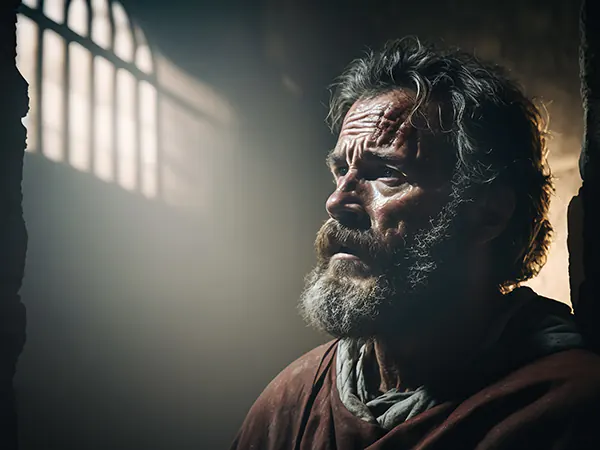
'Ready Answer' by David C. GrabbeWhile many style the apostle Paul as the champion of grace, others call him false, undermining God's law. His fellow apostles vouch for his character.
Where Did The Original Apostles Go?
Sermon by Martin G. CollinsThe Scriptures are largely silent about the exploits of the apostles other than Paul. We have only general comments concerning their spheres of activities.
Hebrews as a Sermon (Part One)
Sermon by John W. Ritenbaugh (1932-2023)Even as Hebrews prepared the first century church for persecution, so it is also relevant to today's church as it faces an increasing assault on God's law.
Facing Times of Stress: When God Is Silent (Part Two)
Sermon by Martin G. CollinsWhat appeared to be a series of judicial set-backs for Paul was actually the outworking of God to place him before even higher levels of secular leadership.
Why Hebrews Was Written (Part Three)
'Personal' from John W. RitenbaughHebrews was written to fulfill several needs of the first-century church. One of the most critical was to explain God's opening of eternal life to the Gentiles.
Spotlight on Luke
Article by StaffLuke, the writer of the gospel of that name and the book of Acts, is more significant to the New Testament than it may first appear.
Suffering Disgrace For Christ's Name
Sermon by Martin G. CollinsWe can always expect new challenges, including persecution, and must never be content with standing still, but must press on to spiritual maturity.
The Jerusalem Council's Conclusion
Sermon/Bible Study by Richard T. RitenbaughThe Jerusalem conference recorded in Acts 15 addressed whether Gentiles entering the church must be circumcised according to the custom of Moses and commanded to keep the law of Moses in order to be saved. Certain men from Judea and some believing Pharisees insisted that Gentiles could not be saved unless they first became Jews through these requirements, treating circumcision and associated traditions as necessary for justification. Paul and Barnabas disputed this position vigorously and brought the matter to the apostles and elders in Jerusalem. Peter recounted how God had shown no distinction between Jew and Gentile when the Holy Spirit fell on Cornelius and his household, declaring that both groups are saved in the same manner through the grace of the Lord Jesus Christ. He described the additional requirements as an unbearable yoke that neither the fathers nor the present generation had been able to bear. James supported this conclusion by citing prophetic Scripture that God had always intended to take a people for His name from among the Gentiles. He therefore judged that no greater burden should be placed on Gentile converts than the four necessary abstentions from things offered to idols, from blood, from things strangled, and from sexual immorality. James noted that these converts already heard the law of Moses read in the synagogues every Sabbath and therefore understood the broader requirements of God's law. The letter sent from the conference confirmed that circumcision had not been commanded for the Gentiles and that the four prohibitions were given to prevent practices especially offensive to Jewish believers and to promote unity in the church. The account makes clear that the decision upheld salvation by grace through faith for both Jew and Gentile alike while leaving intact the continuing obligation to keep the commandments of God.
Where Is Your Ultimate Allegiance?
Sermon by Martin G. CollinsWhen the laws of God conflict with the laws of man, civil disobedience is the only correct response, as was patterned by Peter, Paul, and the apostles.
The Covenants, Grace, and Law (Part Twenty-Four)
Sermon by John W. RitenbaughThe days, months, and times of Galatians 4:10 do not refer to God's Holy Days (which are not weak or beggarly), but to pagan rites the Galatians came out of.
Facing Times of Stress: When God Is Silent (Part Three)
Sermon by Martin G. CollinsActs 27 teaches that we must distinguish among several types of suffering. Regardless of the type of suffering, we must remember that God will deliver us.
Paul: Grace, Law, and Obedience
Sermon by John W. RitenbaughPaul's writings, because of their complexity, are frequently twisted to say that he was anti-law. By denigrating God's law, the unconverted set their own standards.