


Filter by Categories
Israel's Restoration and the Zeitgeist of Zeal
Sermon by Charles Whitaker (1944-2021)The restoration of all things centers on God's ultimate purpose of working salvation throughout the earth, a work that begins with restoring the old creation and culminates in producing a new spiritual creation. Peter identifies this restoration as the subject of prophecy since the world began, and Christ's own reference to Elijah's work through John the Baptist illustrates that God provides interim restorations to sustain His purposes until the final, complete restoration at Christ's return. Central to this restoration is God's prophesied regathering and restoration of Israel. Regathering refers to God searching out Israel's scattered people among the nations and returning them to the Promised Land, while restoration involves both the single act of atonement, when God forgives Israel's sin in one day, and the longer process of elevating Israel's wealth and prestige. Crucially, restoration always follows full punishment for sin, as seen in the pattern of escalating discipline in Leviticus 26 and in Jeremiah's description of Jacob's trouble, where God explicitly ties the tribulation to Israel's accumulated iniquity before promising regathering and restoration. Deuteronomy 30 establishes the foundational prophecy of this process. Moses explains that after experiencing both blessings and curses, Israel will return to God, prompting Him to gather them, prosper them beyond their fathers, and circumcise their hearts. This heart circumcision, later called the New Covenant in Ezekiel 36 and 37, represents the true value God adds to restored Israel: the giving of His Spirit, ensuring perpetual faithfulness rather than the backsliding of ancient Israel. This spiritual transformation, not merely physical return, is the heart of restoration. Rebellion, however, will not be tolerated even in this future judgment; Ezekiel 20 shows that God will purge rebels from among regathered Israel before entry into the land, paralleling the wilderness generation's exclusion from Canaan. Restoration is not an end in itself but positions Israel for a greater purpose: carrying the gospel to the whole world. Drawing on the New Testament pattern of trained, sent-out preachers working in assigned territories, the shepherd imagery of John 10, and the symbolic "exits" of Ezekiel's gates, God's converted people will be led out from Jerusalem to preach the gospel of the Kingdom to Gentiles and to minister to Israelites dispersed across divinely apportioned territories. Just as Israel's restoration follows punishment, so her renewed faithfulness will fuel a global mission, fulfilling Abraham's promise that all nations be blessed. Isaiah 2:3 captures this dual movement, entering Zion to learn God's ways and going forth from Zion to teach them, culminating in Christ's promise that once this gospel is preached to all nations, the end will come.
Isaac and the Day of Small Things
Sermon by Charles Whitaker (1944-2021)Isaac did not play what historians might judge to be a significant role on the world's stage, yet kept the faith, never despising the day of small things.
All in All (Part 1)
Sermon by John W. Ritenbaugh (1932-2023)The end of the sanctification process is when Christ will have defeated all enemies and put all things under His feet. Then, God the Father will be all in all.
The Challenge of Growth in the New Eden
Feast of Tabernacles Sermon by Charles Whitaker (1944-2021)Young people need to prepare themselves now, envisioning themselves as architects, civil engineers, transportation engineers, explorers, and teachers.
The Third Day (Part One)
Feast of Tabernacles Sermon by Richard T. RitenbaughBiblically, the third day carries much historic and prophetic significance.
Creation Stewardship
Feast of Tabernacles Sermon by Martin G. CollinsWe as Christians should strive to be the most conscientious environmentalists or creationists in the world because the earth and its fullness are the Lord's.
God's Workmanship (Part 4)
Sermon by John W. RitenbaughSalvation is not a one time event, but a continuous process—not just immunity from death, but a total transformation of our nature into a new creation.
The Bible and the Environment
'Prophecy Watch' by Richard T. RitenbaughIs God an environmentalist? Should Christians care about the ecological health of the earth and its inhabitants? Here's what the Bible says about the environment.
We Can Make It!
Feast of Tabernacles Sermon by John W. Ritenbaugh (1932-2023)A disciple cannot escape the kind of persecution directed against his teacher. In the wake of this kind of abuse, people can succumb to depression.
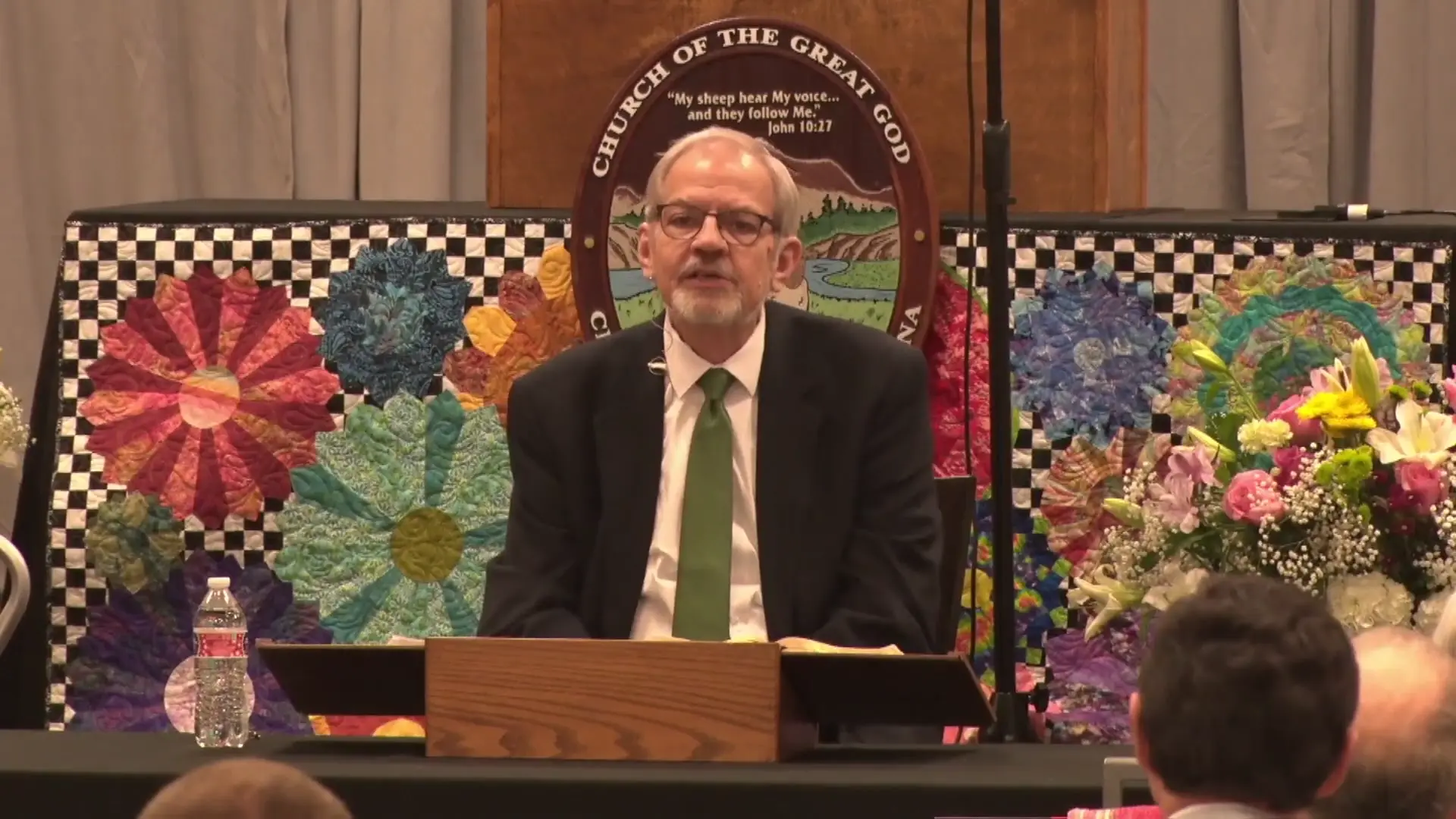
Let Him Who Glories Glory in This (Part Three)
Feast of Tabernacles Sermon by Mark SchindlerRooted in Jeremiah 9:23-24, this three-part series titled "Let Him Who Glories Glory in This" calls God's elect to find their glory not in wisdom, might, or riches, but in knowing and understanding God as He exercises loving kindness, judgment, and righteousness throughout the earth. The series began by examining why God's people keep His holy days, grounding the answer in Leviticus 23:1-4. God's holy convocations are not merely scheduled gatherings but sacred periods during which His people, as a kingdom of priests in training, are expected to remain fully present and grow in righteousness. How believers conduct themselves during these times, including how they raise their children, becomes a living proclamation before the world. Malachi 4 warns that without a truly repentant remnant, God would devote the earth to destruction, and believers are called to be the vanguard of that remnant now. The second sermon explored grace within the kingdom of God, using King David as an example of someone who, despite imperfection, grew to recognize that everything he had came from God alone. Paul's citation of Jeremiah 9:24 in both 1 Corinthians 1 and 2 Corinthians 10 reinforces that God deliberately chooses the weak and foolish to shame the wise, ensuring no flesh glories in His presence. The final sermon traces God's kingdom of righteousness from before creation itself, through the rebellion of Helel, the faithfulness of Noah and Abraham, and forward to the ultimate restoration described in Revelation 21. God's sovereign plan has never wavered. From the angels shouting for joy at creation to Abraham sojourning in faith toward a city whose builder is God, a select few in every age have understood and proclaimed the reality of God's righteous kingdom. Believers today stand within that same unbroken line, called to represent God's kingdom now and prepare to serve fully in