


Filter by Categories
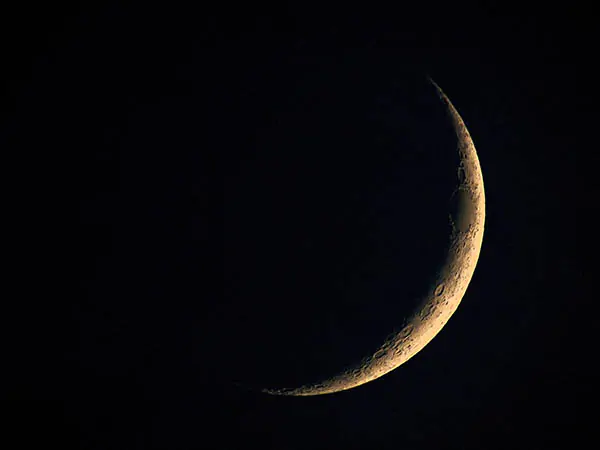
The New Moons
'Personal' from John W. RitenbaughFrom time to time, the question arises whether a Christian should keep, observe, celebrate, or mark the new moons. In the Old Testament, their importance to the Old Covenant ritual is clearly stated, and their connection to the marking of time and the proper observance of the holy days is evident. Feasting on the new moons was not looked upon as something unusual but expected as a matter of social custom. It was not evil, nor did God disapprove, but as He had not commanded it, feasting on a new moon was a social custom. God nowhere commands Israel to hold such feasts. The Israelites chose the new moons for these affairs since they were not encumbered by the restrictions of God's law as the weekly and annual Sabbaths were. Whatever good God had in mind in requiring them to mark the days with sacrifices, the Israelites let slip because He later told them He hated their new moons. Though definitely not on the level of a festival, the new moons are associated with them much like the preparation day is associated with the weekly Sabbath. The lesser one points to and helps prepare us for the arrival of the greater, more important one. Thus, the new moons are more like tools than commanded observances, but very important tools that should not be neglected. At the very least, carefully mark their passing. If you establish a custom for keeping them, remember it is your custom, not God's.
The Biblical New Year
CGG Weekly by Richard T. RitenbaughAt the time of year when the first month is significant to true Christians, God instructs Moses in Exodus 12:2, declaring, "This month shall be your beginning of months; it shall be the first month of the year to you." This establishes the starting point of the year for Israel, coinciding with the beginning of spring, and is later named Nisan after the Babylonian exile. The determination of when this month begins may have initially relied on the visible observation of the new moon that aligned with the green ear stage of barley growth. The ancient Israelites, closely tied to natural cycles, would observe the local barley crop to see if the ears would ripen by the next new moon. If they would, that new moon marked the start of the first month, Abib; if not, it was delayed by one month. Later, a system was developed, likely by the Levites, to calculate the new moons with precision using astronomical data, verified by visual sightings, and the high priest would sanctify the new moon for determining God's appointed times. Additionally, there are biblical indications that the new moon of Tishri, the seventh month, coinciding with autumn, may have been considered a New Year by some, as seen in Ezekiel 40:1 and other references to the year's end or return. However, these indications can be disputed, and the clear command in Exodus 12:2 grounds the understanding in a springtime New Year on Abib 1.
The Cancerous Calendar Controversy
Article by John W. RitenbaughWhich calendar should be used to set God's holy days? No subject, unless it is church government, has divided more people for as long a period of time.
The Lunar Sabbath or the Seventh-Day Sabbath: Which?
'Ready Answer' by Charles WhitakerThe recent Lunar Sabbath phenomenon is unbiblical and unworkable. The weekly Sabbath, observed every seventh day, is correct and in line with God's Word.
Appointments
Sermon by Clyde FinkleaGod established the weekly Sabbath on the seventh day of Creation; He established His Holy Days (moedim) on the fourth day. These are His appointments.
Faith and the Calendar (Part Five): Summary
Sermon by John W. RitenbaughGod assigned the tribe of Judah to be the caretakers of the oracles. The real issue in this controversy is faith in God's sovereignty and His faithfulness.
Faith, Hope, and the Worship of God (Part Three)
Sermon by John W. RitenbaughUsing assumptions, some have concocted some nine conflicting calendars. The preservation of the oracles has not been entrusted to the church but to the Jews.
Are the Sabbath and Holy Days Done Away?
'Ready Answer' by Earl L. HennTo justify not keeping the Sabbath and holy days, many use Colossians 2:16-17 as proof that Paul did not command it. The truth is just the opposite!
Are God's Holy Days To Be Kept Today?
Sermon/Bible Study by Martin G. CollinsIf we do not keep God's holy days, we will deprive ourselves of the knowledge of God's purpose. Jesus and the first century church observed and upheld these days.
Faith and the Calendar (Part One)
Sermon by John W. RitenbaughThe issue is not mathematical or astronomical, but instead a matter of trust in God's faithfulness, authority, sovereignty, oversight, or ability to govern.