Filter by Categories
2015 Eclipse
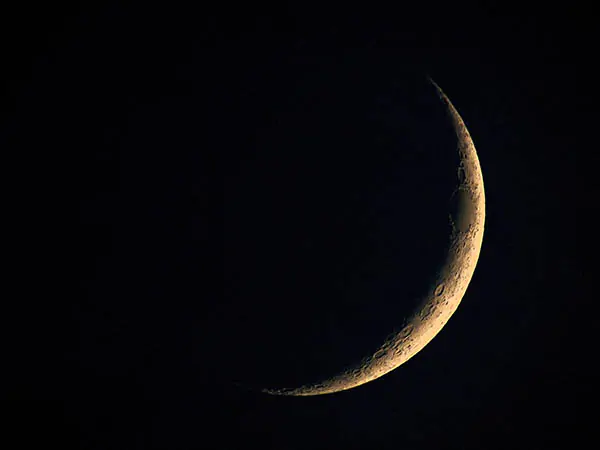
Commentary by John W. RitenbaughA set of astronomical events like these will not occur for another 500 years. Consequently, this could be a significant year prophetically.
Why Does the Jewish Calendar use Different Years?
Bible Questions & AnswersEthanim, later called Tishri, functioned as the seventh month in the biblical calendar and marked the beginning of the civil year on its first day, known as Tishri 1. This civil year is distinguished from the sacred year of Scripture in that it began in the autumn rather than in the spring, and it served a purpose comparable to the fiscal year in the United States. Its primary function was legal and administrative, being used to reckon the reigns of kings and other chronological events throughout Israel's history, rather than to convey the spiritual or symbolic meaning found in the sacred calendar. This civil reckoning stands in contrast to the true sacred year of the Bible, which begins with the first day of the month of Nisan, also called Abib, in the spring, as established in Exodus 12:2. The sacred year carries theological significance because it portrays God's great plan through the unfolding progression of His holy days, beginning with Passover and continuing through to the Eighth Day. Thus, while Tishri 1 governed civil and legal timekeeping, it was the spring-based sacred year that reflected the deeper redemptive purposes of God. The distinction between these two calendrical systems connects to a broader discussion of Jewish chronological reckoning, particularly the dating system that counts years from 3761/3760 BC. This date marks the commencement of the lunisolar calendar itself, not the year of Creation, though Jewish scholars in the century following the fall of Jerusalem in AD 70 mistakenly associated this date with the events described in Genesis 1 and 2. In this way, the Jews preserved an accurate date for calendar calculation while misapplying it to Creation week. Best estimates place the actual occurrence of Creation more than two centuries before the lunisolar calendar's beginning, since determining the average length of the lunar month, the basic factor underlying that calendar, would have required over two centuries of careful measurement and observation. Within this broader context, the autumn new year celebrated by the Jews on the first day of Tishri reflects the civil year's role in Israel's timekeeping, separate from the sacred year's spring origin in Nisan. The Bible thus refers to two different years, the civil and the sacred, each serving distinct functions: the civil year for legal and chronological purposes tied to Tishri 1, and the sacred year for portraying the unfolding of God's redemptive plan through His appointed feasts, beginning in Nisan with Passover and culminating in the Eighth Day.
The Biblical New Year
CGG Weekly by Richard T. RitenbaughThe concept of Ethanim/Tishri 1 arises in connection with the broader discussion of Israel's calendar and the significance of definition verses in establishing sound biblical understanding. Because Exodus 12:2 provides a clear, unambiguous statement that the month of Abib (later called Nisan) marks "the beginning of months" and "the first month of the year," this verse functions as a definition verse that anchors the true starting point of the biblical year in springtime. Against this foundation, certain Old Testament passages have been cited by scholars as evidence for an alternative New Year beginning on Tishri 1, the first day of the seventh month, which coincides with the start of autumn. Several scriptures are examined in support of this theory. Ezekiel 40:1 uses the phrase "the head of the year" (or "the beginning of the year") alongside a date identified in Judaism as the tenth day of Tishri, the Day of Atonement, a phrase whose Hebrew equivalent, rosh hashana, is used today by Jews to designate the Feast of Trumpets on Tishri 1. Additionally, Exodus 23:16 describes the Feast of Ingathering (Tabernacles) as occurring at the "end" or "going out" of the year, while Exodus 34:22 places the same feast "at the year's end," more literally rendered "at the turn of the year." These references have led some scholars to argue that Israel maintained two calendar years simultaneously: a civil or secular year beginning on Tishri 1, and a sacred or religious year beginning on Abib 1. Each of these supposed indications of a Tishri 1 New Year, however, can be disputed. In Ezekiel 40:1, the name of the month is not actually stated in the text, and since Ezekiel consistently follows the Babylonian calendar system, which itself begins in spring, "head of the year" more plausibly refers to the tenth day of Abib, reinforcing Abib 1 as the true rosh hashana. Regarding the Feast of Tabernacles being described as occurring "at the end of the year," this language reflects the end of the agricultural year rather than a formal calendar system, since the surrounding context concerns Israelite agrarian cycles rather than calendrical structure. Furthermore, II Samuel 11:1, which refers to springtime as "the return of the year" (rendered "the spring of the year" in the New King James Version), logically supports a spring New Year, since this is the time when the annual cycle naturally renews. Although neighboring cultures may have observed a Tishri 1 New Year, Israel's own calendar appears to have been governed by the Abib 1 New Year established explicitly in Exodus 12:2. Remaining grounded in this clear definition verse allows the seemingly conflicting references to a Tishri 1 New Year to be reasonably explained and set aside, demonstrating the value of relying on unambiguous scriptural statements when navigating more complex or debated aspects of biblical doctrine.
The New Moons
'Personal' from John W. RitenbaughTishri 1, anciently known as Ethanim, holds a distinctive place in the biblical calendar because it is the one new moon that Scripture explicitly designates as holy time—unlike all the other new moons, which receive no such designation despite the special sacrifices commanded for them. This significance arises because the Feast of Trumpets always falls on the new moon of the seventh month, Tishri, making Numbers 29:6 primarily an instruction concerning this festival rather than new moons in general. The verse specifies the burnt offering with its grain offering for the New Moon, alongside the regular burnt offering and drink offerings, as a sweet aroma made by fire to the LORD, and this passage serves as the foundation for understanding how the new moon of Tishri functions within the broader festival structure. The importance of Tishri 1 extends beyond its own observance to its role as a time marker within God's sacred calendar. The new moon of Abib (Nisan) begins the sacred year, and six new moons later, Tishri arrives along with all the fall festivals. This chronological structure demonstrates how the new moons, including that of Tishri, kept the Israelites on track with the unfolding of God's plan and purpose. From Tishri 1, the Feast of Trumpets, the subsequent fall festivals are calculated in sequence: Atonement falls ten days later, Tabernacles fifteen days later, and the Last Great Day twenty-two days later. This demonstrates the practical necessity of accurately marking the new moon of Tishri, since without this fixed point of reference, the proper timing of these commanded assemblies—at which all Israelite males were required to appear before God—could not be maintained. The distinction between Tishri 1 and other new moons clarifies an important principle: while all new moons were treated with a certain deference by the Israelites due to God's addition of special offerings, only the new moon of Tishri carries the weight of an actual festival requiring holy convocation, cessation from work, and the other observances associated with Leviticus 23's commanded assemblies. The other eleven new moons, though set apart as different from common days through their assigned sacrifices, never receive this elevated status in Scripture. This reinforces the broader argument that God nowhere commands the ordinary new moons to be kept as holy days, abstained from work, or treated with the same solemnity as Tishri 1 and the other appointed feasts. Ultimately, Tishri 1 exemplifies how the new moons function as tools within God's calendar rather than as independently commanded observances. Its role in initiating the fall festival season underscores why careful attention to the new moons remains relevant even though the sacrificial system has been superseded by spiritual sacrifices of praise and thanksgiving. Because the festivals, including those beginning with Tishri 1, are still to be kept, and because their proper dating depends on accurately marking new moons, believers are encouraged to pay careful attention to the coming of this particular new moon as the gateway to the fall festival season.
The Lunar Sabbath or the Seventh-Day Sabbath: Which?
'Ready Answer' by Charles WhitakerThe recent Lunar Sabbath phenomenon is unbiblical and unworkable. The weekly Sabbath, observed every seventh day, is correct and in line with God's Word.
Lift Up Your Voice Like a Trumpet
Sermon by Richard T. RitenbaughHardly anything is more dramatic than the blast of a trumpet. Alarm or warning is a primary function, and its other uses likewise culminate in the Feast of Trumpets.
Trumpets and the Fall of Jericho
Sermon by Richard T. RitenbaughOne major incident involving the blowing of trumpets occurred at the outset of Israel's incursion into Canaan, when God brought down the walls of Jericho.
The Year of Release
Sermonette by John W. Ritenbaugh (1932-2023)The land Sabbath is a type of the weekly Sabbath, wherein the land is given time to regenerate, and all debts (and grudges) are forgiven and slaves set free.
Trumpets: Glorious Appearings
Sermon by Richard T. RitenbaughGod spoke audibly to Moses and the people, intentionally testing their faithfulness, to instill the fear of the Lord in them, and to keep them from sin.
God's Promises Are Sure!
'Personal' from John W. RitenbaughThe story of Joseph offers lessons and encouragement regarding God's dealings with men during the time of the Feast of Trumpets.
When Is the Year of Release (Shemitah)?
Sermon by David C. GrabbeThe anchor point of both the Shemitah and Jubilee is the Day of Atonement. Deuteronomy should be read at the Feast just after the year of release begins.
The Seventh Trumpet
Sermon by Richard T. RitenbaughThe Feast of Trumpets is a memorial of blowing of trumpets, symbolizing the Day of the Lord, the real war to end all wars, when Christ will subdue the earth.
The Unknown Deadline
Sermonette by David C. GrabbeWe do not know how long the project (our sanctification process) will take. Each day is critical in doing our part to be of the same mind as God.
The Unknown Deadline
'Prophecy Watch' by David C. GrabbeGod gives His elect two unknown deadlines: Christ's return and the Christian's lifespan. They focus His people on becoming spiritually rich toward God.
Days of Awe
Commentary by Richard T. RitenbaughWe should count every day as a day of awe. We also must realize that all sins are against God, and that sins against other people do not have less importance.
Remember When
Sermonette byGod wants us to remember when we were called out of bondage into virtue, when He gave us the power of His Holy Spirit to do what ancient Israel could not.
Faith and the Calendar (Part Five): Summary
Sermon by John W. RitenbaughGod assigned the tribe of Judah to be the caretakers of the oracles. The real issue in this controversy is faith in God's sovereignty and His faithfulness.
A Reminder and a Warning to Be Prepared
Sermon by Clyde FinkleaThe Feast of Trumpets signifies a spiritual alarm, admonishing us to repent, reflect, and prepare for the Day of the Lord, a horrendous time of judgment.
John 7:37 Examined (Part Two)
Feast of Tabernacles Sermon by John W. Ritenbaugh (1932-2023)All of the events in John 8-10 occurred on the Eighth Day. Christ was crucified in 31 AD, and the postponement rules of the Hebrew calendar are accurate.