


Filter by Categories
Is America a Christian Nation? (Part Two)
Sermon by John W. Ritenbaugh (1932-2023)In the foundational promises given to Abram in Genesis 12:1-3, the final assurance stands out as a profound declaration: God will make Abram a blessing to all nations. This promise, one of seven, marks a pivotal moment early in Genesis, laying the groundwork for thousands of years of history. It culminates in the birth and work of Jesus Christ, through whom the true Israel of God, the spiritual Family of God, has been established. Jesus Christ, as the promised seed and descendant of Abram, embodies this blessing to all nations, around which much of the Bible revolves. For approximately 2,000 years, the benefits of this promise were largely a blessing to the Israelitish nations. However, a significant shift occurred with the event in Cornelius' home as recorded in Acts 10, opening the door to the spiritual salvation of the Gentiles. This momentous occasion astonished the Jews who witnessed it, as they saw the Holy Spirit given to Gentiles, marking the beginning of the fulfillment of one of the most important prophecies. The signs and wonders mirrored those at Pentecost in Jerusalem, underscoring the magnitude of this expansion of God's blessing. Through Paul's teachings in Ephesians 1 and 2, the fullness of the blessings available to Gentiles upon conversion becomes evident. These blessings, coming from God the Father, are accessible only because we are in Christ. Gentile converts are now adopted into the Family of God, accepted into the church, sealed with the Holy Spirit, and set to inherit the earth alongside Christ. This inclusion of Gentiles, beginning with Cornelius and his family, reflects the good pleasure of God's will and reveals the mysteries of His purpose. The ultimate destiny of those united in Christ, both Israelites and Gentiles, may involve a further step before His return. As depicted in Revelation 14, this group, transformed by the resurrection, shares direct responsibilities within the work of Jesus Christ, undertaking assignments He delegates. This unity and shared purpose highlight the expansive reach of the blessing promised to Abram, extending to all nations through Christ.
Abraham's Sacrifice (Part Five): Promises Confirmed
Sermon by Richard T. RitenbaughGod's promises to Abraham include a profound blessing on the nations, as declared in Genesis 22:18, where He states that in Abraham's seed all the nations of the earth shall be blessed because Abraham obeyed His voice. This promise stands as an unconditional assurance, confirmed by God's oath by Himself, signifying His unchanging character and supreme authority, ensuring that this blessing will be fulfilled regardless of human action. This ultimate blessing points to a Descendant who, through selfless sacrifice, would bring redemption and provide blessings to all who follow and believe in Him. As heirs of this promise, we are encouraged to hold fast to the hope and strong consolation that God will complete His work in us, providing everything needed through our High Priest, Jesus Christ, who mediates on our behalf.
An Unchangeable Promise?
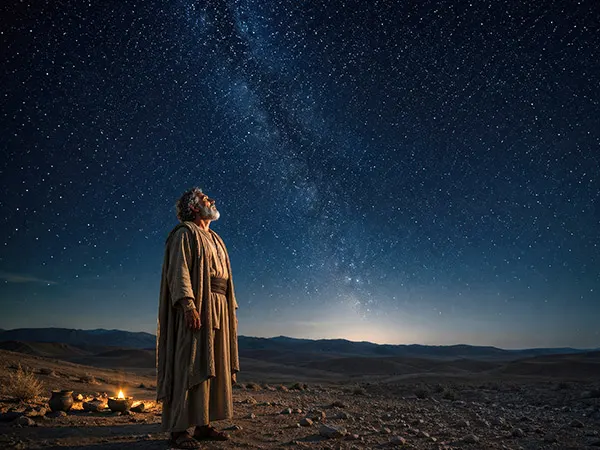
'Ready Answer' by Craig SablichThe blessing on the nations originates in God's covenant promise to Abram, first given in Genesis 12:1-3, where God declares that in Abram all the families of the earth shall be blessed. This promise contained both a physical dimension, the land of Canaan, and a spiritual dimension, blessing extended to all nations. Genesis 15 reveals that God alone passed between the divided animal pieces, showing that the covenant depended entirely on God, not on Abram, making it a one-sided, unbreakable guarantee. Galatians 3:15-16 confirms that once God ratified this covenant, it could never be annulled or added to, and Paul identifies the promise as made specifically to Abraham and his Seed, who is Christ. God repeated and expanded this promise to Isaac and Jacob (Genesis 26:3-4; 28:13; 35:11), each time deepening its scope, until the blessing became bound up with Abraham's descendants. Yet the true heart of the promise was never merely land, but an everlasting relationship with God, requiring resurrection for fulfillment, since Abraham and the other heroes of faith died without receiving it (Hebrews 11:39). This built eternal life directly into the promise, revealing the gospel of the Kingdom two thousand years before Christ's birth. Abraham's faith in this promise was accounted to him as righteousness, establishing the pattern for all believers. The law given later at Sinai, four hundred thirty years afterward, could not annul or replace this earlier promise (Galatians 3:17). God's law had existed from creation, as shown through Noah's knowledge of clean and unclean animals and Abraham's obedience to God's voice, commandments, and statutes prior to Sinai. The law added at Sinai served to reveal sin and guide Israel until Christ came, but it was never meant to supersede the promise, which remained the foundation. The pivotal revelation is that the covenant to Abraham and the New Covenant in Christ form one continuous promise. Christ is the true Seed and Heir, the Mediator who confirmed rather than changed the promise, becoming the first to receive the eternal inheritance as the Firstborn. Through repentance, baptism, and receiving God's Spirit, believers are grafted into this same unchangeable promise, becoming Abraham's seed and heirs according to promise, joint heirs with Christ. This inheritance will reach its ultimate fulfillment when God establishes His Kingdom on earth at Christ's return, when the one who overcomes shall inherit all things. The blessing on the nations thus flows from God's own faithfulness rather than human performance. Abraham's obedience demonstrated genuine belief, and true faith likewise produces obedience, though failure to grow and respond can result in forfeiting what has been offered. Because the promise rests entirely on God's faithfulness rather than human achievement, it remains secure for all who belong to Christ, extending the ancient blessing spoken to Abraham into the present hope of eternal life for God's people.
Leadership and the Covenants (Part Twenty)
Sermon by John W. Ritenbaugh (1932-2023)Abraham realized that his promised Descendant could not possibly be a mere human being, but the Creator Himself.
Abraham (Part Four)
Sermon/Bible Study by John W. RitenbaughAbraham is the only biblical character singled out as a type of God the Father. He is also the only one to be called 'friend of God,' and is a good model.
The Priesthood of God (Part Nine)
Sermon by John W. Ritenbaugh (1932-2023)The jeweled arrangement on the breastplate in Exodus 28, arranged in marching order, symbolizes differences in gifts and responsibilities of the tribes.
The World (Part 1)
Sermon by John W. RitenbaughOur worldview must be shaped by a fear of God, a love for His people, and a hatred for the world's practices that destroy our relationship with God.
Faith, Government, and the Calendar (Part Four)
Sermon by John W. RitenbaughThe calculated Hebrew calendar reflects God's faithfulness in providing His children a reliable calendar. Concocting one's own calendar is presumptuous.