


Filter by Categories
Ukrainian Instability, Russian Initiative
'WorldWatch' by Richard T. RitenbaughOver the past decade, Ukraine has been caught in a tense struggle between the European Union and Russia, its former master. Russian President Vladimir Putin exacerbated the crisis by imposing strict border controls on Ukrainian goods, increasing duties by five to forty percent. After the ousting of pro-Russian President Viktor Yanukovych, who later sought refuge in southern Russia, tensions escalated in Ukraine's eastern regions, particularly in Crimea, where pro-Russian sentiments are strong with Russians comprising nearly 60% of the population. Russian troops mobilized to the Ukrainian border, and armed men in unmarked fatigues seized government buildings in Crimea, as well as the international airport and a military airfield in Sevastopol. Despite international criticism, Moscow claimed its military actions in Crimea were to protect its Black Sea fleet under prior agreements. On March 1, Russia's upper house of parliament approved Putin's request to use military force in Ukraine to safeguard Russians in the east. On March 18, Putin signed a treaty annexing Crimea into Russia, marking Moscow's first border expansion since World War II. By March 23, nearly 200 military sites in Crimea displayed the Russian flag, and approximately 40,000 troops were stationed in adjacent areas. Despite the United Nations General Assembly declaring the annexation of Crimea and Sevastopol illegal, Putin has shown no intention of retreat, though he reduced troop levels in southern Russia. Recently, Russian Prime Minister Dmitry Medvedev visited Crimea, promising financial support to its government and pay raises to its workers, signaling Russia's intent to retain its newly acquired territory. Putin's strategic move to annex Crimea secures greater control over the Black Sea, brings millions of Russians back under Russian governance, and fortifies a vulnerable point in Russia's southern defenses, marking Russia as a formidable power once again.
Cold War Redux?
'WorldWatch' by Richard T. RitenbaughIn December 1991, with the collapse of the Union of Soviet Socialist Republics, Moscow grounded its air force, particularly its strategic bombers, due to a lack of fuel, spare parts, and the will to project power. The Soviets, returning to their traditional identity as Russians, began to look inward. Under Vladimir Putin's leadership, Russia has restored its power, enabling him to confront opposing nations confidently. In August 2008, Putin achieved a military victory over Georgia, gaining control over Abkhazia and South Ossetia under the guise of supporting Russian separatists. In March 2014, Russia annexed Crimea after it broke away from Ukraine, and Putin has since indicated that the Kremlin would not allow a military defeat of ethnically Russian partisans in eastern Ukraine. Despite protests and sanctions from America and the European Union, little has been done to curb Russian power. Putin has warned the U.S. against action in Syria, asserting Russia's preparedness to respond, and granted asylum to Edward Snowden, disregarding American objections. He redirected natural gas pipelines through Turkey instead of Ukraine, disrupting European energy imports, and threatened cyberattacks if NATO builds up forces in the Baltic States. Additionally, Putin hinted at offensive options, including nuclear conflict, if NATO attempts to reverse the annexation of Crimea. Russian officials have warned of forceful responses, potentially nuclear, if Western nations challenge Russia's hold on the region or if NATO arms Ukraine. Moscow has also noted similar conditions in Lithuania, Latvia, and Estonia, with significant ethnic Russian populations, hoping to draw them toward Russia without provoking NATO intervention. Russia's aggressive actions have persisted, with NATO warplanes scrambling 400 times in 2014 due to increased Russian air incursions, a level unseen since the Cold War. In March 2015, NATO intercepted Russian military aircraft near Lithuania, and Swedish forces pursued Russian planes off their coast. Russian aerial and naval activities continue, with suspected submarines near Stockholm and warnings to Denmark about potential nuclear targeting if it joins NATO's missile defense. Moscow has bolstered its Arctic military presence with new nuclear submarines, bases along its northern coast, and revived Soviet-era facilities near Finland. In response, neighboring countries like Norway and Finland are increasing military spending and considering NATO alignment, shifting to a more vigilant stance against Russia's renewed Cold War behavior.
Franco-German Divergence
'WorldWatch' by David C. GrabbeFor the last fifty years, the Franco-German partnership has been the bedrock of European power, but changing dynamics are shifting alliances. Berlin now views Russia as essentially non-hostile, and German politicians, notably Gerhard Schröder, see a Russian partnership as vital to Germany's political and economic future. Russia already supplies the majority of Germany's energy needs, and Germany has proven to be a stable trading partner, unconcerned with Russia's internal affairs. While other European nations, including France, are less enamored with Russia, a Russo-German partnership looks increasingly attractive to both sides. Germany, lacking the geopolitical options of France, needs alliances to ensure its relevance at the heart of a region it cannot command. Recent events in the Russian sphere of influence further highlight Russia's interest in partnering with Germany. The replacement of Kremlin-friendly leaders in Serbia, Georgia, and Ukraine with pro-Western figures, particularly the Orange Revolution in Ukraine where pro-Europe Viktor Yushchenko ousted pro-Moscow Viktor Yanukovich, poses significant challenges for Russia. Ukraine hosts Russia's only warm, deepwater naval base and major infrastructure connections, especially for energy. If Ukraine joins NATO or the EU, it places a potential enemy less than 300 miles from Moscow, rendering Russia essentially indefensible by conventional warfare standards. Recognizing the threatening position of the West, Russia sees partnering with Berlin as a strategic option to keep matters in check.
NATO: In Search of a Mission
'WorldWatch' by David C. GrabbeThroughout the Cold War, NATO served as a critical defense against a Soviet invasion of Europe, with the ever-present threat of Soviet and Warsaw Pact forces overwhelming the continent. The Soviets and their allies believed their numerical superiority in tanks and troops could enable a swift advance to the Rhine River, making Europe heavily reliant on American protection. Lord Ismay, NATO's first Secretary General, pragmatically stated that the alliance's purpose was to keep the Russians out of Europe. The U.S. supported this goal to prevent Russia from combining Europe's resources with its own, which could pose a threat to America. Following the dissolution of the Warsaw Pact and the U.S.S.R. in 1991, NATO struggled to define its purpose without the Soviet threat. Russia has since resurged into much of its former sphere of influence, causing concern among Eastern European NATO members, though Western and Southern Europe show little reaction. Germany, emerging as a leading power in Europe, shapes policies that favor cooperation with Russia rather than viewing it as a threat. Russia supplies nearly 40% of Germany's natural gas, and with Germany's declining population, it benefits from Russia's surplus labor by moving production facilities there. Berlin's approach is to integrate Russia into the European economic system to prevent challenges to the security system. Although NATO deterred a Soviet attack during the Cold War, Russia is no longer excluded from Europe. Recently, France, Germany, and Russia held a summit to discuss a Russian proposal for a new European Security Treaty, which some see as an attempt to replace NATO. The willingness of France and Germany to consider this proposal suggests they no longer view Russia as a threat and may see NATO as less aligned with their interests.
A Battle Group for Eastern Europe
'WorldWatch' by Richard T. RitenbaughThe Visegrád Group, comprising Poland, the Czech Republic, Slovakia, and Hungary, finds itself geographically wedged between the European powerhouse of Germany to the west and a resurgent Russia to the east. This positioning heightens their concern, as Russia has significantly grown in influence among its former satellite states like Belarus and Ukraine since the fall of the Soviet Union. Moscow's successful 2008 campaign against Georgia, backed by its energy wealth, has reestablished it as a formidable threat. This growing concern from the east, coupled with historical tensions and the vulnerability of their region, compels the Visegrád nations to take independent military action, forming a battle group to safeguard their interests amidst the instability surrounding them.
Germany Ascendant
'Prophecy Watch' by Richard T. RitenbaughThroughout their histories, Germany and Russia have shared a complex relationship marked by both conflict and a peculiar mutual attraction. Their proximity has often led to hostilities, yet they have repeatedly formed and dissolved numerous pacts, treaties, and deals over centuries. Notably, Hitler's 1939 Non-aggression Pact with Stalin significantly impacted world affairs. Currently, Germany is negotiating an economic agreement with Russia that could carry political consequences in the near future, potentially shifting the balance of European power toward Germany. On December 12, 2000, Werner Muller, German economic minister, and German Gref, Russian minister of economic development and trade, met in Berlin to discuss a major economic deal. This plan aims to convert a substantial portion of Russia's $14 billion debt to Germany into equity in Russian companies, positioning Germany as a major shareholder in Russian industry. If finalized, this pact could mark the initial step toward a deeper political partnership between the two nations. Russia stands to gain through economic and political revival, while Germany could be propelled into leadership of a united Europe with Russia as an ally, significantly diminishing American influence in Europe and enhancing the geopolitical standing of both countries. Moscow and Berlin recognize that this growing cooperation will bolster each nation's potential and advance their political objectives. Russia, facing economic instability and disappointment in its failed relationship with the United States, fears American domination and a lack of allies, which could hinder its return to world-power status or even lead to the collapse of the Russian state.
The Awakening Bear
'WorldWatch' by David C. GrabbeAt the 43rd Munich Conference on Security Policy on February 10, 2007, Russian President Vladimir Putin delivered a speech criticizing the unipolar world order and the United States for overstepping its borders and showing disdain for international law. He argued that America's dominance encourages other countries to acquire weapons of mass destruction and proposed the United Nations as the sole mechanism for decisions on military force, though he hinted at other solutions by emphasizing Russia's historical role in world affairs and its intent to maintain an independent foreign policy. Russia has recently begun to reassert itself as a world power, stepping back onto the global stage with actions that demonstrate its growing influence. It has cut off energy supplies to neighbors, reducing natural gas exports to Ukraine in January 2006 and oil to Belarus in 2007, using these measures to signal to Europe its dependence on Russian relations for winter warmth. In the Middle East, Russia has engaged in activities to keep other powers, particularly the U.S., off-balance, such as building Iran's Bushehr nuclear power plant while delaying its completion to maintain influence as a key middleman. Additionally, Russia supports Syria, the Hamas-led Palestinian government, and other states challenging U.S. interests, while also seeking inroads with America's Arab allies like Saudi Arabia, Qatar, and Jordan to leverage regional dynamics. Flush with capital from state-owned oil and gas companies, Russia is throwing its weight around, especially in its near-abroad, working to undermine and indirectly challenge the United States to enhance its own global position.
Down But Not Out!
'Prophecy Watch' by Richard T. RitenbaughOver the last few years, Russia has faced significant challenges following the breakup of the Soviet Union into several nations, freeing millions from Russian rule. Boris Yeltsin, Russia's president, has struggled with reforms amid protests, high prices, long lines, political infighting, and another coup attempt, leaving Russia seemingly on its last legs. Yet, under the cover of other international issues, the lumbering bear of Eurasia is reasserting its presence on the world scene, strengthening old alliances and refusing to merely watch events from afar. Rumors circulate that Russia and Germany negotiated a secret pact in 1990, delineating spheres of influence. In this treaty, Germany granted Russia economic assistance and agreed not to interfere with Russia's actions in Ukraine and the Baltic States, while Russia conceded eastern Europe to Germany, including influence over Hungary, Czechoslovakia, and Yugoslavia. Additionally, top Russian officials have held secret talks with key figures of the South African Communist Party and African National Congress, potentially forming a powerful cartel with over 90% of the world's strategic minerals. Recently, Russia has sent a strong message to the West by wielding influence over its traditional ally Serbia, ensuring that NATO and the UN must consider Russia's wishes in international decisions. As the broker of the latest cessation of fighting around Sarajevo, Russian prestige has soared globally. Furthermore, in the latest parliamentary elections, ultra-nationalist politicians, particularly the Liberal Democratic Party of Russia under Vladimir Zhirinovsky, made significant gains, reflecting the concerns of common Russian citizens. Their platform supports a unified powerful army, an all-powerful president, peaceful cooperation with Europe, especially Germany, and friendly relations with China and India, while considering the Middle East within their sphere of influence.
A Threat in Central Asia
CGG Weekly by Richard T. RitenbaughWe would be wise to keep an eye on the Shanghai Cooperation Organization over the next few years.

Who Is America's Greatest Enemy?
'WorldWatch' by Richard T. RitenbaughThe United States stands weakened by worldwide conditions, but its foreign enemies cannot match its power. Its real foe lies much closer.
A Strengthening Germany
'WorldWatch' by Richard T. RitenbaughDespite Germany's amicable relationships with its neighbors for two generations, signs of Berlin's growing influence are causing anxiety across Europe.

Slowly Sinking
'WorldWatch' by Joseph B. BaityRecently, the vaunted power of the American armed forces has begun to erode under weak and vacillating leadership, undermining its hegemony.

The Final Frontier?
'WorldWatch' by Joseph B. BaityThe space race began less than seventy years ago, and now humanity stands on the brink of space-based weaponry and its potential for disaster on Earth.
Rudderless Leadership in U.S. Foreign Affairs
'WorldWatch' by Richard T. RitenbaughWith one look at American activity on the world scene, an observer is struck by the lack of coherence of this administration's foreign policy.
The Rise (Again) of Nations
'WorldWatch' by Richard T. RitenbaughThe last few decades have seen the rise of globalism as a prime factor in international relations. But the pendulum is swinging back toward nationalism.
A Perfect Storm of National Cycles
'WorldWatch' by David C. GrabbeThe societal and generational cycles of America, Europe, and Russia are converging, and the result will prove to be devastating.
Anti-Americanism Abroad
'Prophecy Watch' by Richard T. RitenbaughGod prophesies that Israel will be conquered in the end time. Could anti-American sentiment, especially in Europe, be the beginning of the end?
Germany's Dilemma
'WorldWatch' by David C. GrabbeGermany is an industrial powerhouse, the richest economy in Europe, but it must prop up several poor-performing economies throughout the rest of the EU.
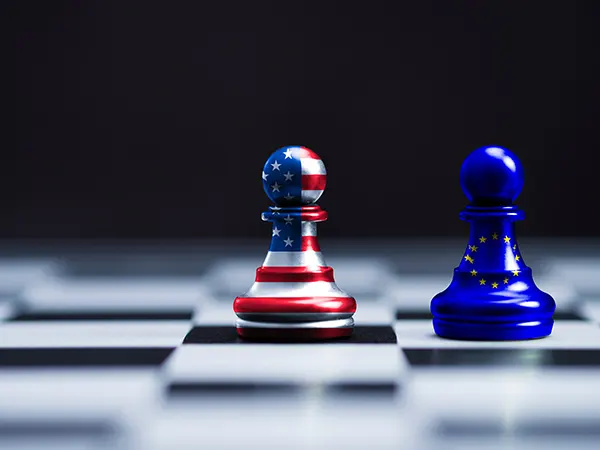
So Long, Western Alliance?
'WorldWatch' by Richard T. RitenbaughU.S. President Donald Trump angered European leaders with the release of his National Security Strategy, a document critical of Europe's recent decline. It questions whether the continent will still be "European" in a few decades, as the massive influx of migrants from the global south, many of them Islamic, changes the nations' principles and cultures. Richard Ritenbaugh urges Christians to watch for signs of fracture in the long-standing Western Alliance.
The Geopolitics of Israel
'WorldWatch' by Richard T. RitenbaughThe land of Israel's position at the crossroads of three continents makes the Holy Land strategically valuable to the great powers around it.
Population Trends in Asia (Part One): Charting Ups and Downs
CGG Weekly by Charles WhitakerThree events are taking place in Asia with an intensity never before witnessed in human history—at least not since the Flood. How might they affect us?
Age of Empires
'WorldWatch' by Richard T. RitenbaughThe United States used to be the world's superpower and policeman. Today, however, new powers are rising to fill the vacuum created by America's retreat.
Birthrates in Decline
Commentary by Richard T. RitenbaughStatistics show that the birth rate for the Western nations has dropped below the replacement rate of 2.1 children per woman, sometimes significantly so.
Peace and Safety?
'Prophecy Watch' by Earl L. HennWith the end of the Cold War, are we entering a time of peace? Hardly. Human nature remains the same, so war is never far off!

A World at War
'WorldWatch' by Joseph B. BaityGlobal conflict increased dramatically between 2021 and 2023, in contrast to the prior six years. The outlook for peace apart from Christ's return is dim.
Population Trends in Asia (Part Two): The Graying of Asia
CGG Weekly by Charles WhitakerOnly a catastrophe of biblical proportions could forestall the tendency for Asia's populations to age substantially between now and 2025.
Demography Is Destiny
Commentary by John W. Ritenbaugh (1932-2023)Population trends become reliable trends of future national consequences. We do not have a debt crisis as much as a death crisis.
Blood and Soil: The Persistence of Anti-Semitism
'Prophecy Watch' by Charles WhitakerWhy has anti-Semitism remained a part of this world's way of thinking? Recent history shows that anti-Semitism has morphed into new expressions of an old evil.
The Zeitgeist of Suicide (Part One): Weeping for the Children Who Are Not
'Prophecy Watch' by Charles WhitakerIt seems counter-intuitive to think that the world's population is shrinking, but trend lines show the possibility of a 95% reduction in population ahead.
Evil Is Real (Part One)
CGG Weekly by Richard T. RitenbaughLiberalism rarely considers actual outcomes—that is, it often promotes a course of action without studying how such actions has worked out in the past.
The Handwriting Is on the Wall (1995)
Feast of Tabernacles Sermon by John W. RitenbaughBecause restraints that once held human nature in check have been removed, the US has grown increasingly more corrupt, approaching conditions before the Flood.

I Versus We
'WorldWatch' by Richard T. RitenbaughOpposing worldviews, individualism and collectivism, fight for dominance in cultures worldwide. Their struggle may play a prominent role in the end time.