


Filter by Categories
The Birth of Jesus Christ (Part One): Annunciation
'Prophecy Watch' by Richard T. RitenbaughThe accounts of Christ's birth, as presented in the Gospels, hold profound significance as signs of His Messiahship. Luke, a masterful historian, captures the essence of these events with concise and purposeful writing, highlighting their importance through the angel's messages to Mary and Joseph. The angel, likely Gabriel, speaks to Mary with words of divine favor, announcing that she will bear God's Son, named Jesus, meaning Savior. This proclamation aligns with Messianic prophecies, emphasizing that only God Himself can save, thus pointing to Jesus as the fulfillment of these ancient promises. Similarly, the angel appears to Joseph in a dream, affirming that Mary's Child, conceived by the Holy Spirit, will be called Jesus, for He will save His people from their sins. The angel also declares Him as "God with us," underscoring His divine nature. These messages to both Mary and Joseph reveal the spiritual significance of Jesus' birth, marking Him as the Messiah who embodies God's presence and redemptive power among His people.
Leadership and Covenants (Part Eleven): Signs
'Personal' from John W. RitenbaughGod has provided messianic revelations through signs over centuries to inform and encourage His people that He has not forgotten His promise to supply the Savior and Redeemer needed to free humanity from bondage to sin and death. These signs began with the judgment in Genesis 3, where little information was given except that Eve, the only female at the time, would bear the Promised Seed. Though her first son was not the Messiah, the lineage of the Promised Seed can be traced from Seth through Noah, Abraham, Jacob, Judah, King David, and finally to Joseph and Mary when He was born in Bethlehem, Judea. Over 4,000 years, God added reminders and precise descriptions to help the Israelites identify the Messiah's appearance when He was sent. God kept His word by sending the Messiah, who performed His responsibilities admirably. In Genesis 12:1-3, God promised Abram that the Promised Seed would come from his line. Further details were given through Moses, emphasizing the Messiah as a prophet like Moses but far greater. King David's family within the tribe of Judah was sanctified, and God's promise to David included the eternal establishment of his throne through the Messiah. Isaiah 9:6-7 provided additional definition to the responsibilities the Promised Seed would hold, and Bethlehem Ephrathah was identified as the family's home base where He was indeed born. In the New Testament, the four gospel accounts explicitly identify Jesus of Nazareth as the promised Messiah. God did not hide His arrival, using angels to reveal the virgin birth to Joseph and Mary, a light from the sky to pinpoint His birth location, and announcements to shepherds who spread the news in Bethlehem. An angel proclaimed Him as the long-awaited Savior. Matthew and Luke provide genealogies aligning with Old Testament prophecies, and specific signs, such as His swaddling cloths and Simeon's prophecy that He would be a sign spoken against, distinguished Him. Additional signs included the wise men's journey, the flight to Egypt, and His intelligence on biblical subjects at age twelve, where He referred to God as His Father. John, Jesus' cousin, also served as a sign by preparing the way for Christ's ministry, clearly announcing the arrival of the long-awaited Promised Seed, Messiah, Redeemer, Savior, and Creator. When Jesus began His public works, He stood out to true believers. In His hometown, He gave clear signs by keeping the Sabbath and declaring the fulfillment of Isaiah 61:1-3, claiming divine anointing and the mission to set people free from bondage, further identifying Himself as the Messiah.
The Rest of the Sign of Jonah
Sermonette byJonah likely drowned; the great fish was his coffin rather than his prison. While Nineveh repented and was spared, Judah did not repent when Christ preached.
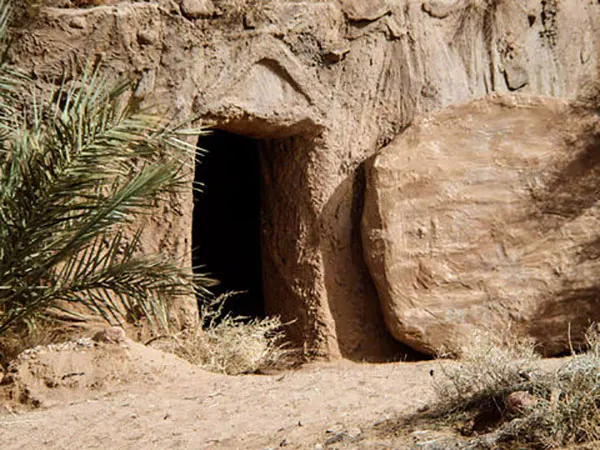
The Resurrection Was Not on Sunday
Herbert W. Armstrong BookletJesus said He would be 3 days and 3 nights in the tomb, but that is impossible in a Friday crucifixion, Sunday resurrection scenario. Here's the biblical truth.

'After Three Days'
Booklet by Richard T. RitenbaughWhen the facts are gathered from Scripture, the timing of Christ's death, burial, and resurrection resolves, and the Friday-to-Sunday scenario crumbles.
Lowly and Riding on a Donkey?
'Prophecy Watch' by Ronny H. GrahamAll four gospels include Zechariah's prophecy that Messiah would ride into Jerusalem on a donkey. This misunderstood beast has a unique symbolic meaning.
Jesus Disqualified?
'Ready Answer' by Richard T. RitenbaughSome say Christ cannot be the Messiah because of His genealogy. Here is why this argument is fallacious and why Jesus IS our Savior!
Post-Resurrection Lessons
Sermon by Richard T. RitenbaughOn the Road to Emmaus, some of Christ's followers were agitated, confused, and in turmoil, being unable to put the scriptures and the physical facts together.
Why the Transfiguration?
Sermonette by Richard T. RitenbaughPeter, James, and John heard the Father's praise of Jesus, declaring Him to be more important than the law (Moses) and the prophets (Elijah).
John (Part Twelve)
Sermon/Bible Study by John W. RitenbaughWhat we believe automatically determines what we do; it is impossible to separate faith and works. If Jesus is not our source of belief, our works will suffer.
Matthew (Part Twenty-One)
Sermon/Bible Study by John W. RitenbaughThe Pharisees and Sadducees, who normally opposed each other, joined forces against their common enemy, Jesus. They should have recognized Him as the Messiah.
John (Part Ten)
Sermon/Bible Study by John W. RitenbaughWhen God removes an infirmity or gives a blessing, He also gives a responsibility to follow through, using the blessing to overcome and glorify God.