


Filter by Categories
Did the Thief on the Cross Go to Heaven with Jesus Christ (Luke 23:43)?
Bible Questions & AnswersJesus Christ declared that He would remain in the grave for three days and three nights following His crucifixion. According to I Corinthians 15:3-4, Christ died for our sins, was buried, and rose again on the third day as foretold in the scriptures. It is emphasized that He, Jesus Himself, was entirely buried, not merely His body, indicating He was dead for those three days before coming to life and arising. John 19:41-42 confirms that Jesus was laid in a new sepulchre in a garden near the place of crucifixion, underscoring that it was Jesus, not just His body, who was placed in the tomb. Acts 2:31 further clarifies that His soul was not left in the grave, nor did His flesh see corruption, proving that during this period, Jesus was in the grave, not in Paradise. Since Jesus did not enter Paradise on the day of His crucifixion, the repentant malefactor crucified with Him could not have entered it that day either, as Christ holds preeminence in all things. The resurrection of Jesus marks Him as the firstborn from the dead, and only after His rising could the promise of Paradise be fulfilled in due time.
Did Christ's Resurrection Change the Day of Worship? (Part Two)
CGG Weekly by David C. GrabbeJesus Christ's resurrection holds critical significance as the sign proving His identity as the Messiah. He declared in Matthew 12:38-40 that the only sign given would be like Jonah's three days and three nights in the belly of the great fish, so the Son of Man would be three days and three nights in the heart of the earth. This timing of His resurrection validates His claim to be the Son of Man and the Messiah, bearing no connection to establishing which day God set apart as holy. The precise timing of His burial and resurrection reveals that He was crucified on the day of Passover, a preparation day for an annual Sabbath, not the weekly Sabbath. His body was placed in the grave late Wednesday afternoon before the high-day Sabbath of the first day of the Feast of Unleavened Bread began. He remained in the grave for three days and three nights, totaling 72 hours, from Wednesday night through Saturday, and He arose on Sabbath afternoon before sunset. This resurrection on the Sabbath does not establish the day of worship, as the Sabbath was already holy and set apart by God. Despite claims by some theologians that His resurrection justifies worship on the first day of the week, there is no indication that God intended such a change. The timing of His resurrection either proves or disproves His Messiahship, but it does not alter the day God sanctified. Even if it did influence the day of worship, it would still point to the seventh day, as He was resurrected on the Sabbath. Jesus' resurrection made no change in the day of worship; it remains a tradition of men to observe another day without regard to God's Word.

Was Jesus Resurrected on Easter Sunday?
'Ready Answer' by StaffJesus Christ's Resurrection stands as a pivotal event, challenging the timing and traditions upheld by many. Jesus Himself declared that He would be in the grave for three days and three nights, mirroring Jonah's time in the fish's belly, which totals 72 hours, as a day and a night together equal 24 hours with twelve hours each for day and night. He affirmed this duration as a sign of His messiahship, stating that in three days He would raise up the temple of His body after its destruction. The timing of His Resurrection was precise, occurring at the very end of 72 hours, not a moment too soon or a blink of the eye too late, fulfilling Scripture. God the Father, as the ultimate Timekeeper, resurrected Christ, unbound by human traditions or measures of time such as rabbinical customs or Roman sentry watches. Scripture details that Jesus was crucified on Wednesday, the fourteenth of Abib/Nisan, and laid in the tomb by Joseph close to sunset on the Preparation Day as the Sabbath drew near. After 72 hours, He rose from the dead as the Sabbath ended, not on Sunday as widely believed. Mary Magdalene found the tomb empty early on the first day of the week while it was still dark, confirming that Jesus had already been resurrected, disproving the notion of a Sunday morning resurrection. If He had risen on Sunday, He would not have fulfilled the sign of three days and three nights in the tomb, essential to His role as Savior. Instead, He rose on the true seventh-day Sabbath, the day of which He declared Himself Lord.
Proofs of Christ's Resurrection
Sermon by Richard T. RitenbaughThe resurrection of Jesus Christ is a cornerstone of our faith, equally vital to our salvation as His death. It is not merely a fact to accept, but a truth to deeply consider, as it offers us hope of our own resurrection and assures us of a living Savior. While our focus often rests on His death and the covering of our sins during Passover and the Days of Unleavened Bread, we must not overlook that He rose from the dead, demonstrating His triumph over death and His divine authority. No human witnessed the moment Jesus awoke from death in the darkness of the tomb, with the stone sealing the entry. Yet, the disciples and others recorded His post-resurrection appearances, testifying that He was dead, entombed by Joseph and Nicodemus, and later seen alive—walking, speaking, eating, preaching, and commanding in a glorious state. They saw Him with their own eyes, touched Him with their hands, and heard His voice giving instructions during the forty days following His resurrection. His appearances were not mere visions but real interactions, as they walked with Him, talked with Him, touched His wounds, and shared meals with Him on multiple occasions. The empty tomb, discovered by the women on Sunday morning, stands as a powerful testimony. The stone was rolled away, and His body was gone, with only the linen wrappings remaining. Mary Magdalene and the other Mary, along with the guards, witnessed the earthquake, saw the stone moved, and heard the angel's message, confirming that the tomb had been sealed and guarded until that moment. This proves that no theft occurred, and His departure from the tomb was a divine act, as He passed through the walls, unbound by physical barriers. Multiple witnesses, including over five hundred people at one time as well as the apostles, saw Him alive after His death, providing overwhelming evidence of His resurrection. These accounts, recorded in twenty-seven documents by eight or nine men—eyewitnesses or close associates—were written within a generation of the events, often between fifteen and forty years after they occurred. Their candidness, even including details that could embarrass them, underscores their dedication to truth, affirming the reality of what they saw and experienced. The transformation of the disciples from fearful and doubting to bold preachers, even in the face of persecution and martyrdom, further attests to the reality of His resurrection. They proclaimed in the very heart of opposition that Jesus Christ had died, was buried, and was no longer in the tomb but alive, working through His church. Their unwavering courage and willingness to die for this truth reveal that they had seen and felt the risen Jesus Christ, knowing beyond doubt that He lives. Finally, the resurrection of Jesus Christ opens the way to eternal life for all who believe and confess Him as Savior. Because He did not remain in the tomb but lives in heaven, working on our behalf, we hold the hope of our own resurrection when our resurrected Lord and Savior returns.
Christ's Death, Resurrection, and Ascension
Sermon by Richard T. RitenbaughJesus Christ, our Savior, our Redeemer, the Messiah, died 1,964 years ago on the day of the Passover, Nisan 14. Three days later, at the end of the Sabbath, He was resurrected to eternal life by our Father in heaven. This resurrection occurred as the weekly Sabbath was ending, exactly seventy-two hours from His burial, symbolizing God reaping the best and the first of His spiritual harvest. Jesus became the perfect wavesheaf offering, the perfect Firstfruit, entering His rest on the Sabbath, a day that commemorates God as Creator and looks forward to the Kingdom of God. The following morning, on the day of the wavesheaf offering, Jesus ascended to heaven as our High Priest and Savior, accepted before God at a time corresponding to the waving of the sheaf, early after sunrise. His resurrection on the Sabbath and ascension shortly after fulfill the types and symbolism of the Old Testament, demonstrating His role as the perfect antitype of the wavesheaf cutting and waving.

Christ's Responsibility, Resurrections, and All in All
Sermon by John W. RitenbaughIn I Corinthians 15, the central issue is the bodily resurrection of Jesus Christ, a concept that caused much confusion among the Gentiles in Corinth. This confusion necessitated clear teaching to ensure they understood whom they worshipped. Denying Christ's bodily resurrection undermines His significance to this profound truth, which was a new and debated idea in those times. The gospel affirms that He was seen bodily by many after His resurrection, providing substantial evidence against the prevailing disbelief in bodily resurrection during that era. Paul emphasizes in I Corinthians 15:20 that Jesus Christ indeed experienced a bodily resurrection, a truth vital to remove all doubt among believers. This event is not merely about rising from the grave but underscores the reality of a physical resurrection witnessed by numerous individuals, reinforcing the certainty of this foundational belief.
Raising Our Conception of the Resurrection
CGG Weekly by Richard T. RitenbaughThe day after the Sabbath during the Feast of Unleavened Bread is the day of the Wavesheaf offering, which typifies the resurrection and ascension of Jesus Christ. The Bible's accounts indicate that Jesus had already been resurrected early, while it was still dark, as Mary Magdalene found the stone taken away from the tomb. Taking all clues together, evidence points to a Wednesday crucifixion and a late Sabbath Saturday resurrection, fulfilling the sign of His Messiahship by remaining in the tomb a full three days and three nights. Jesus Himself declares that He was dead and came to life, emphasizing the unique nature of His resurrection. Unlike other resuscitations where individuals returned to physical life only to die again, His was to everlasting life. God the Father raised Him up, loosing the pains of death, because it was not possible for death to hold Him. He lives by the power of God, and as He states, He is alive forevermore with immortal spirit life. Because He has passed from death to life, He makes salvation and eternal life possible for others. Those who die with Him shall also live with Him, knowing that He dies no more. He continues forever with an unchangeable priesthood, always living to make intercession and save those who come to God through Him. He has authority to give eternal life to as many as the Father has given Him. Having purged sins, He sat down at the right hand of the Majesty on high, exalted by the Father. From this position, He received the promise of the Holy Spirit, pouring it out on the elect, enabling a relationship with God and the potential for a similar resurrection. As the Forerunner, He opens the way for God's people to attain what He has, bearing the image of the heavenly Man. The resurrection of Jesus Christ holds profound significance and is vital to God's purpose and the eternal future of the elect.
The Resurrection: A Central Pillar
Sermon by Richard T. RitenbaughThe resurrection of Jesus Christ stands as a cornerstone of the faith, vital to the hope and salvation of believers. Without His resurrection, there would be no path to eternal life for those who follow Him. In Revelation 1:12-18, written over sixty years after the event, the apostle John beholds a glorified Christ, no longer bound by the flesh, radiating power and holding authority over death and Hades. This vision underscores the transformative power of His resurrection, assuring believers that death holds no dominion over Him and promising the same victory to those who trust in Him. In I Peter 1:3, penned around 65-67 AD, Peter emphasizes the living hope found in Christ's resurrection, portraying Him as a living Being who ensures a future for His followers. This hope secures believers through God's power, affirming their salvation through continued faith in Christ's sacrifice and ongoing work. Similarly, in II Timothy 2, Paul reminds Timothy of the centrality of this doctrine, urging steadfastness in the belief that because Christ rose, believers too will rise and reign with Him in His Kingdom. Paul's teachings in I Corinthians 15, written around 55 AD, provide a comprehensive exposition of the resurrection. He recounts the core message preached to the Corinthians: Christ died for sins, was buried, and rose on the third day, as witnessed by the apostles. This event, fully understood just twenty-five years after Christ's death, forms the foundation of the gospel, linking His resurrection to the future resurrection of believers. In I Thessalonians 4, dated around 50 AD, Paul connects Christ's resurrection directly to the hope of salvation and eternal life at His second coming, reinforcing this unbreakable bond. In Acts 2, Peter's first sermon in 31 AD centers on Christ's resurrection, proclaiming that the grave could not hold Him and citing prophecies from David to affirm this truth. Peter presents Christ as a living Lord and Messiah, whose resurrection fulfills the promise of the Holy Spirit and offers hope to all who believe. Earlier, in Matthew 12:39-40, Christ Himself prophesies His resurrection, declaring that He would remain in the heart of the earth for three days and three nights before rising, a sign of His messiahship fulfilled through the Father's power. The significance of Christ's resurrection is further illuminated in John 11:21-26, where He declares to Martha that He is the resurrection and the life. This statement reveals that eternal life and resurrection are embodied in His Person, contingent upon a believer's enduring faith and relationship with Him. Without this personal connection, there can be no resurrection, emphasizing the necessity of knowing and emulating Him. Finally, in I Corinthians 15, Paul addresses doubts about the resurrection, asserting that if Christ did not rise, faith is futile, and believers remain in their sins with no future. Yet, because He was raised and restored to a Spirit body of great glory, exalted to the Father's right hand, two profound realities emerge: Christ serves as Mediator and High Priest, facilitating a relationship with the Father, and as the firstborn from the dead, He paves the way for others to follow through faithful discipleship. His resurrection opens the path to eternal life and glory for all who believe, ensuring that death is not the end but the gateway to a promised future.
Was Jesus Dead?
Herbert W. Armstrong BookletJesus Christ, the Divine One, died for our sins according to the Scriptures. He, the Anointed, the Messiah, was buried and rose from the dead, not from a living state, but from death itself. For to this end, Christ both died, rose, and was revived, that He might be Lord both of the dead and living. When He rose, He was revived, indicating He had been unconscious, not in a state of conscious mental activity. Jesus, God made flesh, was dead for three days and three nights, His life poured out in His blood on the cross. If He was not dead, the penalty of our sins remains unpaid, and we are without hope. But God the Father, who still reigned in high Heaven, raised Jesus from the dead, not causing Him to return to the same body that had died. Christ Himself was dead and was revived, changed once again into immortality. As He had been converted into mortal human flesh and blood for the purpose of dying for our sins, by a resurrection from the dead, He was transformed into an immortal state. Now, He is a living Savior, no longer a dead Savior, alive forevermore after being dead for only three days and three nights. God the Father raised Him from the dead, and He lives eternally as our High Priest and coming King.
The Resurrection Was Not on Sunday
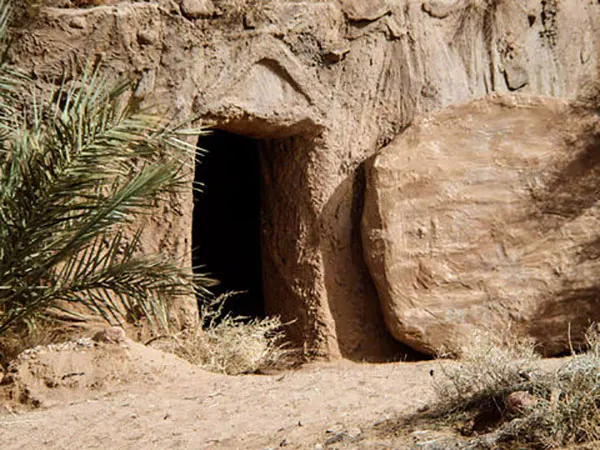
Herbert W. Armstrong BookletJesus Christ's resurrection stands as the pivotal sign of His Messiahship, as He declared that He would be three days and three nights—72 hours—in the heart of the earth, just as Jonah was in the belly of the fish. He staked His claim as the Savior on this precise duration in the tomb, emphasizing that if He failed in this sign, He must be rejected. The Scriptures consistently affirm this period, with multiple witnesses in Matthew, Mark, and Jonah defining it as three full days and three nights, totaling 72 hours. Jesus Himself confirmed that a day and a night each contain twelve hours, supporting the calculation of this time frame. The timing of His resurrection is directly tied to the time of His burial. Buried late in the afternoon before sunset on the day of His crucifixion, which was the preparation day before a Sabbath, His resurrection must have occurred at the same time of day, three days later. This places the resurrection in the late afternoon, near sunset, rather than at sunrise. The Scriptures show that when Mary Magdalene and others arrived at the tomb early on the first day of the week, while it was still dark, the tomb was already empty, and the angel declared that He was risen. This confirms that Jesus rose late on the Sabbath day, before sunset, fulfilling the exact 72 hours He promised. Further evidence establishes that Jesus was crucified on Wednesday, buried before sunset that day, and remained in the grave through Wednesday, Thursday, and Friday nights, as well as the daylight hours of Thursday, Friday, and Saturday—three full days and nights. He rose late Saturday afternoon, near sunset, precisely three days after His burial. The angel's testimony affirms that He rose as He said, fulfilling His sign. Additional scriptural accounts, such as in Corinthians, reinforce that He died, was buried, and rose again on the third day, aligning with the 72-hour duration ending on the Sabbath afternoon, not on Sunday morning.
Jesus and 'the Spirits in Prison'
'Ready Answer' by Richard T. RitenbaughThe resurrection of Jesus Christ stands as a pivotal event in human history, marking a profound victory over death and the forces of evil. After suffering and dying, He was made alive by the Spirit, and following His resurrection, He ascended to heaven, proclaiming His triumph to the imprisoned spirits, demonstrating that He lived despite their efforts. This ascension to the right hand of God, where angels, authorities, and powers are subject to Him, underscores His exaltation over all things. Through His resurrection, He broke the grip of death over mankind, making salvation possible for all, including the lost dead, who will have their opportunity to hear and respond to the gospel in due time. This victory of Christ over death and over satan and his demons is a testament to God's enduring love and fairness, ensuring that every human being will eventually have the chance to enter His Kingdom.
Basic Doctrines: The First Resurrection
Bible Study by Martin G. CollinsDeath is a reality we all must face, yet the hope of the Christian lies in the resurrection of the dead. The same God who resurrected Jesus Christ from the grave nearly two thousand years ago will also raise all the dead to life again. Our resurrection to eternal life is made possible because Jesus Christ died to pay for our sins and rose from the grave as the firstborn of many brethren. His resurrection to life ensures that we can also be resurrected, for we are saved because Christ lives now and forever. At Christ's second coming, only the just, the righteous, will rise in the first resurrection. God will raise the martyred saints to eternal life, while the unjust dead will not be resurrected until a later time. Those who have the Holy Spirit dwelling in them at death will be resurrected through the power of that same Spirit at His return. Additionally, true Christians alive at His coming will also rise in this first resurrection. Christ our Savior will change our corrupt bodies into bodies like His glorious body, transforming mortal flesh into immortal, incorruptible spirit. Jesus promises the overcoming saints a new name known only to the recipient, as well as the names of God and of His city, New Jerusalem. God will grant the saints power over the nations under Christ, and they will be clothed in righteousness and sit with Him on His throne. The saints of God will be part of this first and better resurrection, rising first in God's established order of resurrections.
Resurrection AD 31
'Ready Answer' by StaffJesus Christ's Resurrection stands as a unique and pivotal event, marking Him as the first of God's firstfruits. His Resurrection to immortal, spiritual life, distinct from the physical resurrections described in scripture, is represented by the Wavesheaf Offering. Following His Resurrection, He ascended to His Father, an event separated by a significant period from the anticipated resurrection of the saints at His return, as pictured by the Feast of Trumpets. This interval, believed to span about two thousand years, underscores the sequence of resurrections, with Jesus Christ being the first to attain eternal life. Unlike the physical resurrections of saints in AD 31, who appeared to many in Jerusalem and later died again, His spiritual Resurrection limited His appearances to a comparative few, highlighting the extraordinary nature of His transformation.
Consequences of Resurrection and Ascension
Sermon by Richard T. RitenbaughThe resurrection of Jesus Christ stands as a pivotal event, marking Him as the firstfruits of those who have fallen asleep. Through His rising from the dead, He became the trailblazer, showing the path to eternal life. As the First of the firstfruits, His resurrection opens the way for others to follow, ensuring that just as death came through Adam, life comes through Christ. If He had not risen, no others could achieve eternal life; His success in living sinlessly and dying sacrificially allowed the Father to raise Him, securing the hope of resurrection for all who are in Him. The wave sheaf offering, celebrated on the first day of the week after the Sabbath during the Days of Unleavened Bread, vividly pictures this resurrection and ascension. Cut from the earth at the end of the Sabbath and waved before God for acceptance the next morning, it mirrors how Christ was raised in the waning moments of the Sabbath and ascended to the Father early on the first day. This act, fulfilled in 31 AD, signifies His acceptance as the Firstfruit, paving the way for the ultimate acceptance of His followers. Beyond the resurrection, His ascension to the right hand of the Father carries profound consequences. Seated at the throne of God, He holds all authority in heaven and on earth, ensuring that no external force can thwart His promises to His elect. As High Priest and Minister of the sanctuary, He intercedes for us, pours out the Holy Spirit, aids in temptation, heals, guards against evil, empowers for greater works, and prepares a place in God's Kingdom. His ongoing life ensures complete salvation, not merely forgiveness, but a process of growth and sanctification, as we live His life in us, striving for perfection. The apostles frequently emphasized these events, marveling at the resurrection and ascension, viewing them as the foundation of hope for eternal life. This same appreciation should inspire us, recognizing the exceeding greatness of God's power that raised Christ and seated Him far above all, working mightily toward those who believe.
His Body, His Blood, and His Resurrection
Sermonette by Clyde FinkleaThere are three components to Christ's composite sacrifice for our salvation: His death through the shedding of His blood, His body, and His resurrection.
The Resurrection From the Dead
Sermon by John W. RitenbaughThe resurrection of Jesus Christ from the dead supplies the foundation for the living hope that defines Christian life. This hope does not arise from human merit but is granted as a gift of the Father's mercy, energized by His Spirit, and directed toward an inheritance that is incorruptible, undefiled, and reserved in heaven. Because Christ was resurrected, believers are begotten to this hope and are enabled to anticipate an imperishable relationship within the Family of God rather than a mere return to physical existence. Scripture distinguishes the resurrection of Jesus Christ from earlier restorations to life. Individuals in Old Testament times were raised, yet none was described as resurrected until Christ Himself rose. His resurrection therefore marks the decisive event that opens the way for others to be raised in the same manner and to share the quality of life He now possesses. This resurrection is the axle on which God's plan turns. Without its fulfillment the purpose announced on the Day of Trumpets cannot be realized. The hope it generates is intended to remain constantly active, shaping daily conduct and supplying the vision that prevents casting off restraint. Paul therefore presents the resurrection as the central object of Christian expectation, the means by which believers are saved and the goal toward which every spiritual effort is directed. Being united with Christ through baptism into His death and resurrection places the believer in an intimate fellowship with Him. In this union the power of Christ's resurrection operates, enabling the believer to know Him, to share His sufferings, and to be conformed to His image. The same identification ensures that those who suffer with Christ will also be glorified with Him, reign with Him, and ultimately be like Him when He is revealed. Thus the resurrection of Jesus Christ is not an isolated event but the threshold through which the kind of life God lives enters human experience and continues without interruption into eternity. All moral and ethical instruction in Scripture serves to keep believers on the path that leads to that presence, so that the hope produced by Christ's resurrection may be realized in full.
Four Views of Christ (Part 7)
Sermon by John W. RitenbaughThe resurrection of Jesus Christ forms the central focus of the four Gospels, occupying between one-fifth and nearly half of each account, because it constitutes the means through which life is produced. The Son of Abraham, the Servant, the Son of Man, and the Son of God all suffer betrayal, denial, abandonment, judgment, beating, crucifixion, burial for three days and three nights, and resurrection. This sequence demonstrates that only God can raise the dead and that the Biblical answer to death, which sin inevitably produces, is resurrection rather than any inherent immortality. Because believers are baptized into one body with Christ as Head and are therefore in Him, they share the same path. The old man is crucified with Him so that the body of sin may be done away with; the person is buried with Him in baptism and raised with Him through faith in the working of God who raised Him from the dead. This present rising to newness of life occurs as the deeds of the flesh are put to death by the Spirit, producing the fruit that determines the outcome at the future resurrection. Those who have done good rise to the resurrection of life; those who have done evil rise to condemnation. Thus the resurrection of Jesus Christ both secures salvation and sets the pattern believers must follow through daily death to self if they are to attain the resurrection from the dead and eternal life in the kingdom of God.
Suffering Disgrace For Christ's Name
Sermon by Martin G. CollinsThe resurrection of Jesus Christ forms a central element in the apostles' witness, as they repeatedly declare that God raised Him from the dead after the leaders had murdered Him by crucifixion. This proclamation directly challenges the Sadducees, who deny any resurrection and therefore view the message as an assault on their scriptural understanding and theological authority. The leaders recognize that an authentic resurrection would confirm Jesus as the Messiah and expose their own guilt in condemning Him, prompting them to forbid teaching in His name and to resort to imprisonment and beating. Peter responds by affirming that the apostles must obey God rather than men, presenting the resurrection as the decisive act by which God exalted Jesus to His right hand as Prince and Savior, granting repentance and forgiveness to Israel. The apostles describe themselves as eyewitnesses of these events, joined by the Holy Spirit, and they continue teaching and preaching Jesus as the Christ daily in the temple and homes despite opposition. This testimony follows a fixed pattern of salvation proclamation that includes Christ's death, resurrection, ascension, and appearance to chosen witnesses, establishing the foundation for all further instruction in the way of life. The resurrection distinguishes Jesus from earlier rebels such as Theudas and Judas of Galilee, marking a unique divine intervention that cannot be dismissed as merely human. Even after physical punishment, the apostles rejoice to be counted worthy to suffer shame for His name, their boldness rooted in the certainty that God has raised and exalted the One they proclaim.
Knowing, Following, and Striving for Christ
Sermon by Martin G. CollinsChristians believe that Jesus rose from the dead after crucifixion and lives today to be known personally by those who trust in Him. This resurrection forms the core of faithful Christian living, as expressed in Paul's desire to know Christ and the power of His resurrection. That power, exerted now from the right hand of God, enables believers to share in the fellowship of His sufferings and become conformed to His death. Those who suffer with and for Christ thereby attain the resurrection from the dead even as He did. Paul sought not abstract knowledge of the resurrection but its experiential power, which overcomes sin and death far beyond any human or worldly strength and makes possible a life of holiness that the natural man cannot achieve alone. This power is received through the indwelling Spirit, allowing daily victory over indwelling sin and a preview of eternal life. The resurrection from the dead in view is not merely future but a present quality of life, a standing out among the spiritually dead by living as one already raised. Such living requires total obedience, even through persecution, and produces a true witness that draws the believer closer to Christ. Paul pressed on toward this goal, confident that Christ would complete the work begun in him, so that he might attain the resurrection and enter the eternal union with God that constitutes resurrection life. This pursuit connects directly to the broader call of discipleship, in which God's call through Christ obligates believers to follow Him, forget the past, reach forward, and strive with the full armor of God toward the prize of the upward call.
Approaching God Through Christ (Part Seven)
Sermon by Richard T. RitenbaughWe have access to a Trailblazer, who has gone before us to show us the way. The only way can have fellowship with the Father is through Jesus Christ.
The False Christ Deception
Sermon by Martin G. CollinsA new lie alleges that a tomb has been found with the remains of Jesus, Mary Magdalene, and their alleged son Judah. It may undermine the faith of many.
Post-Resurrection Lessons
Sermon by Richard T. RitenbaughOn the Road to Emmaus, some of Christ's followers were agitated, confused, and in turmoil, being unable to put the scriptures and the physical facts together.

'After Three Days'
Booklet by Richard T. RitenbaughJesus Christ declared that the ultimate sign to prove His message would be His time in the grave, stating that He would be dead for exactly three days and three nights, unable to resurrect Himself. He emphasized that if God the Father resurrected Him after this precise period, it would confirm beyond doubt that He is the Messiah. He reiterated this sign to various audiences, using similar phrasing, such as in His statement about raising the temple of His body in three days. To His disciples, He foretold that the Son of Man would be killed and rise on the third day, with slight variations in wording across accounts. Even the chief priests and Pharisees recalled this sign, mentioning to Pilate after the crucifixion that He had said He would rise after three days. The evidence shows that Jesus was in the tomb for exactly 72 hours, from sunset at His burial to sunset at His resurrection, contradicting the traditional timeline of a Friday burial and Sunday morning resurrection. The gospel writers are unanimous that He was crucified around noon, died at 3 PM, and was buried near sunset. Since He was buried for precisely 72 hours, His resurrection occurred at sunset, not at dawn. Further, the timing of events surrounding His death and resurrection aligns with a Wednesday crucifixion. He was crucified on a Passover day, Nisan 14, which was a preparation day for the high Sabbath of the first day of Unleavened Bread. The sequence of events, including the women observing two Sabbaths within that 72-hour period—a high day and a weekly Sabbath—confirms that He was buried on Wednesday and resurrected at sunset on the Sabbath. Additional proof lies in the wavesheaf ceremony, fulfilled by His resurrection at the end of the weekly Sabbath during Unleavened Bread, symbolizing God reaping the first and best of His spiritual harvest. Early that following morning, He had not yet ascended to His Father for acceptance as our Savior, aligning with the timing of the wavesheaf being waved before God. The harmonized gospel accounts and the Seventy Weeks Prophecy further support that His ministry lasted three and a half years, ending in AD 31, with Passover falling on a Wednesday. This timeline is reinforced by the presence of four Passovers during His ministry, the final one being the day of His death, solidifying the conclusion of a Wednesday crucifixion and a Sabbath resurrection at sunset.
James Cameron's Lost Integrity
CGG Weekly by Richard T. RitenbaughJames Cameron's controversial documentary, The Lost Tomb of Jesus, reveals alleged evidence that archeologists had found the actual tomb of Jesus' family.
Chronic Difficulties
Sermon by Richard T. RitenbaughHuman tradition and Bible truth regarding the timing of Christ's crucifixion and resurrection do not square. Here is the overwhelming chronological evidence.
The Third Day (Part Two)
Feast of Tabernacles Sermon by Richard T. RitenbaughAs a biblical motif, the third day indicates a colossal turn-around from hopelessness to victory. The third day revival motif recurs throughout Scripture.
He Lives, We Live
Sermon by Richard T. RitenbaughRedemption is useless to mortal beings without God's gift of eternal life (I Corinthians 15:19), which God made possible through Christ's resurrection.
Disproving Hell
Sermon/Bible Study by Richard T. RitenbaughMost of Protestant and Catholic theology is immersed in pagan concepts of hell, reinforced by Dante's Inferno. Here is what the Bible says, without tradition.
Each in His Own Order
Sermonette by Craig SablichScripture reveals that God's plan for humanity unfolds through an appointed order of resurrections, each serving a distinct purpose. Once the biblical truth about death is understood, Paul's statement that "each one in his own order" becomes significant: Christ, the firstfruits, is followed by those raised to reign with Him, while later resurrections extend God's work to those who have not yet truly known Him. Ezekiel 37 portrays the whole house of Israel restored to physical life, receiving God's Spirit and coming to know Him, while Revelation 20 reveals a final judgment in which each person faces an informed choice between life and death. The resurrections therefore are not merely events after death; they demonstrate God's orderly, merciful purpose to bring every person to genuine understanding, choice, and ultimately judgment—revealing a God whose plan for mankind is faithful and complete.
Our Bread of Life
Sermon by Richard T. RitenbaughThe world is confused on the timing of Christ's death and resurrection. It becomes clear by a proper understanding of the holy days, preparation days, and Sabbaths.

The Wavesheaf Offering
'Personal' from John W. RitenbaughMost know little about the wavesheaf offering, even though it represents one of the most significant acts: the resurrection and ascension of Christ!
Trumpets and Hope
Sermon by Richard T. RitenbaughOur hope is founded on Jesus rising from the dead. If there is no resurrection, our faith is worthless; if Christ did not rise, we are still under condemnation.
Death of a Lamb
Article by StaffSince the church no longer keeps the Passover with the slaughter of a lamb, we miss important and poignant details that could enhance our observance.
'Being Seen of Them Forty Days'
Sermon by Mark SchindlerOn the 40th day on the count to Pentecost, Jesus ascended. The details of His activity before His ascension have not received the focus they should.

Fully Man and Fully God?
'Personal' from John W. RitenbaughJesus Christ is called both 'Son of Man' and 'Son of God,' raising weighty questions about His nature. Could He have both full humanity and full divinity?
We Shall Be God
Sermon/Bible Study by John W. RitenbaughThough it may sound pretentious or even blasphemous, God's Word shows that we will become literal offspring of the Eternal God, sharing His name and nature.