


Filter by Categories
The Rest of the Sign of Jonah
Sermonette byJonah likely drowned; the great fish was his coffin rather than his prison. While Nineveh repented and was spared, Judah did not repent when Christ preached.
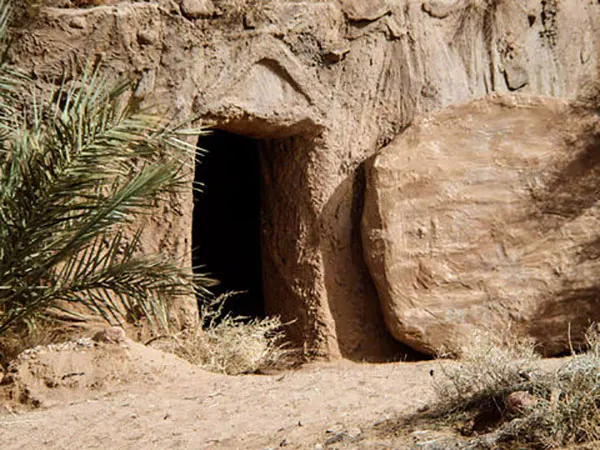
The Resurrection Was Not on Sunday
Herbert W. Armstrong BookletThe doubting Pharisees demanded a sign from Jesus as supernatural evidence of His Messiahship. Jesus answered that an evil and adulterous generation seeks after a sign, and no sign would be given except the sign of the prophet Jonah. He declared that just as Jonah was three days and three nights in the whale's belly, so would the Son of Man be three days and three nights in the heart of the earth. This was the only sign He offered to prove He was the Messiah, staking His claim on remaining exactly three days and three nights in the tomb. If He fulfilled this duration, He would prove Himself the Savior; if He failed, He must be rejected as an impostor. This sign has troubled commentators and higher critics, as it challenges traditions that conflict with the specified duration. Jesus emphasized that as Jonah was in the great fish for 72 hours, so He would be the same length of time in His grave. He defined a day and a night as containing twelve hours each, totaling 72 hours for three days and three nights. Scriptural witnesses in Matthew and Jonah, along with other passages, consistently set the duration of His time in the tomb as three full days and three nights, amounting to 72 hours. If He did not remain in the grave for this exact period, the only supernatural proof He gave would fail. To fulfill this sign, the resurrection had to occur at the same time of day as His burial. Since Jesus was buried in the late afternoon before sunset, the resurrection must have also occurred in the late afternoon, three days later, near sunset. If He rose at any other time of day, He could not have been three days and three nights in the grave, failing to prove by this sign that He was the true Messiah. The angel of the Lord confirmed that He rose as He said, providing evidence that Jesus fulfilled His sign of being three days and three nights in the earth.
The Signs of God
Sermonette byJesus Christ is not against signs; the book of John is structured around eight signs. The Old Testament is full of signs that the Pharisees missed.

Was Jesus Resurrected on Easter Sunday?
'Ready Answer' by StaffJesus defines the duration of His time in the grave in Matthew 12:40, stating, "For as Jonah was three days and three nights in the belly of the great fish, so will the Son of Man be three days and three nights in the heart of the earth." This indicates a precise period of 72 hours, as Jesus understands a day to consist of twelve hours and a night to also be twelve hours, totaling 24 hours per day and night cycle, as noted in John 11:9. Therefore, three days and three nights equate to 72 hours, the same amount of time Jonah spent in the fish's belly. Jesus further confirms this timeframe in John 2:19, responding to a request for a sign of His messiahship by saying, "Destroy this temple, and in three days I will raise it up," referring to His body. His resurrection occurs exactly at the end of 72 hours, fulfilling the Scripture without a moment's delay or excess, as God the Father, the ultimate Timekeeper, ensures perfect timing in raising Him from the grave. This precise 72-hour period, matching Jonah's experience, stands as the sign of His messiahship, and any deviation from this duration would invalidate the fulfillment of His prophecy.
Did Christ's Resurrection Change the Day of Worship? (Part Two)
CGG Weekly by David C. GrabbeJesus provided a specific sign to prove His identity as the Messiah, as recorded in Matthew 12:38-40. When the scribes and Pharisees demanded a sign, He responded that an evil and adulterous generation seeks after a sign, and no sign would be given except the sign of the prophet Jonah. He explained that just as Jonah was three days and three nights in the belly of the great fish, so would the Son of Man be three days and three nights in the heart of the earth. By His own testimony, the significance of the timing of His resurrection lies in proving that He was the Messiah, as He would be in the grave for exactly 72 hours before God resurrected Him. The timing of His resurrection is crucial to validating His claim as the Messiah, rather than establishing which day is set apart as holy. If the Father did not resurrect Jesus at the foretold time, His Messiahship would be disproven. Some assert that Jesus died on a Friday afternoon and was resurrected on a Sunday morning, but this timeline does not fulfill the sign of Jonah, as it is impossible to fit three days and three nights between those times. Jesus specified three days and three nights, not parts of three days. Further examination reveals that Jesus was crucified on the day of Passover, and His body was placed in the grave before sunset, marking the start of an annual Sabbath, the first day of the Feast of Unleavened Bread, described as a high day. This indicates two Sabbaths were involved: an annual Sabbath and a weekly Sabbath. In the year of His crucifixion, Passover fell on a Wednesday, and His body was placed in the grave late that afternoon before the high-day Sabbath began. He remained in the grave for three days and three nights, from Wednesday night through Saturday, totaling 72 hours, and He arose on the Sabbath afternoon before sunset. His resurrection on the Sabbath does not establish it as holy; rather, He was resurrected by God on a day already set apart as holy.

'After Three Days'
Booklet by Richard T. RitenbaughThe Pharisees sought a sign from Jesus to validate His claim as the Messiah, desiring a visible miracle as proof of His fruit. Jesus rebuked them for missing the true meaning of fruit, which He defined as repentance, good works, and spiritual growth. Instead of an immediate sign, He declared that the only definitive proof of His message would be beyond His control: He would be in the grave for exactly three days and three nights, dead and unable to resurrect Himself. If God the Father raised Him after precisely this duration, it would confirm beyond doubt that He is the Messiah. This sign, often referred to as the Sign of Jonah, was reiterated to various audiences with similar phrasing, emphasizing His death and resurrection after three days as the ultimate validation of His identity and mission. Even the chief priests and Pharisees recalled this sign, mentioning to Pilate after the crucifixion that Jesus had said, "After three days I will rise."
What Happened to the Thief on the Cross? (Part One)
CGG Weekly by David C. GrabbeDid the criminal crucified next to Christ go to heaven? That is commonly believed—yet even Jesus was not in heaven that day! Digging deeper shows the truth.
John 7:37 Examined (Part One)
Feast of Tabernacles Sermon by John W. Ritenbaugh (1932-2023)The Eighth Day (or Last Great Day) is a separate festival from the Feast of Tabernacles, which can only derive its significance in the New Testament.
General Revelation
Sermon by Richard T. RitenbaughGod's truth is shockingly simple to understand, yet deceptively profound, causing the 'wise' to stumble but guiding true Christians toward eternal life.
Meet the Minor Prophets (Part Two)
'Prophecy Watch' by Richard T. RitenbaughThe twelve books of the Minor Prophets—including Amos, Obadiah, Jonah, and Micah—are often overlooked in favor of the Major Prophets and the four gospels.
The Pharisees (Part 1)
Sermon by Richard T. RitenbaughHaving their origin in the days of Ezra, the Scribes and Pharisees were extremely zealous for the law, separating themselves for this exclusive purpose.
Matthew (Part Eighteen)
Sermon/Bible Study by John W. RitenbaughIf we ask God for protection from demonic influence, we cannot sit back passively; Satan always counterattacks. Evil must be displaced with good.