


Filter by Categories
The Covenant of Blood (Part One)
CGG Weekly by Ronny H. GrahamBlood holds profound significance as it is equated with life throughout the Bible. In Genesis 4:10, blood is depicted as having life, metaphorically crying out to God from the ground. Later, in Genesis 9:4, God instructs Noah not to eat flesh with its life, that is, its blood. In Leviticus 17:10-14, God emphasizes that the life of the flesh is in the blood, declaring it a capital crime to consume blood and providing it for atonement upon the altar. God reiterates that no one among the children of Israel or strangers dwelling among them shall eat blood, and even hunters must pour out the blood of their prey and cover it with dust, for the blood sustains life. In Leviticus 16, God gives detailed instructions to the high priest for the Day of Atonement, requiring the sprinkling of blood from the sin offering on and around the altar, on the horns of the altar, and on the Mercy Seat to cleanse and consecrate it due to Israel's sin. The high priest could enter the Holy of Holies only once a year on this day, and only with this blood. God is aware of every drop of blood, not just human, but also that of all animals, knowing where all life resides.
The Covenant of Blood (Part Two)
CGG Weekly by Ronny H. GrahamThe significance of blood is deeply rooted in its equation with life itself, as emphasized through the sacrifices and offerings in the Pentateuch, where the shedding of animal blood served to remind the people of their sins and obligations. This practice also foreshadowed the ultimate sacrifice of Jesus Christ, whose shed blood, nearly two thousand years ago, surpassed all other sacrifices by atoning for all sin through the breaking of His body and the pouring out of every drop of His blood. In John 6, Jesus teaches about the true bread from heaven, challenging His listeners by stating that eternal life requires eating His flesh and drinking His blood, a concept many could not grasp as metaphorical and thus turned away. This underscores the gravity of partaking in the symbols of His body and blood, as improper participation can bring judgment, weakness, sickness, or even spiritual death. Furthermore, the blood of Christ is not offered to redeem everyone at this time, but only to the elect, those specifically called by God to a relationship with Him, highlighting the profound privilege of being under His blood.
Everlasting Covenant of Blood
Sermonette by Ronny H. Graham'Blood is thicker than water' indicates that ties to the family come before any other alliances. Yet the 'blood' could also refer to the sealing of a covenant.
Passover and the Blood of Jesus Christ
Sermonette byThe significance of blood in biblical context is deeply rooted in its representation of life. God establishes in Genesis 9:3-4 that blood symbolizes life, a principle reiterated in Leviticus 17:11 and 17:14, where He states that the life of the flesh is in the blood and it sustains life. This connection explains why blood can picture the remission of sins, as the wages of sin is death, requiring a life to satisfy the debt of sin. In some cases, God allowed the lifeblood of an animal to be given in exchange for the sinner's life, pointing to the ultimate worthiness of the Savior. Blood also serves as a symbol even after biological death, as seen in Deuteronomy 12:23, where God instructs not to eat blood because it is the life, even in an animal whose physical life has ended. This enduring significance means blood holds a record of life, and God commands respect for it due to His value of life. Consequently, a land can become polluted through bloodshed, holding the record of lives taken in violence, with only justice providing atonement. Another symbolic usage of blood is in sealing a covenant, representing a life given as a pledge of faithfulness. In Exodus 24:5-8, God's covenant with Israel was sealed with blood from burnt offerings and peace offerings, symbolizing wholehearted dedication and peaceful fellowship with Him. Moses sprinkled this blood on the people, who accepted their obligation to obey, as it symbolized their own lifeblood. In the context of the New Covenant, Jesus speaks in Matthew 26:27-28 of His blood as the blood of the New Covenant, shed for many for the remission of sins, an aspect tied to the covenant itself. This covenant, sealed by His blood, provides not only forgiveness but also a relationship of eternal life, spiritual abundance, and the promise of knowing the Father and Him, far beyond what ancient Israel experienced. Hebrews 13:20-21 further emphasizes that through the blood of the everlasting covenant, God will make us complete in every good work to do His will, culminating in spiritual completion at Christ's return. This blood is a divine pledge, a guarantee of God's unswerving commitment to this purpose. Finally, in John 6:53-56, Jesus declares that drinking His blood is essential for eternal life, representing a sinless, supreme quality of life due to His perfect connection with the Father. Partaking of His undefiled blood begins to change us internally, manifesting in how we live, provided we do not resist Him or neglect this great salvation. Thus, the blood of Jesus Christ, with its multiple facets, meets together in the wine of Passover, commemorating abiding in God and the spiritual abundance of His faithfulness.
The Talking Blood (1994)
Sermon by John W. RitenbaughThe blood of Jesus Christ holds profound significance as a witness for God, bearing a continuous testimony throughout Scripture. It speaks a message of atonement, emphasizing that without the shedding of blood, there is no remission of sins. This theme runs like a red ribbon through the Bible, appearing 427 times to underscore the seriousness of sin and its consequence, death, as the only means by which sin can be covered or paid for. The blood of Jesus, shed in His violent and bloody death on the stake, pays for the sins of the world, marking the completion of His purpose as He declared, "It is finished." Unlike the blood of Abel, which cried out for vengeance, the blood of Jesus speaks of something better, offering a path to redemption rather than retribution. It reveals a better way than the shedding of animal blood for atonement, as His death redeems those who trust in it. Atonement, often associated with the covering of sin, is illustrated through the Hebrew word "kaphar," meaning to shelter or cover, and is linked to forgiveness and reconciliation. While atonement does not always involve sin, as seen in burnt offerings showing devotion to God, it is clear that only blood can atone for sin, satisfying God's righteousness where sin is involved. Other methods like water, fire, incense, or gold may cleanse, but forgiveness of sin requires death. The blood serves as a constant rebuke to the human tendency to minimize sin, shocking us out of insensitivity by demonstrating God's estimate of sin's seriousness through the crucifixion of His innocent Son. Forgiveness is not a casual matter with God; it reflects His deep love and the immense sacrifice made, making it a difficult yet possible act through Christ's blood. This blood, as the appeasing force or propitiation, causes God to deal mercifully with us, establishing righteousness and putting away sin through faith. Man cannot appease God for the forgiveness of sin through offerings, as even millions of animal sacrifices in Israel's history could not equal the value of a human life created in God's image. Only Christ, as God in the flesh, could offer Himself as a sufficient sacrifice, paying not just for one person's sins but for all sins for all time. His blood, both in His death as a completed act of atonement and in an ongoing process of cleansing, abides as a living and dynamic force, facilitating reconciliation and sanctification. Ultimately, the blood's testimony declares that without it, there is no appeasing God's righteousness and justice, no covering for sins, no reconciliation with God, no redemption, no justification, and no hope. Its pervasive presence in Scripture highlights its critical role in salvation, making it a vital consideration in understanding our relationship with God and with one another.
Why Two Goats on Atonement? (Part One)
CGG Weekly by David C. GrabbeIn Israel, sins were symbolically placed on the altar throughout the year. On Yom Kippur, one goat's blood cleansed the altar; the second took away the sins.
Is the Passover Just a Sin Offering? (Part Two)
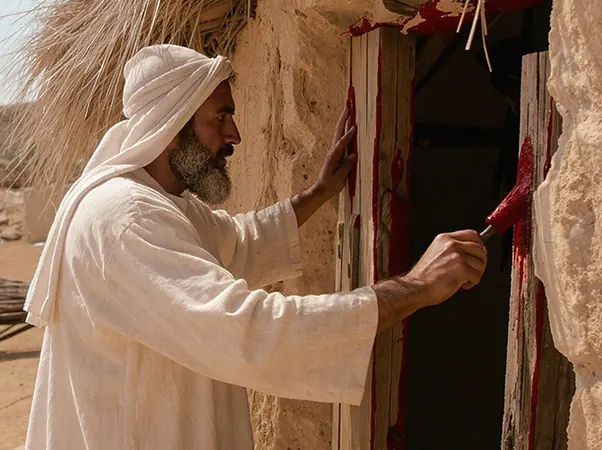
Article by David C. GrabbeThe blood on the doorposts served as the decisive sign that caused the Lord to pass over the houses of the Israelites and spare their firstborn from the plague that struck Egypt. This sign did not represent atonement for sin or the forgiveness of transgressions, for the Passover instructions contain no reference to cleansing from iniquity or substitutionary payment for wrongdoing. Instead, the blood symbolized life itself, given as a pledge that secured redemption from Pharaoh's legal claim upon the nation. Because Egypt and all within it belonged to Pharaoh, the Israelites required this visible token of separation so that the destroyer would not enter their dwellings. The same blood therefore testified to God's covenant faithfulness to Abraham, by which He chose to deliver His firstborn nation rather than destroy it along with the Egyptians. In this way the blood marked both protection and purchase, establishing Israel's release from bondage so that the promises made to the patriarchs could be fulfilled.
Are You Drinking of the Master's Cup?
Article by StaffThe red Passover wine symbolizes the blood of Christ, shed for the remission of sins. It took the blood of the Son of God to forgive our sins, and by drinking the wine we accept His shed blood on our behalf, which forgives us and wipes our sinful slate clean. Jesus calls it "My blood of the new covenant, which is shed for many for the remission of sins" (Matthew 26:28). Because a cup offered in a betrothal meant accepting a marriage covenant, drinking of the cup of His blood also accepts His invitation to be betrothed to Him. It is the cup of blessing and the communion, or sharing, of the blood of Christ (I Corinthians 10:16), given with thanksgiving and praise to God. Forgiveness through His blood prepares us to stand sinless, spotless, and without fault in His presence at the Marriage Supper. The blood's significance reaches beyond forgiveness, however. Drinking of the cup also means sharing the path Christ walked, including suffering, and the glory that follows. Babylon's cup, by contrast, is full of abominations and of the blood of the saints, and the two cups cannot be mixed. Because the blood is so weighty, we must examine ourselves before drinking and not partake in an unworthy manner (I Corinthians 11).

Never Forget
Sermon by Ryan McClureAfter Adam and Eve sinned, God provided them a vivid introduction to death, perhaps killing an animal in their presence to make tunics for them to wear.

Azazel: Endings
Sermon by David C. GrabbeOne goat had to die for cleansing; the other goat had to remain alive for bearing the sins away. Jesus fulfilled both roles. Satan's binding atones for nothing.

Why Did Jesus Have to Die by Crucifixion?
'Ready Answer' by StaffCrucifixion is man's most cruel form of punishment. Why did Jesus need to die this way? What does it teach us? And was Jesus stabbed before or after He died?
A Pre-Passover Look
Sermon by John W. RitenbaughWe must thoroughly examine ourselves, exercising and strengthening our faith, actively giving love back to God, to avoid taking Passover in a careless manner.
The Signs of God (Part Three)
CGG Weekly by David C. GrabbeGod equates belittling His signs with rejecting Him. The signs of the weekly and annual Sabbaths are emphasized by God, but commonly cast aside by men.
Hebrews (Part Eleven)
Sermon/Bible Study by John W. RitenbaughHebrews emphasizes the infinite superiority of Christ's priesthood and one-time sacrifice as contrasted to the repetitive Aaronic sacrifices.
The Gift of a Leper
Article by StaffThe leper's healing teaches that, while Jesus freely healed the man, his cleansing was not really free. The gift he was told to present contains vital instruction.
The Two Witnesses (Part Six)
Sermon by Richard T. RitenbaughThe Two Witnesses have authority from God to annihilate those who interfere with their work as well as power over weather patterns and natural elements.
Happiness is Circumstantial, but Joy is Not!
Feast of Tabernacles Sermon by Martin G. CollinsHappiness is a by-product of our response to God's calling, coupled with our determination to connect with the Father, the Son, and the whole spiritual family.
Matthew (Part Twenty-Three)
Sermon/Bible Study by John W. RitenbaughThe apostles' inability to drive out the demon teaches that faith is not a constant factor; it will deteriorate if it not exercised through prayer and fasting.