


Filter by Categories
Everlasting Covenant of Blood
Sermonette by Ronny H. Graham'Blood is thicker than water' indicates that ties to the family come before any other alliances. Yet the 'blood' could also refer to the sealing of a covenant.
Passover and the Blood of Jesus Christ
Sermonette byThe symbolism of blood in the biblical context carries profound significance, representing various aspects of life and covenant. Blood is essentially synonymous with life, as God declares in Genesis 9:3-4 that the life of the flesh is in the blood, a principle reiterated in Leviticus 17:11 and 17:14, where blood is identified as the life of all flesh, sustains its life, and is not to be consumed with meat. This connection underscores why blood can symbolize the remission of sins, as a death is required to satisfy the legal debt of sin, sometimes through the substitutionary lifeblood of an animal, pointing to a greater worthiness. Blood also serves as a record of life even after biological death, as seen in Deuteronomy 12:23, where God instructs not to eat the blood because it remains the life of the animal, commanding respect for it due to His value of life. This respect extends to the land, which can become polluted through bloodshed, holding a record of lives taken in violence, with blood crying out to God, as with Abel's blood to Him, showing its significance beyond death. Another symbolic usage of blood is in sealing a covenant, representing a life given as a pledge of faithfulness. In Exodus 24:5-8, God's covenant with Israel was sealed with blood from burnt and peace offerings, symbolizing wholehearted dedication and peaceful fellowship, with Moses sprinkling blood on the people as they accepted their obligation to obey, the blood of oxen representing their own lifeblood. In Matthew 26:27-28, Jesus speaks of His blood as the blood of the New Covenant, shed for many for the remission of sins, an aspect tied to the covenant rather than standing alone, encompassing a relationship and fellowship with God, termed eternal life by Jesus, a life of spiritual abundance continuing past the grave. The Passover wine becomes a vivid token of God's commitment to make us complete, as affirmed in Hebrews 13:20-21, where the blood of the everlasting covenant is the vehicle for spiritual completion, a guarantee of God's purpose in us. Finally, in John 6:53-56, Jesus emphasizes that drinking His blood is essential for eternal life, representing a sinless, supreme quality of life due to His perfect connection with the Father. Partaking of Christ's undefiled blood begins internal change, manifesting in how we live, commemorating abiding in God and the spiritual abundance from His faithfulness during Passover. Jesus Christ's blood, with its multiple facets, converges in the wine of Passover, embodying life, covenant, and eternal promise.
The Talking Blood (Part One)
Feast of Tabernacles Sermon by John W. Ritenbaugh (1932-2023)The symbolism of blood holds profound significance within the biblical narrative, serving as a vital element in understanding God's purpose for humanity. Blood figuratively speaks in several places in the Bible, and God hears and interprets its message as a teaching lesson for our benefit, though the benefit is not always immediately obvious. On occasions when blood speaks, it reveals its biblical prominence and immense importance to us. In I John 5:6-9, the apostle John describes blood as a living witness to the life and ministry of Jesus Christ. Blood, alongside water and the Holy Spirit, bears testimony to His work, specifically referring to His bloody death on the stake to pay for the sins of the world. These elements are not mere events but are expressed as significant witnesses because the Person at the center is the Creator God, and it was His blood that was shed. Their testimony converges upon one truth: that Jesus Christ, the Creator God, came in the flesh, and through Him, we have life—not just any life, but eternal life. Blood is portrayed as a constant witness, always in the present tense for us, as if God ensures we never forget that the blood of His Son was shed so we can live. The Bible itself is likened to a living book, with a red ribbon running through it from Genesis to Revelation, symbolizing that blood is central to the movement of the story. Figuratively, if one cuts the Bible anywhere, it bleeds, underscoring the importance of blood to life and the narrative of salvation. Research indicates that blood is referenced 427 times in Scripture in relation to atonement, emphasizing the principle that without the shedding of blood, there is no remission of sins, no covering or blotting out of transgressions. This repetition—61 times the number seven, a figure of perfection—highlights God's seriousness about sin and its consequence, death, as the only means by which sin can be atoned for. Through this, God hammers into our consciousness the gravity of sin and the sacrificial love demonstrated by His Son's death.
The Talking Blood (1994)
Sermon by John W. RitenbaughThe blood of Jesus Christ stands as a profound witness, bearing testimony to His identity and purpose. As stated in I John 5:6 and 5:8, He came by water and blood, and alongside the Spirit and water, the blood agrees as one in affirming the truth of His mission. This blood, shed in His violent death on the stake, marks the culmination of His work to pay for the sins of the world, a significant event that declares, "It is finished." Throughout Scripture, blood emerges as a central symbol, appearing 427 times to underscore the gravity of sin and its consequence—death. It is through blood that atonement is made, a concept rooted in the idea that without the shedding of blood, there is no remission of sins. Leviticus 17:11 emphasizes that the life of the flesh is in the blood, given upon the altar to atone for souls, affirming that only blood can cover sin. Hebrews 9:22 reinforces this, noting that under the law, almost all things are purified with blood, and without it, there is no forgiveness. The blood of Jesus speaks, as Hebrews 12:24 describes, offering something better than vengeance. Unlike Abel's blood, which cried out for retribution, His blood speaks of mercy and a superior way of atonement, surpassing the blood of bulls and goats. Isaiah 1:18 illustrates this transformative power, promising that though sins are scarlet, they shall be white as snow when covered by His blood. This atonement, derived from the Hebrew word "kaphar" meaning to cover or shelter, signifies reconciliation and cleansing, as seen in Genesis 6:14 where Noah covered the ark with pitch to protect against judgment. In Matthew 26:27-28, Jesus declares the cup as His blood of the new covenant, shed for many for the remission of sins. Acts 20:28 further reveals that God purchased the church with His own blood, highlighting the immense cost of redemption. Romans 3:23-25 speaks of justification through His blood by faith, demonstrating God's righteousness in passing over sins. I John 2:2 and 1:7 present Jesus Himself as the propitiation for sins, His blood continuously cleansing those who walk in the light, not just as a past act but as an ongoing process. This blood serves as a constant rebuke to the human tendency to minimize sin. It shocks the conscience, revealing the seriousness of sin through the horrific crucifixion of God's innocent Son. Forgiveness, therefore, is not casual but comes at a tremendous sacrifice, as God's justice must be satisfied alongside the sinner's repentance. The blood's testimony is clear: without it, there is no appeasing God's righteousness, no covering for sins, no reconciliation, no redemption, and no hope.
The Talking Blood (Part Two)
Sermon by John W. Ritenbaugh (1932-2023)The blood of Jesus Christ functions as a unique and ongoing witness that testifies to the sinless life He lived and the purpose He fulfilled in God's plan. Like Abel's blood, which cried out from the ground, this blood speaks better things, testifying before God of the perfect offering that covers sin. Its symbolism centers on atonement, rendered from the Hebrew kaphar, meaning to shelter or place a covering over, which neutralizes sin's death-dealing power and reconciles the offender to God. This covering is accomplished solely through the shedding of Christ's blood in His death, an act that satisfies divine justice while demonstrating mercy. The same blood serves as propitiation, an appeasing force that motivates God to deal patiently and forgivingly with sinners. It extends beyond a one-time justification to an active, continuing process of cleansing for those who walk in the light, as the living presence of Christ works within them. This symbolism directly links to personal calling, creating an obligation to follow wherever Christ leads and to extend the same reconciling attitude toward others. Without this blood there is no forgiveness, no redemption, no justification, and no basis for fellowship with God or brethren. Its testimony underscores that sin cannot be minimized or excused through carnal self-deception, because only this one death, accompanied by this one portion of blood, meets the requirements of God's righteousness.
Why Two Goats on Atonement? (Part One)
CGG Weekly by David C. GrabbeGod intended the law given through Moses to point the Israelites to their coming Messiah, a purpose most evident in the required animal sacrifices. Each unblemished animal of specified species, age, and gender represents a pure and innocent life offered to instruct about sin, devotion, fellowship, and uncomplaining service. Blood functions as the central symbol within these rituals because it embodies life itself, even after the heart has stopped. Scripture repeatedly identifies blood with life, as in the declaration that the blood is the life and must not be eaten with the meat. This symbolism first appears when God treats Abel's shed blood as possessing a voice that cries out after violent death. In the ordinary sin offering the guilty party places hands on the animal, thereby transferring guilt so that the innocent substitute bears the transgression. The resulting blood then represents a sinful life and serves as a continuing record of the offense. Although the ritual symbolically cleanses the offender through the sprinkling and pouring of this blood on the altars, the blood itself remains defiled and cannot actually remove sin. Consequently, any blood from a sin offering that contacts a priest's garments requires washing, a requirement absent from burnt or peace offerings that do not involve transferred sin. The accumulated blood on the horns of the incense altar therefore functions as a repository of the nation's sins that still must be addressed. This symbolic quality of blood necessitates an annual cleansing of the altar and explains why the Day of Atonement ceremony employs two goats together as a single sin offering rather than one animal.
What is Atonement?
Sermon by John W. Ritenbaugh (1932-2023)Man's estrangement from God is wholly man's fault. Atonement denotes the way harmony is achieved, making the entire world at one or reconciled with God.

Purge Me With Hyssop
Article by StaffThe Bible frequently uses the hyssop plant as a symbol of cleansing and purification. In relation to Christ's sacrifice, this herb has a connection to the Passover.
Is the Passover Just a Sin Offering? (Part Two)
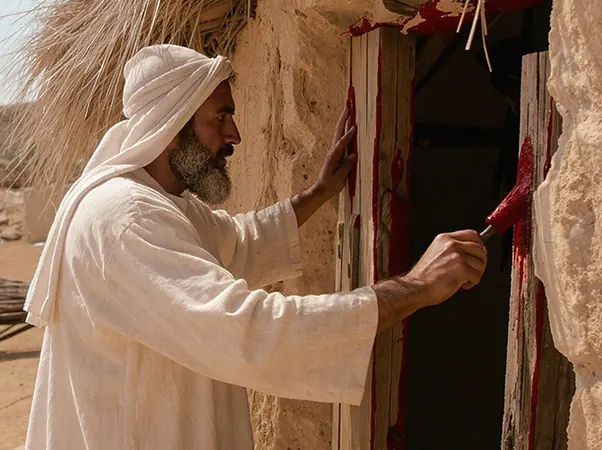
Article by David C. GrabbeThe blood on the doorposts served as a sign for the Israelites that the destroyer would pass over their houses. Blood is fundamentally symbolic of life itself, as the life of the flesh is in the blood, and this correspondence explains why blood appears in various symbolic roles. In some cases it represents a life-debt paid for the forgiveness of sins, yet not every use of blood carries that meaning. Blood can also symbolize the sealing of a covenant by pledging life in whole or in part as a token of faithfulness, and it can function as a testimony or witness. Within the instructions for the first Passover, the blood on the doorposts aligns with redemption rather than atonement. The text contains no reference to forgiveness or the removal of sins in connection with that blood, and the consistent scriptural description of the event is that God purchased Israel from Pharaoh's legal claim. The blood therefore signified the life of the lamb given to redeem the occupants of each house, marking God's pledge of protection and deliverance of His firstborn nation in fulfillment of the covenant made with Abraham. This act of sparing constituted an exemption or pretermission, an overlooking of Israel's idolatry and other sins for the sake of His name rather than a legal justification that cleansed those sins.
Are You Drinking of the Master's Cup?
Article by StaffThe symbolism of blood is developed within the broader framework of the Passover cup, where the red wine represents the blood of Christ shed for the remission of sins. This blood symbolism carries a dual significance that extends far beyond a simple memorial: it both secures forgiveness and establishes a covenant relationship. At the last Passover service, Jesus explains that the wine in the cup represents His blood of the new covenant, shed for many for the remission of sins. Drinking of this cup means accepting His shed blood on one's behalf, whereby sins are forgiven and the sinful slate is wiped clean. The blood-covenant symbolism connects directly to the ancient betrothal custom, in which a groom poured wine and invited his intended bride to drink from his cup; her acceptance of the drink signified her consent to the marriage covenant. Understanding this custom illuminates why Jesus described the wine as His blood of the new covenant when offering it to His disciples. By drinking of His cup, believers accept His invitation to be betrothed to Him, receiving forgiveness of sins so that they may ultimately stand before Him as a chaste and spotless bride at the Marriage Supper. Yet the meaning of this blood symbolism extends further still, since drinking of a cup in Scripture signifies accepting all that the cup contains, not merely its benefits. Thus the blood of Christ, while providing atonement, also signifies a shared participation in His sufferings. When James and John declared themselves able to drink Jesus' cup, they did not yet grasp that this cup entailed suffering and martyrdom, as history later confirmed. In this sense, the symbolism of the blood in the cup binds believers to Christ's path of suffering as well as His forgiveness, calling for a willingness to endure trials in the same manner He did. This theme culminates in Gethsemane, where Jesus confronted the cup of divine wrath against sin, a cup rooted in Old Testament imagery of judgment. His blood, then, was shed not only as a symbol of covenant and forgiveness but as the means by which He bore the full weight of God's wrath for sin on behalf of humanity. Consequently, the blood of Christ, represented in the Passover wine, unites the themes of atonement, covenant betrothal, and shared suffering, while pointing forward to future glorification with Him. The cup of blessing, containing this blood symbolism, is therefore inseparably tied to the promise of salvation, resurrection, and eventual reign with Christ for those who partake worthily and endure to the end.

Why Did Jesus Have to Die by Crucifixion?
'Ready Answer' by StaffCrucifixion is man's most cruel form of punishment. Why did Jesus need to die this way? What does it teach us? And was Jesus stabbed before or after He died?
Why Two Goats on Atonement? (Part Two)
CGG Weekly by David C. GrabbeIn the Day of Atonement ritual, the first goat's blood cleansed the altar of sin while the azazel goat took them away. Christ fulfilled both roles.
How Did They Overcome? (Part Two)
CGG Weekly by David C. GrabbeThe blood of the Lamb grants us eternal life, as well as entrance to the Holy of Holies, enabling us to come before the throne of the Most High God.
Is the Passover Just a Sin Offering? (Part Three)
Article by David C. GrabbeWhen compared with the sin offering, the Passover shows little similarity. It more closely aligns with the peace offering, picturing fellowship with God.
Eating: How Good It Is! (Part Four)
'Personal' from John W. RitenbaughJohn 6 has always been a difficult chapter to explain. However, Jesus' teaching is clear. Here is what it means to us.