


Filter by Categories
Abraham's Sacrifice (Part Five): Promises Confirmed
Sermon by Richard T. RitenbaughHuman culture operates on an intricate web of promises—warranties, guarantees, contracts, and personal assurances—and people judge one another's trustworthiness by whether they follow through on what they pledge. This everyday reality becomes profoundly significant when applied to God, because His very divinity is at stake in the matter of promise-keeping. If God made promises and failed to fulfill them, He would become untrustworthy, fickle, and capricious—a deity with feet of clay unworthy of faith or worship. Critical scholars and atheists exploit this very issue, arguing that the God of the Old Testament, portrayed as vindictive and violent, cannot be reconciled with the meek and gracious God of the New Testament. They point to instances where God apparently failed to deliver on stated promises as evidence that Scripture is merely human invention. This accusation, however, collapses once one recognizes a crucial biblical distinction: promises are either conditional or unconditional. Conditional promises depend on the other party fulfilling specific stipulations; unconditional promises, by contrast, God fulfills regardless of anything else, because He alone made the commitment. Deuteronomy 28 illustrates the conditional type explicitly. God offers Israel extraordinary blessings—prosperity, fertility, safety, victory over enemies—but repeatedly attaches the word "if": if they obey His voice and keep His commandments. Israel largely failed to meet these conditions, and so the blessings were withheld—not because God broke His word, but because Israel broke the terms of the agreement. God was under no obligation to deliver on a contract the other party did not uphold. By contrast, the promise to David recorded in I Chronicles 17, reaffirmed in Jeremiah 33 and Psalm 89, exemplifies an unconditional promise. God declares that David's throne and lineage would be established forever, swearing by His own holiness that He would not lie. Nothing David or his descendants did would nullify this promise; its fulfillment rested entirely on God's own character and oath. This distinction between conditional and unconditional promises culminates in the account of Abraham's near-sacrifice of Isaac. Because Abraham demonstrated complete obedience and fear of God, requiring no further proof, God's subsequent promises to him became unconditional—locked in, guaranteed, "as good as given." God confirmed this by swearing "by Myself," a phrase explained in Isaiah 45: since there is no being greater than God, He can swear only by His own righteousness and unchanging nature. Hebrews 6 draws on this very passage, showing that God's oath to Abraham was given specifically to provide "strong consolation" to believers, assuring them that His promises are "immutable" and that "it is impossible for God to lie." The greatest of these unconditional promises—that in Abraham's seed all nations would be blessed—was fulfilled through the sacrificial work, resurrection, and priestly ministry of Jesus Christ. Because this promise rests on God's own unchangeable character rather than human performance, believers can trust with certainty that He will likewise supply everything necessary to bring them into His Kingdom, never breaking His word, though human failure may forfeit conditional blessings tied to obedience.
The Certainty of God's Promises
Feast of Tabernacles Sermon by Kim MyersIf we measure God's promises by our own behavior, it would be discouraging and disappointing. But God can be absolutely trusted to keep all of His promises.
Swear Not!
'Ready Answer' by John O. ReidThe New Testament strictly forbids oaths of any kind, as our word should always be honest and trustworthy.
How Good Is Your Word?
'Ready Answer' by David F. MaasWe are known by what we say and how well we keep our word. How honorable and dependable are the promises that we make to others?
Freedom and Responsibility
Commentary by John W. Ritenbaugh (1932-2023)When a culture liberalizes, there will be a corresponding rise in irresponsibility, as people become fickle, rash, undependable, untrustworthy or disloyal.
Giving Your Word
'Ready Answer' by John O. ReidOne's word is not worth a whole lot these days in the world. But God listens to what we promise, so we had better perform it!
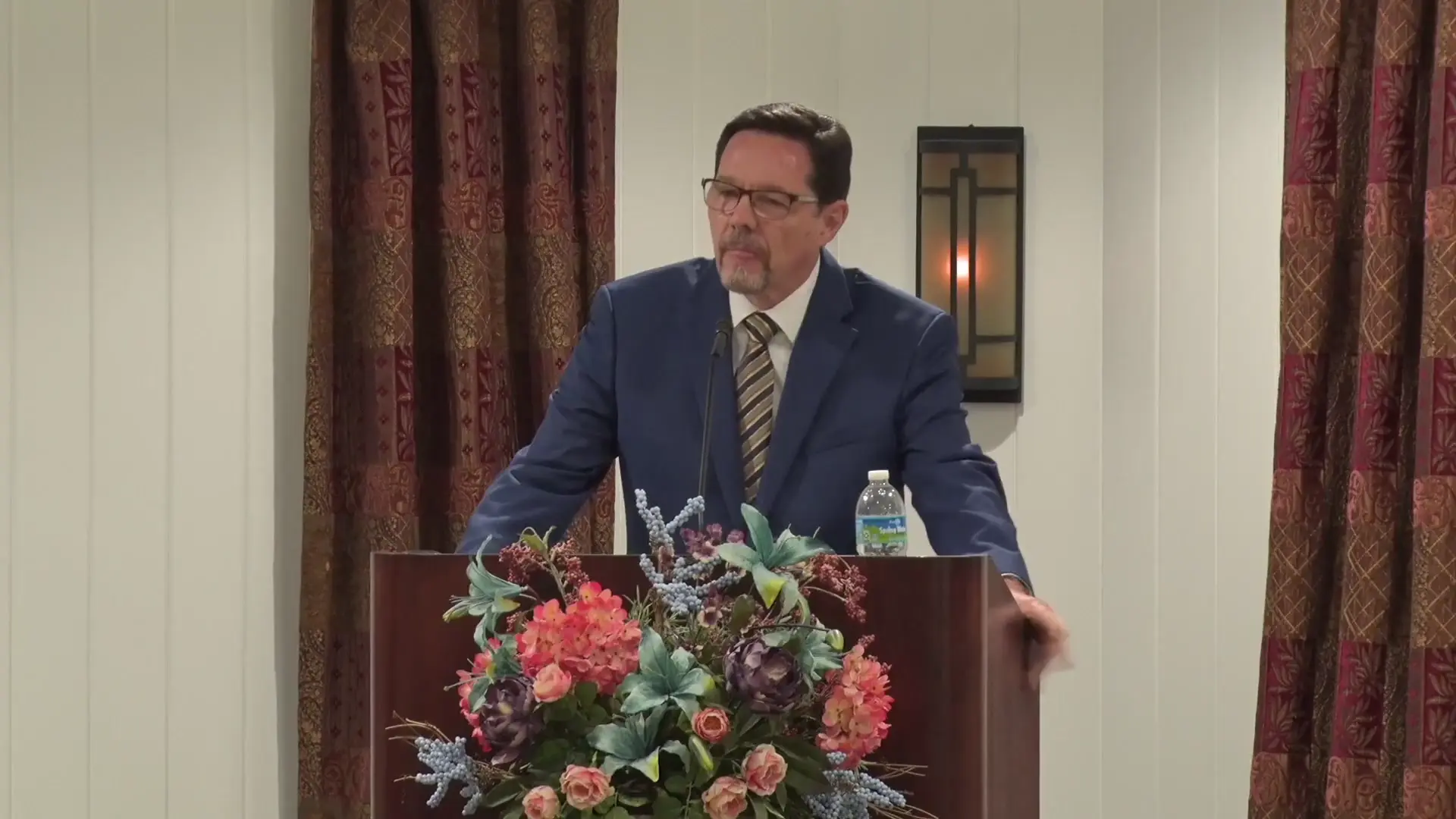
Have You Become an Example to All Who Believe?
Sermon by Martin G. CollinsWhether we are called to welcome others, speak truthfully, keep commitments, or guard our own speech, credibility flows from consistent daily actions.
Perfect, Gentle Courtesy (Part 1)
Sermon by Martin G. CollinsOur manners express our personality, especially as they portray humility, courtesy, or gentleness, and are improved as we make use of God's Spirit.
Ecclesiastes Resumed (Part Eleven)
Sermon by John W. Ritenbaugh (1932-2023)Ecclesiastes deals with quality of life issues for those who have been called, emphasizing responsibility and choice, continually fearing God.

When Actions Contradict Stated Beliefs
Sermon by Martin G. CollinsHypocrisy consists of professing beliefs or virtues that one does not genuinely possess. The primary motivator is pride, and its resulting sin is lying.