


Filter by Categories

Our Words Matter: Are They Harmful or Helpful?
Sermon by Ted E. BowlingAs members of God's church, we must recognize the profound impact of our words. Harsh and idle words can cause lasting emotional pain, creating invisible scars that some may carry for a lifetime. They can perpetuate negativity, resentment, and distrust, deeply affecting others in ways we may never fully comprehend. We must never underestimate the power of our speech, as even a casual remark can destroy self-esteem and linger for years. Our words matter greatly to God, and He holds us accountable for what we say. Harmful words can separate and destroy, negating countless kind expressions with a single negative statement. We must consider the effect of our words, both positive and negative, before speaking, ensuring they reflect God's love and character rather than detract from His purpose. The Scriptures warn against destructive language such as lying, sowing discord, tale bearing, and gossip, which are abominations to God, being against His character. Like an arrow shot from a bow, idle words cannot be taken back once spoken, often causing irreversible harm. Gossip and tale bearing wound reputations and create strife, feeding contention as wood feeds a fire, and a small rumor can grow into a destructive blaze. In contrast, helpful words can bond us together, elevate, encourage, and strengthen one another when spoken with care and love. As representatives of Christ, we must refine our speech by cultivating humility, courtesy, and kindness, learning from His example to speak truth with love, offer forgiveness, and build others up. Our speech should always honor God, reflecting His mercy and grace, and we must guard our tongues against harshness and negativity. Let us continually examine ourselves, asking whether our words are harmful or helpful. Like David, we should pray for God to set a watch over our lips, ensuring that what we say nurtures a closer relationship with Him and mirrors His values.
Rumors Will Fly
CGG Weekly by John O. ReidJesus instructs that for every idle word people may speak, they will give account of it in the day of judgment. By words, people will be justified, and by words, they will be condemned. God is everywhere and hears all that is said. Mankind has said many things believing that God is somehow deaf and blind. What is allowed out of the mouth is exceedingly important and will either help or haunt. Evil, vain, empty, thoughtless comments will not be passed over by God. All will be held accountable for every careless word spoken. Words reflect what people are. Speech is an overflowing of the heart, for out of the abundance of the heart the mouth speaks. What is said reveals characters. Jesus gives hope and wise instruction by saying that by words people will be justified. If people carefully consider what to say before speaking, whether in prayer, private conversation, or public speech, they can stifle human nature's impulses and say the right thing. In the midst of controversy, crisis, or adversity, pausing to consider what Jesus Himself would say helps learn how a godly person handles difficult matters. When distraught, upset, or confused, taking a moment to think of the instruction of God's Word provides the opportunity to utter wisdom instead of vanity. Episodes of spiritual growth and maturity will stand in good stead under God's judgment and will please God greatly. A personal experience of spreading a rumor that alerted an entire front serves as a reminder that a far greater judgment awaits if failing to engage the mind of God by His Spirit before speaking. If all resolutely determine to do this, most rumors can be grounded before they begin to fly.
Apologies and Hypocrisy
CGG Weekly by Richard T. RitenbaughThe apostle Paul writes in Romans 3:10, quoting Psalm 14:1, that there is none righteous, no not one. A few verses later, he paraphrases Psalm 5:9, stating that their throat is an open tomb and with their tongues they have practiced deceit, as recorded in Romans 3:13. These accusations indicate that human beings as a whole and as individuals are guilty as charged. James writes in his epistle that all stumble in many things, and if anyone does not stumble in word, he is a perfect man, able also to bridle the whole body. However, no man can tame the tongue, which is an unruly evil, full of deadly poison, as stated in James 3:2 and 8. He concludes that out of the same mouth proceed blessing and cursing, and these things ought not to be so, according to James 3:10. Offensive speech is unjustified. Under America's founding principles, offensive speech is protected by the First Amendment to the Constitution, which states that Congress shall make no law abridging the freedom of speech or of the press. The Founders severely limited the government's ability to censor speech, writing, or activity that expresses contrarian views and depended on the overall morality of society to keep such expressions within decent, ethical parameters. Modern American culture exposes their trust in the innate goodness of fellow man as misguided. Public outcry over thoughtless and demeaning jokes, such as at the expense of women's basketball players, fills the role that the Founders hoped would rein in offensive speech. Others who regularly say far worse and more damaging things about black women receive a free pass. Top-selling rap artists verbally abuse black women in crude, hateful lyrics. A double standard exists in such matters. The Lord proclaims in Hosea 4:1 that there is no truth or mercy or knowledge of God in the land. Putting these scriptures together with the present state of American hypocrisy indicates that the day of judgment cannot be far off.
Penalty of Death
Sermonette byGossip is like scattering feathers in a wind: It is just as impossible to reverse the damage done by gossip as it is to regather the feathers.
Listen, Wait, and Then Speak
Sermonette byJames provides some of the best advice on communication and control of the tongue. The correct order of communication is listening, waiting, and then responding.
Flavorless Salt
Sermonette by Hunter D. SwansonThe metaphor of properly flavoring our speech with salt applies to how we speak to those who have not yet been called, which reflects on the family name of God.

Flavorless Salt
'Ready Answer' by Hunter D. SwansonThe apostle Paul advises Christians to speak graciously, our speech 'seasoned with salt.' We must control what we say because it exposes our hearts.
Gossip
Sermon by Richard T. RitenbaughThe apostle James says that the tongue can metaphorically start a dangerous fire. He warns that gossip, tale-bearing and being a busy-body is like murder.
Making the Cut (Part Three)
CGG Weekly by Richard T. RitenbaughKing David's list of required character traits in Psalm 15 starts off by setting an impossibly high standard: the very character of God Himself.
Purging the Rumor Bug from the Body of Christ
'Ready Answer' by David F. MaasThe church grapevine is good at spreading news, but it can be evil when it spreads gossip and rumor. Gossip actually harms the gossip himself. Here's how.
The Incomprehensibility of Our Great God
Commentary by Martin G. CollinsWestern society is increasingly using exaggerations or superlatives to describe the ordinary and mundane. Everyone will give an account of all idle words.
Am I Childlike or Childish
Sermonette by Bill OnisickChildlike humility overlooks offenses, but childish pride causes one to strike out in retaliation when feelings are hurt or feathers are ruffled.
Matthew (Part Seventeen)
Sermon/Bible Study by John W. RitenbaughJesus didn't break the Sabbath, but he did break extra-legal fanatical human custom applied to the Sabbath apart from God's Law.
Character and Reputation (Part Two)
CGG Weekly by James BeaubelleWe can never destroy another's standing before God, but we can easily injure his or her standing before other people. We truly are our brother's keeper.

Speaking the Truth in Love
Sermon by Bill OnisickOur speech reveals the true condition of our hearts. Even truthful words can be brandished as tools of destruction when delivered with pride or malice.
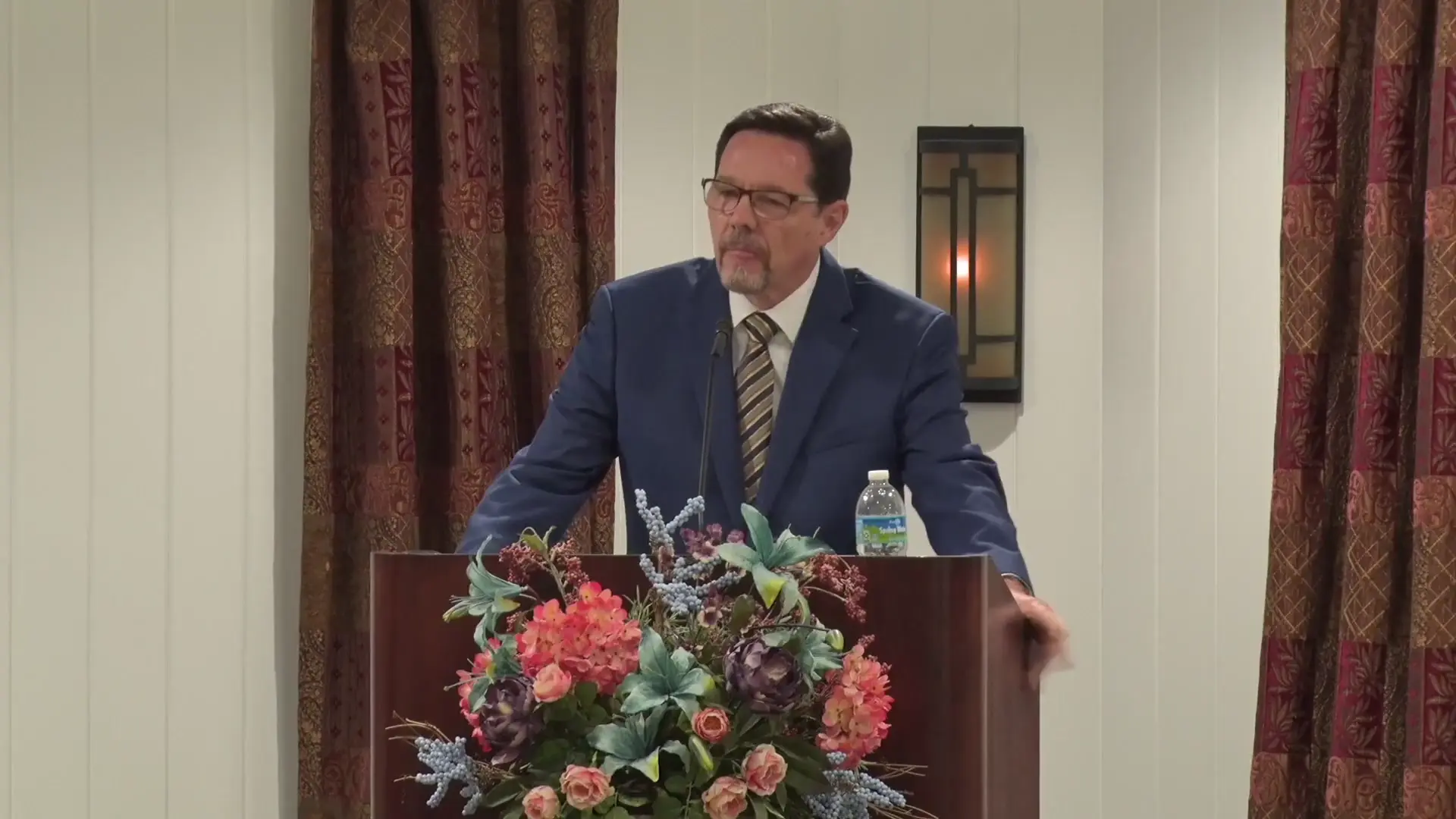
Have You Become an Example to All Who Believe?
Sermon by Martin G. CollinsWhether we are called to welcome others, speak truthfully, keep commitments, or guard our own speech, credibility flows from consistent daily actions.
Pure Language Restored
Feast of Tabernacles Sermon by Martin G. CollinsWhen we repeat negative expressions, they become reinforced, and we develop a negative disposition. Our spoken words reinforce our thoughts.
Out of the Abundance of Our Prayers
'Ready Answer' by John O. ReidJesus remarks that our lips tell the tale our hearts try to hide. Using this proverb as a foundation, what do our prayers tell God about us?
Ecclesiastes and Christian Living (Part Six): Listening
'Personal' from John W. RitenbaughWhen Solomon visits the Temple, he comes away with a sense that too many treat religion far too casually, forgetting that they are coming before God.
Titus (Part Six)
Sermon by Richard T. RitenbaughWe have the commission to be witnesses to a corrupt society. It is in the closeness of the crowd that we have the greatest potential to grow spiritually.

God Never Disappoints
Sermon by Martin G. CollinsUnlike people who, because of their natural carnal nature, feel disappointment with God, God's people should never experience any disappointment with Him.
Perfect, Gentle Courtesy (Part 1)
Sermon by Martin G. CollinsOur manners express our personality, especially as they portray humility, courtesy, or gentleness, and are improved as we make use of God's Spirit.