


Filter by Categories
Developing a Mature Spiritual Appetite
'Ready Answer' by David F. MaasThe journey to spiritual maturity requires moving beyond dependency on spiritual milk to embracing solid food. The apostle Paul expressed frustration at the chronic dependency in congregations, noting to the Corinthians that they were fed with milk and not solid food because they were still carnal and unable to receive deeper teachings. Similarly, to the Hebrews, he indicated that these congregations were not equipped to feed themselves, unable to discern the spiritual from the carnal. It is vital for us to wean ourselves spiritually from the bottle, revitalizing our appetite for the weightier matters of faith. Many have seemingly lost their desire for solid spiritual food over time, becoming conditioned to wait for weekly sermons rather than ravenously devouring God's Word daily. If Sabbath services are the only times we are spiritually nourished, we risk starving to death. Our spiritual diet, much like our physical one, should consist of both carbohydrates and proteins. Carbohydrates, likened to individual scriptures from sermons, provide immediate fuel. Proteins, akin to God's Holy Spirit, serve as building blocks, transforming isolated spiritual facts into eternal principles, giving structure and understanding. Without this structure, scriptures remain mere knowledge without deeper insight. Jesus reminds us that we cannot live by bread alone, emphasizing the need for both immediate fuel and long-term spiritual growth. Preparing spiritual food as an adult involves preserving, canning, and storing it properly. Diligently taking notes and storing up spiritual preserves ensures we are not caught without nourishment during a famine of the Word. Meat in due season will rot if not prepared and preserved correctly, just as spiritual insights must be assimilated and applied. The breakup of past fellowships underscored the necessity of having spiritual reserves, as many found themselves starving spiritually without stored resources. We must learn to feed ourselves, engaging in daily Bible study as our life-sustaining manna, rather than passively waiting to be fed. A real spiritual appetite is developed and sustained by active involvement in God's work. Jesus declared that His food was to do the will of Him who sent Him and to finish His work. Participating in the spiritual harvest, especially in this urgent phase of preparing the bride for Christ, builds a robust appetite. If our spiritual hunger wanes, it may be due to a lack of engagement in this harvest. The key to developing an adult spiritual appetite lies in applying ourselves to the will and work of God.
Eating: How Good It Is! (Part Seven)
'Personal' from John W. RitenbaughJust as a person's physical health depends on the quality of food consumed, so too does spiritual health rely on the nourishment of the mind with godly content. If one ingests harmful or worldly thoughts without discernment, it will inevitably affect conduct and judgment, producing negative patterns. Conversely, diligently seeking out good and true messages, as found in the words of God, tends to foster positive thinking and spiritual strength. The principle is clear: what a person sows into their mind, they will reap in their life, as God renders to each according to their deeds. Spiritually, eating occurs primarily through hearing and reading, where words shape faith and establish life patterns. Only the words of God or Christ, His gospel, and His truths form the faith that leads to salvation, creating the correct beliefs and way of life. This faith, the faith of Christ, arises from believing what He believes. Rejecting or disbelieving His words leads to dismay, while filtering all other messages through God's truth ensures spiritual vitality. Neglecting this nourishment, as seen in the church's past, has led to spiritual malnourishment, weakening faith and contributing to scattering and division. The church, depicted as a body, must maintain spiritual health to resist internal threats like tares or false prophets, who sap strength by diverting nourishment for their own growth. As long as individual members strive to feed on spiritual food intended to strengthen them, such dangers pose less threat to the whole. However, when the body fails to consume the right spiritual sustenance, disorder, confusion, and division emerge, compromising the spiritual walls and leaving the church vulnerable. Maintaining a relationship with God through His revealed truth is central to overcoming this spiritual famine and preserving the abundant life He intends.
Eating: How Good It Is! (Part Three)
'Personal' from John W. RitenbaughThe Bible teaches that feeding the mind parallels the physical truism, "We are what we eat." Just as the body can only work with the food it is given, the mind operates within the quality and quantity of knowledge provided through genetics, instruction, examples, and personal experiences assimilated through thoughtful meditation. Jesus emphasizes in Luke 12:22-23 that life is more than food and clothing, indicating that stability and serenity of mind must come from within, not from physical provisions. Setting one's heart on material possessions or worrying about their lack leads to perpetual insecurity, depriving us of the abundant life in peace and joy that God desires for us. To achieve this abundant life, we must be weaned from overwhelming dependence on physical things and nourished by a nutritious spiritual diet. II Timothy 1:6-7 reveals that it takes the Spirit of God to produce a truly sound mind, as a mind lacking the Holy Spirit will be limited in outlook, unstable, and self-focused, unable to cope with life in a godly manner. In John 6:63, Jesus expands on this, stating that the Spirit gives life while the flesh profits nothing, and His words are spirit and life, playing a large role in producing the abundant life God intends. Isaiah 55:1-3 appeals to the idea of a spiritual food that nourishes the inner man, filling life in a way material things cannot. God's pure Word can purify the mind, freeing it from pre-conversion corruption, but only if consistently eaten and used daily, much like physical food sustains the body. A poor spiritual diet results in a spiritually weak and diseased person, just as a poor physical diet erodes physical vitality. Similarly, good spiritual health can be lost through laziness or neglect, as seen in Hebrews 5:11 and 6:12, where sluggish listening and lack of meditation lead to a lack of faith and faithlessness. For spiritual maturity and vitality, a mature Christian needs solid spiritual nourishment, assimilated and actively applied, to continue growing and prevent regression. Jesus illustrates this in His own life, finding energy and strength in doing God's will, which became His food, filling Him with exhilaration and a sense of satisfaction. As followers progress in His teaching, an interesting transition occurs: He becomes their spiritual food, essential for life within them.
Fully Accepting God's Sovereignty (Part Three)
Sermon by John W. RitenbaughEternal life is to live a quality life as God lives, having developed a close relationship with God, living by faith and accepting His sovereignty over all.
Maintaining Good Health (Part 8)
Sermon by John W. RitenbaughA poor spiritual diet will bring about a weak spiritual condition. What the mind assimilates is exceedingly more important than what the stomach assimilates.

A Subtle Yet Devastating Curse
'Prophecy Watch' by David C. GrabbeAmos 8:11 speaks of 'a famine . . . of hearing the words of the LORD.' Such a famine is occurring today: God's words are available, but few hear them.
Eating: How Good It Is! (Part Four)
'Personal' from John W. RitenbaughJohn 6 has always been a difficult chapter to explain. However, Jesus' teaching is clear. Here is what it means to us.
Maintaining Good Health (Part 7)
Sermon by John W. RitenbaughJeremiah compares studying and meditating upon God's Word to physical eating, enabling a person to receive spiritual energy, vitality, and health.
Answered Prayer Through Faith
Sermon by Martin G. CollinsFor prayer to be successful, our petitions must be specific and synchronized to God's will, but we must patiently and humbly accept God's timetable.
Damnable Heresies
'Personal' from John W. RitenbaughMany heresies have crept into the church over the past several years. Here is how Satan works to introduce heresy into the church, and what we can do about it.
Maintaining Good Health (Part 10)
Sermon by John W. RitenbaughEven though we are already damaged goods when God calls us, by embracing God's truth and seeking His help, we can break the bad habits which enslave us.
The Handwriting Is on the Wall (1996): Scattering
Feast of Tabernacles Sermon by John W. RitenbaughGod initiated the scattering of the church for our ultimate good. When the revelation of God was replaced with the wisdom of this world, God intervened.
The Covenants, Grace, and Law (Part Nine)
Sermon by John W. RitenbaughSatan has attempted to obliterate the sanctification step from the conversion process. Sanctification is produced by doing works pleasing to God.
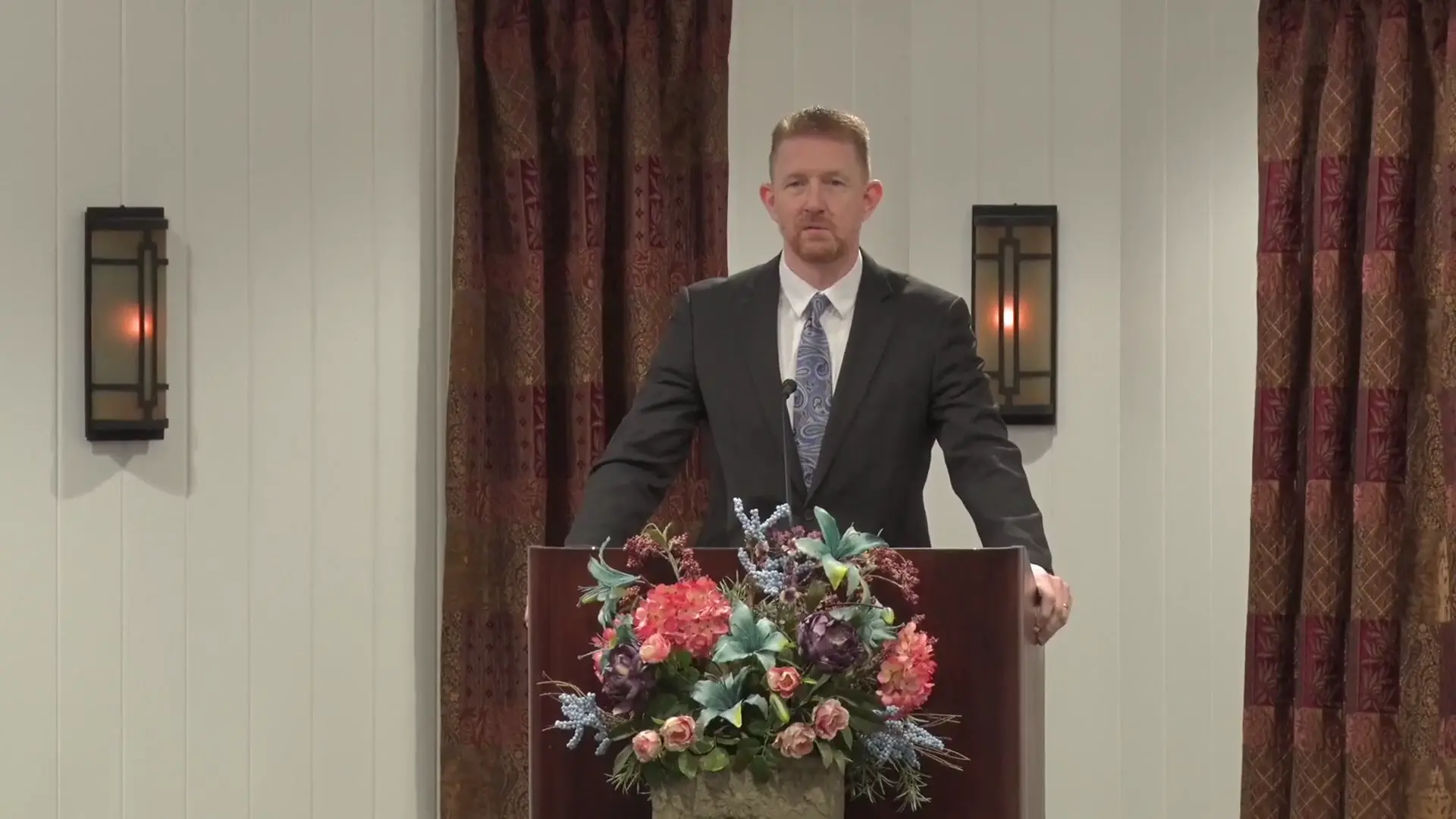
What Do We Do at the End of an Age?
Sermon by David C. GrabbeSpiritual health depends heavily on what one regularly takes in, much as physical health depends on diet. This principle is illustrated through the analogy of atherosclerosis, in which fatty deposits from regular consumption gradually clog the arteries until the blood can barely circulate, often without visible symptoms until the condition is severe. Spiritually, the same gradual process occurs: what is put into the mind on a regular basis accumulates and can cause a hardening, or sclerosis, of the heart toward God. This does not happen from a single lapse—just as clogged arteries do not develop from one meal of French fries—but from a steady diet of lesser things ingested habitually, such as a doughnut eaten three times daily, which naturally and inevitably leads to trouble. This spiritual diet includes constant engagement with the passing national scene, described as a "channel" that is always on because of continual digital connectivity. Watching this channel can impart no faith, hope, or love; it can only sap spiritual strength, never build it, though this does not mean one should ignore reality altogether. Similarly, following podcasters, influencers, commentators, and analysts who align with one's worldview poses a danger, for even where their words are true and reasonable, they cannot compare to the message of Christ. Over time, exposure to such voices causes one to adopt bits of their worldview, not all of which agrees with God, so that the truth of God can barely squeeze through a heart coated with these lesser, though not necessarily evil, influences. By contrast, the true remedy for spiritual sclerosis is a diet centered on the word of God, described as living and powerful, sharper than any two-edged sword, able to discern the thoughts and intents of the heart. Focused study in Scripture is precisely the area that tends to slip when pressure builds, yet it is essential nourishment, for it is how one hears Him who speaks from heaven. The Sabbath is presented as God's provision of a whole day set apart for this very purpose—to pursue God, to be fed by His word, and to strengthen the relationship with Him rather than filling that time with lesser pursuits. Neglecting this spiritual feeding, whether through careless Sabbath observance or through justifying personal preferences over God's holy time, represents an early symptom of hardening. Ultimately, the call is to examine what regularly fills the mind and heart—whether media, work concerns, organizational loyalties, or entertainment—and to ask whether these are nourishing one's walk with God or displacing it. Since spiritual sclerosis can also be contagious, absorbed from one's surroundings and companions, exhorting one another daily is necessary so that the church itself becomes an environment feeding sensitivity to God rather than dulling it. The overarching exhortation is to prioritize a steady, faithful intake of God's word and relationship with Him above every competing influence, for this spiritual diet determines whether the heart remains responsive or grows fatally calloused.
Back to Basics
Sermon by Richard T. RitenbaughIncreasing knowledge without the capacity to process it leads to insanity. To combat information overload, we must get back to the basics of Christianity.