


Filter by Categories
The Importance of Doctrine
Sermon by John W. RitenbaughThe importance of adhering to true doctrine is paramount, as deviating from it leads to spiritual peril. God is not the author of confusion, and doctrinal disagreement among clergymen portrays Him as unconcerned about doctrine, which contradicts biblical clarity. Some individuals, disillusioned with the Church of God, now fellowship with mainstream churches, believing that God's spirit operates there despite their observance of Sunday instead of the Sabbath. They argue that spiritual needs can be met in these settings, dismissing the significance of a single doctrinal package as absolute truth. However, this perspective is misguided, as the Bible consistently identifies the Church of God as the specific body where truth resides, not in other denominations. Scripture warns against fellowshipping with those who do not adhere to God's commandments, as seen in Deuteronomy 13:1-5, where following false prophets or dreamers who lead away from the Lord is condemned. Such actions are a test of faithfulness to God, and joining with those who defy the Sabbath, a clear sign of God's covenant, results in being taught doctrines not commanded by Him. Deuteronomy 6:12-18 further cautions against following other gods, emphasizing God's jealousy and the dire consequences of disobedience. Matthew 7:21-23 reinforces this by stating that not everyone who calls on the Lord will enter the kingdom of heaven, but only those who do the will of the Father, highlighting that many who appear righteous are workers of iniquity due to commandment-breaking. The Church of God is described in I Timothy 3:15 as the pillar and ground of the truth, a specific organization upholding God's doctrine. Amos 3:1-2 and I Corinthians 12:12-28 illustrate that God covenants with one body, not multiple scattered groups, mirroring the unity of Israel as one nation and the human body as an organized entity. Fellowshipping with other spiritual bodies leads to absorption and loss of distinctive identity, as warned in the Old Testament patterns of Israel's scattering and loss among pagan nations. James 3:11-12 questions whether a fountain can yield both sweet and bitter water, implying that truth and error cannot coexist in the same source. Proverbs 7:4-27 portrays false churches as a seductive woman leading to destruction, a path that ensnares the naive and results in spiritual death. Jeremiah 2:13 describes forsaking God, the fountain of living waters, for broken cisterns that hold no water, a fitting analogy for abandoning true doctrine. II Corinthians 6:14-18 commands believers to separate from unbelievers, having no fellowship with unrighteousness or idols, as God dwells only with His people. Ephesians 4:14 warns against being tossed by every wind of doctrine, deceived by cunning craftiness, which destroys godly maturity and unity. The true doctrine, given as a specific package within the Church of God, is essential for preparation for salvation and the Kingdom of God. Galatians 1:6-9 condemns any gospel other than that preached by the apostles, labeling it a perversion. Those who follow false doctrines by fellowshipping with erroneous churches are on a different path, leading to a different destination, unprepared for the first fruits due to disobedience. Doctrine indeed makes a difference, and deviating from it by joining with false churches is a grave error with eternal consequences.
Does Doctrine Really Matter? (Part One)
Sermon by John W. RitenbaughDeviating from doctrine occurs when people reject portions of what God has taught in favor of other teachings. This process begins with instruction from God followed by new teaching from a different source that individuals then choose to believe. The choice leads to changed perspectives and actions that produce division and warfare. Such deviation creates confusion because it is impossible for God to lie or to be the author of confusion. When groups receive teaching from the same source yet hold differing doctrines the result is conflict rather than peace. The pattern appears when individuals feel free to accept or reject teachings according to personal preference rather than maintaining loyalty to the original instruction. This freedom produces a mixture of beliefs that alters the worldview and removes the sense of responsibility to follow what was first taught. The outcome spreads through generations as children accept the same altered teaching and practice it. Division within religious groups demonstrates that the attitudes producing warfare flow from a source other than God. False teaching is identified as the most dangerous element because it subtly erodes belief systems and changes choices over time. Those who deviate in this manner create their own set of beliefs and act upon them. The result is that they no longer follow the path set by the original teaching. The text shows that belief choice and action remain directly linked so that what is accepted as doctrine determines conduct and its consequences.
Does Doctrine Really Matter? (Part Seven)
Sermon by John W. RitenbaughDeviating from doctrine occurs when individuals alter, ignore, or fail to submit to the specific group of teachings that constitute the one faith delivered through God's Word. This faith consists of direct statements arranged plainly so that those called by God can understand and follow them without convolution. Deviation begins with unbelief that allows people to pick and choose doctrines or substitute human interpretations, as when ancient Israelites and later church members changed directions given in Scripture. Such changes, even small ones, produce wrong conclusions and prevent the formation of right character, since correct teaching must be believed and obeyed to produce the right choices. The process connects directly to self-examination because the presence of Jesus Christ in a person is maintained through faithful adherence to His Word. When fear of self-denial or fear of other people overrides trust in God, individuals withhold full submission, leading to presumptuousness and the gradual erosion of faith. Historical examples show that this pattern devastated the Worldwide Church of God through contact with outside teachings and continues to fragment groups today when members reject clear instructions on observances such as Passover and Pentecost. Paul repeatedly charged Timothy and Titus to guard the sound words received from Christ and to avoid profane babblings that increase ungodliness, warning that any deviation subverts hearers and constitutes sin. Ultimately, deviation reveals that fear of the wrong objects has displaced fear of God, so that the fearful and unbelieving stand in danger of the second death. The broader message therefore requires daily practice of denying the flesh its unlawful gratification and directing fear toward the One whose power extends beyond death, thereby preserving the faith intact and enabling growth toward the coming rest.
Does Doctrine Really Matter? (Part Three)
Sermon by John W. RitenbaughThroughout the 'Christian' world, militant atheism may be decreasing, but religious indifference is also increasing at even a more dramatic rate.
Five Easily-Neglected Doctrines
Sermon by John W. Ritenbaugh (1932-2023)Here are five easily neglected doctrines, which, if carelessly observed or distorted, could jeopardize the salvation of God's people.
Are You Part of the Spiritual Unity?
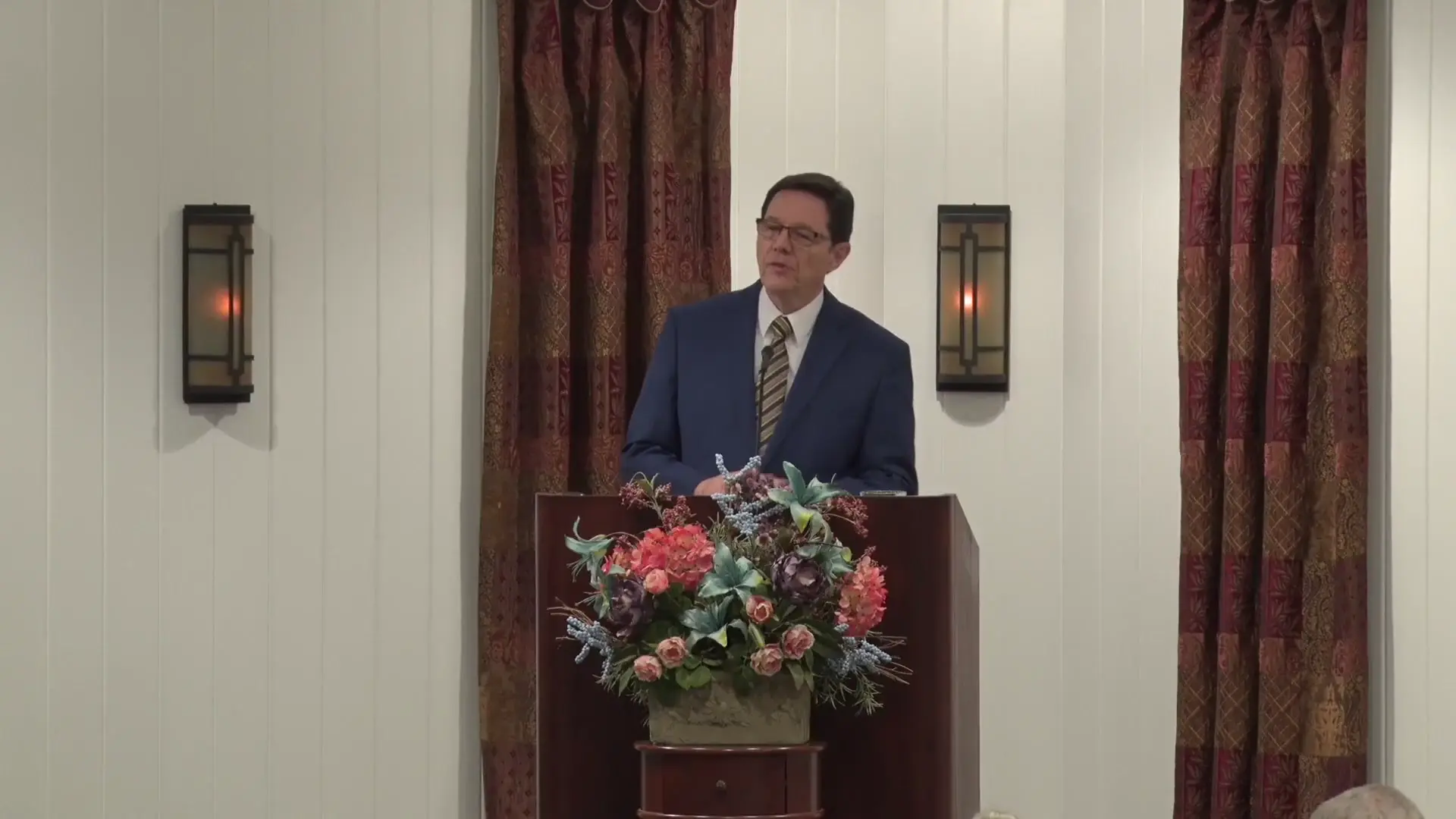
Sermon by Martin G. CollinsSound doctrine functions as the essential foundation upon which spiritual unity rests, and deviation from it inevitably produces division, confusion, and vulnerability to destructive forces. Beliefs shape values, values shape choices, and choices determine whether conduct strengthens or destroys unity—making doctrinal fidelity the root issue behind every collapse, whether in nations, armies, or the church. The apostle Paul repeatedly confronted congregations, especially the Corinthians, whose troubles stemmed directly from a failure to understand the true nature of the church as defined by its doctrine; thinking individualistically rather than as members of one body led to factions such as declaring allegiance to Paul, Apollos, or Cephas. Paul's sevenfold repetition of "one" in Ephesians 4 underscores that spiritual unity already exists and must be safeguarded rather than manufactured. Yet Ephesians 4:13-14 warns that without reaching "the unity of the faith and of the knowledge of the Son of God," believers remain children "tossed to and fro and carried about by every wind of doctrine, by the trickery of men, in the cunning craftiness of deceitful plotting." This instability is directly tied to doctrinal immaturity and susceptibility to deception. The Parable of the Wheat and Tares illustrates how deviation from truth infiltrates the church itself: Satan sows counterfeit seed among the genuine, producing tares indistinguishable from wheat until maturity exposes them. These "religious hobbyists" participate outwardly in worship yet lack true conversion, demonstrating that intermingling of good and evil doctrine within congregations is Satan's ongoing method of undermining God's people. Paul's warnings to Timothy and Titus reinforce this danger: a time would come when people "will not endure sound doctrine, but according to their own desires... will heap up for themselves teachers" and be "turned aside to fables." Those who teach contrary to "wholesome words" and "the doctrine which accords with godliness" are described as proud, quarrelsome, and destitute of truth, sometimes even using godliness as a means of personal gain. Such deviation produces envy, strife, and corrupt disputes rather than unity. Ultimately, doctrine is inseparable from love and practical conduct—"speaking the truth in love" is necessary for the body to function and grow. Any teaching or practice that undermines the interdependence of members, fosters rivalry, or elevates self-importance constitutes false doctrine and introduces schism. Since the church is one spiritual body animated by one Spirit, deviation from sound doctrine is not merely an intellectual error but a rupture in the very bond of peace that Christ established, threatening the collective growth, edification, and witness of the Body of Christ before both humanity and "principalities and powers in the heavenly places."
Together We Stand - But on What?
Sermon by Martin G. CollinsPaul, using the body analogy in I Corinthians, focuses on the need for unity and inter-relatedness by concentrating upon sound doctrine.
Unity (Part 5): Ephesians 4 (B)
Feast of Tabernacles Sermon by John W. RitenbaughAdopting a revolutionary stance for the sake of change, variety, or relieving boredom will systematically destroy the faith once delivered.
Guard the Truth!
Booklet by John W. RitenbaughThe true church of God is an invisible, spiritual organism, of those people that have and are led by the Spirit of God, who hold fast to apostolic teaching.
Purpose-Driven Churches (Part 4)
Sermon by John W. RitenbaughOutcome-based religion holds large membership as its measure of success, believing that the ends justify the means. It avoids doctrine that might divide.
What Does God Really Want? (Part 1)
Sermon by John W. RitenbaughThe priorities in Matthew 6:33 indicates that the primary emphasis should be on repentance and overcoming rather than mastering a technicality.
Conscience (Part 1)
Sermon by John W. RitenbaughHuman nature will degenerate as far as it is allowed. It can adapt quickly to its environment, adjusting effortlessly to immorality and perversion.
Pentecost: A Test?
CGG Weekly by Pat HigginsBeing careless with something we deem minor can be fatal. We are to live by every word God gives to us, kept pure, unadulterated by additions and subtractions.
Meet the Modern Pagans
Commentary by David C. GrabbeAllowing a freewheeling, inclusive approach to multicultural experiences, the new pagan Druid religion is highly eclectic, rejecting only Christianity.
The Holy Spirit: The Power of God
Sermon by Kim MyersThe Holy Spirit enables us to become offspring of God, giving us the ability to produce spiritual fruit, the very character, power, and mind of God.
A Little Leaven
Sermonette by John W. RitenbaughOur individual sins (committed in our thoughts, words, and behaviors) are never isolated, but sadly influence every other member of the congregation.