


Filter by Categories

Afflicting Our Souls
Sermon by Richard T. RitenbaughOn the Day of Atonement, God commands us to afflict our souls, a directive repeated three times in six verses in Leviticus 23, emphasizing its importance as a hallmark of this solemn Sabbath. This affliction, also mentioned twice in Leviticus 16, is central to the day's observance, alongside refraining from work and attending holy convocation. The purpose of afflicting our souls is to humble ourselves, to deny our inner self—both physically and mentally—as a means of spiritual growth. In Isaiah 58:3, there is a direct correlation between fasting and afflicting our souls, showing that to afflict the soul is to fast completely, abstaining from food and water. This act is meant to be more than physical denial; it involves humbling, oppressing, or denying the life force or inner self, affecting both body and mind. The Hebrew term for afflict, "ana," means to humble or deny, while "nephesh" refers to the soul or inner self, indicating a deep internal impact. This affliction extends to our thoughts and emotions, as fasting can cloud the mind and reveal our physical frailty, reminding us of our dependence on God for sustenance and life. Afflicting the soul through fasting is intended to produce humility, piety, grief, repentance, and a seeking of God's will through prayer. It is a tool to draw us closer to Him, to motivate change, and to prevent His wrath by fostering submission and growth in character. However, as seen in Isaiah 58, fasting can become an empty ritual if done hypocritically, without true internal change. God rejects such fasting, as it fails to affect the heart or produce genuine repentance and humility. Jesus Christ, in Matthew 6, teaches that fasting should be a private, spiritual act between the individual and God, not a public display for human praise. It is an internal good work, done by and for the inner self, to build character and deepen one's relationship with the Father and with Him. In Luke 5, He explains that fasting was unnecessary for His disciples while He was physically present, likening His ministry to a wedding feast of joy and abundance. Yet, after His departure, fasting becomes necessary to overcome the disadvantage of His physical absence, helping believers maintain a close relationship with Him and the Father. Jesus also introduces a renewed understanding of fasting, returning it to its original purpose as hinted in Isaiah 58:6-12. This godly fast is not about outward show but about breaking the bonds of wickedness within oneself, leading to a change in attitude toward others—promoting humility, sacrifice, and a willingness to help. Such fasting acknowledges the reality of our human nature and sinfulness, fostering deep repentance and gratitude toward God for His calling and aid. It spurs us to work with Him to repair breaches in character and relationships, ultimately bringing blessings to ourselves and future generations through humble submission.

Holy Days: Atonement
Bible Study by Richard T. RitenbaughOn the Day of Atonement, Christians fast to afflict their souls, demonstrating that only by seeing themselves in proper comparison to God can they adopt the right attitude to submit to Him. This holy day, the most solemn of the seven festivals, emphasizes the importance of humility before God, as He threatens death to those who fail to afflict their souls or who do any work on this day. Fasting, as a means to afflict the soul, puts us in a proper attitude of dependence on God's providence by depriving ourselves of life's necessities for the full twenty-four hours. God desires such a humble spirit so we can walk in harmony with Him. When we fast, we aim to free others from their sins, intercede for their healing, provide for their needs, and understand His will, using fasting as a tool of godly love for the good of others. On the Day of Atonement, we fast to implore God to bring the greatest blessing of unity and oneness with Him upon ourselves and the world.
Humbleness is Our Only Path to Holiness
Sermonette by Bill OnisickFor to come near to God, we must be thoroughly cleansed inside and out. Self-affliction, enabled by fasting, creates humility—the only path to holiness.
The Forgotten Promises
CGG Weekly by Mike FuhrerFasting holds a significant place in drawing close to God and transforming our character from self-centeredness to outgoing concern for others. The Bible illustrates that afflicting the soul through fasting, by abstaining from both food and water for at least 24 hours, is a standard practice for seeking God's guidance and sanctifying time before Him. This act of afflicting oneself, as seen in various scriptural examples, should be treated as holy, spent in prayer and study. God promises remarkable rewards for those who fast properly, including healing, guidance, and strength, ensuring that their light rises in darkness and their needs are met even in drought. These blessings underscore the importance of afflicting the soul through fasting as a vital spiritual discipline.
The Peculiarities of Atonement
CGG Weekly by Richard T. RitenbaughThe Day of Atonement stands out as the most unusual holy day, marked by the distinctive practice of fasting, or afflicting our souls. This act of abstaining from food and drink for an entire day carries profound spiritual instruction. Through fasting, we come to understand our deep dependence on God, recognizing that every moment of our lives is sustained by Him. If He were to withdraw His provision, we would perish swiftly. This realization extends to our spiritual lives, revealing how much He supplies throughout our conversion—revealing Himself, calling us, forgiving us, and granting eternal life. Such understanding humbles us, fills us with awe, and stirs eternal gratitude for His boundless care. As a response, we are moved to treat others with greater kindness, sacrificing for them and showing outgoing concern, mirroring the generosity God extends to us.
Fasting
Sermonette by James BeaubelleThe best offering we can present is a humble and contrite heart, attainable through fasting, if done without pride and self-seeking.
The Price of Atonement
CGG Weekly by Richard T. RitenbaughAfflicting the soul on the Day of Atonement refers to the fast commanded in Leviticus 23:26-32, where God instructs Israel to abstain from eating and drinking for a full 24-hour period. Although this physical affliction tends to dominate personal experience and anticipation as the day approaches, the passage itself reveals through repeated emphasis that atonement, not the fast, is meant to be the central focus of the day. The word "atonement" appears three times in these verses, while "afflicting the soul" and "doing no work" each appear as responses to atonement, not as its primary meaning. The Hebrew word behind "atone," kāpar, means to atone, propitiate, appease, pacify, or wipe clean, with a root idea of covering. This connects directly to the Jewish name for the day, Yom Kippur, meaning a day of covering. An illustrative example from Genesis 6:14, where God commands Noah to cover the ark with pitch to keep water from seeping in, demonstrates the completeness implied by this covering. Similarly, most Old Testament uses of the word describe God covering or purging sin through animal sacrifice, that is, killing a bull, goat, or ram and using its blood to cover the sin. The soul's affliction, therefore, exists within the larger biblical teaching that such sacrificial covering under the Old Covenant was never fully effective. Hebrews 10:4 states plainly that the blood of bulls and goats cannot take away sins. Under that system, sins were only ceremonially covered or hidden, not truly forgiven or removed. Paul describes these repeated yearly sacrifices as reminders of sin that God took no pleasure in, since they could never accomplish complete removal or forgiveness of guilt. By contrast, the New Covenant, as prophesied in Jeremiah 31:34 and quoted in Hebrews 10:17, promises that sins will not only be forgiven but forgotten entirely. The reason animal sacrifices could never suffice is rooted in the principle that a lesser life cannot redeem a greater one. Since the life of a bull or goat holds less value than a human life, no amount of animal sacrifice could equal the price required for human redemption. Genesis 2:17 establishes that the penalty for sin is death, meaning that forgiveness requires a payment of equivalent or greater worth than the sinner's own life. Even if a person paid for his own sins through death, such a payment would only cover himself, leaving no provision for anyone else. Thus, a sacrifice of surpassing value was needed, one that could not only cover sin as under the Old Covenant but completely pay for, forgive, remove, and forget it. This was fulfilled in the sinless life of the Creator God who became flesh and dwelt among humanity, Jesus Christ. Because of who He is, His life possesses incalculable value, sufficient to pay for the sins of all humanity and still remain alive, having been raised to become life for others. This truth, that atonement was accomplished not by animal blood but by Christ's own life, is presented as the true price of atonement and the proper focus of the Day of Atonement, of which the physical affliction of the soul through fasting serves only as a response.
The Unity of Atonement
Sermonette by Austin Del CastilloWe fast to learn humility, sacrifice, and empathy towards our Savior, who had His blood shed and who bore our sins, being forsaken for our sakes.

The Fall Holy Days
Article by John ReissThe Day of Atonement, observed on Tishri 10, centers on God's specific instruction found in Leviticus 23:27-28, where His people are commanded to "afflict your souls" as part of this holy convocation. This affliction is defined through Isaiah 58:3, which reveals that fasting constitutes the means by which souls are afflicted. On this day, observers neither eat nor drink for a full twenty-four hours. The Hebrew term underlying this command, anah, carries the meaning of afflicting, humbling, and forcing oneself, indicating that this practice is not merely physical deprivation but a deliberate act of self-humbling before God. The purpose of this affliction is to seek God's guidance while minimizing human resistance to His instructions and urgings. The physical weakness produced by fasting is connected to spiritual strength, echoing the apostle Paul's principle that when one is weak physically, one becomes strong spiritually. This affliction of soul works alongside another key feature of the day: the total prohibition of work. Freed from ordinary tasks such as meal preparation, observers can devote the day to sincere introspection and communion with God. This combination of fasting and rest from labor serves a theological purpose beyond personal discipline. It teaches the recognition that God accomplished atonement without human aid or works, since salvation comes by grace rather than human effort. The affliction of the soul thus becomes a physical enactment of humility, putting the observer into the proper frame of mind to remember the One who provides all things and whom all must obey. This connects directly to Isaiah 66:2, which states that God looks favorably on the one who is poor and of a contrite spirit, who trembles at His word—qualities that fasting and self-affliction are designed to cultivate. Within the broader pattern of the fall holy days, the Day of Atonement and its call to afflict the soul pictures a thoroughly humbled mankind submitting to God's direction. This humbling is not an end in itself but points toward the larger truth that salvation and unity between God and humanity are entirely God's doing. Without His revelation and calling, human beings could accomplish nothing worthwhile spiritually. The affliction of soul on this day thus prefigures the ultimate result of Christ's atoning work: a humble unity and cooperation between God and man, and among all humanity, that will produce a glorious, prosperous, and peaceful world under Jesus Christ's future rule.
Atonement: Physical and Spiritual Cleansing
Sermonette by Ryan McClurePhysical fasting provides insights to a parallel spiritual process of cleansing and removal of sin. Our High Priest commands us to let go to lighten our burden.
Isaiah 58 and Fasting
Sermon by Richard T. RitenbaughFasting on the Day of Atonement centers on the specific command to "afflict your souls," a phrase repeated throughout Leviticus 23 and Leviticus 16 with severe consequences attached—those who fail to afflict their souls are to be cut off, the same penalty given for doing work on that day. This affliction of soul is the one required human action on Atonement, standing in stark contrast to the command that no work at all be done, a stricter prohibition than on any other holy day. This distinction is significant: since the actual work of atonement—payment for sin through Christ's sacrifice and the removal of sin as depicted by the Azazel goat—is accomplished entirely by God, humanity's only role is to afflict the soul, to fast, to be humble and contrite. Going without food and water reminds the faster of total dependence on God for physical sustenance and, by extension, for spiritual life itself; without God's Word, Spirit, forgiveness, and grace, a person would spiritually wither just as the body weakens without food. Isaiah 57 establishes the necessary posture for this affliction of soul, describing God as dwelling with those of a contrite and humble spirit in order to revive them. God explicitly states that He cannot contend forever, for both spirit and soul would fail before Him, underscoring that affliction of soul must lead to humility rather than mere physical hardship. Isaiah 58 then exposes the difference between counterfeit and genuine affliction of soul. The people fasted—afflicting their souls physically—yet pursued their own pleasure, oppressed laborers, and fasted merely to win disputes, provoking God's rebuke: "Is it a fast that I have chosen, a day for a man to afflict his soul?" Bowing the head like a bulrush and wearing sackcloth is dismissed as hypocrisy if it lacks true inward humility, a point Christ reinforces in Matthew 6 by warning against fasting to be seen by others. The true fast God chooses redirects the affliction of soul outward into loosing bonds of wickedness, freeing the oppressed, and sharing bread with the hungry—actions that flow only after one is first freed from personal sin, since one cannot free others while still burdened by one's own faults. The reward for authentic affliction of soul, freed from hypocrisy and self-interest, is described in Isaiah 58:8-12: light breaking forth, healing, righteousness going before, God as rear guard, and the soul satisfied even in drought. Thus affliction of soul functions not as a legalistic ritual but as the spiritual posture of humility and dependence that restores unity between God and His people.
Fast or Famine
Sermon by Richard T. RitenbaughGod has used famine as one of the tools to get the Israelites' attention when they violated the terms of the Covenant with Him, forsaking His holy law.
Psalms: Book Four: All His Benefits
Sermon by Richard T. RitenbaughAll that we have has come from others, especially God. The Day of Atonement points out how needy and dependent on God we are; fasting shows our frailty.
All Flesh Shall See the Salvation of God
Sermon by Martin G. CollinsMoral failure compounds when self-loathing sabotages happiness. Only atonement can turn this depression around, providing the comfort of mental and spiritual health.
A Day Without Work
Sermon by Richard T. RitenbaughRefraining from work on the Day of Atonement symbolizes our inability to atone for our sins. We, humble and poor in spirit, depend upon God for everything.
Faith and Spiritual Focus
Sermon by Martin G. CollinsFasting is not for pressuring God or attempting to put Him in debt, but instead to reveal what we really are, clothing us with the humility to yield to Him.
Seeking God's Will (Part Four): Sacrifice
Sermon by Richard T. RitenbaughOn the Day of Atonement, we are to afflict our souls by fasting. We do no work, signifying that we did absolutely no work to attain our salvation.
Why Trumpets?
Sermonette by James BeaubelleThe Feast of Trumpets depicts a time when angelic beings sound an alarm, warning God's saints to prepare to put themselves under His sovereign rule.
Pride, Humility, and Fasting
Sermon by John W. RitenbaughThe intent of fasting is to deflate our pride—the major taproot of sin—the biggest deterrent to a positive relationship with God. Humility heals the breach.
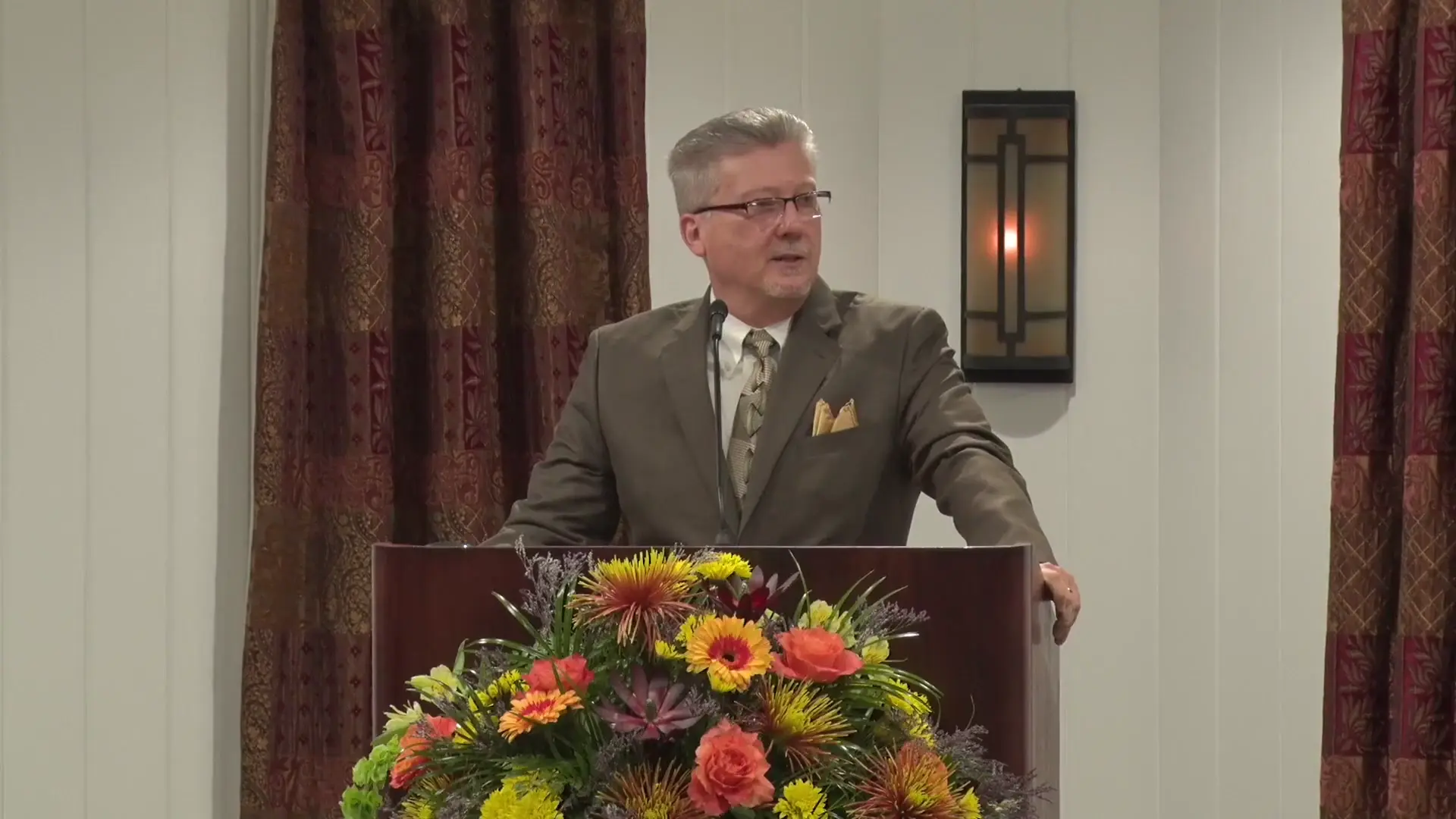
Jesus in the Feasts (Part Four): Atonement
Sermon by Richard T. RitenbaughIsaiah 53 and passages from the New Testament substantiate Christ's dual role in shedding His blood and bearing away sins, thereby reconciling humanity to God.
The Doctrine of Israel (Part Fourteen): Israel Redeemed
Sermon by Richard T. RitenbaughGod employs a winnowing process in selecting those who will enter the Millennium. The process includes punishment for Israel's failure to serve as priests.
What We Can Learn From This Day of Atonement
Sermon by John W. RitenbaughGod's solution to mankind's separation was sending a second Adam, Jesus Christ, to make reconciliation possible. Fasting shows our dependence on God.
A New Beginning
Sermon by Martin G. CollinsAtonement represents a new beginning when people of the world would be reconciled to God and freed from their bondage, reflecting the year of Jubilee.