


Filter by Categories
Did Christ's Resurrection Change the Day of Worship? (Part One)
CGG Weekly by David C. GrabbeIn the Christian era, the Sabbath has been a point of contention since at least the fourth century AD, when the Roman Catholic Church claimed the authority to shift the day of worship from the seventh day to the first. Over the subsequent years, countless seventh-day Sabbath-keepers faced imprisonment or death for adhering to the fourth commandment. During the Protestant Reformation, those who opposed the Catholic Church's abuses broke away, yet they retained the altered Sabbath tradition. Today, most professing Christians observe the first day as the proper day of worship, despite the clear biblical affirmation that only the seventh day was blessed, sanctified, and made holy. Catholic theologians openly acknowledge this change, asserting that church leadership holds the authority to make such modifications, even though the Bible upholds the seventh day as the Sabbath. Protestants, however, justify Sunday worship as a tradition of men, claiming it honors the day of Christ's resurrection. Yet, there is no biblical evidence of God transferring the sanctification and holiness from the seventh day to another. The assertion that the Sabbath has changed implies that the Creator Himself is changeable, contradicting the truth that with God there is no variation or shadow of turning, and that Jesus Christ is the same yesterday, today, and forever. The Sabbath is not a minor detail or obsolete ritual; it is the capstone of the creation week, set apart by God as holy to allow fellowship with Him without the distraction of ordinary labors. God gives no indication that the Sabbath is temporary or subject to change, and prophecies affirm that it will be observed after Christ returns and establishes His Kingdom. Throughout Scripture, from creation through the ministry of Christ and into the New Covenant church, God's establishment and reinforcement of the seventh-day Sabbath remain steadfast, with no hint that the day of worship would shift to the first day of the week.
Rome's Challenge (Part 1)
Article by StaffThe Seventh-day Adventists, adhering strictly to the Bible as their teacher, find no warrant for changing the Sabbath from the seventh day to the first. They set apart Saturday for the exclusive worship of God, following the positive command of God Himself, reiterated in the sacred books of the Old and New Testaments, and practiced by the children of Israel for thousands of years. In contrast, Protestants, since their emergence in the sixteenth century, have rejected the day named by God for His worship, assuming the first day, Sunday, in apparent contradiction to His command, without any reference to such a change in the Sacred Volume. The Adventists derive their belief from the consistent teaching of both the Old and New Testaments, confirmed by the life and practice of the Redeemer and His apostles, showing no cancellation of the Saturday arrangement. Protestants, however, have aligned with a practice not supported by their infallible guide, the Bible, adopting a day for worship that lacks Scriptural endorsement, thus teaching and practicing what may be contrary to God's explicit command to remember the Sabbath day and keep it holy.
Did Christ's Resurrection Change the Day of Worship? (Part Two)
CGG Weekly by David C. GrabbeThe seventh day of the week, the Sabbath, was set apart at creation as blessed, sanctified, and holy. It was given to Israel before the Old Covenant, confirmed in a separate perpetual covenant, and observed by God's people throughout biblical history. Jesus kept the seventh-day Sabbath, as did the apostles and early church after His death. Prophecies indicate it will be kept when He returns to establish His Kingdom on earth. Despite this consistent teaching, some justify breaking the fourth commandment and worshipping on the first day of the week, claiming to honor the day of Christ's resurrection, though there is no indication that God intended such a change. Whether by assumed authority or careless handling of God's Word, Sunday-keeping is a tradition of men rather than an ordinance of God. Jesus declares that love for Him is shown by keeping His commandments, including the ten given at Mount Sinai. Yet, for centuries, church leaders have led millions into error by making God's commandment of no effect through their tradition. Jesus' resurrection made no change in the day of worship; men took it upon themselves to alter it without respect to God's Word. In the future, when Christ returns, all who claim Him as King will once again hallow the Sabbath.

Strategies for Interfacing with Babylon without Becoming Assimilated (Part Four)
Feast of Tabernacles Sermon by David F. MaasTragically, the vast majority of professing Christian churches, over 77% according to research, have chosen the venerable day of the sun as their day of rest, rejecting the day God hallowed from Creation. Most professing Sabbatarians, a mere 5% of the total, have also discarded the annual Sabbaths and holy days identified in Leviticus 23, which outline God's master plan for the future. The Eastern Orthodox Church, the Roman Catholic Church, and its multiple Protestant daughters have all rejected the day God sanctified as the Sabbath, embracing instead the day faithfully worshipped by pagan cultures across history, venerating their sun gods. This rejection of the seventh-day Sabbath, the day on which Almighty God regularly instructs His chosen saints, has led to a predictable erosion of the other commandments, resulting in widespread moral decay among peoples who should have known better. Historically, human hands rather than divine authority altered the Sabbath. Early in the fourth century, Emperor Constantine, seeking political advantage, issued a civil decree on March 7, 321 AD, making Sunday a day of rest, stating that all judges, city people, and craftsmen shall rest on the venerable day of the sun. This edict marked the first law establishing Sunday as a sacred day of rest. Following Constantine's lead, the Roman papacy at the Council of Laodicea in 364 AD passed a law condemning the practice of resting on Saturday, transferring it to Sunday, declaring that Christians shall not Judaize and be idle on Saturday but shall work on that day, while honoring the Lord's day. If found Judaizing, they were to be shut out from Christ. Eusebius, a noted Roman Catholic bishop, confirmed this shift, stating that all duties of the Sabbath were transferred to the Lord's day. Thus, human intervention, not divine command, changed the day of the Sabbath, depriving the churches of the world from the knowledge of God's master plan revealed through His weekly and annual Sabbaths.
Why So Many Religions? (Part Two)
CGG Weekly by John W. RitenbaughMan has often deviated from God's clear teachings, leading to divisions among religious groups. A striking example is the alteration of the Sabbath, which the Bible authorizes as Saturday for the worship of God. Despite this, the Catholic Church has established Sunday as the day of worship, claiming authority to do so, though such permission is not found in the Bible. Protestants, while agreeing that this permission is absent from Scripture, still do not observe the Sabbath as designated. This reflects man's stubborn nature, turning away from God and insisting on setting his own rules, contrary to the enduring and pure words of the Lord. God's teachings remain absolute, and He will not bend to man's will, for to do so would deny His sovereignty, character, and goodness.
Many Are Called, But Few Are Chosen (Part Two)
Sermon by Martin G. CollinsDespite the Council of Laodicea's condemnation of the Sabbath, a group of believers termed Paulicians kept God's laws and resisted the heresy from Rome.
Sabbathkeeping (Part 1)
Sermon by John W. RitenbaughHow and why a person keeps the Sabbath determines whether this test commandment is really a sign between God and His people or an act of futility.
Strategies for Interfacing with Babylon without Becoming Assimilated (Part Five)
Sermon by David F. MaasGod is not a closed triangular Trinity, but a family consisting of God the Father and God the Son, and will include billions of resurrected, glorified saints.
Rome's Challenge (Part 2)
Article by StaffProtestantism recognizes no rule of faith except the Bible, yet the Bible nowhere gives Protestantism the authority to change the day of worship to Sunday.
Roman Catholic and Protestant Confessions About Sunday
Article by StaffIt is generally known and freely admitted that early Christians observed the seventh day as the Sabbath, and that mere men changed God's times and laws.
Rome's Challenge (Part 3)
Article by StaffJesus never deviated from observing the 7th-day Sabbath, nor ever hinted at moving its holiness or sanctification to the first day of the week.
Rome's Challenge (Part 4)
Article by Staff'The day of the Lord' or 'the Lord's day' is not a reference to the fist day of the week (Sunday) but to the time of Jesus Christ's judgment at His return.
The God of the Old Testament
'Ready Answer' by Pat HigginsMany believe that the God of the Old Testament was a cruel, angry God, while Jesus, the God of the New Testament, is kind and loving. Here's what Scripture shows.
The Commandments (Part Five)
Sermon/Bible Study by John W. RitenbaughThe Sabbath is a period of time God purposefully sanctified and set apart for the benefit of mankind, a time dedicated to God's spiritual creation.
Does Doctrine Really Matter? (Part Fourteen)
Sermon by John W. RitenbaughGod has sanctified no day other than the Sabbath. Sunday worship is a pagan deviation, perpetuated by Gnosticism, a movement that despises God's laws.
Belief with Obedience
Sermon by John O. ReidCatholics and Protestants, because of lack of belief, do not find the Bible a sufficient guide to salvation. They claim to believe Christ, yet disobey.
Leadership and Covenants (Part Five)
'Personal' from John W. RitenbaughUniversal in scope, the Edenic Covenant introduces God to mankind as his Creator and establishes the way human beings are to relate to Him and the creation.
The Fourth Commandment (Part 1)
Sermon by John W. RitenbaughThe Sabbath is a special creation, a very specific period of holy time given to all of mankind, reminding us that God created and is continuing to create.
The Fourth Commandment (Part 3)
Sermon by John W. RitenbaughJesus magnified the Sabbath, giving principles by which to judge our activities. Each time Jesus taught about the Sabbath, He emphasized some form of redemption.
Foundation of Sand
Sermonette byPaul warned the Colossians of scholarly men who would try to mix God's truth with vain philosophy based on the tradition of men instead of Jesus Christ.
Simplifying Life (Part Five)
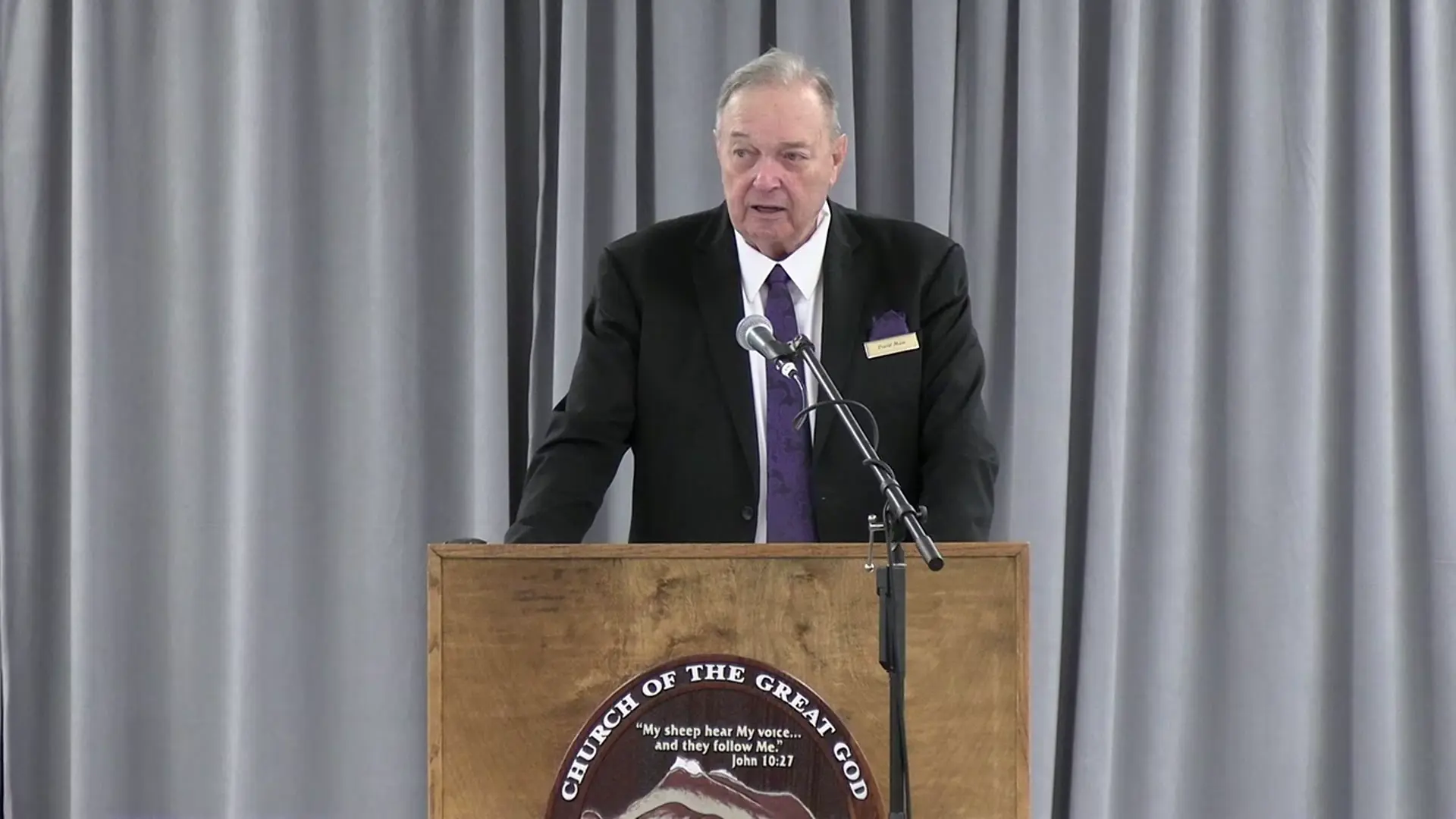
Feast of Tabernacles Sermon by David F. MaasThe seventh-day Sabbath is God's design for rest, sanctification, and restoration, both today and for the entire creation in the Kingdom of God.

How Does Faith Establish the Law? (Part Two)
'Ready Answer' by David C. GrabbeThe meaning of Romans 3:31 is plain unless one believes that grace abolishes God's law. Justification by faith is based on the law's true purpose.
Is It Salvational? (Part Three)
CGG Weekly by David C. GrabbeWhen Jesus returns, many will be prohibited from entering the Kingdom! They think they know Him, yet they are just using Him to make themselves important.
The Signs of God (Part Three)
CGG Weekly by David C. GrabbeGod equates belittling His signs with rejecting Him. The signs of the weekly and annual Sabbaths are emphasized by God, but commonly cast aside by men.
Does Doctrine Really Matter? (Part Thirteen)
Sermon by John W. RitenbaughThe elect are not immune to antinomian deception, including the doctrine of eternal security, the total depravity of man, unconditional love, and cheap grace.
The Commandments (Part Nine)
Sermon/Bible Study by John W. RitenbaughBenign neglect of the Sabbath covenant can incrementally lead us into idolatry. We must treat this holy time as different from the other days of the week.