


Filter by Categories
A Different Kind of Savior
Sermon by Richard T. RitenbaughIn the early first century, many Jews in Palestine were gripped by a profound Messianic fervor, eagerly anticipating the prophesied Messiah's arrival. They were actively seeking Him, well-versed in their scriptures and aware of predictions about His coming. Despite their knowledge, they often misunderstood the prophecies, focusing on a specific time frame around the early first century for His appearance. They expected Him to reveal Himself, possibly in Jerusalem at the Temple, or in Bethlehem, the city of David, as understood by some in Herod's court. Individuals like Simeon, a just and devout man in Jerusalem, waited for the Consolation of Israel, assured by the Holy Spirit that he would see the Lord's Christ before his death. Similarly, Anna, a prophetess of great age, served God in the temple and spoke of Him to all who sought redemption in Jerusalem, indicating a broader group of seekers in the city and beyond. This expectation was not limited to common people; religious elites, including priests, Levites, and Pharisees, also inquired about potential Messiahs, questioning figures like John the Baptist to determine if he was the Christ. The anticipation extended across regions, with disciples from the Sea of Galilee, such as Andrew and Philip, recognizing Jesus as the Messiah and committing to follow Him. Even Samaritans, including the woman at the well in Sychar, expressed hope for the Messiah's coming, with Jesus directly affirming to her that He was the One. This widespread longing was evident throughout the nation, though confusion and skepticism persisted due to diverse opinions and past experiences with false messiahs. Several individuals, like Simon of Peraea, Athronges, and Judas of Galilee, had proclaimed themselves messiahs between 4 BC and AD 6, leading rebellions against Roman rule, only to be crushed. These figures shaped a perception of the Messiah as a warrior king of Davidic lineage, expected to expel oppressors and restore Israel as God's chosen people. Influenced by Old Testament passages, such as II Samuel 7, Amos 9, Isaiah 9 and 11, and Jeremiah 23, many Jews envisioned a Messiah who would establish a permanent kingdom, defeat enemies like the Romans and Edomites, and bring judgment and justice, focusing on martial imagery over spiritual redemption.
Priceless
CGG Weekly by Richard T. RitenbaughSpring heralds Christianity's annual memorial of the Savior's death and His resurrection as our High Priest and soon-coming King. For the church of God, the observance of Passover marks the time when, roughly 2,000 years ago, Jesus of Nazareth sacrificed Himself for our sins, granting access to the Father and making possible our salvation and eternal life. Due to the vast distance in time, place, and culture, Christ's sacrifice often lacks the immediacy it should have for His modern disciples. Some view it merely as a historical fact, acknowledging that God forgives through His Son's blood and offers the potential of everlasting life. Others respond emotionally, sympathizing with His suffering but not fully grasping the moral and spiritual obligations it places on His followers. Many who profess to be Christians focus excessively on His death, leaving Him figuratively on the cross, while underemphasizing His current, glorious role as our Advocate before the Father and Head of the church. Throughout His life, Jesus faced constant misunderstandings about Himself, His teachings, and His purposes, enduring frequent threats to His life and the knowledge of betrayal and abandonment by His closest friends.

No Private Interpretation
'Prophecy Watch' by Richard T. RitenbaughThe concept of the Messiah and the perceptions surrounding Him are deeply woven into the fabric of biblical prophecy and human misunderstanding. A central theme of the Old Testament is the coming of the Messiah, with prophecies spanning from Genesis 3:15 to Malachi 4:2, foretelling the arrival of the Savior. The gospel writers, particularly Matthew, diligently highlight how Jesus fulfilled these predictions through His actions and the events surrounding Him, often quoting Scripture to substantiate these claims. Despite having access to these prophecies and the living example of Jesus, many first-century Jews, burdened by traditional yet erroneous understandings, failed to recognize Him as the Messiah. Their reactions, as recorded in John 7:25-27, reveal a profound confusion about what to expect from the Messiah, rooted in preconceived notions rather than submission to God's revealed knowledge. Even John the Baptist, praised by Jesus as among the greatest men ever born, struggled with his preconceived ideas about the Messiah, needing reassurance through the fulfillment of prophecies like Isaiah 61:1-2, as seen in Luke 4:17-21. A tragic example of misinterpretation is found in Judas Iscariot, whose misconceptions about the Messiah's role led to the betrayal and death of Jesus, as well as his own demise. Scholars suggest Judas may have been influenced by the Zealots, a group driven by a mix of socio-economic, political, and prophetic ideas, believing the Messiah would lead a revolt against Roman rule to establish God's Kingdom. This misunderstanding stemmed from ignoring prophecies of the Messiah's first coming and mistiming those of the second, leading Judas to misinterpret Jesus' message and actions, ultimately resulting in catastrophic consequences.

Recognizing the Second Witness
Article by Charles WhitakerThe Messiah's role in preaching the Good News of His Father's Kingdom unfolds through two distinct visits, often referred to as His two ministries or His first and second comings. Nearly 2,000 years ago, during His first visit, Christ introduced His message by reading Isaiah 61:1-2 in the synagogue of Nazareth, yet many Galileans failed to recognize Him as their Messiah. At His second visit, as He stands to read Isaiah 61:2-3, many will again be filled with wrath and seek to destroy Him, unable to acknowledge Him as their Messiah. During His first witness, two groups in Jerusalem, described as the Magicians and the Jingoists, failed to recognize Jesus as the Messiah due to misconceptions and misinterpretations of Scripture. The Magicians believed the Messiah would appear suddenly out of nowhere, misinterpreting Malachi 3:1, and rejected Him because they knew His origins. The Jingoists, aware of prophecies about Christ's descent from David and birth in Bethlehem, overlooked Micah's detail that He would only come forth from Bethlehem, not reside there, and dismissed Him for beginning His ministry in Galilee. In contrast, a group called the Devout, encountered shortly after Christ's birth in Jerusalem, recognized Him as the Messiah even before His ministry began. Their deep love for God's truth, guided by characteristics such as having God's Spirit, hearing God's Word, fellowshipping with like-minded believers, fasting often, praying regularly, making scriptural connections, and valuing assembly, enabled them to identify their Messiah while others could not. The failure of the Magicians and Jingoists to recognize Christ as their Messiah led to dire consequences within forty years, as they suffered through a devastating tribulation when the Romans destroyed Galilee, Judea, and Jerusalem. Conversely, the Devout, by doing the right things and understanding the imminence of Christ's first witness, were counted worthy to escape such distress and stand before the Son of Man. Today, standing at the threshold of His second witness, the choice to follow the example of the Devout—loving the truth, using God's Spirit, studying His Word, fasting, praying, and fellowshipping with the elect—will determine whether one recognizes the Messiah and escapes the coming Tribulation.

Jesus and the Feast (Part One): Alignment With God
Feast of Tabernacles Sermon by Richard T. RitenbaughOnly in John 7 do we find some evidence of Tabernacles and the Eighth Day, providing a gold mine to discover what was on Jesus's mind during this time.

Jesus and the Feast (Part Two): Belief in the Spirit
Feast of Tabernacles Sermon by Richard T. RitenbaughOn the last day of the Feast, Jesus proclaimed Himself as the One who will dispense God's Spirit, amplifying the promise He had made to the woman at the well.
John (Part Four)
Sermon/Bible Study by John W. RitenbaughThe apostle John has provided at least eight separate forms of witness, establishing the veracity of Jesus Christ's identity as God in the flesh.
The Birth of Jesus Christ (Part Two): Nativity
'Prophecy Watch' by Richard T. RitenbaughWhen Jesus was born, one of the greatest events in history occurred. The angel's announcement to the shepherds may have been the first preaching of the gospel.
Why the Transfiguration?
'Ready Answer' by Richard T. RitenbaughWhy was Jesus transfigured on the mount? What did it mean? What was it designed to teach the apostles?

Why Hebrews Was Written (Part Eight): Hebrews 1
'Personal' from John W. RitenbaughHebrews 1 delivers a knock-out punch to skeptics like many first-century Jews who claimed He falls short in qualifying as our High Priest and Savior.
John (Part Thirteen)
Sermon/Bible Study by John W. RitenbaughThe myriad opinions of the crowd concerning Jesus were all conditioned from their perspectives and traditions, but hardly ever from God's perspective.
Not-So-Great Expectations
CGG Weekly by David C. GrabbeA person's expectations can blind him to the truth because his preconceptions fail to match reality. This fault indicates he does not see God clearly.
John (Part Twelve)
Sermon/Bible Study by John W. RitenbaughWhat we believe automatically determines what we do; it is impossible to separate faith and works. If Jesus is not our source of belief, our works will suffer.
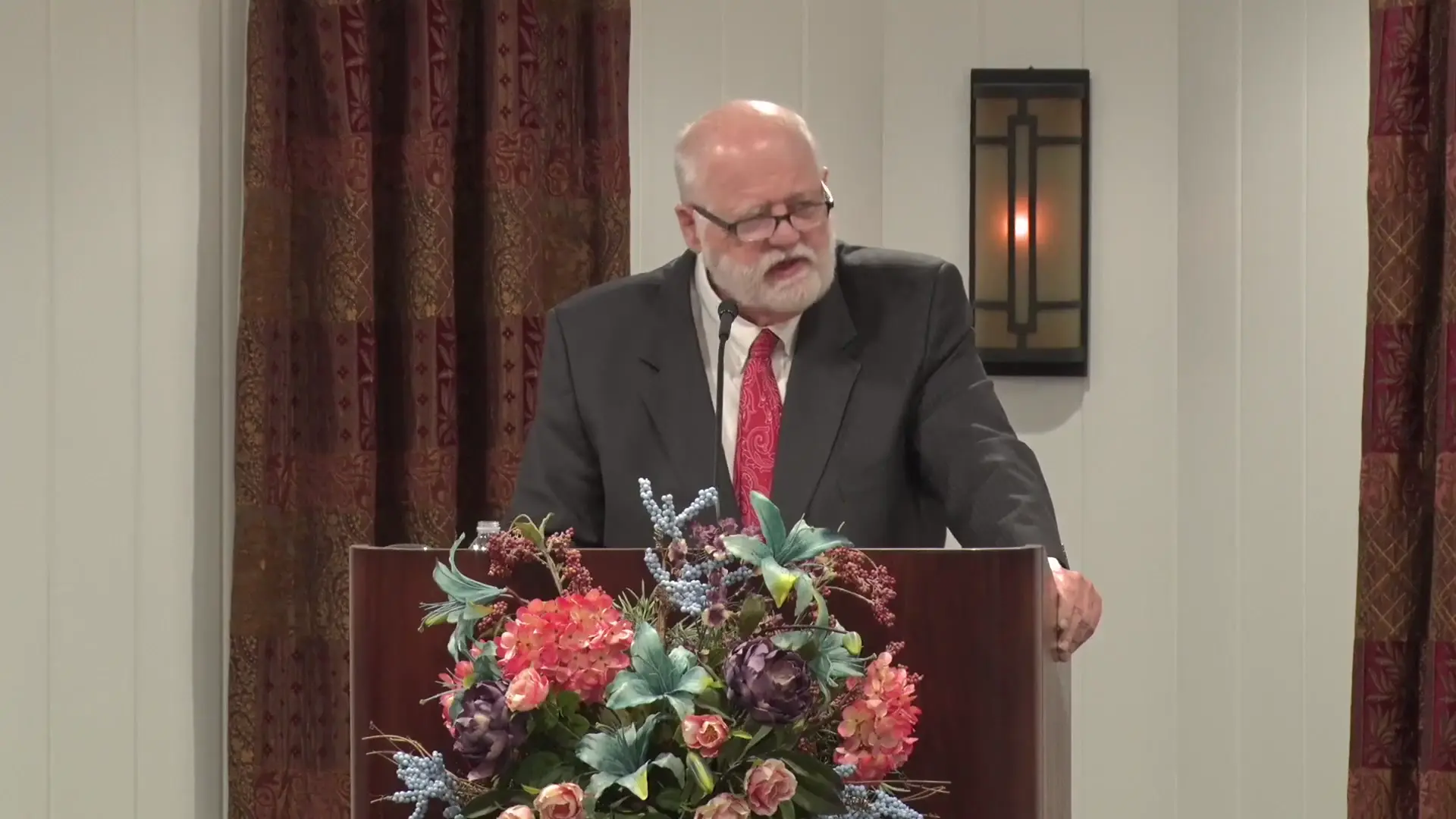
Judas Iscariot
Sermon by Ted E. BowlingJudas did not believe that Jesus was the Messiah. He viewed Him only as an honorable teacher rather than as supreme in authority or God. This perception caused Judas to remain with Jesus for three and a half years while calculating personal gain from the position of treasurer. Judas could not see that Jesus was God and never realized how perfect Jesus really was. His response of calling Jesus Rabbi instead of Lord reflected this limited view. The perception prevented any change of heart even after Jesus washed his feet and offered every opportunity to turn back.
The Last Words of Jesus Christ
Sermon by Martin G. CollinsDuring the final hours of His life, Jesus made seven last statements to mankind, illustrating His nature and what He considered to be important for us.
Passover (Part Two)
Sermon by John W. RitenbaughThe Passover is to be kept on the twilight of the 14th, while the Feast of Unleavened Bread begins on the 15th. The Word of God supersedes tradition and heritage.
John (Part Nineteen)
Sermon/Bible Study by John W. RitenbaughThe key to the real abundant life is to follow Christ's example of forcing His will into submission to the Father's will, even to the point of death.
Matthew (Part Twenty-Three)
Sermon/Bible Study by John W. RitenbaughThe apostles' inability to drive out the demon teaches that faith is not a constant factor; it will deteriorate if it not exercised through prayer and fasting.

Jehu: A Type for Today
Sermon/Bible Study by Richard T. RitenbaughJehu may have been called to save Israel, but he was impulsive and bloodthirsty. Though he destroyed Baalism, he did not restore true worship of God.
A Footnote on the Start of Christ's Ministry
Sermonette by David C. GrabbeWhen the angry members of the local synagogue tried to push Jesus over the cliff, they paralleled the Jewish tradition for the azazel goat.
The Book of Daniel (Part Five)
Sermon by Martin G. CollinsDaniel 7-8 is full of overlapping images and visions. Both chapters show the certainty of the end of Gentile kingdoms, replaced by God's eternal Kingdom.
Cain's Assumption (Part Two)
CGG Weekly by David C. GrabbeIs it possible Cain saw himself as the great protagonist, the conqueror of Satan—even the Savior of the world? Did Cain literally have a "Messiah complex"?
Post-Resurrection Lessons
Sermon by Richard T. RitenbaughOn the Road to Emmaus, some of Christ's followers were agitated, confused, and in turmoil, being unable to put the scriptures and the physical facts together.
Acts (Part Six)
Sermon/Bible Study by John W. RitenbaughThe early church had confidence in God's sovereignty, realizing that no human authority could thwart God's power. This conviction gave them strength.
John (Part Twenty-One)
Sermon/Bible Study by John W. RitenbaughThe humble attitude exemplified by Jesus in footwashing shows the mind of God. God expects us to follow Christ's example of loving others, flaws and all.
Matthew (Part Thirty-One)
Sermon/Bible Study by John W. RitenbaughThe emotions Jesus felt were real, experiencing every agony, fear, anguish, disappointment, terror and temptation we all experience, yet without sin.
Matthew (Part Twenty-Eight)
Sermon/Bible Study by John W. RitenbaughWhen God gives a responsibility, He gives all the tools to carry it out and the freedom to decide how to do it. He wants to see how we do with what He gives.