


Filter by Categories
Is the Passover Just a Sin Offering? (Part Two)
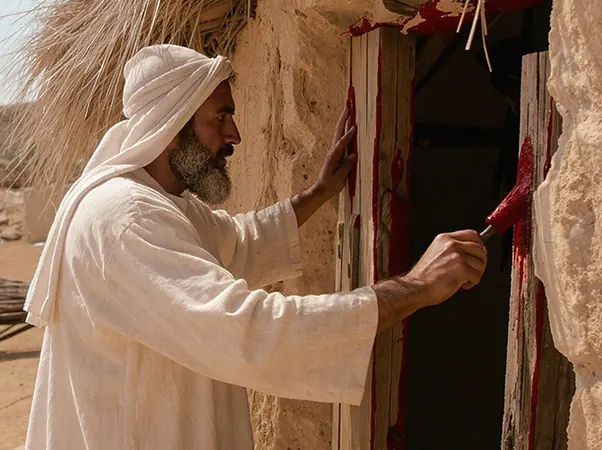
Article by David C. GrabbeThe requirements for the Passover begin with selecting a lamb according to the size of each household on the tenth day of the month, ensuring sufficient meat without waste. The lamb must be roasted whole in fire, eaten that night with unleavened bread and bitter herbs, and fully consumed or burned by morning. Participants eat while dressed with belt, sandals, and staff, in haste, as this constitutes the LORD'S Passover. The blood applied to the doorposts and lintel serves as the decisive sign, prompting God to pass over those houses and spare the firstborn within from the destroyer. This blood represents the life of the lamb given to redeem Israel as God's firstborn nation from Pharaoh's legal claim and bondage, fulfilling the covenant made with Abraham rather than symbolizing atonement. God acts out of faithfulness to that covenant, extending mercy by overlooking Israel's idolatry and sins without providing forgiveness or justification through the blood. The repeated scriptural emphasis falls on eating the specially prepared meal, setting the observance apart from sin offerings, which receive no mention in the Exodus instructions. The Hebrew term pecach conveys exemption or sparing, underscoring an act of grace that delivers households while judging Egypt.
Is the Passover Just a Sin Offering? (Part Three)
Article by David C. GrabbeThe instructions for the Passover in Egypt establish specific requirements that distinguish it entirely from a sin offering, revealing that its purpose was never atonement but rather fellowship and redemption based on God's prior covenant promises to Abraham. Comparing Exodus 12 with Leviticus 4 demonstrates irreconcilable differences: the Passover was eaten in homes as a household meal, while the sin offering was consumed only by priests in a holy place, and only under specific circumstances where the priest had no personal involvement in the sin. The Passover lamb had to be roasted in fire—explicitly not boiled—whereas the sin offering required boiling. Furthermore, the head, legs, and entrails, symbolizing a person's thoughts, conduct, and emotions, had to be included in the Passover meal, while these same parts of the sin offering had to be burned outside the camp, away from God's presence. This detail confirms that the Passover pictured these aspects of a person's life being consumed in a positive relationship with God rather than being associated with sin's source. Beyond these ritual distinctions, God established explicit pre-conditions for participation in the Passover: circumcision was required (Exodus 12:43-48), and ceremonial cleanliness was mandated, as demonstrated in the instructions for Israel's second Passover (Numbers 9:6-13) and reinforced by the use of hyssop, a substance consistently associated with ceremonial cleanliness. This requirement of cleanliness before eating the Passover further confirms it was not a sin offering, since the sin offering's entire purpose was to cleanse from sin—if the Passover itself provided cleansing, prior ceremonial purity would have been unnecessary. Notably, this same requirement of cleanliness appears in the peace offering (Leviticus 7:20-21), the sacrifice type to which the Passover bears the closest resemblance, both being shared meals eaten the same day, with nothing permitted to remain until morning. This pattern of pre-conditions and communal fellowship, rather than sin-payment, continues through Melchizedek's meal with Abraham of bread and wine, where no sin is mentioned despite the priestly context, and culminates in Christ's Last Passover with His disciples. There, Christ's fervent desire to share the meal centered not on the disciples' sins but on fellowship, and His declaration that He would not eat the Passover again until it is fulfilled in the Kingdom of God points to a future fulfillment beyond the sin offering—which He has already perfectly accomplished—pointing instead to the redemption that the Passover requirements have consistently pictured from Egypt onward.

Passover: An Extraordinary Peace Offering
Sermon by David C. GrabbeGod requires that each household or group of neighbors select a lamb on the tenth day sufficient for all participants without waste, then roast it whole in fire with its head, legs, and entrails on the fourteenth day. Participants must eat the flesh that night with unleavened bread and bitter herbs while dressed for travel, consuming it in haste with none remaining until morning. The blood applied to the doorposts and lintel serves as the sign that spares the household during the judgment on Egypt. Only the circumcised may partake, and those approaching the meal must first attain ceremonial cleanliness. These stipulations distinguish the Passover from the sin offering, where priests alone ate limited portions in a holy place after boiling, and where the offerer received no share. The requirements align more closely with those of the peace offering, which also permits a shared meal eaten the same day, allows broader participation, and presupposes prior acceptance by God. In the New Covenant the physical prerequisites correspond to baptismal circumcision of the heart and freedom from carnal attitudes that would disrupt fellowship, so that partakers approach the bread and wine in a worthy manner. These conditions ensure that the observance centers on grateful participation in the covenant meal rather than on atonement.
The Second Passover
Sermonette by Richard T. RitenbaughGod's appointments with His people, particularly the Passover, stand as fixed and recurring periods of holy time that cannot normally be rescheduled. He declares His presence at these times and expects attendance, underscoring their singular importance over any human appointment. Provision exists, however, for a Second Passover when the regular observance on the fourteenth day of the first month proves unavoidably impossible. Biblical precedent appears in the days of Hezekiah, when insufficient sanctified priests and incomplete notification of the people led to keeping the Passover and the Feast of Unleavened Bread in the second month. Authorization for this exception originates in the wilderness account of Numbers 9, where men defiled by contact with a corpse approached Moses for direction. God responded with a permanent judgment applicable to all future generations: anyone unclean because of a dead body or absent on a journey may keep the Passover on the fourteenth day of the second month at twilight. These two categories represent limited, unavoidable circumstances rather than broad excuses. Uncleanness corresponds today chiefly to serious illness requiring quarantine, while a journey denotes an unforeseen emergency that removes one from any available service. Minor ailments, fatigue, stress, or planned travel supply no legitimate basis for deferral. The Second Passover follows every ordinance of the first, including the eating of unleavened bread and bitter herbs, with nothing left until morning and no bone broken; only the month changes from the first to Iyar. Anyone clean and not on a journey who deliberately omits the appointed Passover in the first month bears personal sin and faces being cut off from the people. This requirement flows directly into New Testament practice, where self-examination precedes partaking so that the bread and cup are received in a worthy manner, thereby avoiding judgment and reaffirming the covenant.
Circumcision Is Nothing?
Sermonette by Charles Whitaker (1944-2021)While the Jerusalem Council did rule that Gentiles were not obligated to be physically circumcised, the ruling did not extend to Israelites.
Was Jesus Christ's Body Broken?
Sermonette by David C. GrabbeWas Jesus Christ's body actually broken? If so, it would have symbolized disqualification and a broken covenant. Only the bread of Passover was broken.
The Covenant of Circumcision
Sermon/Bible Study byCircumcision was the sign God gave Abraham indicating that his descendants would ascend to greatness, acquiring physical and spiritual blessings.
Don't Go Out of the House!
Sermon by John W. RitenbaughThe term house can mean structure, family, kingdom, or church of God. The instruction to us personally is to not leave the church or fellowship of faith.
The Doctrine of Israel (Part Two): The Old Covenant
Sermon by Richard T. RitenbaughGod made the New Covenant because Jacob's offspring did not have what it took to fulfill the terms of the Old Covenant. The carnal mind is hostile to God's law.
The Very Same Day
Sermon by David C. GrabbeThe 'very same' or 'selfsame' day is a memorial of a past event, typically on the same date, including several of God's appointed times and pronouncements.
Sanctification and Holiness (Part 4)
Sermon by John W. RitenbaughThe bronze altar, made with the censers from the rebels, was a reminder of the folly of rebelling against holy things, replacing God's standards with human ones.