


Filter by Categories
Was Jesus Christ's Body Broken? (Part Three)
CGG Weekly by David C. GrabbeChrist's body was not broken, and His death was a supreme victory rather than a defeat. He held His head up until He gave up His spirit, having finished perfectly what the Father gave Him to do and fulfilled the sin, burnt, grain, drink, and peace offerings. Though He was marred beyond recognition, He remained unbroken and undivided. Paul teaches in I Corinthians 10:16-17 that the Passover bread is communion in Christ's body, and that the bread is broken only so it can be shared. Because we are many yet one bread and one body, the bread remains one unbroken body, Christ's, which we gather to join. Throughout Scripture bread symbolizes the substance of life, and in John 6 Jesus calls His flesh the living bread that gives eternal life, so the bread pictures living flesh rather than a dead or broken body. The wine, by contrast, pictures shed blood and death. Eating the bread means taking in His sinless life, with the living Savior abiding in us and we in Him. We are baptized into His death, but we are saved by His life (Romans 5:10). Only a body undefiled by sin has blood that can pay the death penalty, and we are accepted into God's presence on the basis of that sinless flesh (Hebrews 10:20).
Was Jesus Christ's Body Broken?
Sermonette by David C. GrabbeWas Jesus Christ's body actually broken? If so, it would have symbolized disqualification and a broken covenant. Only the bread of Passover was broken.
His Body, His Blood, and His Resurrection
Sermonette by Clyde FinkleaThere are three components to Christ's composite sacrifice for our salvation: His death through the shedding of His blood, His body, and His resurrection.
What Does 'Discerning the Lord's Body' Mean? (Part One)
CGG Weekly by David C. GrabbeBecause there is only one Bread of Life, who is Christ (John 6), everyone who partakes of that one Bread becomes a single spiritual body. The principle is that we become spiritually unified with whatever we partake of. Israelites who ate the sacrifices became partakers of the altar and so entered fellowship with the object of their worship, and those who ate at a demon's altar fellowshipped with demons. No one can have it both ways: either we share the cup and bread in fellowship with Jesus Christ, or we share what demons offer. When each person takes the cup of blessing and the bread at Passover, he becomes one with Christ, and because the whole church partakes, everyone who partakes becomes one with Him. The Lord's body is therefore a collective noun, made up of those whom the Father called and who are now in fellowship with Christ through symbolically sharing in His blood and body. This bears on how members treat one another. At Corinth some were self-centered, lacking self-control, and shaming and despising brethren for their circumstances, and Paul warns that taking the Passover in such an unworthy manner makes a person guilty of the body and blood of the Lord. God does not look favorably on those who mistreat the ones for whom Christ died, so each person must examine himself before eating and drinking.

Christ Coming in the Flesh
Sermon/Bible Study by Richard T. RitenbaughChrist came in a body, in a human body, in the flesh. He became a lowly servant in the likeness of a human being. He was a fleshly man with the nature of man but with as much of the nature of God as possible. He became flesh and developed into Jesus Christ. He lived among us and tabernacled among us. He was born of a human woman. He was conceived in the womb through the Holy Spirit. He was born of a woman and subject to the law like any other human. He is described as her Seed. He was a real baby and a real child. He had blood that He could shed for redemption. He was visible and could be seen. He could die. He gave Himself, His body, and His blood as the payment for forgiveness and salvation. He fulfilled everything needed to be that sacrifice as a human being like us in every way.
Jesus Christ, the Bearer of Sin
Sermonette by David C. GrabbeChrist bore our sins in His own body on the tree (I Peter 2:24), so His bearing of sin was not an abstract legal pronouncement but a real, physical fulfillment. While alive on the tree for hours, He experienced in His body the piercing, crushing, bruising, smiting, scourging, shame, and anguish that sin produces, in addition to death. Isaiah 53 foretells this suffering, and the previous chapter says He was marred more than any man, so that it was hard to tell He was human. Sin distorts and corrupts the image in which we were created, and His disfigured body bore that corruption. The Father laid the iniquity of us all on Him, just as the high priest laid his hands on the azazel, and Paul says God made Him to be sin and that He became a curse for us (II Corinthians 5:21; Galatians 3:13). Death alone would not have been enough to display this; a single cut of the throat could have ended it. Like the azazel, He was led outside the gate rather than killed at the temple (Hebrews 13:12), and He felt every second of bearing sin. His stripes bring healing, chiefly spiritual healing that turns us to the Shepherd. He received complete justice in His body so that our chastening can be mediated and bearable.
Marriage and the Bride of Christ (Part Eight)
Sermon by Martin G. CollinsThe husband is commanded to love his wife as his own body, regarding her as precious and delicate, continually nourishing and protecting her.

His Bones Were Not Broken
Sermon by Ted E. BowlingJesus is the fulfillment of the Passover Lamb whose bones were to be left intact. His piercing parallels the lamb being bled by splitting its throat.
Is the Passover Just a Sin Offering? (Part Four)
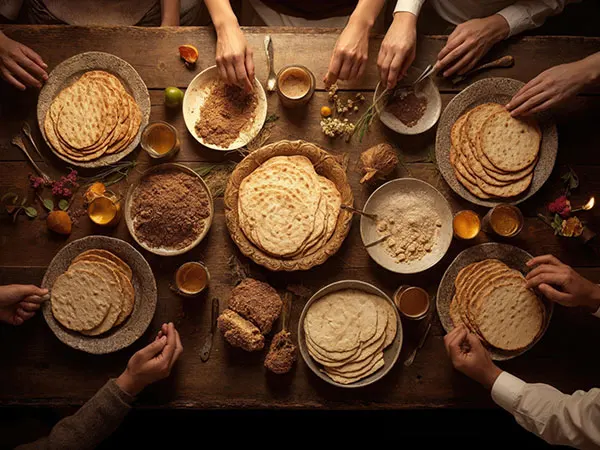
Article by David C. GrabbeChrist's body is a complex symbol, and in the Passover bread it pictures His living body, not His dead one. Jesus' flesh is sometimes tied to death, as when He bore sins in His crucified body (I Peter 2:24; Colossians 1:21-22), but Scripture also uses it as imagery of life. The church is "members of His body, of His flesh and of His bones" (Ephesians 5:30), alive in the living Savior. Bread in Scripture was the staple of life and a heavenly gift, yet physical bread cannot truly satisfy (Deuteronomy 8:3; Isaiah 55). In John 6, Jesus calls Himself the "living bread" and the "bread of life," so the bread that represents His flesh symbolizes life, even eternal life. It stands for the sinless life He lived, which grants access to the Father (Hebrews 10:19-20) and which believers are joined to when they partake. Justification pays the death penalty, but eternal life requires Christ living in the believer, since "we shall be saved by His life" (Romans 5:10). The wine, by contrast, pictures shed blood and death. The Passover also looks ahead, for it is not completely fulfilled until the Kingdom, when redemption of the body is complete and the faithful put on incorruption.

The Bread and Wine of Passover
Sermon by David C. GrabbeThe Passover reminds us of the New Covenant on the anniversary of the Abrahamic covenant God using the original elements of the meal between Melchizedek and Abraham.
The Secret Disciples
Sermonette by Ted E. BowlingJoseph of Arimathea and Nicodemus were both high-ranking Jewish leaders who initially approached Jesus in secret, becoming secret or stealth disciples.
Image and Likeness of God (Part Three)
Sermon by John W. RitenbaughThe numerous scriptural references to angelic beings indicate that the spiritual entities have tangible substance. God is not a universal nothingness.