


Filter by Categories
Footwashing
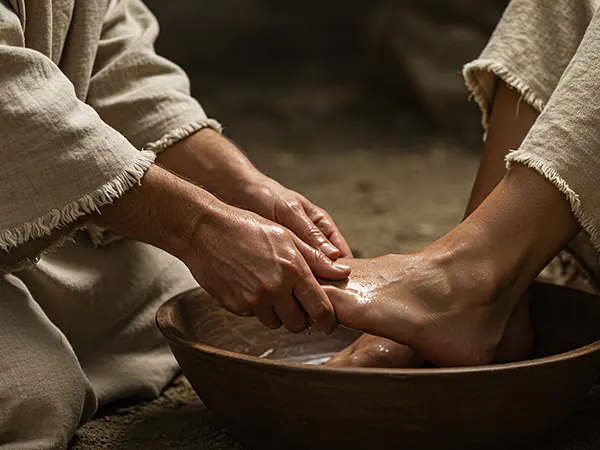
Bible Study by Richard T. RitenbaughDuring the Passover service, before partaking of the symbols of Christ's body and blood, Christians participate in the footwashing ceremony. Though seemingly archaic in our modern world, footwashing provides necessary reminders of our duties to each other. In the Palestine of Christ's day, where roads were unpaved and people wore sandals, footwashing was a common service provided to guests by the lowest-ranking servant to keep the house clean and refresh the guests. Footwashing is performed during the evening of Nisan 14, as Jesus and His disciples ate the Passover. After the meal, Jesus tied a towel around His waist and washed His disciples' feet, setting an example for the church to place the footwashing ritual first in the annual service. Its purpose is to teach humility and service, as Jesus showed that the greatest among us should be as the younger and serve others, preparing them for the Passover's greater purpose of Christ's sacrifice. Jesus' attitude in washing His disciples' feet reflects the same humility that led Him to give up divine power and glory to become a man, demonstrating that our Creator is foremost a servant, willing to serve His own servants. The significance of having our feet washed lies in its representation of a yearly renewal of our baptism and commitment to God's way of life, as Jesus indicated that we need only this act to remove the dirt collected in our walk through life. The footwashing ritual itself does not make us clean; it is a symbolic act manifesting an inward attitude and conviction. Though Judas went through the ritual, he was not truly clean due to his unrepented sin, showing that personal repentance and examination are necessary for recleansing. This rededication at Passover is a shared effort between us and God, as we renew our faith in Christ's sacrifice, redevote ourselves to the New Covenant, repent of failings, and seek forgiveness, while He cleanses us of our sins. Footwashing is a commanded ceremony for Christians, an object lesson whose meaning we are to practice at every opportunity, serving others as Christ served us. There is also a blessing for participating in footwashing, as Jesus promised that those who do these things will be happy, blessed, favored, or satisfied, reflecting the reward of following God's way of life.

Footwashing: An Attitude of Service and Forgiveness
Sermon by Ted E. BowlingAs members of the body of Christ, we prepare to partake of the Passover, following the example Jesus Christ set on the night before His death. On that last Passover evening with His disciples, He instituted the ceremony beginning with foot washing, a symbol of His teaching on humility, service, and forgiveness. Christ desired to impart a vital lesson through this act, showing that true greatness in God's Kingdom comes from serving others, not seeking power or authority. In John 13:4, we see Jesus lay aside His garments, taking a towel and adopting the role of a servant. By washing His disciples' feet, He demonstrated humility, lowering Himself to a subservient position. This act was profound in the first century, where feet were often dirty from walking dusty, muddy paths in open sandals, and washing them was a task reserved for the lowest servant. Christ chose to perform this menial duty, teaching His disciples to live as He did, in constant service to others. The cultural context made this act even more striking. Foot washing was considered demeaning, typically done by a Gentile servant in a household. When Peter resisted, it was likely out of concern for Christ due to the implications of a master serving a servant. Yet Jesus insisted, teaching that to be part of His Kingdom, one must embrace humility and be willing to serve. This lesson was not just for that evening but is an everyday attitude we must adopt. Christ's act of washing Judas' feet, knowing he would betray Him, further illustrates the depth of His humility and forgiveness. Despite the impending betrayal, Jesus knelt before Judas with the same care and thoughtfulness as He did for the other disciples. This leaves no excuse or boundary for us in showing humility, love, and forgiveness to our brothers. Foot washing is not merely a ritual but a way of life, reminding us of the covenant made at baptism to surrender our lives to God. It represents a change of mind and heart, an attitude of forgiveness, sacrifice, and service that we must carry day in and day out. As we prepare for Passover, let us cultivate this foot washing attitude, reflecting Christ's example of serving others without condition or expectation of reward.

Another Look at Footwashing
Article by Bill KeeseeIn the thirteenth chapter of the gospel, the apostle John records the footwashing ceremony that Christ performed and instituted on the last night of His life. This act, at its root, is an expression of love, fittingly described by the disciple whom Jesus loved. Washing another's feet embodies humility, yet a deeper study of Christ's instructions reveals a more profound reason for its importance, highlighting the vital example He set for us today. John, as the last gospel writer, includes this ceremony in the New Testament canon, recognizing its direct connection to the work of Christ. Recorded in John 13:1-17, footwashing offers a window into the character of our Savior, helping us understand the struggles some face in finding happiness and the joy others experience through applying its lessons. Jesus performs a menial task typically reserved for the lowest servant, declaring in John 13:13-15, "You call Me Teacher and Lord, and you say well, for so I am. If I then, your Lord and Teacher, have washed your feet; you also ought to wash one another's feet. For I have given you an example, that you should do as I have done to you." He emphasizes that a servant is not greater than his master, reflecting His own submission to God the Father and illustrating that service is the essence of godly leadership. When Simon Peter objects to having his feet washed, Christ responds in John 13:7-8, "What I am doing you do not understand now, but you will know after this," and further, "If I do not wash you, you have no part with Me." This compels Peter to yield, showing the necessity of this act for maintaining a relationship with Him. Christ clarifies in John 13:10 that one who is bathed needs only to wash his feet to be completely clean, indicating that while we may be cleansed initially, we will occasionally need renewal as we walk through life and sin again. Christ instructs in John 13:14, "If I then, your Lord and Teacher, have washed your feet, you also ought to wash one another's feet," suggesting that this act symbolizes forgiveness of sin to restore a clean relationship with God. By extension, we are called to forgive the sins of our brethren, mirroring the mercy we receive from our heavenly Father. Finally, in John 13:17, Jesus concludes, "If you know these things, happy are you if you do them," emphasizing the application of this teaching. Practicing footwashing and the forgiveness it represents unlocks us from burdens of grudges and animosity, leading to inner peace and true happiness as we follow the example of our Savior in serving and forgiving one another.
Humble Service
Sermonette by Ted E. BowlingJesus modeled the practice of foot-washing to demonstrate the need to be submissive to one another, to serve one another, including those who betray.
Service with a Smile
Sermonette by Bill OnisickJesus Christ expects His followers to serve while expecting nothing in return. Whoever wants to become great must fill the role of an unpretentious servant.
The Value of Humility
Sermonette byPride distorts our view of reality and our relationships. Being humble is not for the faint of heart, but requires God's Spirit operating in our lives.

How Often Should We Partake of the Lord's Supper?
Herbert W. Armstrong BookletThe biblical proof that God's people should keep the Passover (the Lord's Supper), explaining that it occurs annually on the evening of Nisan 14.

His Bones Were Not Broken
Sermon by Ted E. BowlingJesus is the fulfillment of the Passover Lamb whose bones were to be left intact. His piercing parallels the lamb being bled by splitting its throat.
Faithful Stephen
Sermon by Martin G. CollinsChrist does not want His staff to exercise Gentile patterns of tyrannical, top-down leadership, but to humbly serve people without striving for greatness.
King of Peace: Meal with His Friends
Sermon by Mark SchindlerJesus rose from supper, laid aside His garments, girded Himself with a towel, poured water into a basin, and began to wash the disciples' feet, wiping them with the towel. When He came to Simon Peter, Peter protested that the Lord should never wash his feet. Jesus replied that if He did not wash Peter, Peter would have no part in Him, prompting Peter to ask for his hands and head as well. Jesus explained that one who is bathed needs only to wash his feet to be completely clean, adding that not all present were clean, for He knew the one who would betray Him. Jesus had washed the feet even of the betrayer. After resuming His garments and sitting down, Jesus asked whether the disciples understood what He had done. He affirmed that as their Teacher and Lord He had given them an example, commanding them also to wash one another's feet. This act illustrated the love He had shown them to the end and formed part of the commandment that they love one another as He had loved them, laying down His life for His friends. The footwashing therefore demonstrated the humble, outgoing service required among those who share the peace offering with the King of Peace, enabling them to remain one in Him and to fulfill the covenant made at baptism.
God Gives Grace to the Humble
Sermon by Martin G. CollinsGenuine humility is one of the most elusive characteristics a person can attain. It consists of of self-respect accompanied by a genuine desire to serve.
Greatest Offering
Sermonette by Bill OnisickGod demands that we love, do justice, and walk humbly, assuming the role of a servant rather than a tyrant, after the manner of the Gentiles.

Purge Me With Hyssop
Article by StaffThe Bible frequently uses the hyssop plant as a symbol of cleansing and purification. In relation to Christ's sacrifice, this herb has a connection to the Passover.

Holy Days: Passover
Bible Study by Richard T. RitenbaughJesus taught that the first step in observing the New Testament Passover is footwashing. While His disciples ate the Passover meal, He rose and washed their feet. In that culture this act was considered a very lowly responsibility performed by servants when visitors entered a house. By performing it, Jesus demonstrated how His followers should serve one another in humility. He commands Christians everywhere and throughout all ages to follow His example. This instruction forms an integral part of the Passover observance that commemorates His death and initiates the fellowship God extends to His called-out people through the annual holy day season.
Judas Iscariot
Sermon by Ted E. BowlingDuring the Passover season, as we reflect on significant events and figures, the act of footwashing emerges as a profound demonstration of humility and service. In John chapter 13, Jesus Christ, in an act of utmost humility, washed the feet of all His disciples, including Judas Iscariot, who would later betray Him. Despite knowing Judas' intentions, He served him with the same care and respect as the others, humbling Himself as a servant. This act of washing Judas' feet, even in the face of impending betrayal, highlights the depth of His love and commitment to each disciple. Jesus gave Judas every opportunity to reconsider his path, showing courtesy and servitude, setting an example for how to handle personal conflicts with patience and forgiveness.
We Stick Together
Sermon by Mark SchindlerChrist's final marching orders to His disciples was that they love one another, sacrificially sticking together in service to one another.
John (Part Twenty)
Sermon/Bible Study by John W. RitenbaughJust as a seed must die to itself in order to bear fruit, we also must sacrifice our lives, submitting unconditionally to God's to bear abundant fruit.