


Filter by Categories
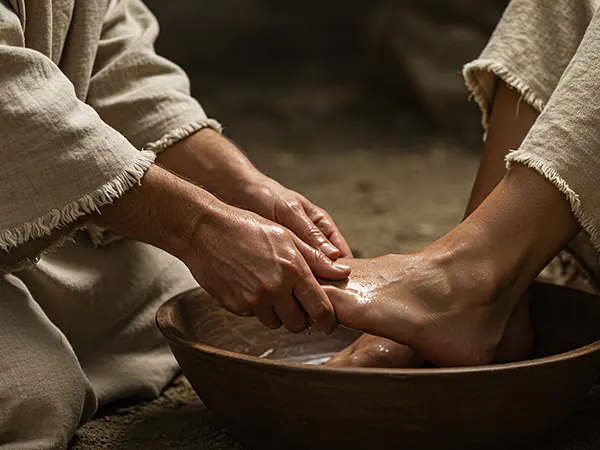
Footwashing
Bible Study by Richard T. RitenbaughThe Passover marks the beginning of a new cycle of God's festivals and holy days, during which Christians participate in the footwashing ceremony before partaking of the symbols of Christ's body and blood. Though seemingly archaic in our modern world, footwashing provides necessary reminders of our duties to each other. In the Palestine of Christ's day, where roads were unpaved and people wore sandals, footwashing was a common service provided by the lowest-ranking servant to wash the dust off guests' feet, keeping the house clean and refreshing the guests. The footwashing ritual is performed first in the annual Passover service, following the example set by Jesus on the evening of Nisan 14, when He washed His disciples' feet after the meal. Its purpose is to teach humility and service, as Jesus demonstrated that the greatest among us should serve as the least, showing willingness to perform even the most menial tasks for the good of others. Jesus' attitude in this act reflected the same humility that led Him to give up divine power and glory to become a man, revealing our Creator as a servant willing to serve His own. The significance of having our feet washed lies in its representation of a yearly renewal of our baptism and commitment to God's way of life, removing the dirt we collect in our walk through life without needing full immersion again. However, the ritual itself does not make us clean; it is a symbolic act manifesting an inward attitude and conviction. If the heart is not repentant, as seen in Judas Iscariot's case, the ceremony holds no cleansing power. This rededication at Passover is a shared effort between us and God, where we renew our faith in Christ's sacrifice, redevote ourselves, repent, and seek forgiveness, and He cleanses us. Footwashing is a commanded ceremony for Christians, an object lesson to be inculcated into our lives and practiced at every opportunity, following Christ's example of service. There is also a blessing for participating in this ritual, as Jesus promised happiness, favor, and satisfaction to those who follow God's way, alongside the ultimate reward of eternal life and rulership in His Kingdom.

Footwashing: An Attitude of Service and Forgiveness
Sermon by Ted E. BowlingAs members of the body of Christ, we prepare to partake in the Passover, following the example Jesus Christ set on the night before His death. On that last Passover evening with His disciples, He instituted the ceremony beginning with foot washing, a symbol of humility, service, sacrifice, and forgiveness. This act, introduced by Christ, teaches a vital lesson relevant for us today, emphasizing an attitude contrary to the world's values of arrogance and intimidation. In John 13:4, we see Jesus lay aside His garments, taking on the role of a servant by wrapping Himself with a towel and kneeling to wash His disciples' feet. This subservient position represents true humility and service, reflecting how He lived His life from beginning to end. Christ knew His death was imminent, yet He chose this moment to impart a lasting lesson to His disciples, showing that to be part of God's Kingdom, one must be willing to humble themselves and serve others. In the first century, foot washing was a necessary and humbling task due to the dusty, dirty paths people walked in open sandals. It was typically performed by the lowest servant in a household, often a Gentile, as it was considered demeaning by Jewish customs. Christ's act of washing His disciples' feet, including those of Judas despite knowing his betrayal, underscores an unparalleled example of humility and forgiveness. This gesture left no excuse or boundary for withholding love or forgiveness from others. Foot washing is not merely a ritual for Passover evening but an everyday attitude we must embody. Christ, as Lord and Master, demonstrated that submitting to others is part of our calling. When we participate in this ceremony, we are reminded of the covenant made at baptism to surrender our lives to God. It is more than a physical act; it is a change of mind and heart, urging us to adopt an ongoing attitude of forgiveness, sacrifice, and service.
Humble Service
Sermonette by Ted E. BowlingJesus modeled the practice of foot-washing to demonstrate the need to be submissive to one another, to serve one another, including those who betray.

How Often Should We Partake of the Lord's Supper?
Herbert W. Armstrong BookletThe biblical proof that God's people should keep the Passover (the Lord's Supper), explaining that it occurs annually on the evening of Nisan 14.
Why Passover and Not Easter?
CGG Weekly by Richard T. RitenbaughThe early church kept Passover, not Easter. Christ tells us to remember His work of redemption from sin, enabling Christians to fellowship with the Father.
How Do We Keep God's Festivals?
'Ready Answer' by Richard T. RitenbaughHere are the foundational principles to keep in mind in observing the Feasts of God throughout the year.

Never Forget
Sermon by Ryan McClureAfter Adam and Eve sinned, God provided them a vivid introduction to death, perhaps killing an animal in their presence to make tunics for them to wear.
The Beatitudes, Part 6: The Pure in Heart
'Personal' from John W. RitenbaughPurity before God is far more than just being clean. To Jesus, being pure in heart, described in the Beatitudes, touches on the very holiness of God.
Leavening: The Types
Sermon by John W. RitenbaughThe holy days are reliable teaching tools, emphasizing spaced repetition to reinforce our faulty memories and drive the lesson deep into our thinking.
Seeking God's Will (Part One): Holiness
Sermon by Richard T. RitenbaughDetermining the will of God is difficult to do unless we know the character of God. Holiness is the foundation for all of the other traits of God.
Approaching God Through Christ (Part Three)
Sermon by Richard T. RitenbaughThe one who comes before God must be pure in body and mind. The priests had to wash themselves from a bronze laver, midway between the altar and the entrance.