


Filter by Categories
The Covenants, Grace, and Law (Part Twenty-Five)
Sermon by John W. RitenbaughIn the context of the book of Galatians, the concept of halakha emerges as a central issue that Paul addresses with fervor. Halakha, translated from Hebrew as "walk," refers to the authoritative Jewish way of life, encompassing moral law and ritual precept as interpreted and reinterpreted by Jewish teachers from the time of Ezra onward. It includes a vast body of teachings, legislation, and practices that adapted to changing economic, domestic, political, and social conditions through the decisions of spiritual leaders. While intended to bring all human occupations into service to God and establish the divine will as the measure of life, halakha often consisted of human opinions rather than the direct Word of God, leading to interpretations that varied widely in accuracy. Paul, in Galatians, confronts the imposition of halakha—the Jewish way of life, combined with elements of ascetic, demon-driven Gnosticism—as a burdensome yoke on Gentile converts. This was not the law of God but a complex system of traditions, as seen in detailed codes like those in The Code of Jewish Law, which meticulously governed every aspect of life with rules far beyond scriptural mandates. For instance, specific instructions on wearing shoes or smelling spices on Yom Kippur illustrate the extreme detail and zeal of these human interpretations, often elevated above scripture itself. The problem intensified as the Jews, in their zeal, not only adhered rigidly to halakha but also proselytized aggressively, making adherence to these traditions a perceived means of election with God. Paul identifies this as a critical error in Galatians, noting that it circumvented God's sovereignty and the true way of justification through faith in Jesus Christ. The Jewish belief that possessing and keeping halakha motivated God's choice of them undermined the grace of the Father and the sacrifice of Christ, rendering His death seemingly in vain. Furthermore, practices derived from halakha, such as the separation from Gentiles exemplified by Peter's actions in Antioch, created divisions within the church. These traditions, often part of the oral law, lacked harmony with God's law and fostered class distinctions, leading Paul to clarify that he condemns not God's law but the man-made laws added under the guise of serving God. In Galatians, the push to impose halakha on Gentile converts, including circumcision as a gateway to the Jewish way of life, was the subject of contention at the Jerusalem council in Acts 15, where the decision was made not to burden Gentiles beyond essential laws, trusting they would learn more from synagogue teachings. Ultimately, Paul argues that justification comes not through works of halakha or any law system alone but through faith in Jesus Christ. He emphasizes that even adherence to God's law must be coupled with faith in Christ to be effective, highlighting that the Galatians were being misled into accepting a distorted mixture of Gnosticism and Judaism, rooted in halakha, rather than the true gospel of grace and faith.
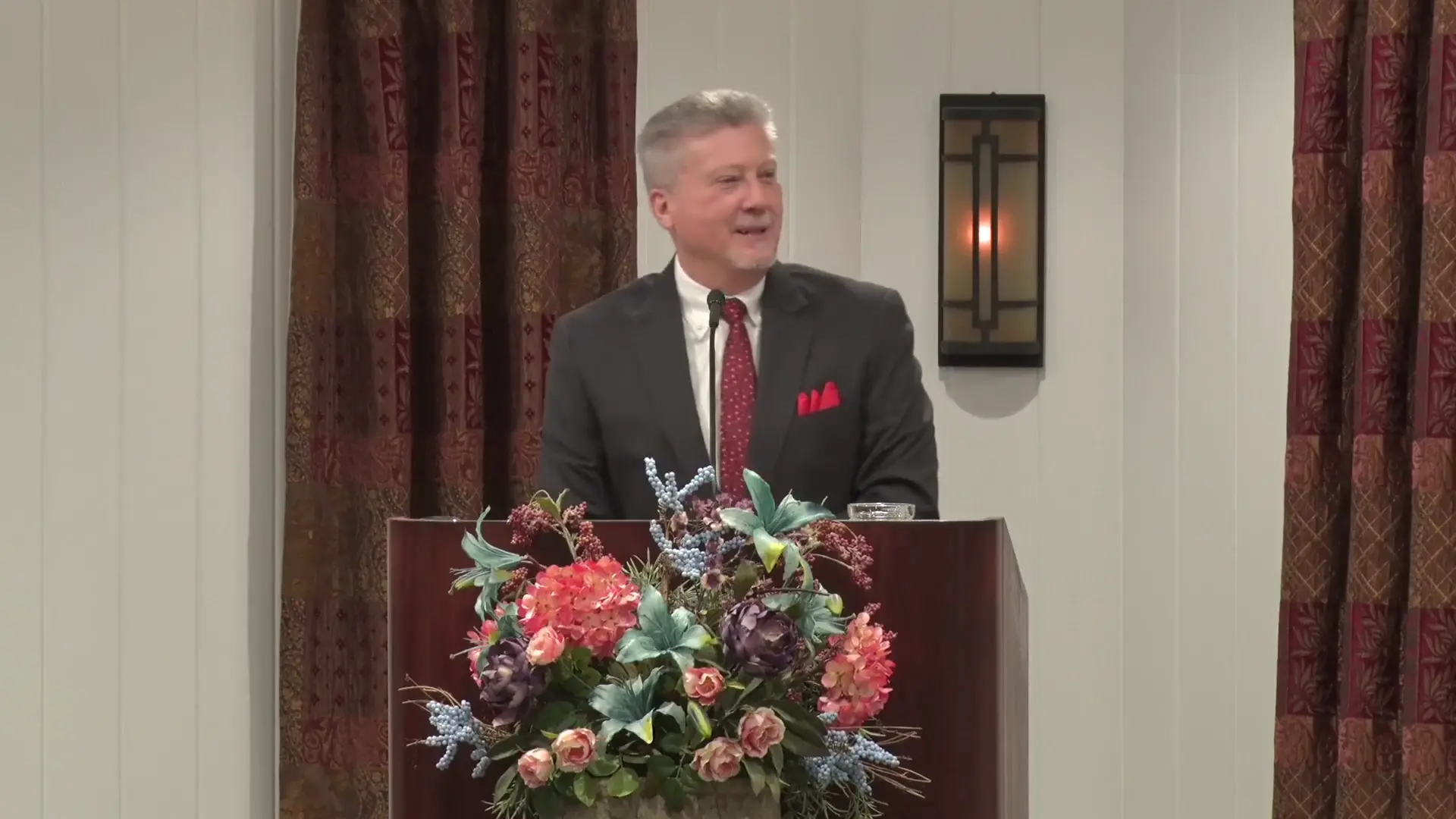
The Jerusalem Council's Conclusion
Sermon/Bible Study by Richard T. RitenbaughThe Jerusalem council addressed demands that Gentiles undergo circumcision according to the custom of Moses and keep the full body of Jewish teaching, legislation, and practices known as halakhah. This term denotes the oral law and traditions of the elders, an accumulation of interpretive rules and regulations added to Scripture after the return from Babylon. These requirements had come to function as a means of justification and ritual purity within Judaism, functioning as an unbearable yoke that neither earlier generations nor the apostles themselves could bear. The council rejected this approach because it contradicted the principle that both Jews and Gentiles are saved in the same manner, by grace through faith in the Lord Jesus Christ. Circumcision and the associated traditions were set aside as works that cannot justify, while the law of God itself remained in force as the standard that defines sin and guides righteous conduct. James therefore issued only four targeted prohibitions to prevent practices especially offensive to Jewish believers and to foster unity in the church, noting that the Gentiles already heard Moses read in the synagogues every Sabbath. In this way the decision preserved the authority of God's written law for every believer while removing the man-made burden of halakhah as a condition for membership or salvation.
The Covenants, Grace, and Law (Part Twenty-Eight)
Sermon by John W. RitenbaughThe yoke of bondage Paul refers to in Galatians was a combination of the code of regulations added by the Pharisees and Gnostic ritualism, not God's Law.
The Covenants, Grace, and Law (Part Twenty-Six)
Sermon by John W. RitenbaughChrist will empower us, but will not live our lives for us. The marching orders for our pilgrimage derive from God's Word, containing His holy law.
Kosher Pork
Commentary by Richard T. RitenbaughRabbi Cherlow thinks a pig is unclean because of its 'faulty' digestive system and that laboratory-produced meat does not fall under God's proscription.
Unity and Division: The Blessing and the Curse (Part Four)
'Ready Answer' by Charles WhitakerGod commanded the Israelites to utter blessings from Mount Gerazim and curses from Mount Ebal, most of which deal with hidden sins that give rise to hypocrisy.
The Present Harvest (Part One)
Sermon by Charles Whitaker (1944-2021)The Jews of Christ's day were weary and discouraged because of the burdensome yoke their leaders placed on them through the tradition of the elders.
Lessons From Jesus at Nazareth
Sermonette by James C. StoertzLooking at the event where Jesus read from the Book of Isaiah to the congregation at Nazareth and then comparing important parallels with that congregation and today's church, we see it demonstrate lessons we should learn, such as not taking our own righteousness for granted by going into a rage when shown its shortcoming. Why do people get mad so easily? In Luke 4, all they in the synagogue flew into a rage when Jesus read the weekly portion of the Haftara to His local congregation. The way the Synagogue conducted the service was to read the Torah portion first, which was speculated to be Leviticus 25 on Jubilee, and a Haftara portion in which Jesus read Isaiah 61. Here we are shown the important insight that He cut into two the prophesied elements of His return, the redemption and healing that He brings to His people is the part he brings now, the vengeance will happen on a future date. While they initially were brought joy by His good news, the "defensive screen" appeared when He said they lacked faith and did not deserve the miracles because of that lack. Learning of their shortcomings, they soon devolved into attempted murder which shows us that even those who study God's word daily can fall into rage when their own righteousness is called into question.