


Filter by Categories
Is the Christian Required To Do Works? (Part Five)
'Personal' from John W. RitenbaughThe gospel of Jesus Christ reveals the Kingdom of God as the ultimate hope and inheritance for Christians. This inheritance is not an immediate reward upon conversion but a future promise to be fulfilled at Christ's return. As heirs according to the promise, true Christians will receive the same inheritance as Abraham, who was promised to be the heir of the world through the righteousness of faith. Upon resurrection at Christ's return, the saints will be glorified with spiritual bodies and will rule alongside Him over the earth, reigning as kings and priests in an everlasting Kingdom established on the earth He created for mankind. The kingdoms of this world will become the kingdoms of our Lord and of His Christ, and He shall reign forever and ever, with the resurrected saints governing the remaining physical subjects of the Kingdom.
Blessing Promises: Our Spiritual Inheritance
Feast of Tabernacles Sermon by Martin G. CollinsThe inheritance of the Christian is a spiritual treasure, reserved in heaven for the faithful, far surpassing any material gain. In the teachings of Jesus Christ, as seen in Matthew 5 and Luke 6 through the Beatitudes, blessing is overwhelmingly conceived as a spiritual inheritance, not tied to worldly comfort or riches. Christ pronounces blessing on those who suffer deprivation in this life, emphasizing a reward that transcends earthly possessions. The New Testament shifts focus from material prosperity to the spiritual state of those who belong to God's Kingdom, highlighting that true blessing is found in spiritual growth and eternal promises rather than physical wealth. The concept of being blessed, as explored through Greek terms like "eulogeo" and "makarios," underscores a profound spiritual reality. "Eulogeo," meaning to be well spoken of, reflects an inherent worthiness in God and Jesus Christ, and extends to believers who are deemed worthy through perseverance and faith. "Makarios," used in the Beatitudes, denotes a divine quality of being fully satisfied through Christ, a state achievable only by His indwelling presence. This blessedness calls for a readiness to sacrifice material things for the sake of the Son of Man, sharing spiritual richness with others rather than seeking personal gain. In the book of Revelation, seven blessings are directed toward the saints, each using the term "makarios" to signify being indwelt by God and fully satisfied through Jesus Christ. These blessings commend purity, perseverance, and obedience, promising spiritual rewards such as access to the Tree of Life, protection from the second death, hidden manna, authority to rule with Christ, a secure name in the Book of Life, a permanent place in God's Kingdom, and the right to sit with Christ on His throne. None of these promises involve material wealth; they are entirely spiritual, focusing on eternal fellowship and victory with Christ. Ultimately, the Christian's inheritance is a state of blessedness beyond comprehension, marked by joy, spiritual prosperity, and cherished fellowship with God. It is a promissory ticket to God's Kingdom, where material blessings pale in comparison to the eternal rewards awaiting the faithful. When we ask God to bless us, we seek His intervention for our eternal good, trusting in His wisdom to provide what is best for our long-term spiritual future rather than immediate gratification.
The Christian and the World (Part Six)
Sermon by John W. RitenbaughAs Christians, we are called to a unique inheritance, one that stands in stark contrast to the fleeting treasures of this world. Our true riches lie in heavenly treasures, which are moth-proof, rust-proof, and burglar-proof, reserved in heaven for us by God. These treasures endure forever, unlike earthly possessions that diminish in value and ultimately cease to serve any purpose. God, through His calling, has made us a special group, not because of our own merit, but because of what He has done, setting us apart to rearrange our goals and lives in harmony with His purpose. Our inheritance is tied to the Kingdom of God, where we are equipped to carry on the responsibilities He entrusts to us in His family, helping His Son, our elder Brother, rule over God's vast creation and bring others into His family. The path to these true riches is to yield to God, allowing Him to work in us, for it is He who gives us the power to become spiritually and eternally rich. Our real blessedness lies in knowing God, yielding to be in His image, walking in His way, and communing with Him, producing enduring fruit such as love, joy, peace, gentleness, goodness, meekness, and faithfulness, which no one can take away.
Divine Providence (Part Two)
CGG Weekly by Mike FuhrerGod's care for us goes well beyond fulfilling our basic physical needs. He is far more interested in providing those things that aid us in our spiritual walk.
Basic Doctrines: The Reward of the Saved
Bible Study by Earl L. HennThe Christian's inheritance is not heaven but a place of rulership on the earth under Jesus Christ. The promises of salvation were first given to Abraham and his Seed, who is Christ, and then extended to all whom God calls. God's twofold promise to Abraham included a material inheritance of the land of Canaan, which foreshadowed the spiritual inheritance of the whole earth (Romans 4:13), and a spiritual blessing to all nations through his Seed. Those who share Abraham's faith and righteousness are counted his spiritual descendants, regardless of race or sex, and so become heirs of the same promises (Galatians 3:26-29). Jesus echoes David in declaring that the meek shall inherit the earth (Matthew 5:5; Psalm 37:11), and says nothing of a mystical place in the heavens. The phrase "kingdom of heaven" means heaven's kingdom, the government Christ will bring from heaven and set up on earth at His return. At that time the faithful are resurrected as co-heirs with Christ and reign with Him on the earth as princes, teaching and enforcing God's laws to build a world of peace and prosperity during the thousand-year reign. Beyond the Millennium, the ultimate inheritance is authority over the entire universe as members of the God Family for all eternity, a reward far exceeding the notion of floating on a cloud in heaven.
Hebrews as a Sermon (Part Two)
Sermon by John W. Ritenbaugh (1932-2023)God designed the sermon of Hebrews to motivate God's people, who are going through the same turmoil as those living in 65 AD, facing persecution from society.
Thy Kingdom Come! (Part One)
'Prophecy Watch' by StaffWhile most understand the Kingdom of God represents God's future rule over mankind, many do not realize it also has past and present aspects.
What Is Your Lentil Soup?
'Ready Answer' by StaffThe story of Esau and his selling his birthright for a bowl of soup is a cautionary tale for today. What we treasure will ultimately determine our destiny.
What is Your Bowl of Lentil Stew?
'Ready Answer' by StaffGod has called Christians to a birthright that makes Esau's seem trivial. Those who rise in the first resurrection, the small first harvest of God's children, receive promises never offered again: to be the Bride of Christ, to rule cities with the King of Kings in the Millennium, and to wear a crown bearing a new name. Believers are not merely meek inheritors of the earth but children of God, heirs of God and joint-heirs with Christ of everything God has and is, slated to inherit and rule over all things (Romans 8:16-17; Hebrews 2:8). This is a once-in-eternity opportunity offered by One who cannot lie. Yet the inheritance can be forfeited. Esau despised his birthright by trading a future he could not see for immediate satisfaction, and anything a Christian places ahead of God's promises, whether sin, worry, covetousness, the pursuit of success, or neglect of the Sabbath and holy days, becomes his own bowl of lentils. Inheriting requires sacrifice, endurance, repeated testing, and a focus on what is eternal, as Moses and Paul demonstrated. Unlike Esau, the converted have the Holy Spirit, and Christ living in them gives victory. Jesus, who endured the cross for the joy set before Him, models keeping the eye fixed on the inheritance. The sufferings of this present time are not worthy to be compared with the coming glory.
Thy Kingdom Come! (Part Two)
'Prophecy Watch' by StaffThis age will end to be succeeded by the glorious reign of Christ. God's Kingdom will come, whether or not we as individuals inherit it when the time comes.
Our Awesome Destiny
Feast of Tabernacles Sermon by John W. RitenbaughUnderstanding is totally different from knowledge. Some people with ample knowledge are incredibly ignorant when discerning the plan of God.
Hebrews 2: God Is Present
Sermon by John W. Ritenbaugh (1932-2023)God's people must immerse themselves daily in the Scriptures. While sinning Israelites consider God to be absent, He is nevertheless present with His saints.
Deuteronomy (Part 2)
Feast of Tabernacles Sermon by John W. RitenbaughWe need to develop vision (the ability to see in the mind's eye) so that by living the statutes of Deuteronomy, we may become a witness to all of mankind.
The Covenants, Grace, and Law (Part Thirteen)
Sermon by John W. RitenbaughAs we participate in the New Covenant, we go through the stages of justification, sanctification, and ultimately glorification as part of Christ's body.

Why Was Jesus Not Crucified as Passover Began? (Part Two)
'Ready Answer' by David C. GrabbeThe timing of Christ's crucifixion does not coincide with the Passover, but instead lines up with the covenant God made with Abraham, marking a major fulfillment.
Why Do the Wicked Prosper?
'Ready Answer' by Mike FordRighteous men have complained about the ease of the evil for ages, but what is the answer? King David contemplated this, and gives us the answer.
Meekness
Bible Study by Martin G. CollinsMeekness is one of the hardest virtues to define. The Bible shows meekness to be strength, as the character of such people as Jesus and Moses shows.
God's Workmanship (Part 4)
Sermon by John W. RitenbaughSalvation is not a one time event, but a continuous process—not just immunity from death, but a total transformation of our nature into a new creation.
Troubling the Household of God
Sermon by Mark SchindlerIf we allow the old, carnal man to dictate how we speak or make other decisions, we will trouble the household of God and inherit nothing but the wind.
Assurance (Part Two): Of the Path to Glory
Sermon by Martin G. CollinsWe can be assured that we are God's heirs and offspring if we are led by the spirit, remaining on the sanctified path of fellowship, growing continually.
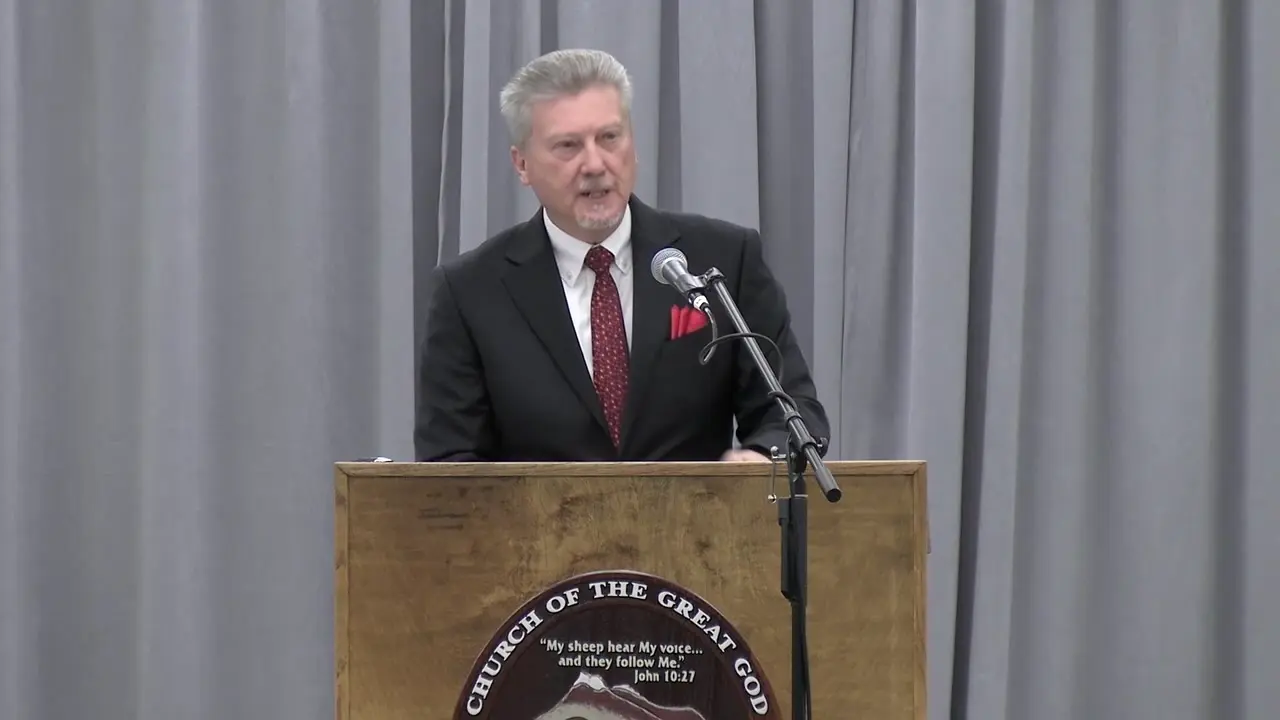
Joshua's Four Miracles (Part One)
Feast of Tabernacles Sermon by Richard T. RitenbaughIsrael's conquest of Canaan under Joshua can be a metaphor for the journey from baptism to entering God's kingdom, especially for the second generation.
The Resurrection From the Dead
Sermon by John W. RitenbaughOur lives revolve around the hope of a resurrection from the dead. Hope, deriving from Christ's resurrection, gives faith and love impetus and energy.