


Filter by Categories
The Mystery of Melchizedek Solved!
Herbert W. Armstrong BookletMelchizedek, known as the King of Salem, which means peace, bears a name that translates to King of Righteousness. As referenced in Psalm 110:4, David prophetically declared that Christ is a priest forever after the order of Melchizedek, a statement reiterated in Hebrews 5:6, 10. In Hebrews 7, Melchizedek is identified as the King of Righteousness, an attribute that aligns solely with deity, for only God or one empowered by Him can embody such righteousness. He is also the King of Peace, a title no human could claim, as humanity knows not the way of peace. Further, Melchizedek is described as without father, without mother, and without descent, indicating He was not born as humans are and had no genealogy. Hebrews 7:3 reveals He has neither beginning of days nor end of life, existing eternally, a characteristic unique to deity. Though He cannot be God the Father, whom no man has seen, Melchizedek was made like unto the Son of God and remains a priest continually. Even in the time of the Apostle Paul, He abides as a priest permanently, just as Christ is High Priest today and forever. The order of Christ's Priesthood is named after Melchizedek, underscoring that Melchizedek and Christ are one and the same Person.
The Priesthood of God (Part Ten) Conclusion
Sermon by John W. Ritenbaugh (1932-2023)As future priests, we are going to be given rigorous, hands-on jobs to teach people righteousness and holiness, distinguishing between the sacred and profane.
Tithing
Bible Study by Martin G. CollinsThe biblical system of tithing has been a point of controversy among Christians for centuries. Was the law of tithing changed for Christ's church?
Tithing: First Tithe
Bible Study by Martin G. CollinsMany churches understand tithing but do not believe that God commands them for today. However, tithing has always been God's way of financing His work on earth.
Ending Your Financial Worries
Herbert W. Armstrong BookletEven with all the political problems hanging over us, Americans are most concerned about their personal finances. Here is how your financial problems can be solved!
Why We Tithe (Part 2)
Sermon by Richard T. RitenbaughGod does not want basic compliance, but growth in godliness. Jesus encourages the Pharisees to emulate the generosity of God rather than stinginess.
Hebrews (Part Seven)
Sermon/Bible Study by John W. RitenbaughWith godly hope, we need to envision the successful accomplishment of God's purpose for us, realizing that God has bound that promise with an oath.
Hebrews (Part Eight)
Sermon/Bible Study byJesus Christ's priesthood is superior to the Aaronic priesthood because Christ tenure is eternal rather than temporal, guaranteeing both continuity and quality.
Tithing
Sermon by John O. ReidThis comprehensive overview of tithing explores the attitudes we should have toward tithing, the purposes of the tithe, and the benefits of tithing.
Ezekiel's Temple and the Covenants
Sermonette byA future Millennial temple (described in Ezekiel 40—48) will contain some elements of the Old Covenant, including animal sacrifices and Levitical priests.
Why We Tithe (Part 1)
Sermon by Richard T. RitenbaughTithing both precedes and transcends the covenant, having a deep spiritual significance far beyond the letter of the law: learning to give as God gives.
A Day Without Work
Sermon by Richard T. RitenbaughRefraining from work on the Day of Atonement symbolizes our inability to atone for our sins. We, humble and poor in spirit, depend upon God for everything.
Kings and Priests
Sermonette by James BeaubelleThe Eighth Day is a dramatic, pivotal moment in God's divine plan of salvation, symbolizing new beginnings and the final phase of God's redemptive work.
On This Side of Jordan
Sermon by Charles Whitaker (1944-2021)When the circumstance of sin ceases, what happens to the law? The concept of sin as a reality will be gone at a certain point in time.
Hebrews (Part Five)
Sermon/Bible Study byThe ancient Israelites resisted the gospel, refusing to mix it with actual obedience. What they heard never became a part of their lives; Egypt never left them.
Approaching God Through Christ (Part Four)
Sermon by Richard T. RitenbaughJesus Christ is symbolized by the table of showbread in the Tabernacle, having gold utensils and vessels for bread and wine, symbolizing our fellowship with God.

Fully Man and Fully God?
'Personal' from John W. RitenbaughJesus Christ is called both 'Son of Man' and 'Son of God,' raising weighty questions about His nature. Could He have both full humanity and full divinity?
Malachi's Appeal to Backsliders (Part Three)
Sermon by Martin G. CollinsWe must be careful when we ask for justice, for our request might come back to bite us. Those begging for justice will indeed get what they ask for.
Hebrews (Part Nine)
Sermon/Bible Study by John W. RitenbaughAfter the change from the Aaronic to the Melchizedek priesthood, it was also necessary to change the Covenant. The flaw was not the law, but the heart.
Hebrews (Part Six)
Sermon/Bible Study by John W. RitenbaughJesus experienced the same temptations and suffering we do, qualifying Him for the role of High Priest, the bridge-builder between man and God.
God's Spiritual House
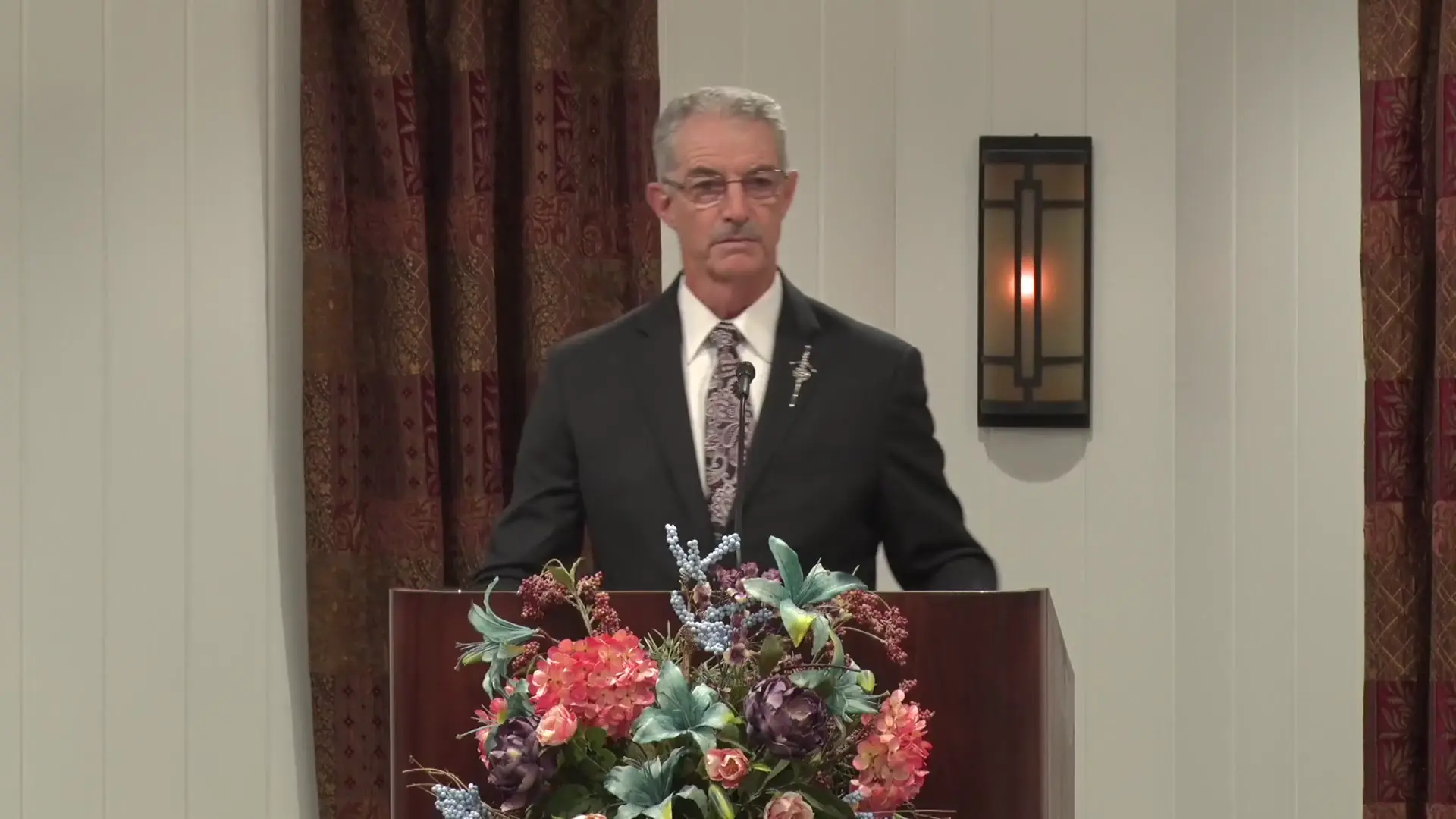
Sermon by Ronny H. GrahamIn I Peter 2:5 and 9, Peter speaks of a holy priesthood and a royal priesthood, tasked with offering spiritual sacrifices acceptable to God through Jesus Christ. This priesthood is not just any ordinary role but signifies a unique and exclusive calling. There is a distinction that may be drawn between the Aaronic priesthood and the priesthood after the order of Melchizedek, though it remains unclear if Peter intends to separate them into distinct groups. What is evident is that with the establishment of the priesthood after the order of Melchizedek, the Aaronic priesthood was transformed. Historically, under the Aaronic priesthood, God set apart the tribe of Levi to serve as priests, a role of the highest responsibility in tending to the Tabernacle of God. One had to be born into the Levite family to serve, much like a royal lineage. The Levites were not numbered among the other tribes for military service; their sole duty was to care for the Tabernacle, setting it up, taking it down, and guarding it with their lives, as any outsider approaching faced death (Numbers 1:47-53). The change in priesthood, brought by our High Priest, Melchizedek, Jesus Christ, has torn away the veil, opening direct access to the Holy of Holies at any time. Only those chosen by God the Father can come to Him on the authority of Jesus Christ. Our King and High Priest is worthy of our lives, our praise, and our every breath as we strive to uphold His name, granting us unlimited access to the Most High, His Father and ours.