


Filter by Categories
Don't Go Out of the House!
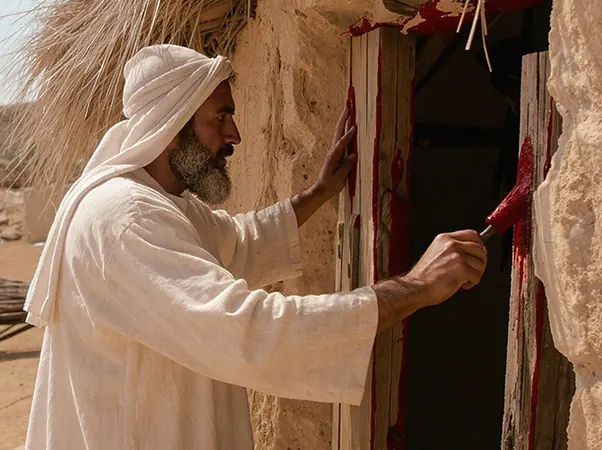
Sermon by John W. RitenbaughIn Exodus 12:22-23 and 27, God commands the Israelites not to go out of the house during the Passover, a directive laden with profound symbolism for us today. The door, representing the entire house, is central to this instruction, with emphasis placed on the blood applied to the doorposts and lintel. If the destroying angel could not pass the door marked by blood, he could not enter the house, ensuring safety within. Historical insights suggest the Passover lamb was slain at the door, its blood puddling on the threshold, then splashed on the doorposts and lintel using hyssop, completely surrounding the entrance with blood. This ensured no entry for the destroyer, as the blood formed an impenetrable barrier. God's specific command not to leave until morning preserves this powerful type, teaching a vital lesson for us in times of trouble: remain within the protective bounds symbolized by the house and the blood.
Christ's Death, Resurrection, and Ascension
Sermon by Richard T. RitenbaughIn the account of the Passover, as detailed in Exodus 12:3-14, the significance of blood on the doorposts emerges as a powerful symbol of protection and redemption. On the tenth day of the month, each household was to select a lamb without blemish, a male of the first year, to be kept until the fourteenth day, when it was to be killed at twilight. The blood of this lamb was then to be taken and smeared on the two doorposts and the lintel of the houses where the Passover meal was eaten. This act served as a sign, for the Lord declared that upon seeing the blood, He would pass over those houses, sparing them from the plague that would strike the firstborn in the land of Egypt. Thus, the blood on the doorposts became a shield against destruction, ensuring the safety of those within as the Lord executed judgment against the gods of Egypt. This day was to be kept as a memorial, a feast to the Lord throughout all generations, by an everlasting ordinance.
Don't Leave the House!
Sermon by John W. RitenbaughIn the narrative of Exodus 12:22-23, the instruction is given to take a bunch of hyssop, dip it in the blood in the basin, and strike the lintel and the two doorposts with the blood. None shall go out of the door of their house until morning, for the LORD will pass through to strike the Egyptians. When He sees the blood on the lintel and the doorposts, the LORD will pass over the door and not allow the destroyer to enter the houses to strike them. As further explained in Exodus 12:27, this act is the Passover sacrifice of the LORD, who passed over the houses of the children of Israel in Egypt when He struck the Egyptians and delivered their households. The door in this context represents the entire house, signifying that if the death angel could not pass the door, it could not enter the house. There is an indication from ancient art and Jewish scholarship that the Passover lamb was originally killed at the door of the house, with the blood draining directly onto the threshold rather than into a basin. This is supported by the similarity between the Hebrew words for threshold and basin, as seen in the Septuagint translation which uses threshold. If true, the death angel would have been surrounded by blood on the threshold, doorposts, and lintel, emphasizing the protective barrier. The command to remain inside until morning carries a symbolic weight, suggesting a period of safety and waiting within the protected space. This act of applying blood to the doorposts and lintel serves as an object lesson, illustrating a principle of divine protection and deliverance through a concrete, acted-out event in the history of Israel.

Purge Me With Hyssop
Article by StaffThe Bible frequently uses the hyssop plant as a symbol of cleansing and purification. In relation to Christ's sacrifice, this herb has a connection to the Passover.
Passover (Part Four)
Sermon by John W. RitenbaughThe proponents of a 15th Passover discount clear scriptural details and instead speculate. One cannot build doctrines on implication, distortion, and traditions.
Go Not Out of the House
Sermon by John W. RitenbaughFor Passover, Israel was commanded not to go out of their houses. This is also a warning to Christians when we understand the implications of the word 'house'.
Is the Passover Just a Sin Offering? (Part Two)
Article by David C. GrabbeThe instructions for the first Passover specify that the Israelites were to place the blood of the lamb on the two doorposts and the lintel of their houses. This blood served as a sign that caused the Lord to pass over those houses during the plague on the firstborn, protecting the occupants from destruction. The text emphasizes that the blood represented the life of the lamb given to redeem those within each house rather than to atone for sins. No mention of forgiveness or atonement appears in the Exodus Passover account, and the first sin offering is not recorded until later in Scripture. Instead, the blood functioned as a sign of redemption from Pharaoh, who held a legal claim over Israel as resident aliens in his land. God identified Israel as His son and firstborn, and the blood marked the nation for exemption from the judgment that fell on Egypt. This act of deliverance fulfilled the covenant with Abraham, by which God had promised to bring Abraham's descendants out of bondage and into the land. The sparing of Israel occurred for the sake of God's name and faithfulness to that covenant, not because of any legal justification or removal of the people's idolatry and other sins. The Passover thus demonstrates God's gracious acceptance and protection of His firstborn nation, setting the blood on the doorposts apart from any sin offering and linking it directly to the broader theme of redemption from bondage.
The First Day of Unleavened Bread (Part One)
Sermon by John W. RitenbaughPassover takes place at twilight as the 14th of Abib begins. Unleavened Bread begins 24 hours later on the 15th of Abib. The Passover is a preparation day.
Truly Unleavened
Sermon by Richard T. RitenbaughGod has imputed righteousness to us as His Children because we are in Christ. Our state before God is unleavened provided we maintain this relationship.
Passover (Part Six)
Sermon by John W. RitenbaughSome believe in a late-14th Passover on the basis of II Chronicles 35:10-11, but this overlooks the context. The Passover was originally a home-based observance.

Holy Days: Passover
Bible Study by Richard T. RitenbaughThe blood placed on the doorposts and lintels of Israelite homes served as the sign by which the Death Angel passed over those dwellings during the plague that struck the firstborn of Egypt. God instructed each family to apply the blood of the selected lamb at twilight on the fourteenth day of the first month, ensuring that the firstborn within those houses remained alive while the Egyptian firstborn perished. This application of blood did not function as a covering for sin or an act of atonement. Instead, it represented the life of the lamb given to redeem or purchase the children of Israel from Pharaoh and from the bondage of Egypt. Scripture consistently describes the Passover event in terms of redemption and buying back rather than forgiveness, and the details of the Passover sacrifice align more closely with a peace offering than with a sin offering. Through this act, God initiated fellowship with His called people, establishing peaceful and secure communion over a shared meal that pictured His favor and the well-being He bestows. The same emphasis on redemption and ongoing relationship appears in the New Testament observance, where the symbols of bread and wine commemorate Christ's life given to secure eternal fellowship for those He has redeemed, directing attention to the peace and joy found in Him rather than to sin.
Doors
Sermonette by Joseph B. BaityDoors serve practical purposes, offering privacy, security, and comfort by keeping out unwanted elements or people while also carrying symbolic weight.
The Scepter, Duty, and the Days of Unleavened Bread
Sermon by Mark SchindlerGod has honored His promise to David that He would always provide a member of his family to sit on the throne of Judah. The heirs to David's scepter live today.
Matthew (Part Twenty-Three)
Sermon/Bible Study by John W. RitenbaughThe apostles' inability to drive out the demon teaches that faith is not a constant factor; it will deteriorate if it not exercised through prayer and fasting.
Places of Safety (Part One)
Sermonette by Ryan McClureGod see His Holy Days (include the weekly Sabbath) as typical places of safety. Such occasions foreshadow a time when the wolf and lamb dwell together.
The Covenants, Grace, and Law (Part Six)
Sermon by John W. RitenbaughCircumcision is a token, sign, or seal that one was the heir of Abraham. No physical sign has the power to transfer righteousness to the doer.