


Filter by Categories
Is the Passover Just a Sin Offering? (Part Two)
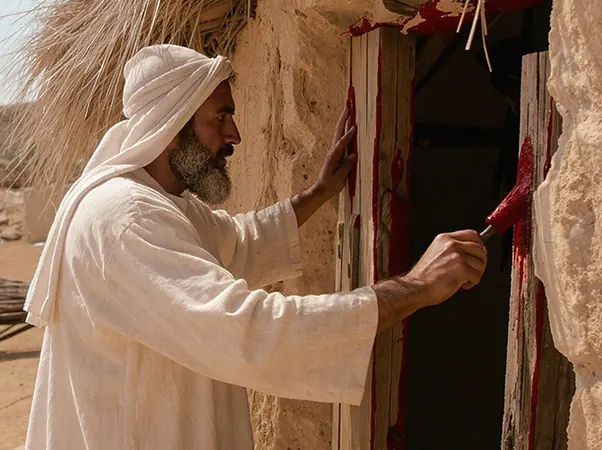
Article by David C. GrabbeThe instructions for the first Passover observance emphasize that the lamb was not solely a blood sacrifice but a meal to be eaten. God directed that each household select a lamb sufficient for its members, with neighbors sharing if needed, and specified that the blood be placed on the doorposts and lintel while the flesh was roasted whole in fire and consumed that night with unleavened bread and bitter herbs. None of it was to remain until morning, and participants were to eat it dressed for travel, with staff in hand, in haste. These details culminate in the declaration that it is the LORD'S Passover. Scripture repeatedly highlights the act of eating the Passover, both in the Old Testament accounts of the Exodus and later observances and in the New Testament descriptions of Christ's final meal with His disciples. This consistent focus on consumption sets the observance apart from a sin offering. The blood on the doorposts functioned as a sign of life granted to redeem those within each house from the destroyer, allowing God to pass over the Israelites while striking Egypt's firstborn. This redemption concerned deliverance from Pharaoh's bondage rather than forgiveness of sins, as the Exodus narrative contains no reference to atonement or cleansing through the blood. Instead, the meal and its protective sign reflect God's covenant faithfulness to Abraham, by which He spared and purchased Israel as His firstborn nation despite their idolatry. The Hebrew term pecach conveys exemption or sparing, underscoring an act of mercy that overlooked transgressions without providing legal justification. The Passover meal thus commemorates this redemptive purchase and divine protection, establishing a foundation distinct from later sacrificial provisions for atonement.
Eat in Haste?
Sermonette byThe Israelites were to eat the Passover, not in haste, but with serious reflection. The only thing standing between them and death was the blood on the doorpost.

Passover: An Extraordinary Peace Offering
Sermon by David C. GrabbeThe Passover instructions emphasize eating the specially prepared lamb as a distinctive meal. God provided details about when the lamb should be eaten, how it should be prepared, what should accompany it, and what should be done with the remains. The repeated emphasis in both Old and New Testaments falls on the eating of the Passover. This focus sets the observance apart from a sin offering, which was not generally available for eating. The Passover was a meal shared by a circumcised household. The bulk of the instructions concerned the lamb they were to eat. Israel ate the Passover in homes. The Passover lamb had to be roasted in fire, and boiling it was forbidden. The head, legs, and entrails had to be roasted with the rest of the lamb. None of the Passover was to remain until morning, and what remained had to be burned. The Passover bears the most resemblance to the peace offering. Both were eaten the same day the sacrifice was performed. Like the Passover, the peace offering was a shared meal of fellowship. The Passover continues this pattern as a fellowship meal on the eve of the sealing of a covenant. During the Passover service, Jesus Christ had been fervently looking forward to this special occasion of fellowship. The New Testament scriptures place the emphasis on the bread and wine as the original elements of the fellowship meal. The bread represents the sinless life that Jesus Christ lived. As participants symbolically partake of His flesh, they are joined to His sinless life. The wine represents the covenantal relationship with God. Through drinking the wine, participants take in the blood of the covenant. The Passover unites participants with God through a sacrificial meal. It also unites them with others, so that they become one because they partake of that one bread, which is Jesus Christ.
Passover (Part Two)
Sermon by John W. RitenbaughThe importance of Passover, particularly the act of eating, is central to God's purpose as it signifies a lifelong commitment beyond mere belief in the sacrifice of Jesus Christ. In John 6:54-58, it is emphasized that whoever eats His flesh and drinks His blood has eternal life, and He will raise them up on the last day, highlighting that eating this bread ensures eternal life. Exodus 12:11-13 instructs the Israelites to eat the Passover in haste, with specific preparations, as the Lord will pass over their houses marked with blood to spare them from the plague in Egypt. Further, Exodus 12:8-9 details that the flesh must be eaten on that night, roasted in fire, with unleavened bread and bitter herbs, adhering to precise instructions. Exodus 12:44 and 12:46 specify that only circumcised individuals may eat it, and it must be consumed within one house without carrying any flesh outside or breaking bones. Numbers 9:1-3 and 9:9-12 reinforce that the Passover must be kept at its appointed time on the fourteenth day of the month at twilight, according to all its rites and ceremonies, including eating with unleavened bread and bitter herbs, even for the second Passover a month later if one was unable to participate initially. God's command is clear that to keep the Passover, one must eat of it on the night of the fourteenth, underscoring the critical nature of this act in obedience to His instructions.
Passover (Part Three)
Sermon by John W. RitenbaughJesus said that unless one eats the flesh of the Son of Man and drinks His blood, there is no life in that person. Whoever eats His flesh and drinks His blood has eternal life, and He will raise that person at the last day. His flesh is food indeed, and His blood is drink indeed. The one who eats His flesh and drinks His blood abides in Him, and He in that person. This bread came down from heaven. The one who eats this bread will live forever. If the Passover is not taken and taken properly, there is simply no eternal life in a person. Passover is named for God passing over the Israelitish people while they remained in their houses. The blood was a sign on the houses where they were. When God saw the blood, He passed over them. The Passover sacrifice of the Lord passed over the houses of the children of Israel in Egypt. Passover and the Feast of Unleavened Bread are two distinct and separate festivals. There are nine steps connected to Passover, and eight of those steps had to take place on the fourteenth. The eating of the lamb that night was one of those steps. No alien was to eat it unless circumcised. They were not to leave their house until the morning. According to all its rites and ceremonies, the Passover was to be kept. The rites have the force of law. They were to leave none of it until morning nor break one of its bones. According to all the ordinances of the Passover, they were to keep it. No outsider was to eat of it. A sojourner and a hired servant were not to eat it. In one house it was to be eaten. They were not to carry any of the flesh outside the house nor break one of its bones. All the congregation of Israel was to keep it. When a stranger sojourns and wants to keep the Passover, all his males were to be circumcised, and then he was to come near and keep it. He was to be as a native of the land. No uncircumcised person was to eat it. The ordinance of the Passover emphasizes the eating of it. Keeping the Passover does not begin and end with the killing of the animal. God is more concerned with the eating of the animal than with the killing of the animal. Jesus was concerned with the eating of Him. The emphasis is on the eating of the animal more than on the killing of the animal. Jesus sent Peter and John to prepare the Passover so that they might eat it. He said that with fervent desire He had desired to eat this Passover with them before He suffered. Jesus and His disciples understood that keeping the Passover meant eating the Passover. Eating the Passover is part and parcel with keeping the Passover. The Jews still considered eating the Passover as keeping it. All the congregation of Israel was to keep it. The Hebrew word means to observe, to celebrate, to accomplish, or to keep. When a stranger wants to keep the Passover, he is to keep it, and no uncircumcised person is to eat it. The Hebrew word for eat means to consume, to devour, or to dine. The Passover is to be sacrificed and it is to be eaten. Keeping and eating are equated. Keeping the Passover means eating the Passover, and it had to be done on the fourteenth. Symbolically, killing the Passover emphasizes responsibility for the death of the Savior and recognition of sin. Eating it emphasizes the more important continuance. Jesus related it to the manna. Every day the manna came down, and every day the people received the strength to live another day. The eating of the Passover emphasizes the continuance of the relationship with Christ the Savior and with God the Father and the dwelling in Him. Through this process, one becomes one with Him. The descendants of the captivity kept the Passover on the fourteenth day of the first month. They slaughtered the Passover lambs, and the children of Israel who had returned from the captivity ate together with all who had separated themselves from the filth of the nations of the land in order to seek the Lord God of Israel. Certainly the lamb had to be killed, but Passover has not been kept until it is also
The Lesson of the Night to be Much Observed
Sermonette byThe same God who exercised vigilance and care over our forebears does so over us. Israel's leaving Egypt signifies maintaining the relationship with God.