


Filter by Categories

The Harvesting of the Firstfruits
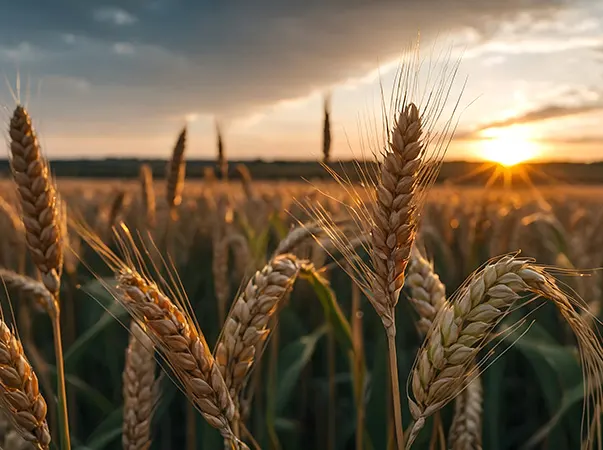
'Prophecy Watch' by Bill KeeseeIn the context of biblical agricultural imagery, the early harvest, often associated with the Feast of Harvest or Pentecost, represents the firstfruits of the grain harvest, beginning with the wavesheaf offering during the Feast of Firstfruits. This early harvest, primarily of barley, contrasts with later harvests of fruits and vegetables, symbolizing the initial gathering of God's children. In ancient times, barley was harvested before it was fully ripe to prevent the grain from falling out of the husk prematurely, ensuring it could ripen further after being cut. The grain, appearing white at this stage rather than the golden brown of full maturity, was cut with a sharp sickle when it was sufficiently developed. Harvesters then gathered the cut stalks into sheaves, tying them into bundles and standing them upright in shocks—groups of 15 to 20 sheaves leaning against each other in a cone shape. This structure allowed air to circulate, aiding the grain in maturing while protecting it from ground moisture and rot. After many days, when the grain was deemed ready, the shocks were hauled to the threshing floor for further processing. This meticulous process of the early harvest underscores the careful timing and labor involved in ensuring a successful yield.
Holy Days: Pentecost
Bible Study by Earl L. HennThe early spiritual harvest finds its meaning within the broader pattern of God's holy days, which follow the two harvest seasons of the year: a small one in spring and a larger one in fall. These agricultural cycles typify two corresponding spiritual harvests, with Pentecost, occurring in late spring, symbolizing the first and smaller of these. God commanded Israel to appear before Him during three yearly periods, Passover and Unleavened Bread in early spring, the Feast of Harvest in late spring, and the Feast of Ingathering in fall, establishing the framework in which this early harvest occurs. Before Israel could reap the spring crop, a wavesheaf offering had to be made, waved before God by the priest on the day after the weekly Sabbath during Unleavened Bread, after which the harvest could commence. Pentecost, or the Feast of Weeks, was then counted fifty days from that wavesheaf offering, always falling on a Sunday. In the Old Testament, two leavened loaves were offered on this day as firstfruits, representing humanity's imperfect and diverse works accepted only through Christ's perfect sacrifice. This early harvest carries deep symbolic weight: those whom God calls into His church now are a pilot group, specifically selected as firstfruits, described in Scripture as living in the world but not part of it. They are being trained as future leaders under Christ after His return, when God will work to save the whole world. This present age, therefore, is not the only day of salvation; it represents merely the first, smaller harvest before the greater ingathering to come. The end time itself constitutes this spiritual harvest, corresponding to Christ's second coming and the resurrection of the dead, when God reaps the firstfruits. The fifty days counted to Pentecost symbolize both the span from the church's founding to the end of the age and the converted life of an individual believer growing into Christ's image. Jesus Christ Himself fulfilled the wavesheaf symbolism as the first of the firstfruits, a sinless sacrifice resurrected to eternal life. Just as the sheaf of grain had to be waved before God for acceptance, Christ ascended to the Father on that same day to be accepted before the harvest could begin, explaining why He would not permit Mary Magdalene to cling to Him. Exactly fifty days after His ascension, the Holy Spirit came upon the disciples on the Day of Pentecost, fulfilling His promise and marking the moment the Spirit came to dwell within them rather than merely alongside them, as it had in Christ. This event marked the founding of the church itself. The early church continued observing Pentecost long after this outpouring, as seen in Paul's determination to reach Jerusalem in time for the festival decades after Christ's ascension. This continuity demonstrates that Pentecost remains a perpetual reminder of the church's role as firstfruits within God's unfolding plan of salvation, the first stage of a harvest that will ultimately encompass all humanity.
The Endurance of the Firstfruits (Part One)
CGG Weekly by David C. GrabbeThe day of Pentecost, known also as the Feast of the Firstfruits and the Feast of Weeks, represents the early harvest in God's spiritual calendar, distinguished from other holy days by the requirement that believers count toward it rather than simply observe it as a fixed date. This counting, commanded in Leviticus 23:15, involves the Hebrew word sāpār, which carries the sense of tallying, inscribing, or recounting something as it happens, rather than forecasting or speculating about the future. This linguistic detail suggests that God intends His people to mark the passage of the seven weeks progressively, day by day, as they move from Wavesheaf Day toward the feast itself, rather than merely calculating the date in advance on a calendar. The instruction that these seven Sabbaths be "completed" or "full" introduces a second significant term, tāmîm, which in the overwhelming majority of its scriptural uses carries a moral dimension beyond mere completeness. It is the word used to describe Noah as perfect among his contemporaries and Abram as blameless before God, as well as sacrifices required to be without blemish. Applied to the count to Pentecost, this term implies that the seven weeks represent not just the passage of time but a process of moral and spiritual perfection, the firstfruits becoming blameless and sincere as they progress toward bearing the full image of God. This reveals that Pentecost draws attention not to a single day but to an entire span of time, reflected in its alternate name, the Feast of Weeks. The early harvest, symbolized by this feast, points to the growth process occurring between God's acceptance of the Wavesheaf offering and the ultimate harvesting of His people in the resurrection. Using the day-for-a-year principle, the fifty days of the count represent the fifty years of an adult's converted life, though this is understood typologically rather than literally, since not all believers live a full fifty years after conversion. Stephen was martyred soon after the church began, and most of the apostles suffered martyrdom well before fifty years had passed, while John lived considerably longer. The number seven, representing spiritual perfection throughout Scripture, indicates that the seven Sabbaths of the count symbolize the process of spiritual perfecting itself, regardless of the literal number of years a believer experiences. Because Pentecost is a feast day, it functions as a celebration, specifically a celebration of a successful harvest achieved through effort and against real risk of failure. Just as farmers rejoice over a harvest that could easily have failed, believers celebrate in advance the success of the spiritual harvest represented by the early firstfruits, trusting that God will complete the work He has begun despite the many things that could go wrong along the way. This confidence rests on the assurance that God will fulfill His part in the process, leaving believers to focus on their own faithfulness and cooperation with that ongoing work of perfection.

The Wavesheaf Offering
'Personal' from John W. RitenbaughMost know little about the wavesheaf offering, even though it represents one of the most significant acts: the resurrection and ascension of Christ!
Who Are the Firstfruits?
Sermonette byWe may take it for granted that 'firstfruits' are synonymous with 'Christians.'" However, 'firstfruits' is very general, referring to surprising things.
Countdown to Pentecost 2001
'Personal' from John W. RitenbaughHow does one count to Pentecost when Passover is on a weekly Sabbath, making the Last Day of Unleavened Bread the only other available Sabbath to begin the count?
Do You Recognize This Man? (Part Four)
Sermon by Richard T. RitenbaughFruit is a product of growth requiring knowledge, work, patience, truth (light) and water (God's Spirit). Only by remaining on the vine will we bear fruit.
Walk By Faith Not Fleece
Sermonette by Bill OnisickGod mightily used Gideon, initially a timid man who required multiple signs from God, when he began walking more by faith than sight.
Powerful Effects of the Holy Spirit
Sermon by Martin G. CollinsWe are intrigued by supernatural power, and many seek to display it. Yet the Scriptures show the activity of the Holy Spirit in ways that are commonly missed.
Themes of Ruth (Part One): Naomi
Sermon by Richard T. RitenbaughNaomi's attractive personality, selflessness, godly conviction and common sense characterize her relationship with her Gentile daughters-in-law.
Will You Marry Me? (Part Two)
Article by StaffThe story of Boaz and Ruth and the cup of betrothal at Passover ask us to consider: Are we committed to this wonderful relationship with our Fiance?
Is Any Time Right for You?
Feast of Tabernacles Sermon by Martin G. CollinsWhen life is empty, time drags; when life is full, time flies. In order to make the best use of time, we must spend it on something that will outlast it.