


Filter by Categories

God, Satan, and David's Numbering of Israel
'Prophecy Watch' by David C. GrabbeGod's sovereignty extends over all beings, even those who have corrupted themselves, such as rebellious angels. He uses them to accomplish His will, as seen in the life of Ahab, where a demon's deception through the king's prophets was accepted by God to bring about Ahab's fall. Similarly, in the incident of King David's numbering of Israel, both God and satan were involved. God instigated the numbering, while satan broadcast the suggestion, influencing David to conduct a census. This interplay demonstrates that God's control prevails, even over adversarial forces, to fulfill His purposes. Though it may seem as if God and satan caused David to stumble, God did not tempt David to sin nor cause him to sin. Instead, He opened the way for the sin already in David's heart to be revealed, allowing David to realize how far he had strayed from God. God's actions brought the hidden sin into the open, like a boil needing to be lanced for healing to begin. His judgments, though unsearchable and beyond human understanding, always serve His righteous will.
God, Satan, and David's Numbering of Israel
Sermonette by David C. GrabbeGod's sovereignty extends over all beings, even those who have corrupted themselves, as seen in the interplay between God and Satan in the history of Israel. In the accounts of David's numbering of Israel, both God and Satan are depicted as influencing the event. In I Chronicles 21, Satan stands up against Israel and moves David to conduct the census, while in II Samuel 24, it is the LORD whose anger is aroused against Israel, prompting David to number the people. This apparent discrepancy can be understood by recognizing that God ultimately holds responsibility, setting parameters within which Satan operates. Clear examples of this dynamic are evident in other scriptural events. In the opening chapters of Job, God brings Job to Satan's attention, goading him to challenge God's protection, thus making Satan the instrument of Job's calamities while God remains the ultimate authority. Similarly, in I Kings 22, God presides over a heavenly assembly where a spirit, acting as a lying spirit, is permitted by the LORD to deceive King Ahab through his prophets, demonstrating that God uses even rebellious beings to accomplish His will. Returning to David's census, both God and Satan are behind the action, with God desiring it to happen and Satan broadcasting the suggestion. God's anger against Israel, as noted in II Samuel 24, indicates a broader context of divine displeasure, yet God does not cause David to sin. Instead, He allows the sin already present in David's heart—self-reliance and a focus on military might rather than trust in God—to become manifest through the census, exposing the underlying issues for correction. Thus, God's control over Satan serves His purpose, ensuring that even adversarial actions align with His sovereign plan.
Power Belongs to God (Part Two)
'Personal' from John W. RitenbaughGod's control over Satan is absolute and unyielding, demonstrating His supreme power in every circumstance. Satan possesses significant innate abilities, far beyond any human creation, as a magnificent and mighty being who, as far as we know, lives forever. However, his power is strictly limited by what God has created in him and the latitude God permits for its use. Satan can operate only within the boundaries set by God for His divine purposes. Despite the horrible events on earth that might suggest otherwise, satan's power is most assuredly not unlimited. God meters out the authority given to him solely to accomplish what He desires, ensuring that no force can stand against His will or hinder the completion of His purpose for each of us.
The Sovereignty of God (Part Five)
Sermon by John W. RitenbaughGod's control over satan and evil spirits is evident throughout the biblical narrative, showcasing His supreme sovereignty over all aspects of creation. The Bible clearly demonstrates that satan is entirely subject to God's authority. In the account of Eden, satan had to stand and receive his sentence without protest, unable to act against God's decree. In the story of Job, satan could not touch Job until God granted permission, and even then, he was restricted by the boundaries God set, unable to take Job's life. During the confrontation with Jesus in Matthew 4:11, when Jesus commanded satan to leave, he obeyed immediately, illustrating God's power through Christ over him. Ultimately, the scriptures affirm that satan will be cast into the lake of fire at the appointed time, further emphasizing God's complete dominion over him. Moreover, God's sovereignty extends to the use of evil spirits to accomplish His purposes. In Judges 9:22-24, God sent an evil spirit to create discord between Abimelech and the men of Shechem, stirring rivalry to bring about justice for the cruelty done to Gideon's sons. Similarly, in I Kings 22:19-22, God utilized a lying spirit to deceive Ahab through his false prophets, ensuring that Ahab would go into battle and meet his demise as part of God's plan. These instances reveal that even malevolent entities operate under God's command, unable to act outside His will, as He orchestrates events to fulfill His divine objectives.
The Sovereignty of God: Part Five
'Personal' from John W. RitenbaughSatan is entirely subject to God's control. In Eden, he must listen to God's sentence without response. In the book of Job, he cannot touch Job until God permits, and even then, he is barred from crossing the line to kill him. When Jesus commands him to depart, as seen in Matthew 4:10-11, he leaves immediately. Finally, in Revelation 20:1-3, Satan is bound and cast into a bottomless pit at God's command, and in verses 8-11, he is released for a time at God's discretion before being cast into the Lake of Fire. God's sovereignty over evil spirits is absolute, as they too are forced to submit to His authority.
Power Belongs to God (Part 2)
Feast of Tabernacles Sermon by John W. RitenbaughGod's authority over Satan is part of His absolute sovereignty over everything in creation, since all power belongs to Him. Satan's human instruments, including civil governments and false churches, are the church's primary enemies, yet even they are under God's control. Pilate's authority over Jesus was given from above, and God turns a king's heart as He wills (Proverbs 21:1). Authorities everywhere are appointed by Him (Romans 13:1), so history moves in the direction He intends. Christ has been given all authority by the Father, holds primacy over every created being, and triumphed over principalities and powers, including demons (Colossians 2:15). Job 1 and 2 show the principle directly: Satan can do nothing against God's children except what God permits, setting limits such as sparing Job's life. Satan is "a dupe in God's hand," and God puts a protective wall around His people, saying, "This far, and no further." Satan has only the power God gives him. According to Revelation 20, God will cut off that power, and an angel of lesser power than Satan will bind him for a thousand years. Believers can therefore trust that no enemy can deflect or nullify the unseen Power behind all visible powers, and that every trial serves God's purpose of preparing them for His Kingdom.
The Providence of God (Part One)
Sermon by John W. RitenbaughGod's relationship to Satan is addressed directly in contrast to dualistic religious systems, which teach that God and Satan exist as equal and opposing forces locked in an eternal struggle where neither ultimately prevails and everything ends in a stalemate. This dualistic view is explicitly rejected as incompatible with what Scripture reveals about God's nature and rule. Instead, the Bible presents God as sovereign over His entire creation, and this sovereignty is said to include even the subordinate domain of Satan. The framing is presented as an either/or proposition: either God is sovereign, including over Satan's domain, or He is not sovereign at all—there is no middle ground. If the dualists were correct, and Satan stood as God's equal, then all hope would be lost, since there would be no assurance that good ultimately triumphs over evil. This point connects directly to the broader discussion of divine providence and sovereignty that runs throughout the material. Since Isaiah 45 declares that God Himself creates both light and darkness, both peace and calamity, the question naturally arises whether Satan operates independently of God or whether even his sphere of influence falls under divine control. The answer given is that Satan's domain, though real, is subordinate—meaning it does not operate as an independent, competing power but exists within the boundaries God permits and governs. This is essential to the larger argument that God is not merely a distant Creator who set the universe in motion and withdrew, as the Deists imagined, but is continuously and intimately involved in sustaining and directing all things, as shown through Hebrews 1:3, Colossians 1:17, and John 5:17. If God upholds "all things" by the word of His power, and if by Him "all things consist," then nothing—including whatever activity originates from Satan—falls outside His ultimate control. This assurance of God's control over Satan's subordinate domain is what makes it possible to trust that "good always triumphs," despite appearances to the contrary. It underlies the confidence expressed that although believers must pass through pain, trial, and even calamity, these things occur within a universe where God, not Satan, holds final authority. Without this certainty of God's control over every force, including Satan, the promise that "all things work together for good to them that love God" would be groundless, and believers would be left, as the Deists or dualists would have it, subject to chance or to an unresolved cosmic conflict rather than to the purposeful, sovereign providence of their Creator.
Satan (Part 1)
Sermon by John W. RitenbaughGod has Satan and his demons under restraint. Having rebelled against God, they were cast down from heaven to the earth, which Peter and Jude describe as a place of restraint, a prison of "chains of darkness" in which they are reserved for judgment. Much of their former free moral agency was taken away. Satan is a created being who remains puny compared to God, and he can do only what God permits. In Job, God sets the limits on Satan's attack: "all that he has is in your power; only do not lay a hand on his person," and later "spare his life." God deals with believers the same way, allowing tests according to the measure of their faith, love, and Spirit, and never giving a greater test than they can endure (I Corinthians 10:13). Several other factors hold the demons in check. They know God exists and tremble before Him (James 2:19). They are a kingdom divided against itself, held in line only by the force of their chief. Good angels outnumber them at least two to one and minister to the heirs of salvation, as Daniel 10 shows when Michael came to help Gabriel against the prince of Persia. Because God allows demons real liberty in testing believers, Christians must put on the whole armor of God and hold their position. Victory is assured because Christ has already defeated Satan.
Satan (Part 2)
Sermon by John W. RitenbaughSatan uses disinformation, spread through false ministers/prophets, teaching smooth things that destroy. We must test the spirits to ensure a teaching is from God.
The Sovereignty of God (Part One)
Sermon by John W. RitenbaughWe are assured that even though inexplicable things happen in our lives, God is still sovereign. We must develop childlike faith to trust in Him for solutions.
How Does God Help Us? (Part 2)
Sermon by John W. RitenbaughThe trials we go through are part of His providence, putting us into humility and determining what really motivates us.
Where Does Righteousness Come From?
Sermonette by David C. GrabbeJob was righteous because of the work of God, forming his righteousness out of nothing, guiding events and providing an environment in which character was formed.
Conspiracy Theory (Part Twelve)
Commentary by John W. Ritenbaugh (1932-2023)Satan has orchestrating his plans for hundreds of years, employing gullible human beings who may not know that they are being used in his service.
Conspiracy Theory (Part Eleven)
Commentary by John W. Ritenbaugh (1932-2023)Satan has been meticulously and carefully preparing for a war against God for millennia, stepping up the pace as technology has developed exponentially.
Being Alert to Our Enemy
Feast of Tabernacles Sermon by John W. Ritenbaugh (1932-2023)Like the cycles of the seasons, the events of prophecy follow natural progressions. God has given ample warnings to His prophets to prepare His people.
Anticipating the Enemy
Sermon by Martin G. CollinsWe become vulnerable to Satan when we allow pride to consume us, cozy up to false doctrine, toy with the paranormal, or let down in prayer and Bible study
Leadership and the Covenants (Part Twenty-One)
Sermon by John W. Ritenbaugh (1932-2023)Prior to the Flood, mankind's thoughts and intents were evil continually. A parallel time of demonic activity is on the horizon for those living today.

Lead Us Not Into Temptation
Sermon by Ryan McClureIt is solely God's prerogative to test and to prove, while Satan's function is to tempt, to trip up, and to destroy. God tests but does not tempt.
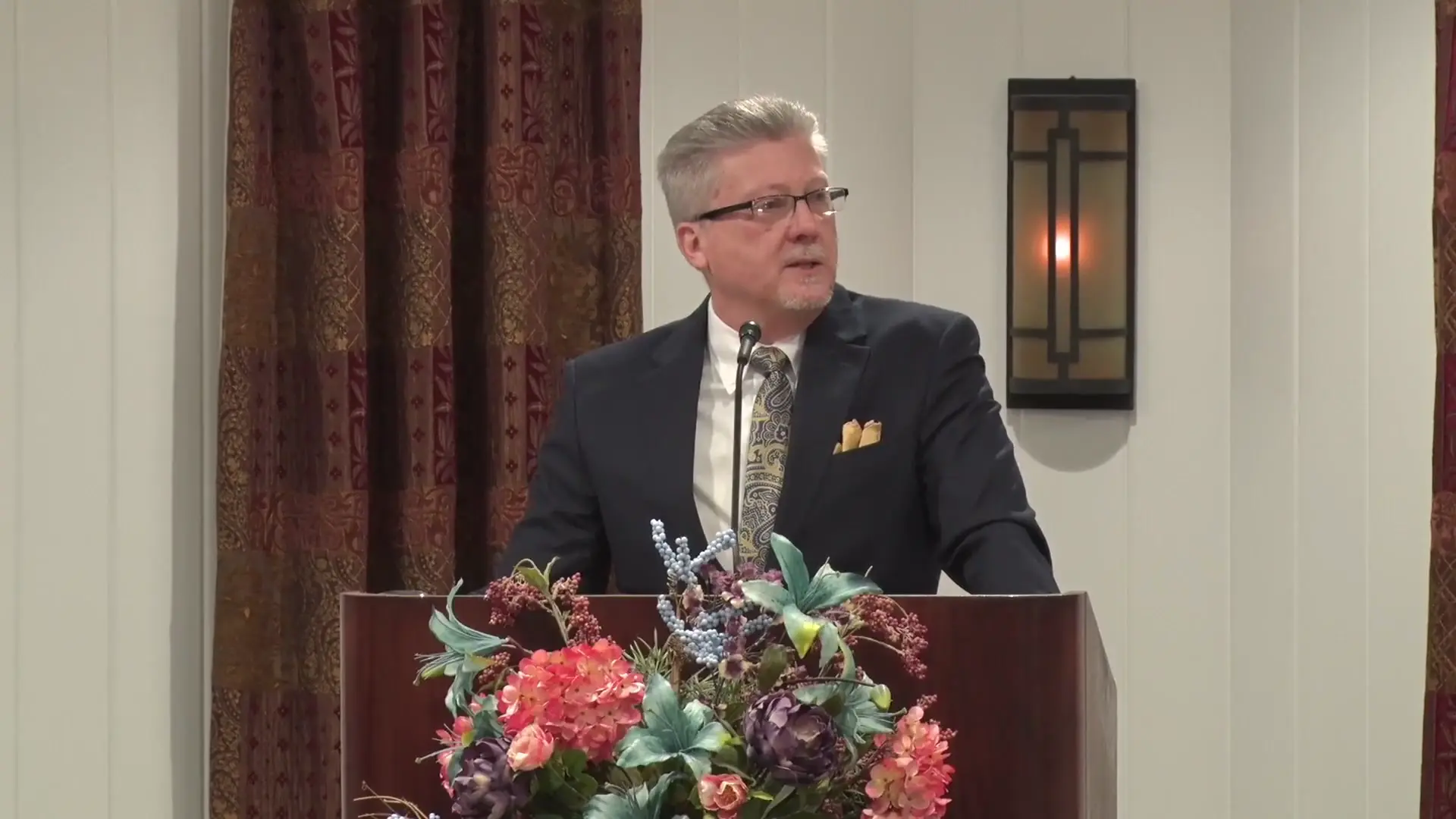
Psalm Genres (Part Six): Penitential Psalms
Sermon by Richard T. RitenbaughGod demonstrates supreme authority over all forces of evil, utilizing even the most malevolent entities for His divine purposes. He employs satan the devil, a rebel and adversary against Him and His people, as a tool to strengthen and prepare His followers for the Kingdom of God. Without altering satan's inherently evil nature, which remains unrepentant, God manipulates his actions to foster repentance, growth, and the development of Christ-like character in His people. Thus, while evil itself never transforms into good, God masterfully uses it to produce positive outcomes in the lives of His chosen, showcasing His unparalleled ability to turn adverse circumstances toward a beneficial end.