


Filter by Categories
Whatever Happened to Gnosticism? Part One: False Knowledge
Article by David C. GrabbeIn recent years, a resurgence of philosophies akin to ancient Gnosticism has emerged, gaining popularity through various movies and books. Though not identical to the heresy faced by the early church, this modern form poses a significant challenge, echoing the predominant source of error during the writing of the New Testament. Several biblical books, including John, I Corinthians, Galatians, Colossians, I and II Timothy, Jude, and I John, address elements of Gnosticism, while Revelation mentions related beliefs and practices linked to knowing the depths of satan and the Nicolaitans. Gnosticism, though rarely named explicitly in Scripture, influences contemporary thought, particularly within certain feminist movements that draw on texts like the Gospel of Mary, the Gospel of Eve, and the Pistis Sophia to promote ideas of the divine feminine and support claims for female leadership roles in churches. These texts are used to argue for equal access, participation, and claims to knowledge, often leading to practices like allocating clerical functions by lot and rejecting God-ordained roles and hierarchy within the church of God. Such egalitarian notions, while seemingly utopian, result in confusion and the undermining of doctrine, as individuals with Gnostic leanings often believe they possess superior understanding compared to the rest of the church and its ministry. God's pattern, however, is to establish doctrine and leadership through those He chooses.
Is Comparative Religion Forbidden?
Commentary by Richard T. RitenbaughThere is a growing concern about idolatry within certain religious groups, particularly regarding the teaching of Comparative Religion courses. Such courses, offered by institutions like Armstrong College, are seen by some as a direct violation of God's warning in Deuteronomy 12:29-30, where He commands His people not to inquire after the gods of other nations or to follow their practices. The concern is that by examining the origins, practices, and teachings of major world religions—such as ancient Mesopotamian religions, tribalism, Buddhism, Shinto, Taoism, Confucianism, Hinduism, Islam, Judaism, and various Christian denominations—students risk being ensnared by false beliefs. However, a closer understanding of God's command reveals that He is not forbidding the mere knowledge of other religious practices, but rather the intentional study of them for the purpose of adopting or engaging in idolatry. In the cultural context of the ancient Middle East, there was a belief that gods ruled specific lands, requiring acknowledgment through worship or sacrifice by those who entered. God's instruction to the Israelites was to reject this practice and worship only Him, regardless of the land they inhabited. Thus, learning about false religions as a matter of awareness is not the issue; the danger lies in seeking to observe or practice those false beliefs.
Prepare to Meet Your God! (Part Five): Religion and Holiness
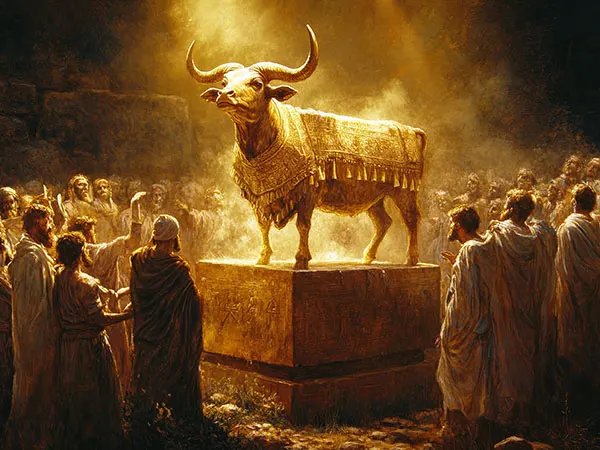
Article by John W. Ritenbaugh and Richard T. RitenbaughGod's complaint against Israel's religion is that it had form but no substance. The people made pilgrimages to their shrines, but they did not grieve over their nation's sins. They went to church, but they continued to cheat, steal, and lie. They made a great show of being religious, but their religion caused no changes in their conduct. Israel talked the talk but did not walk the walk. Spiritual adultery had occurred as Israel turned their backs on God and followed the ways of other gods. God gave Israel many advantages—His law, His providence, His protection—to allow His people to live His way of life, but they rebelled against Him. When God looked on Israel, He saw a whole nation, from her culture to her government to her religion, organized around human self-concern. He saw no clear evidence of godly living to verify their claims of being His people. Israel's false religion, represented by the altars of Bethel, is at the root of her problems. The violence and injustice in Israelite society stemmed from the false teaching proclaimed from the pulpits. The religion of Israel began with a man, Jeroboam I, who changed the true worship of God. The people were not righteous, moral, or just in their dealings with one another, so their playing at religion, though sincere, was despicable to God. Since their rejection of the house of David under Jeroboam I, the Israelites had practiced a syncretic religion, mixing falsehood with the truth of God. This admixture of beliefs produces a foul mixture, no different from what Israel was doing in Amos' time. Through human nature, satan constantly attempts to displace the truth of God with error, leading to a subtle and gradual loss of true worship. God sent prophets to testify against the nation and expose the direction it was going, and He called Nazirites to exemplify pure living before His people. However, the Israelites forced the Nazirites to break their vow and muzzled the prophets, showing their intolerance for holiness. The more holy one becomes, the greater the contrast with the world, and the more likely persecution will follow.
The Religion of Climate Change
Feast of Tabernacles Sermon by Mike FordBeing good stewards of the earth should not lead to the imbalanced practice of making mother-earth our goddess. Rejecting the Creator brings calamity.
Do You Believe—Really Believe?
CGG Weekly by Richard T. RitenbaughNumerous religions claim the Bible as their source of belief, but none of them seems to care that what they do does not square with biblical teaching.
Politics and Idolatry
CGG Weekly by Richard T. RitenbaughMany are not just 'into' politics—it is their religion. They worship at the altar of government, sacrificing to honor the god of politics, the party.

The Four Horsemen (Part Two): The White Horse
'Prophecy Watch' by Richard T. RitenbaughAt God's command, the white horse and its rider ride over the earth 'conquering and to conquer.' It is a precursor of the destruction that is wrought by its fellows.
Taking Care With the Tares
'Ready Answer' by Ted E. BowlingThe Parable of the Wheat and the Tares warns of false brethren within the fellowship. Jesus Christ exemplified how to interact with them in a godly manner.
Many Are Called, But Few Are Chosen (Part Four)
Sermon by Martin G. CollinsThe Arnoldists, Albigenses, Cathers, Waldensians, and the Lollards all had Sabbath-keepers in their ranks. Gradual syncretism is a pattern of church history.
He Came to Reintroduce a Way of Life
Sermonette by Craig SablichJesus Christ did not come to start a new religion, but instead reintroduce a way of life that would liberate people from sin.
Many Are Called, But Few Are Chosen (Part Three)
Sermon by Martin G. CollinsChrist cautions the Pergamos congregation to shun the doctrine of the Nicolaitans. The Church suffers when it harbors those who compromise and offend.
Purpose-Driven Churches (Part 3)
Sermon by John W. RitenbaughOutcome based religion exalts numerical growth and feeling good over the truth of God, promoting the use of modern psychology over 'divisive' biblical doctrine.
Facing Times of Stress: Lovers of Self
Sermon by Martin G. CollinsWe face the same kind of pressures and stress that Timothy faced, with perilous times ahead of us, threatening the existence of the nation and the church.
Does Doctrine Really Matter? (Part One)
Sermon by John W. RitenbaughThe strife between this world's belief systems shows that God did not originate them. False teachings are dangerous because they can erode the faith.
The Global Environmental Ethic (Part Three)
Commentary by Martin G. CollinsThe UN Environmental Project espouses an environmental ethic, an eco-spirituality designed to enforce a global reference for earth and an international earth sabbath.
The Christian and the World (Part Three)
Sermon by John W. RitenbaughWe must realize we are walking on a razor's edge, with the Kingdom of God on one side and the world with all its sensual magnetic charms on the other side.
Whatever Happened to Gnosticism? Part Three: Satan's Three Heresies
Article by David C. GrabbeWhen Satan confronted Adam and Eve, he fed them three heresies that Gnosticism incorporated into its parasitic philosophy and way of life.

Strategies for Interfacing with Babylon without Becoming Assimilated (Part Four)
Feast of Tabernacles Sermon by David F. MaasOver 77% of 'Christian' churches have chosen the day of the sun as their day of rest, rejecting the day God hallowed from creation, seen in the 4th Commandment.
Islam: Dark Beginnings
CGG Weekly by David C. GrabbeRelatively few in the Western world know the origin of Islam and the Koran, and fewer still understand the implications. What is the source of this spring?
Contemporary Primitivism
CGG WeeklyTechnology merely indicates material development, whitewashing over a culture's moral, ethical, or spiritual state with shiny displays and distractions.
Purpose-Driven Churches (Part 2)
Sermon by John W. RitenbaughThe emerging, new paradigm, purpose driven, outcome-based churches emphasize that the ends justify the means, glorifying relativistic human philosophy.
The Beast From the Earth and 666
Sermon by Richard T. RitenbaughThe first beast rises out of political turmoil, while the second rises out of an entrenched, worldwide religious system, totally opposed to God's laws.
Christ's Death and the 'Immortality' of the Soul
Sermon by John W. RitenbaughThe dangerous false belief of inherent immortal life has led to an acceleration of sin and the danger of eternal oblivion. Only God can give eternal life.