


Filter by Categories

Does Jesus Recognize Today's Christianity?
'Ready Answer' by Craig SablichThe religion bearing the name of Jesus Christ has fragmented into numerous groups, creating a patchwork of traditions and beliefs that often contradict one another. Catholics, Baptists, Evangelicals, Charismatics, Methodists, Calvinists, and Lutherans all hold distinct doctrines, raising the question of who truly teaches the gospel of the Kingdom of God that Jesus preached. This religious confusion prompts doubt about whether Christ would find Himself welcome among these denominations or identify with any of them. If Jesus walked into a church, He would likely find people calling themselves His followers yet worshipping on different days and following traditions that violate God's commands, in ways He taught against. Many Christian groups teach that since Jesus demonstrated His love through obedience and sacrifice, there is no need to show love toward God and fellow man through obedience to His standards. This perspective conflicts with the teachings of Jesus, representing man's attempt to twist Scripture to fit preconceived beliefs. When He returns, Jesus will not be checking denominational labels but will recognize those who are His friends, those who have built a relationship with Him through obedience to all His commandments, worshipping the Father according to His instructions, and living a way of life rooted in love for God and others.
Is America a Christian Nation? (Part Four)
Sermon by John W. Ritenbaugh (1932-2023)The concept of 'Christianity, False' as it pertains to the broader context involves the following: False Christianity is characterized by the practice of religious doctrines that deviate from the true teachings of Jesus Christ. This deviation is evident in the early American settlers and founders who, despite their sincerity and piety, did not adhere to the full truth of God's Word. They followed the teachings of the Protestant Reformation, which were not in complete alignment with biblical truth. This led to a mixture of light and darkness, truth and error, in their religious practices. The settlers and founders believed that the Old Testament was done away with, contradicting Christ's own words in Matthew 5:17 about the perpetuity of the law. They did not keep the Sabbath or observe God's holy days as established by Christ, further illustrating their deviation from true Christianity. In modern times, the term 'Christian' is often misused by various denominations that hold differing beliefs and practices, leading to confusion and division. These groups do not follow Christ in the same way, nor do they agree with each other politically or doctrinally. This fragmentation and disagreement among those who claim to be Christians highlight the presence of false Christianity. The influence of false Christianity is seen in the efforts of Evangelicals to claim that America was a Christian nation from its founding. However, the evidence suggests that the nation never formally covenanted with God, and its religious practices were based on a mix of human teachings and partial biblical truths, rather than the full revelation of God's purpose. False Christianity is also associated with the rise of the beast and the false prophet, as well as the synagogue of Satan mentioned in Revelation. These entities are prophesied to persecute the true church and are part of a broader conspiracy involving the Deep State, which seeks to control the world through false religion and governance. In summary, false Christianity is marked by deviation from biblical truth, fragmentation among denominations, and its association with end-time prophecies involving persecution and global control.
The Cross: Christian Banner or Pagan Relic?
Article by Earl L. HennLong before the coming of Christ, pagans used the cross as a religious symbol, with many variations in the ancient world. According to historian Alexander Hislop, Tammuz, associated with Babylonian mystery religions, had as his initial the Babylonian letter T, shaped identically to crosses used in today's Christianity. Satan, aware of Jesus' future crucifixion, made the cross a popular symbol of worship to deceive the world and lead people into worshipping a false Christ. God instructs His true followers to worship in Spirit and truth, forsaking this world's false religions, rituals, and pagan symbols, including the cross. True Christian soldiers must divest themselves of anything impure or unclean, ensuring that Christ's Bride, His true church, is holy and without blemish at His coming.
Is the United States a Christian Nation? (Part Four)
Sermon by John W. Ritenbaugh (1932-2023)The Founders of the United States, though sincere and moral, were not called as Christians have been. What they practiced was labeled Christianity, but it was a counterfeit of the true faith. This counterfeit was far superior to other religions of their time, yet it did not make the United States a Christian nation as Israel and Judah were under the Old Covenant. The principles they incorporated into the Constitution were influenced by their understanding of Christian principles, but this does not equate to the nation being God's in the same way as ancient Israel and Judah.
Is Jesus Christ a Christian?
Sermonette by Craig SablichChristianity today appears as a fragmented tapestry, woven from diverse traditions and beliefs among countless groups such as Catholics, Baptists, Evangelicals, Charismatics, Methodists, Calvinists, and Lutherans, often holding contradictory views. The question arises whether Jesus Christ would identify with any of these denominations or recognize any as His people. Many of these groups share a common doctrine that the Old Testament law was abolished by Jesus on the cross, viewing God's law as a burden and irrelevant. Yet, Jesus Himself taught that He did not come to abolish the law but to fulfill it, emphasizing that love and obedience are intertwined, and raising the law to a higher standard by equating hatred with murder and lust with adultery. Furthermore, many Christian groups adopt worship practices and holidays that contradict God's specific instructions, incorporating man-made traditions that Jesus rejected. He observed the holy days listed in Leviticus 23, such as Passover, the Feast of Trumpets, and the Feast of Tabernacles, as well as the seventh-day Sabbath, practices often unrecognized by modern groups. Jesus warned against worship that honors Him with lips while hearts remain distant, teaching doctrines based on human commandments rather than God's will. When He returns, He will not look for denominational labels but for those who obey His commandments, worship according to His Father's instructions, and live a lifestyle rooted in love for God and others, as demonstrated by His own example.
A Quick Survey of American Christianity
Commentary by John W. Ritenbaugh (1932-2023)In America today, a survey revealed that 70-80% of respondents consider themselves Christian, yet the nature of their faith varies widely, often lacking depth and authority. Among the five identified types of Christians, only the Active Christians, comprising 19%, are committed churchgoers and Bible readers. Professing Christians, at 20%, hold similar beliefs but show less church involvement and commitment to Bible study. Liturgical Christians, making up 16%, are regular churchgoers with a strong belief in church authority, yet Bible study is absent. Private Christians, the largest group at 24%, own Bibles but rarely read them or attend church. Cultural Christians, at 21%, exhibit minimal religious behavior, show tolerance for other religions, and do not see Jesus as essential to salvation, believing there are many paths to God. This diversity in belief results in a Christianity that is fragmented, marked by disunity, confusion, and spiritual laziness. Except among Active Christians, there is a pervasive vague and shallow belief in God, with little recognition of His involvement in creation or the authority of the church and the Bible in daily life. This lack of engagement and knowledge means that many who identify as Christian are ignorant of God's purpose, contributing to a culture where individuals do what is right in their own eyes due to the absence of a respected, central authority. Historically, when this nation was founded, trust in the church as essential to well-being was stronger, and attendance and participation were more common, even if those churches were not aligned with God's truth. This fostered a higher level of knowledge about God and Christian life, keeping immorality at a lower level compared to today. The decline in the authority of the church and the Bible, effectively diminished by satan, has obscured God, rendering Him vague and unknowable to many. This has led to a permissive, so-called Christian culture where biblical illiteracy is rampant across all categories of Christians, and individuals create their own spiritual beliefs, risking self-deception in their standing with God.
Is the United States a Christian Nation? (Part Two)
Sermon by John W. Ritenbaugh (1932-2023)Many groups are labeled as Christian by historians and ordinary people, but this does not make them truly Christian. What people often call Christianity is not genuine; it consists of numerous counterfeits that have been mistakenly accepted as truth due to ignorance of biblical standards. Jesus warned that false Christs and false prophets would arise, deceiving many, leading to the emergence of false churches with erroneous doctrines that claim the Christian name. These false ministries choose the broad, easy path rather than the narrow, difficult way that Jesus taught. Consequently, the majority will not follow the true path, as Jesus indicated that only a few would find the narrow way, and His church would remain small, a little flock, until His return. Despite sincere intentions, many are conditioned by ignorance and deception to reject the true faith, preferring a less demanding form of religion that does not require significant sacrifice. This results in a distorted version of Christianity that is delivered as easy and amusing, fundamentally different from the demanding and narrow path Jesus described. America's Christians, by their actions, demonstrate that they do not adhere to the faith once given to the saints, revealing that they do not hold the same beliefs, thus proving that the United States is not aligned with the true Kingdom of God. True Christians are commanded by our King Jesus Christ to separate from such worldly kingdoms and their false representations of faith.

The Changing Face of Mainstream Christianity
'WorldWatch' by Joseph B. BaityIn the twenty-first century, mainstream Christianity, despite its historical role in stabilizing Western civilization, faces a profound deterioration in its fundamental beliefs. Surveys from 2020, such as the State of Theology survey by Ligonier Ministries with LifeWay Research, reveal alarming trends among Evangelicals, with nearly one-third failing to recognize the divinity of Jesus Christ, sixty-five percent believing He was a created being, and forty-four percent of Christian respondents asserting that He sinned. George Barna's American Worldview study further highlights the waning influence of Christianity, noting that nearly fifty percent of Americans who claim to believe in God as depicted in the Bible are not convinced of His existence, reflecting a shift from absolute moral truths to conditional ones. Additionally, a survey by EWTN and RealClear Opinion Research indicates a plurality of Catholics now support the 1973 Roe v. Wade decision legalizing abortion, marking a significant departure from traditional stances. Pope Francis has also endorsed same-sex civil unions, a notable shift from the Vatican's 2003 opposition to legal recognition of such unions. Fr. Martin Lasarte warns of the grave danger posed by secularization within the Church itself, describing it as a more profound threat than external attacks. As nominal Christians increasingly abandon core precepts, the modern church drifts toward irrelevance, contributing to the ongoing disintegration of societal morality.
Is America a Christian Nation? Summary (Part Two)
Sermon by John W. Ritenbaugh (1932-2023)It is evident that America was not founded as a Christian nation, nor has it ever been one. Despite intentions by some to present or transform the nation into a Christian entity, this has never been realized. The Founders, though sincere in their personal beliefs about God and often drawing upon biblical principles for laws in founding documents like the Constitution, relied on a syncretic corruption of true biblical Christianity. They believed they were accessing Christian sources, but these were influenced by a religion evolving from the Protestant Reformation, far removed from the religion of Jesus Christ. A clear indication of this divergence is their failure to observe God's Sabbath and holy days as Jesus and the apostles did, signaling they were not following in His steps. Several critical truths underscore this point. First, the Founders did not accept God's promises to Abraham, which are foundational for true Christianity. Without adhering to these promises, establishing a Christian nation was doomed from the start. Second, none of the ceremonial patterns of Israel's formation as a nation under God, such as coming out of captivity or crossing the Jordan River, were replicated in America's founding. God did not manifest as He did at Mount Sinai, nor did He establish His presence in key American cities like Boston or Philadelphia. Third, there was no singular leader akin to Moses or Joshua among the Founders, and no formal covenant was made with God through such a figure. Fourth, no pre-existing set of divine laws was given for the settlers to observe; instead, they created their own constitution. Fifth, no single religion was mandated for worship, contrary to God's requirement for unity in worship as seen in commands to keep specific feasts. The Founders explicitly avoided establishing a national religion, reflecting a deliberate choice against divine involvement. Sixth, no covenant akin to the one Jesus Christ requires of His disciples, involving a clear understanding of responsibilities, was made between God and the United States. The detailed religious instructions given to Israel were absent in America's founding, leaving religious practice open to individual interpretation. Finally, from its inception, American citizens did not practice true Christianity but instead followed personal inclinations in religion, mirroring the era of the Judges where everyone did what was right in their own eyes. This nation was established as a worldly entity and has remained so, failing to meet the standards God set for founding a church or nation under His guidance.
Is the United States a Christian Nation? (Part One)
Sermon by John W. Ritenbaugh (1932-2023)False Christianity arises when people profess belief in Jesus Christ and the Bible yet fail to follow Him in conduct and instead blend religious fervor with political ideals and national identity. This mixture leads to idolatry because it substitutes loyalty to a kingdom of this world for exclusive allegiance to the Kingdom of God. Evangelicals in particular treat America as a Christian nation from its founding, citing the faith of the founders and biblical principles in founding documents, but the founders deliberately avoided establishing any specific denomination as the national religion while still encouraging broad moral instruction. Their intent was civic order, not the creation of a people who obey God as Christ did. Biblical definitions show that a Christian must be led by the Spirit of God, imitate Christ in submission and love, and produce the fruit of obedience rather than lawlessness. Denominational divisions, differing political loyalties, and support for candidates whose agendas conflict with divine commands demonstrate that Christ is divided among such groups. The world's kingdoms, including ancient Israel, have always stood in enmity against God, rejecting His messengers and His Son. Therefore any claim that the United States or its citizens have been Christian by national identity rests on a false premise that confuses outward profession and political activism with the spiritual separation and obedience required of those called out of the world.
Is the United States a Christian Nation? (Part Five)
Sermon by John W. Ritenbaugh (1932-2023)The Founders of this nation were guided more by laws of expedience than by ideology or theology, not having the true faith once delivered.
Today's Christianity (Part One): Christianity Goes Global
'Prophecy Watch' by Charles WhitakerChristianity, defined here as Satan's counterfeit of the way of life Christ taught, stands far from dead despite repeated declarations by Enlightenment philosophers, Progressive Era pundits, socialist despots, and today's post-modernist sages that it has become a defunct artifact incompatible with Western civilization. These voices celebrate release from its supposed moral restraints of superstition and myth, yet events demonstrate its dynamic expansion, particularly in the last five decades. Objective counts of adherents and subjective measures of fervor both confirm vigorous growth across Africa, where numbers rose from 10 million in 1900 to 360 million today, and in the Orient, where Korea advanced from 330,000 Christians in 1900 to 12 million and China now holds tens of millions of practicing believers. The Philippines hosts one group alone with 7 million adherents, and projections indicate that by 2050 only 20 percent of the world's Christians will be non-Hispanic whites, with the remainder of Gentile stock centered in the global south. This movement, termed Southern Christianity, features born-again adherents who are largely charismatic, Pentecostal, evangelistic, and often fundamentalist or Trinitarian in the Reformed tradition. Groups emphasize private revelation, feelings, and emotionalism over formal doctrine, maintain contemporary liturgies, and operate under indigenous leadership that blends local pagan practices with core teachings. Though some maintain loose ties to Western denominations, most exist as independent splinter organizations that reject hierarchy and formalism. A defining trait remains their conservative moral stance, which resists homosexuality, female ordination, divorce, abortion, and the culture of death while upholding strong family values. This conservatism fuels reactions against northern liberalism, as seen when African and Asian Anglican bishops at the 1998 Lambeth Conference overrode European efforts to advance homosexual ordination. Southern Christianity thus functions as a witness against Western apostasy and may serve as a geopolitical counterpoise to rising fundamentalist Islam, though its current fragmentation leaves open questions about future unity or large-scale action.
The Christian and the World (Part Three)
Sermon by John W. RitenbaughFalse Christianity consists of those who claim to follow the Bible yet lack sufficient belief in God to translate knowledge into obedience on even the most basic matters of faith. Despite acknowledging that Saturday is the Sabbath, that Jesus and His disciples kept it, and that Scripture requires believers to walk in Christ's steps, they declare the Fourth Commandment merely ceremonial, substitute Sunday observance, and assert that any day suffices. In the same manner they nullify the Sixth Commandment by engaging in mass warfare at the command of men, setting human authority above the clear directive to obey God rather than men. This pattern arises because the natural man cannot receive the things of the Spirit; they appear as foolishness to him and remain spiritually indiscernible. Consequently the carnal mind inclines toward the world, finding logical and appealing whatever gratifies the senses or advances worldly interests, whether Christmas-keeping or national conflict. The outcome is pervasive confusion and division, visible in the historical fragmentation of Protestantism and the recent fracturing of Catholicism, where each person ultimately does what is right in his own eyes. Scripture shows that this same carnality will eventually produce a brief, spectacular unity when the beast and false prophet gather the nations under one central authority and shared doctrine. That unity rests only on common worldly goals and will fracture once those goals are met, for iron does not mix with clay. Those whose names are written in the Lamb's book of life will refuse to worship the beast because they keep God's commandments and possess the testimony of Jesus Christ; their faith produces the patience to endure rather than submit. All others, lacking genuine trust in God, will be drawn by lying signs and the appeal of carnal advantage to receive the mark and follow the beast. Thus false Christianity stands in opposition to God, its loyalties fixed on the visible and temporal rather than the eternal realities apprehended by faith.
Is the United States a Christian Nation? (Part Six)
Sermon by John W. Ritenbaugh (1932-2023)The belief that America was or is a Christian nation cannot be supported by the facts. The world, governed by Satan, hates Christ's true followers.
The Christian and the World (Part Two)
Sermon by John W. RitenbaughThere is a clear demarcation in God's mind regarding which is the true way and which is not. We were formerly children of Satan until God rescued us.

Handwriting on the Wall: Cultural Christianity
Feast of Tabernacles Sermon by Richard T. Ritenbaugh'Cultural Christianity' is a Christ-free, worldly adaptation of faith used for cultural identity, often embraced for its social influence, lacking true devotion.
Is America a Christian Nation? Summary (Part One)
Sermon by John W. Ritenbaugh (1932-2023)The founders made no covenant between the People of the United States and God. American citizenry never practiced true Christianity.
Christianity Vs. Cultural Paganism
Sermon by Martin G. CollinsSatan deceives by mixing truth with and falsehood, promoting cultural pagans or tares among the wheat or members of the church of God.
Today's Christianity (Part Three): Southern Christianity's Impact on America
'Prophecy Watch' by Charles WhitakerThough secularists tried to use immigration policy to sideline Christianity, it backfired. God has used their scheme to accomplish His own purposes.
Is the United States a Christian Nation? (Part Three)
Sermon by John W. Ritenbaugh (1932-2023)America has never embraced true Christianity as its dominant faith, nor has it ever really followed Christ, but has instead embraced a counterfeit.
Is the United States a Christian Nation? (Part Seven)
Sermon by John W. Ritenbaugh (1932-2023)When the U.S. Congress wanted to put 'In God we Trust' on currency, the Seventh Day Adventists objected, arguing that the U.S. has never been a Christian nation.

Are You a Christian?
'Ready Answer' by David C. GrabbeOne-third of earth's population calls itself 'Christian' despite vast differences in doctrine. Should God's elect, true disciples of Christ, use this name?
In the Wake of an Unnatural Disaster (Part Eight)
Commentary by John W. Ritenbaugh (1932-2023)The membership in Corinth, steeped in worldly philosophy, twisted and misapplied the messages, adjusting them to the popular philosophical fad of the time.
In the Wake of an Unnatural Disaster (Part Seven)
Commentary by John W. Ritenbaugh (1932-2023)Of the things God says He hates, including pride and hands that shed innocent blood, nothing seems to be more disgusting than the American abortion industry.
What's in the Bucket? (Part Two)
Commentary by John W. Ritenbaugh (1932-2023)If the Founders of the United States had been ardent followers of Christ, they would not have legalized chattel slavery through the Constitution.
God, Allah, Rick, and John
Commentary by John W. Ritenbaugh (1932-2023)Rick Warren, the energetic and ambitious founder of the Purpose Driven Church movement, is now seeking to syncretistically merge Islam and Christian faiths.

Presumption and Divine Justice (Part One)
'Personal' from John W. RitenbaughOrthodoxy in virtually every aspect of life has been discarded, indicating how perverse human nature is in its determination to rebel against God.
Mightier Than the Sword (Part One)
Commentary by John W. Ritenbaugh (1932-2023)Apostasy in nominal Christianity has come from major philosophers, serving as 'educators' within the worldly churches, causing great damage with their pens.
Does Doctrine Really Matter? (Part One)
Sermon by John W. RitenbaughThe strife between this world's belief systems shows that God did not originate them. False teachings are dangerous because they can erode the faith.
Which God Do You Worship?
CGG Weekly by Richard T. RitenbaughEveryone, it seems, worships the same God — even Jews and Muslims and others — as there are many roads to heaven, right? So the common belief runs.
Is Jesus the Only Way?
Sermonette by Craig SablichWe all have working acquaintances with unbelievers, but to enter a close relationship with someone not yet called of God is dangerous and foolhardy.
Deceptions of the Last Hour!
Sermon by Martin G. CollinsFalse Christianity arises when Satan disguises deception as truth and righteousness by infiltrating the church with many antichrists who deny that Jesus is the Christ and reject both the Father and the Son. These deceivers emerge from within the fellowship yet prove they were never truly of it, departing to promote false doctrine that appears logical and beneficial while undermining obedience to God's law and the reality of Christ's incarnation as both fully God and fully man. Such teaching takes multiple forms, including the claim that Jesus was merely a human teacher, the Gnostic assertion that the eternal Christ descended at baptism and departed before the cross, and the broader cultural practice of professing knowledge of God while denying Him through evil works and the traditions of men. This counterfeit Christianity extends beyond individuals to institutions, religions, and societies that replace the necessity of Christ's return and millennial reign with human philosophies, environmental religions, and syncretic movements such as Chrislam. It employs counterfeit symbols and icons drawn from ancient paganism to mark its followers and presents itself as Christianity while systematically opposing the spirit and spread of the true gospel. The spirit of antichrist that animates these efforts has been active since the apostolic era, tests the righteous, and will reach its climax in the final manifestation of the man of sin and the False Prophet, who will perform lying wonders to deceive many into rejecting the returning Christ. The material presents this danger as an external threat that complements internal weaknesses such as sin and love of the world, all of which seek to rob believers of fellowship with God the Father and God the Son through the Holy Spirit. Recognition comes through the anointing that teaches the truth and exposes every lie, enabling the faithful to remain steadfast, reject error, and hold fast their crown until Christ returns in power and glory.

The Parable of the Wheat and Tares
Sermon by Martin G. CollinsFor every pure thing God has created, Satan has manufactured a counterfeit, even passing himself off as an angel of light. He is the master imitator.

Christmas, Syncretism, and Presumption
'Personal' from John W. RitenbaughChristmas presents a striking example of the perversity of human nature, as many who claim Judeo-Christian roots celebrate a festival not mentioned in the Bible. Despite its global appeal, the real interest in Christmas is often commercial rather than religious, with many dismissing its pagan origins as inconsequential. Yet, this syncretistic inclusion dilutes the purity of God-given religion, leading to a tolerance where absolutes fade and perversions become commonplace. God nowhere speaks of making Christmas a part of Christianity, nor does He command the celebration of His Son's birth. Instead, He warns against adding heathen traditions to His worship, as such additions hinder the journey to His Kingdom. The fruits of keeping Christmas do not glorify God or clarify spiritual life; rather, they lead people away from the truth. Centuries ago, Christmas was added to Christianity not as a reflection of true faith, but as a deliberate ploy to win converts from paganism, a grab for power that has only diverted focus from God's intended path. Scripture shows that adding to or subtracting from God's Word is a snare, vanity, and spiritual death. God does not want us to presume we can merge foreign practices with His truth, and once we know this, we are responsible to step away from such traditions. It makes a great deal of difference whether or not we keep Christmas, as it is not part of the truth God has revealed.
Many Are Called, But Few Are Chosen (Part Five)
Sermon by Martin G. CollinsWe must avoid forgetting the connection between past and present, especially as our forebears had to battle outer and inner enemies of God's truth.
Whatever Happened to Gnosticism? Part Three: Satan's Three Heresies
Article by David C. GrabbeWhen Satan confronted Adam and Eve, he fed them three heresies that Gnosticism incorporated into its parasitic philosophy and way of life.
Many Are Called, But Few Are Chosen (Part Two)
Sermon by Martin G. CollinsDespite the Council of Laodicea's condemnation of the Sabbath, a group of believers termed Paulicians kept God's laws and resisted the heresy from Rome.
Purpose-Driven Churches (Part 3)
Sermon by John W. RitenbaughOutcome based religion exalts numerical growth and feeling good over the truth of God, promoting the use of modern psychology over 'divisive' biblical doctrine.

The Four Horsemen (Part Two): The White Horse
'Prophecy Watch' by Richard T. RitenbaughAt God's command, the white horse and its rider ride over the earth 'conquering and to conquer.' It is a precursor of the destruction that is wrought by its fellows.

Was Jesus Resurrected on Easter Sunday?
'Ready Answer' by StaffWhen did Jesus rise from the tomb? The world - because of tradition - says Sunday, but the Bible reveals the only possible timing of His resurrection.

The Plain Truth About Christmas
Herbert W. Armstrong BookletDid Christmas come from the Bible or paganism? Here are the origins of the Christmas tree, Santa Claus, mistletoe, the holly wreath, and exchanging gifts.
Prepare to Meet Your God! (Part Five): Religion and Holiness
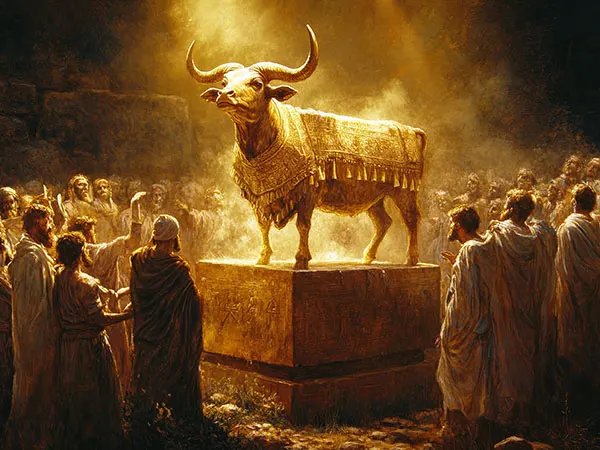
Article by John W. Ritenbaugh and Richard T. RitenbaughThe prophet Amos exposes the ancient Israelites' religion as syncretic, a blend of God's way and paganism, corresponding to this world's Christianity.
Strategies for Interfacing with Babylon without Becoming Assimilated (Part Five)
Sermon by David F. MaasGod is not a closed triangular Trinity, but a family consisting of God the Father and God the Son, and will include billions of resurrected, glorified saints.
Conspiracy Theory (Part Nineteen)
Commentary by John W. Ritenbaugh (1932-2023)The nephilim were not the offspring of angels cohabiting with humans; these 'giants' were apostates from the true religion who decided not to follow God.
Psalm Genres (Part Three A): Messianic
Sermon by Richard T. RitenbaughThe Messianic Psalms serves as a powerful corrective to shallow or misguided views of Christ fostered by nominal Christianity.

Inclusivity?
Sermon by Ronny H. GrahamMany churches have abandoned traditional values and have embraced humanism, using buzzwords such as inclusivity, community, spirituality, and justice.
An Atheist Minister?
Commentary by Richard T. RitenbaughThe United Church of Canada accepts the credentials of Greta Vosper, a self-professed atheist and non-believer of the Bible, confirming her position as a minister.
Denying God From the Pulpit
'WorldWatch' by Richard T. RitenbaughA United Church of Canada minister openly proclaimed her atheism recently — and retained her pulpit.
The Whole World is Writhing
Commentary by John W. Ritenbaugh (1932-2023)Wherever secularism has gained ascendancy, it has attempted to bully and harass the religious elements of society by the tyranny of political correctness.
In Search of a Clear World View (Part Seven)
Sermon by John W. Ritenbaugh (1932-2023)The modern nations of Israel, by turning its back on the truth, has blown its opportunity for moral leadership every bit as much as ancient Judah did.
How Far Have We Fallen? (Part Five)
Commentary by John W. Ritenbaugh (1932-2023)The current persecution of nominal Christians in the Middle East will crescendo until God's called-out ones will receive intense persecution as well.
Does Doctrine Really Matter? (Part Twelve)
Sermon by John W. RitenbaughFalse Christianity finds its roots in the first-century Gnostic infiltration of the church, a movement John, Jude, Peter, and Paul all wrote against because these teachers had entered the congregation unnoticed, appearing converted while secretly holding beliefs drawn from Greek philosophy rather than Scripture. Called Gnostics, meaning to know, they claimed special personal revelation surpassing what Christ and the apostles taught, looking down on genuinely converted believers as enslaved to Yahweh, the Old Testament, and especially the Sabbath. Because these concepts were inspired by Satan and his demons, God ensured their record was preserved into the end-time, since the same spirit would confront the church again before Christ's return. Revelation's messages to Ephesus, Pergamos, and Thyatira directly warn against the Nicolaitanes and "the deep things of Satan," language identified as Gnostic, showing that hearing, doing, and overcoming remain linked responsibilities for believers facing this same danger. Although the Gnostics as an organized movement faded by the fourth century, their principles survived through two channels: the developing Catholic Church and, a thousand years later, the Protestant Reformation. Augustine, who spent nine years as a hearer among Manichean Gnostics before converting to Catholicism, became the crucial bridge. He established the Catholic doctrine of church authority enforced by violence, misusing Luke 14:23 despite Jesus' own statement in John 18:36 that His kingdom is not of this world. Augustine also grounded Catholic theology in tradition rather than Scripture, a principle still evident in claims that Sunday observance rests on church authority rather than the Bible. Most significantly, his treatises on predestination and perseverance, though dormant for centuries, became the foundation for Martin Luther's and John Calvin's doctrines of predestination and eternal security—teachings not actually supported by Scripture's fuller context, including Israel's failure to enter the Promised Land as a warning against presuming eternal security. The fruits of Luther and Calvin expose the corrupted root of these teachings: Luther's violent temper, antisemitism, and reckless statement that one could "commit adultery a thousand times a day" without endangering salvation, and Calvin's brutal, prolonged execution of Michael Servetus, defended as righteous. Their doctrines directly echo the Nicolaitan Gnostic Nicolas, revealing continuity between ancient heresy and Reformation theology, later softened into modern labels like "eternal security," "Lordship Salvation," and "carnal Christian" doctrine, promoted by writers such as Ankerberg, Weldon, Stanley, MacArthur, Swindoll, and Gromacki. These teachings, by removing guilt, fear, and the necessity of obedience, contradict passages such as Hebrews 10:26-30 and 1 Corinthians 6:9-10, which plainly state that willful sin and unrighteousness exclude one from the Kingdom. Ultimately, this modern theology repeats the essential Gnostic error: believing one knows better than God's word, replacing fear, faith, and love toward God with permissiveness disguised as grace, thereby continuing, in subtler form, the ancient corruption first sown into the church by Satan through the Gnostics.
Why Such Confusion About the Kingdom of God?
Sermonette by Craig SablichIn Matthew 6:33, Jesus states that seeking His Kingdom is our primary goal. Most Christian organizations have no concept of what the Kingdom of God is.

'After Three Days'
Booklet by Richard T. RitenbaughWhen the facts are gathered from Scripture, the timing of Christ's death, burial, and resurrection resolves, and the Friday-to-Sunday scenario crumbles.