


Filter by Categories
The Intolerance of Liberals
Commentary by John W. Ritenbaugh (1932-2023)Intolerance, as that which cannot be endured or put up with, often pertains to another's views, beliefs, and behavior, marking them as unbearable. In the cultural fabric of America, while tolerance has been a foundational element, intolerance persists and manifests in various forms. Not all citizens have historically acted with tolerance; for instance, the colonists displayed clear intolerance toward King George III and the taxation imposed by the British Parliament, showing that forbearance is not always easily granted. In contemporary times, a significant divide exists between those who identify as politically and culturally liberal and those who are conservative, with intolerance growing especially among influential secular circles. These groups, often without religious grounding, exhibit a stark inability to allow differing opinions to coexist peacefully. They are driven to impose their views, perceiving others as needing rescue from ignorance, and use various means, including legal actions through organizations like the ACLU, to enforce their will. This intolerance extends to open expressions against Christianity and its beliefs, a trend that began decades ago and continues to intensify. Persecution often starts with mere intolerant feelings, but the intensity escalates until opposing opinions must be eradicated or forcibly aligned with the dominant view. Historically, both religious and political groups have been among the worst persecutors of those who hold differing beliefs, as seen in the bloody persecutions in Europe and the Inquisitions of the Catholic Church. As Henry A. Wallace, vice president under Franklin Delano Roosevelt, articulated, a fascist combines a lust for money or power with such intense intolerance toward others of different races, parties, classes, religions, cultures, regions, or nations, that they become ruthless in using deceit or violence to achieve their ends. This highlights the dangerous potential of intolerance when it is allowed to grow unchecked.
When Tolerance Is Intolerable
Sermon by Martin G. CollinsOver the past century, the understanding of tolerance in this nation has shifted dramatically from mere civility toward disagreeable persons to a demand for acceptance of politically correct views. This redefined tolerance has morphed into intolerance toward those who adhere to traditional Christian values, with media often portraying Christians in a derogatory manner. Society reacts negatively to being confronted about sinful behavior, resulting in what is perceived as persecution. Human tolerance is never neutral, shifting with the winds of pop culture, influenced by corrupt governments and self-serving religious leaders who shape public values. These forces, driven by satanic deception, push for acceptance of worldly evils. The shift from tolerance to intolerance has been a gradual process, orchestrated over decades by socialist and communist social engineers who weaponize tolerance against biblical values. Infiltrators in schools, government, corporations, and churches have inverted cultural norms, pressuring society, especially through education, to conform to new guidelines. In government education systems, zero tolerance policies are employed to shock, embarrass, and intimidate students into compliance with irrational rules, aligning with globalist agendas. These policies, coupled with conflict resolution and anger management sessions, instill a submissive, communitarian mentality in students, even young children, re-indoctrinating them against their will and their parents' wishes. The generation now emerging has learned intolerance as a way of life, a trend poised to intensify publicly. Worldly tolerance fosters false security and assurances of peace, much like the false prophets in ancient Israel who encouraged complacency by proclaiming peace when there was none. Such leaders failed to warn of impending judgment, mirroring how current government and media deceive by claiming economic strength, reduced crime, and acceptance of immorality as progress. This false tolerance is a stark contrast to reality, revealing a sick and misguided society. UNESCO's Declaration on Tolerance defines it as respect, acceptance, and appreciation of diverse cultures, deeming it a moral, political, and legal requirement. Yet, this stance calls for rejection of dogmatism and absolutism, targeting religious sources of intolerance through covert methods in government schools, including intrusive surveys and classroom discussions that monitor resistance to these ideals. Such tolerance ultimately embraces immorality and injustice while refusing to accommodate Christian separation in belief, setting the stage for future conflict.
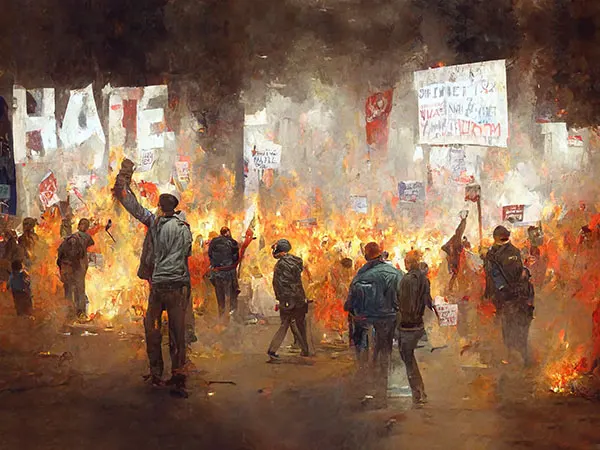
Christianity's Shrinking Refuge
'WorldWatch' by Joseph B. BaityA troubling trend of intolerance has developed among Western nations in recent years. After several hundred years of mostly tolerant attitudes, a surging tide of anti-Christian sentiment and even violence threatens the status quo. Christian persecution is not new. Since the days when Jesus Christ walked the earth, His followers could expect persecution from individuals, governments, and even religious leaders. As the nascent church of God began its expansion into Europe, most of the new Western nations were culturally and politically steeped in varying degrees and forms of Christian teachings. Following the Reformation and the Enlightenment, the great enmity between Catholics and Protestants began to wane slightly in most nations. The United States fostered a new tolerance and ensured peaceful religious diversity in its founding documents. As America and Europe became havens for many different forms of religious and political thought, the West has witnessed the rise of alternative religious practices and political philosophies that often conflict with mainstream Christian dogma. With these shifts, a rise in anti-Christian sentiment was inevitable. In Europe and Canada, anti-Christian passions have produced laws directed at restricting traditional religious expression. Church pastors face constraints on their biblical teachings from the pulpit. In recent months, the West has witnessed a troubling rise in anti-Christian violence. Attacks once believed to be isolated incidents overseas are now occurring frequently in Western neighborhoods. Across the European continent, public citation of biblical teachings has led to accusations of hate speech, as laws increasingly criminalize traditional religious expression. Vandalism and attacks on churches and their worshippers are common throughout the West. The national news and entertainment media focus their growing contempt on believers and mock all forms of Christianity. Social media amplifies this harmful discourse. As the mainstream culture moves further away from a Christian worldview, Christian beliefs that contradict progressive secular values are increasingly denounced by the culture and wrongly portrayed as being hateful or bigoted. It is shocking to see Western countries take authoritarian measures against Christians simply trying to live out their faith. Hostility toward Bible-believing Christians is clearly and steadily rising in the West. The rise of Islamic fundamentalism reveals a horrific anti-Christian fervor that wishes to eliminate all vestiges of the Judeo-Christian ethic. Islamic fundamentalists govern nine of the top ten nations where Christians faced the greatest persecution in 2025. Left-wing liberal activists in the West express solidarity with radical Islam, with nothing in common except their hatred and disdain for Christians. Both the modern, physical nation of Israel and the spiritual Israel of God can expect to be under assault as the end of this age draws near. While there are efforts to restore biblical teaching to the public square and push back against the media, cultural, and political aggression, the damaging trend is unlikely to be fully reversed. Even though the greater incidence and the most severe acts of persecution still exist outside the borders of the West, faithful and watchful Christians should remain mindful of the admonitions of Jesus Christ and His apostles as storm clouds form on the horizon.
Today's Brand of Tolerance
Commentary by John W. Ritenbaugh (1932-2023)Over the past 25 years, tolerance has been a dominant theme in secular messages, yet it appears rarely in older biblical translations, where terms like forbearance, endurance, patience, and longsuffering are preferred. Tolerance, understood as the capacity to endure hardship or pain from objectionable opinions or disrespect, is not inherently contrary to Christian principles. However, a modern twist on tolerance by government, media, and academia has redefined it to mean acceptance on an equal level, regardless of practices, pushing a progressive social agenda. This shift demands acceptance rather than mere forbearance, and failure to comply often results in accusations of lacking love or even punishment. Humanism, also known as secularism, promotes man as God by rejecting the true God's standards, allowing individuals to set their own. This perspective, dominant among evolutionists and environmentalists in academia, fosters an exaggerated self-view, leading to intolerance toward those who adhere to God's standards. Examples of this intolerance include a student reprimanded for using God's name respectfully in a poem, another scolded for reading the Bible during free time, and Christian business owners fined heavily for refusing services that conflict with God's laws, despite no loss to the customers. Conversely, a gay hairdresser faced no backlash for refusing service to a governor over differing beliefs on same-sex marriage, and a former president was praised for rejecting a biblical standard on women's roles in ministry. These instances reveal an anti-God spiritual power driving the world, where tolerance is acceptable only when directed against God's principles. This intolerance, shaped to justify satan's designs, is growing into outright hatred toward those on God's side, with increasing tests and challenges ahead.
God, Obama, and Religous Tolerance
Commentary by John W. Ritenbaugh (1932-2023)President Obama endorsed the mosque at Ground Zero, pleading tolerance. Yet God is a jealous God, ordering the extermination of all competing religions.
Tolerance
Sermonette by Ronny H. GrahamTolerating perversion in our midst will attract the wrath of Almighty God. Tolerance of evil out of political correctness is not an option for us.

Those Who Are Persecuted
Sermon by Richard T. RitenbaughPersecution is already here, part and parcel in the lives of followers of Christ. If we are persecuted for following God's instructions, we will be blessed.
Is There Hope For Equality?
Commentary by John W. Ritenbaugh (1932-2023)Fairness and equality will never exist while Satan is the ruler of the world; our carnal minds are always going to be stirred to resentment.
Pilgrim's Progress
Feast of Tabernacles Sermon by Mark SchindlerEach one of God's elect will go through a continuous succession of metaphorical hurricanes that will scuttle us unless we keep our focus on Christ.
Dissatisfaction
Commentary by Martin G. CollinsChange agents have attempted to apply traditional Christian terminology to politically correct referents, distorting and defiling the original meaning.
Deuteronomy (Part 3) (1994)
Feast of Tabernacles Sermon by John W. RitenbaughWe will not be prepared to rule in the Millennium unless we are experientially persuaded of God's faithfulness to His Covenant and His intolerance of evil.
Deuteronomy (Part 4) (1994)
Sermon by John W. RitenbaughWe must seek God as ardently as we would a physical love relationship, spending quality time with Him. If we make no effort, the relationship cools.