


Filter by Categories
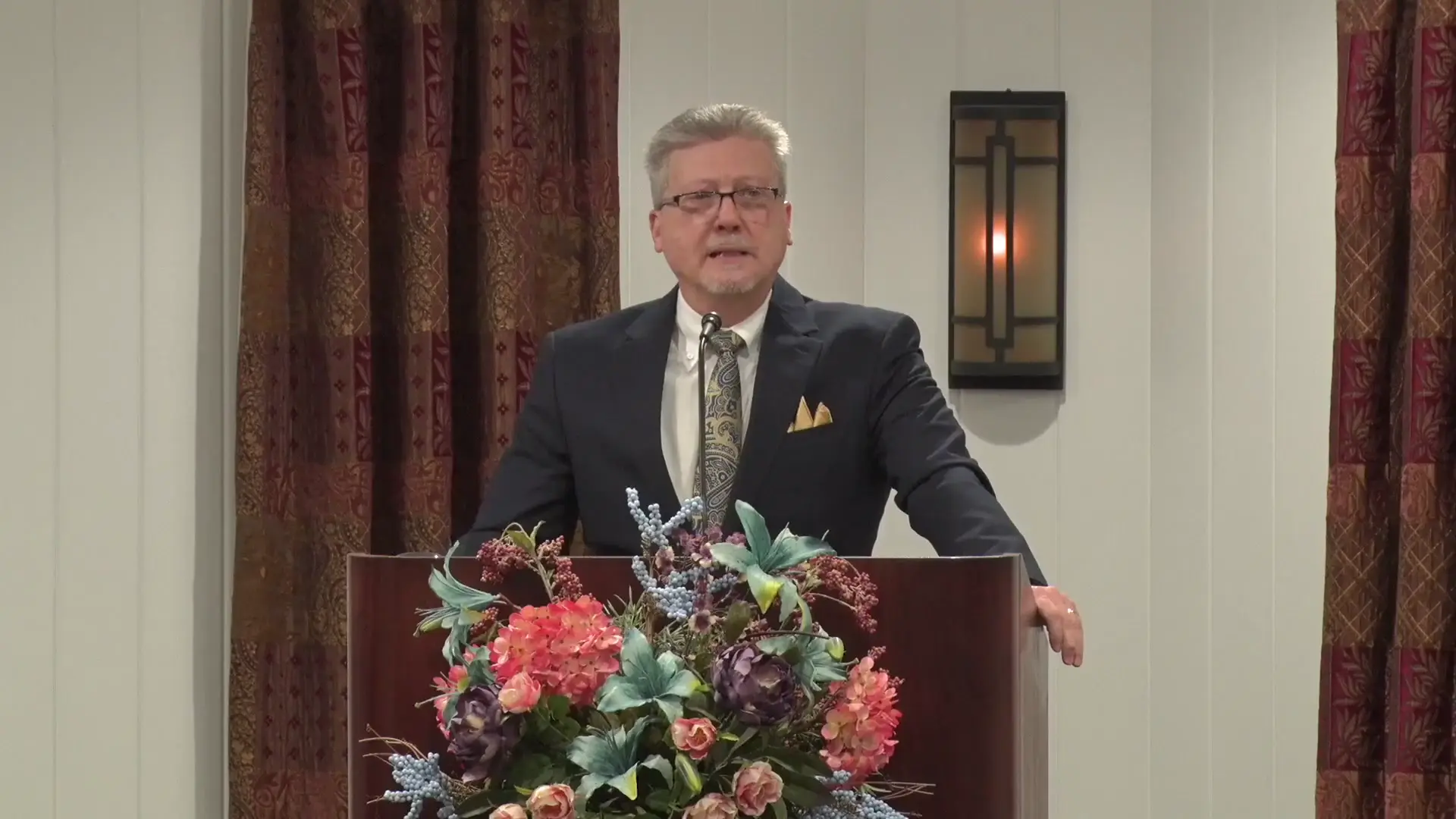
Psalm Genres (Part Two): Imprecatory Psalms
Sermon by Richard T. RitenbaughPsalm 83, attributed to Asaph, stands out as one of the finest examples of an imprecatory psalm, illustrating how such psalms function as prayers calling on God to act with justice against those who threaten His people. The psalm opens in verses 1 through 4 by setting the scene of crisis: "Do not keep silent, O God! Do not hold Your peace, and do not be still, O God!" Asaph describes how God's enemies have made a tumult, lifted up their heads in hatred, and taken crafty counsel against God's people, declaring, "Come, and let us cut them off from being a nation, that the name of Israel may be remembered no more." This establishes the extreme, existential nature of the threat—not a minor grievance but a conspiracy aimed at Israel's total annihilation, the kind of dire circumstance that characteristically prompts imprecatory prayer. The imprecations themselves begin at verse 9, where Asaph asks God to "deal with them as with Midian, as with Sisera, as with Jabin at the Brook Kishon," and to "make their nobles like Oreb and like Zeeb... all their princes like Zebah and Zalmunna, who said, Let us take for ourselves the pastures of God for a possession." This reveals the height of the enemies' presumption: they are attempting to seize what belongs to God Himself, the land He gave His people. Asaph continues in verses 13 through 18, asking God to make the enemies like whirling dust and chaff, to pursue them with tempest and storm, and to fill their faces with shame. What distinguishes Psalm 83 as one of the best imprecatory psalms is that Asaph does not stop at requesting destruction. He adds a crucial purpose clause: he asks that the enemies be put to shame "that they may seek Your name, O Lord," so that "men may know that You, whose name alone is the Lord, are the Most High over all the earth." Asaph's apparent hatred is therefore directed not at the people themselves but at their sinfulness and hatred of God. He asks God to make them ashamed precisely so they might repent, change their minds, abandon their persecution of Israel, and turn to the God of Jacob to live. By removing the root cause—their hatred of God—the entire problem would be resolved. This stands in contrast to Psalm 139:19-22, where David declares a "perfect hatred" toward God's enemies, a complete hatred without love, directed at their blasphemy and rebellion against God. Together these passages demonstrate that imprecatory prayer, when rightly offered, flows not from personal vengeance but from alignment with what God Himself hates—sin, evil, and wickedness aimed spitefully at His people. Psalm 83 thus exemplifies the broader principle that these curses are cries for God's justice, rooted in a shattered sense of fairness, offered by those too weak to act for themselves, who trust God alone as their rock, fortress, and refuge to right what has gone terribly wrong.
Esther (Part Three)
Sermon by Richard T. RitenbaughHaman was the treacherous offspring of King Agag, and Mordecai was the godly descendant of King Saul. Their pairing in Esther provides a sequel to I Samuel 15.
All About Edom (Part Two)
'Prophecy Watch' by Richard T. RitenbaughEsau was prophesied to be the father of a nation, Edom, and the Bible gives us plenty of clues about the character of his descendants.
A Beast on the Horizon
Sermonette by Clyde FinkleaKarl Theodore zu Guttenberg seems to be preparing to be a Fuhrer of Europe with just as much alacrity as some formerly attributed to Franz Josef Strauss.
Christian Reaction to Terror
Sermonette by Richard T. RitenbaughAsaph's godly and humane reaction to the attack on Judah contrasts greatly with America's more self-righteous and vindictive approach.
Called, Chosen, and Faithful
Sermonette by Clyde FinkleaIn a world marked by war, injustice, corruption, and spiritual deception, biblical prophecy points to events preceding the return of Jesus Christ. II Thessalonians 2 identifies two key developments: a great falling away from the truth and the revelation of the man of sin, empowered by Satan to deceive those who reject truth. Amid the scattering of God's Church and increasing trials, believers must remain spiritually vigilant. Revelation 17:14 describes Christ's followers as "called, chosen, and faithful"—a progression from responding to God's calling, through repentance and conversion, to steadfast endurance. II Peter 1 emphasizes developing faith, virtue, knowledge, self-control, endurance, godliness, brotherly love, and love. Being called and chosen is only the beginning; remaining faithful to the end is essential for entering God's Kingdom and sharing in the first resurrection.
Ishmael
Sermonette by Richard T. RitenbaughTo this day, a perpetual conflict exists between Ishmael's offspring and Isaac's offspring, with the Ishmaelites determined to wipe Israelites off the earth.
Purpose-Driven Churches (Part 7)
Sermon by John W. RitenbaughThe Purpose Driven Church will be a major player trying to take the true, end-time church in the wrong direction.
What I Believe About Conspiracy Theories
Feast of Tabernacles Sermon by John W. RitenbaughThe drive toward one world government is a transparent reality having several biblical prototypes, all inspired by demonic opposition to God's rule.
The New World Order Rises
Feast of Tabernacles Sermon by John W. Ritenbaugh (1932-2023)The Beast is a reality, and it is coming to pass in the scope of globalism. Satan has a vast reservoir of people he can work through; we used to be a part of it.
The King of the South
Sermon by Richard T. RitenbaughThe King of the South (Daniel 11:40) might be a confederation of Arabic/Islamic nations continually at war with the people of Israel.
Making Faithful Choices (Part Two)
Sermon by Martin G. CollinsGod demonstrated to Gideon, through His systematically whittling his army from 30,000 to 300, that His providence, and not Gideon's might, would bring victory.
The Doctrine of Israel (Part Thirteen): Jacob's Trouble
Sermon by Richard T. RitenbaughDuring Jacob's Trouble, a confederacy of gentile peoples (particularly the offspring of Ishmael and Esau) will destroy the nations of modern-day Israel.
A Place of Safety? (Part 2)
Sermon by John W. RitenbaughMany biblical examples, including Jesus, David, and Jacob, all fled for their lives in a prudent common sense move. Discretion is often the best part of valor.