


Filter by Categories

'After Three Days'
Booklet by Richard T. RitenbaughJesus Christ emphasized the significance of a precise duration in the grave as the ultimate sign of His identity as the Messiah. He declared that He would be in the grave for exactly three days and three nights, a period over which He would have no control, proving His authenticity through God the Father's resurrection of Him after this exact time. This duration, amounting to 72 hours, is critical, as any deviation would invalidate the sign He provided. The timing of His burial and resurrection further clarifies this period. Jesus was buried at sunset, as all gospel accounts agree that sunset was near when the stone was rolled over the tomb's entrance. Given the 72-hour duration, His resurrection also occurred at sunset, not at dawn, contradicting traditional views of a dawn resurrection. The gospel writers specify that Jesus died at the ninth hour, around 3 PM, after being crucified at noon, and the subsequent activities left little daylight for burial preparations, reinforcing the sunset burial. Regarding the day of the week, the events surrounding His crucifixion and resurrection reveal a sequence involving two Sabbaths within the 72-hour period. Jesus was crucified and buried on a Wednesday, which was the Preparation Day of the Passover, followed by a high day Sabbath, the first day of Unleavened Bread, on Thursday. The women then prepared spices on Friday and rested on the weekly Sabbath. Consequently, Jesus was resurrected at sunset on the Sabbath as the day concluded, aligning with the exact 72 hours from burial. Additionally, the wavesheaf ceremony, occurring on the day after the weekly Sabbath during the Feast of Unleavened Bread, symbolizes the first and best of the harvest given to God. Jesus fulfilled this symbolism by being resurrected at dusk at the end of the Sabbath, exactly 72 hours from His burial, as God reaped the first of His spiritual harvest. His subsequent ascension to the Father for acceptance as our Savior and High Priest coincided with the timing of the wavesheaf being waved in the Temple, further fulfilling the ritual to the letter.
The Third Day (Part Two)
Feast of Tabernacles Sermon by Richard T. RitenbaughIn the exploration of significant biblical events, the concept of 'day' holds a pivotal role, often marking decisive moments of transformation and divine intervention. In Hosea 6:2, the term 'day' is used symbolically, suggesting a period of revival and restoration for Israel and Judah. After two days of trial and separation from God, it is on the third day that light begins to dawn, initiating a process of renewal as God revives and restores a humbled remnant. The meaning of 'day' here is not necessarily a literal 24-hour period; it may represent a prophetic year, indicating two years of tribulation followed by a third year of divine intervention. Alternatively, it could symbolize a longer prophetic day, equating to 1,000 years, where two millennia of estrangement precede a third millennium of restoration, aligning with the concept of the Millennium. This pattern of the third day as a time of significant change is echoed in various scriptural accounts. In Genesis 1, the third day of creation sees God separating land from seas, revealing what was hidden and populating it with abundant plant life, symbolizing life emerging from barrenness. Similarly, in the narrative of David's three-day plague in II Samuel 24, the third day marks the end of suffering, David's repentance, and the purchase of the threshing floor for the future Temple, setting the stage for restored worship. The ultimate third day event is the resurrection of Jesus Christ, occurring after three days and three nights, as precise timing in Scripture underscores its importance. On this day, He is revived, restored to divine glory, and revealed as very God, unveiling profound truths and opening salvation to all mankind. These third day events consistently carry themes of revival, restoration, and revelation, often turning despair into joy and triumph. Whether through the uncovering of land, the end of a plague, or the resurrection of Christ, the third day stands as a beacon of hope and a critical juncture in God's unfolding plan.
Bucking Tradition
CGG Weekly by Richard T. RitenbaughJesus Himself declares in Matthew 12:38-40 that He would be buried for three days and three nights, mirroring Jonah's time in the belly of the great fish. He also acknowledges in John 11:9 that there are twelve hours in the day, understanding that a full day comprises twelve hours of day and twelve hours of night. This calculation leads to the undeniable conclusion that Jesus prophesied He would be in the grave for 72 hours as the sole sign of His Messiahship. However, fitting 72 hours between sundown on Friday and sunrise on Sunday is impossible, resulting in only about half that duration. If Jesus was in the grave for only 36 hours instead of the promised 72, it would contradict His words, but His resurrection and ascension to the right hand of the Father affirm that He was indeed buried for exactly three days and three nights before being returned to life in glory. Furthermore, the account in John 20:1 reveals that when Mary Magdalene arrived at the tomb while it was still dark on Sunday morning, it was already empty, and since Jesus was placed in the tomb near sunset, His resurrection would have occurred at a similar time.
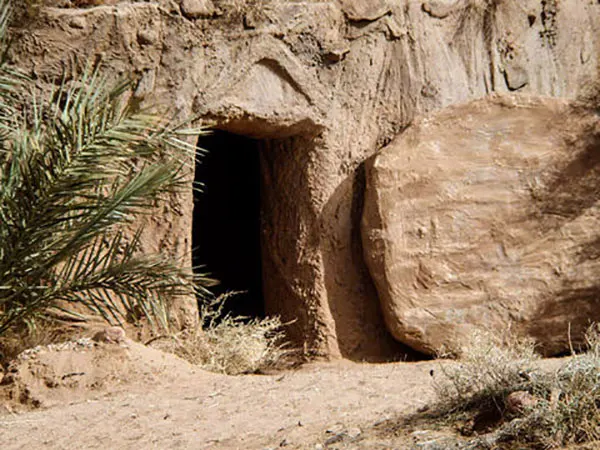
The Resurrection Was Not on Sunday
Herbert W. Armstrong BookletA Bible day is a twelve-hour period of light, and a night is a twelve-hour period of darkness. Jesus Himself asked, "Are there not twelve hours in a day?" (John 11:9-10). Genesis 1:4-13 gives the only Bible definition for counting days: God called the light Day and the darkness Night, and the evening darkness and morning light made the first day, and so on. Thus "the third day" includes three dark periods and three light periods, and "three days and three nights" means 72 hours, the same length Jonah spent in the fish. Days end at sunset, according to Leviticus 23:32. Because Jesus had to remain exactly 72 hours in the tomb, He had to rise at the same time of day He was buried. He was buried in the late afternoon before sunset, so He rose in the late afternoon, not at sunrise Sunday. Days are also distinguished by type. The weekly Sabbath falls on Saturday, but annual holy days, called "high day" Sabbaths, are also Sabbaths and fall on varying days of the week, such as Thursday, depending on the calendar date. Jesus was crucified on Passover, the 14th of Abib, which was a Wednesday. The following high-day Sabbath, the 15th, was Thursday, and the weekly Sabbath followed on Saturday. Sunday morning came after He had already risen.

Was Jesus Resurrected on Easter Sunday?
'Ready Answer' by StaffA biblical day is twelve hours of daylight followed by twelve hours of night, so day and night together equal 24 hours (John 11:9), and three days and three nights total 72 hours. Jesus' sign of Jonah therefore means a full 72 hours in the grave, not a rabbinical reckoning in which any part of a day counts as a whole day. That tradition ignores God as the Timekeeper, and the Father who raised Jesus is not bound by it or by Roman sentry watches. The day is also counted from sunset to sunset, so Jesus was buried at sunset and rose 72 hours later at the end of the weekly Sabbath. God numbers the days of His feasts, and they fall on different days of the week. The Passover, Abib/Nisan 14, is a feast but not a Sabbath. The first and seventh days of Unleavened Bread, the fifteenth and twenty-first, are annual Sabbaths and cannot both fall on the seventh day of the week. Pentecost always falls on Sunday. A preparation day is the day before any Sabbath, weekly or annual, so it need not be Friday. In the crucifixion week two preparation days occurred: Wednesday for the holy day on Thursday, and Friday for the weekly Sabbath. The tenth of Abib/Nisan, when the Passover lamb was selected, was the day of the triumphal entry, which therefore was not a Sunday. Sunday is not the Lord's day; Jesus is Lord of the seventh-day Sabbath (Mark 2:28).
Has Time Been Lost?
Herbert W. Armstrong BookletA day is defined in Scripture as the period from sunset to sunset, measured by the earth's revolution in relation to the sun rather than by any twenty-four-hour period on a man-made clock. This reckoning has remained unbroken through calendar reforms, which altered only the numbering of days within months while preserving the continuous succession of the seven-day week. Whether the change occurred under Pope Gregory in 1582, in England in 1752, or in Russia in the twentieth century, Thursday was always followed by Friday and Saturday by Sunday, so that the Saturday observed today is identical to the seventh day kept in the time of Christ. Travel around the world creates only an apparent gain or loss of a day in computation; the actual sequence of sunsets remains unaltered, and the Sabbath is observed wherever the sun sets for the individual. Joshua's long day was a single extended period of daylight counted as one day from sunset to sunset, not two, and therefore introduced no alteration in the weekly cycle. From Adam onward, successive generations of righteous men preserved knowledge of the seventh day until the bondage in Egypt. There God restored the true Sabbath to Israel by the miraculous provision of manna, which fell for six days, doubled on the sixth, and was withheld on the seventh, demonstrating unmistakably which day followed creation. The Jewish people, scattered among all nations yet observing the same Saturday without interruption, and the true Church, which has kept that day through centuries of persecution, further confirm that the weekly cycle has never been lost. Astronomical testimony likewise affirms the unbroken continuity of the seven-day week across all known calendars. These lines of evidence together establish that the Saturday now observed is the identical seventh day God blessed and sanctified at creation, the day Jesus Himself kept and declared Himself Lord of, so that the command to remember and keep it holy can be obeyed with certainty.
What Is the Book of Revelation?
'Prophecy Watch' by David C. GrabbeThe concept of the Day centers on a distinct period marking the close of human misrule and the onset of divine judgment and intervention. This Day does not denote any particular day of the week but rather the era when the misjudgment of man ends and the righteous judgment of God begins, following six thousand years of futile human attempts to govern under satanic influence. The seventh day arrives when God intervenes to establish His government, enabling mankind to understand how to live. It commences with the visible appearance of Jesus Christ coming in the clouds in all His glory, at which point the present age wraps up and the new one begins. This Day aligns directly with the revelation or unveiling of Jesus Christ, as the book describes the events surrounding His triumphant return from heaven with mighty angels in flaming fire to execute vengeance on those who neither know God nor obey the gospel. At that time He will be glorified in His saints, who exchange earthly glory for heavenly glory, while those who reject the message face everlasting destruction. The majority of the visions focus on this end-time sequence and the events immediately preceding His revelation, even as a few earlier symbols appear for context. The Day of the Lord thus supplies the time element for the entire book, fulfilling the gospel message of the Kingdom of God on earth by removing human governments and imposing divine rule. For those who obey, it brings the salvation of the saints both living and dead, revealed in the last time as the inheritance reserved in heaven becomes theirs through the resurrection.