


Filter by Categories
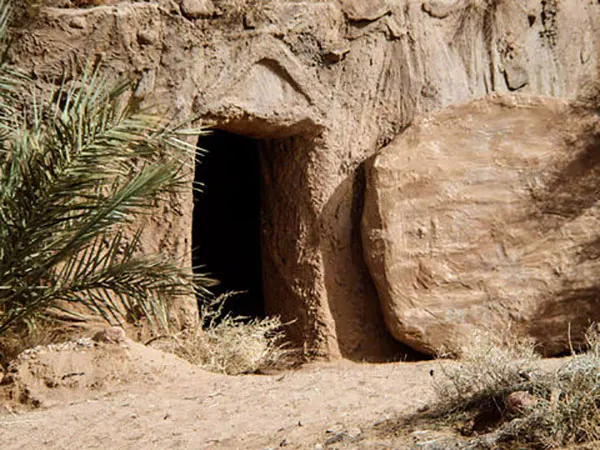
The Resurrection Was Not on Sunday
Herbert W. Armstrong BookletJesus was not crucified on Friday but on Wednesday, the Passover, the 14th of Abib. His only sign of Messiahship was three days and three nights in the tomb (Matthew 12:39-40), which Scripture defines as 72 hours, just as Jonah's time in the fish was 72 hours. Texts such as "after three days" (Mark 8:31) and "in three days" (John 2:19-21) allow no shorter period, and Friday sunset to Sunday sunrise yields only a day and two nights. Because the full period requires the resurrection at the same hour as the burial, and Jesus was buried in the late afternoon before sunset, He rose late in the afternoon three days later, not at Sunday sunrise. The Sabbath following the crucifixion was not the weekly Sabbath but the annual high-day Sabbath, the 15th of Abib (John 19:14, 31), which fell on Thursday. Annual Sabbaths can fall on any day of the week. The women bought spices after that Sabbath, on Friday, and then rested on the weekly Sabbath (Mark 16:1; Luke 23:56). Matthew 28:1 in the Greek reads "after the Sabbaths," confirming two Sabbaths that week. Counting Wednesday, Thursday, and Friday nights and Thursday, Friday, and Saturday days, Jesus rose late Saturday afternoon. The tomb was already empty on Sunday morning, and the angel said He rose "as he said."

Was Jesus Resurrected on Easter Sunday?
'Ready Answer' by StaffJesus Christ's crucifixion did not occur on a Friday, as traditional beliefs suggest. According to Scripture, He was crucified on Wednesday, the fourteenth of Abib/Nisan, and rose from the dead exactly 72 hours later as the Sabbath ended. Jesus Himself stated in Matthew 12:40 that He would be in the heart of the earth for three days and three nights, mirroring Jonah's time in the fish's belly, which calculates to a full 72 hours based on His definition of a day and night as twelve hours each in John 11:9. This precise timing, overseen by God the Father as the ultimate Timekeeper, refutes arguments relying on rabbinical traditions that count partial days as whole days. Further evidence lies in the sequence of events surrounding His death and burial. Jesus hung on the cross from noon to 3 PM, and Joseph hurriedly laid His body in the tomb close to sunset on the Preparation Day, which was for the Sabbath, as noted in Luke 23:54 and John 19:42. The Passover, which Jesus and His disciples observed on the correct day, Abib/Nisan 14, fell on a Wednesday that year, aligning with the Preparation Day for the first day of Unleavened Bread. Counting back 72 hours from His resurrection at the end of the Sabbath does not lead to a Friday crucifixion. Additionally, the timing of His triumphal entry into Jerusalem, symbolically selecting Him as the Passover lamb on the tenth of Abib/Nisan, places the Passover on Thursday if the entry were on Sunday, further contradicting a Friday crucifixion. Instead, His entry occurred on a Sabbath, confirming the Wednesday crucifixion. Jesus rose on the true seventh-day Sabbath, the day He declared Himself Lord of in Mark 2:28, fulfilling the sign of His Messiahship with exact precision.
Chronic Difficulties
Sermon by Richard T. RitenbaughMillions of professing Christians observe Good Friday as the day of Jesus Christ's crucifixion, believing it occurred on a Friday, followed by a resurrection on Easter Sunday. However, this traditional timing does not align with the biblical account. The crucifixion took place in the middle of a literal week, on a Wednesday, Nisan 14, which was the Passover day. Joseph of Arimathea placed Him in the tomb just before sunset, prior to the onset of the annual Sabbath, the first Day of Unleavened Bread. Jesus Christ remained in the tomb for a full three days and three nights, exactly 72 hours, as He prophesied in Matthew 12:40, referencing Jonah's time in the belly of the great fish. Counting three full days from late Wednesday near sunset brings the resurrection to the end of the weekly Sabbath, near sunset, not on a Sunday morning. Furthermore, that week contained two preparation days—one for the high holy day and one for the weekly Sabbath. The Passover, always a preparation day for the first Day of Unleavened Bread, is not a holy day itself, allowing for work. In this case, the preparation day was a Wednesday, not a Friday. Observant Jews, including those who prepared spices and oils for His body, would not have worked on the high holy day Sabbath, the first Day of Unleavened Bread, nor on the weekly Sabbath. They likely prepared on the intervening day, Friday, and rushed to the tomb early Sunday morning, Nisan 18, to complete their tasks, only to find it already empty. The gospel accounts confirm that the tomb was discovered empty before dawn on Sunday, indicating He had been raised approximately 12 hours earlier, at the end of the Sabbath. The traditional timeline of Good Friday to Easter Sunday also falters with the events of the so-called Holy Week. The Triumphal Entry, often celebrated as Palm Sunday, occurred six days before the Passover, which, counting back from a Wednesday Passover, places it on a Thursday, Nisan 8, or potentially a Friday with inclusive counting. However, a Friday entry creates issues, as the subsequent cleansing of the temple would fall on the weekly Sabbath, a day when moneychangers and commerce would not have been present in the temple, rendering such an act unnecessary and unlikely. Thus, the biblical chronology points to a Thursday entry, with the cleansing occurring on Friday, Nisan 9, further supporting that the crucifixion was not on a Friday but on a Wednesday, aligning with the scriptural record of events.

'After Three Days'
Booklet by Richard T. RitenbaughWhen the facts are gathered from Scripture, the timing of Christ's death, burial, and resurrection resolves, and the Friday-to-Sunday scenario crumbles.