


Filter by Categories
Passover (Part Five)
Sermon by John W. RitenbaughPassover serves as the preparation day for the Feast of Unleavened Bread, embodying the groundwork necessary before one can truly begin to come out of sin. There is significant work associated with Passover, including killing, roasting, and burning the lamb, which explains why there is no command against work on this day. Passover memorializes the preparations required to seriously address sin, while Unleavened Bread signifies the actual process of coming out of it. Spiritually, this preparation involves coming to a knowledge of God's plan and purpose, understanding and believing in the blood of Jesus Christ as our Savior, and beginning to repent. These steps lay the foundation for the subsequent movement away from sin, as represented by Unleavened Bread.
Passover (Part Six)
Sermon by John W. RitenbaughPassover everyone, let's focus on the significance of Passover as the Preparation Day, a time of intense activity and readiness. Passover occurred at the beginning of the fourteenth day, marking the start of a busy period of preparation. The entire fourteenth day was devoted to getting ready for coming out of Egypt, involving the slaying, cleaning, and roasting of the lamb. The Israelites had to remain in their houses through the night as the Death Angel passed over, then burn the remains and stay until morning. The daylight portion of the fourteenth was used to gather along the route they would follow out of Egypt through Rameses. It was a day filled with work, which is why Passover is not considered a holy day but a festival. God demands that we work on that day, preparing for the feast that follows. Then, at sunset of the fourteenth, beginning at ba erev, the memorial of coming out of sin starts and continues into the fifteenth. This pattern, established from the first Passover, was intended to be followed for all subsequent Passovers.
Manna and the Preparation Day (Part Two)
CGG Weekly by David C. GrabbeAll four gospel accounts use the term Preparation Day for Passover day rather than for the sixth day of the week (Matthew 27:62; Mark 15:42; Luke 23:54; John 19:14, 31, 42). Passover is an annual preparation day for an annual Sabbath, the first day of Unleavened Bread, when the unleavened bread eaten that night symbolically takes in the true manna, the Bread from heaven. Though Passover day is still a common work day, the gravity of the previous night's service and of the coming Feast cannot be shaken. The Passover ritual reorients the mind. It may not be a holy day, but it feels like one because our thoughts have been gathered and focused on the spiritual dimension in anticipation of the holy days. It puts us in the right frame of mind to be mentally present when the holy time arrives. Passover is the epitome of Preparation Days, so it reveals God's intent for the weekly Preparation Day. The weekly day does not carry the same impact, since anything repeated frequently loses some of its force. Nevertheless, understanding Passover helps us use the weekly Preparation Day to gather our thoughts, turn our focus, and reorient ourselves so the Sabbath does not come upon us abruptly. The lesson of Unleavened Bread, a memorial of deliverance from physical and spiritual Egypt, would be incomplete without the Preparation Day of Passover before it.
Did Christ's Resurrection Change the Day of Worship? (Part Two)
CGG Weekly by David C. GrabbeJesus was killed on the day of Passover, which was a preparation day, and His body had to be put into the grave before sunset (Mark 15:42; Luke 23:54; John 19:14). Sunset ended the day of Passover and began a Sabbath. That Sabbath was not the weekly Sabbath but an annual one, the first day of the Feast of Unleavened Bread, which John confirms by calling it a high day (John 19:31). Two Sabbaths are therefore involved: the annual high-day Sabbath and the weekly Sabbath. Because Jesus was crucified on the preparation day for the annual Sabbath, He did not die on a Friday, as is commonly believed. In the year of His crucifixion Passover fell on a Wednesday, and His body was laid in the tomb late Wednesday afternoon before the high-day Sabbath began. He remained in the grave three days and three nights, 72 hours, and God raised Him on the weekly Sabbath afternoon before sunset. This timing fulfills the sign of Jonah, which a Friday burial and Sunday morning resurrection cannot do. The Passover preparation day thus corrects the traditional chronology and upholds the proof of Christ's Messiahship.

Was Jesus Resurrected on Easter Sunday?
'Ready Answer' by StaffThe Passover is a feast but not a Sabbath. God never calls it a Sabbath in Exodus 12, while the Feast of Unleavened Bread is both a feast and a Sabbath. The holy convocations on the fifteenth and twenty-first days of Abib/Nisan cannot both fall on the seventh-day Sabbath, so not all Sabbaths fall on the seventh day, and the holy days fall throughout the week. The preparation day is the day before any Sabbath, whether weekly or annual. In Exodus 16 God had Israel gather double on the sixth day, so Friday was the preparation day for the weekly Sabbath, but a preparation day can fall on any day except Saturday. Passover, the fourteenth, is the preparation day for the first day of Unleavened Bread, the fifteenth, unless Passover itself falls on a Sabbath. That year Passover fell on Wednesday, and Joseph hurried to bury Jesus before sunset because it was the Preparation Day (Luke 23:54; John 19:42). The next day, Thursday, was the holy day. On Friday the women prepared spices, then rested on the weekly Sabbath. Two preparation days therefore occurred that week, one for the annual holy day and one for the weekly Sabbath. The claim that the preparation day can only be Friday is false, and it undermines the Friday crucifixion.

'After Three Days'
Booklet by Richard T. RitenbaughAll four gospel writers mention that Jesus was tried, convicted, crucified, and buried on a preparation day. This day is not necessarily a Friday, as other days can also be considered preparation days. God Himself gave instructions about the use of the preparation day to the Israelites before they reached Mount Sinai. The Jews later deemed it significant to ensure that each of the holy days, which are also Sabbaths, was preceded by a preparation day. Since holy days can fall on any day of the week, the preparation day can likewise fall on any day of the week. This is particularly relevant to the Passover, which is not only a festival in its own right but also functions as the preparation day for a holy day, the first day of the Feast of Unleavened Bread. According to the calculated Hebrew Calendar, Passover can fall on a Monday, Wednesday, Friday, or Sabbath. Clearly, our Savior was crucified on a Passover day, Nisan 14. John specifies that it was the Preparation Day of the Passover, and further clarifies that the Sabbath following was a high day, the first day of Unleavened Bread, an annual holy day. This aligns with the understanding that Christ, as our Passover, was sacrificed for us.
The First Day of Unleavened Bread (Part One)
Sermon by John W. RitenbaughPassover on the 14th of Abib is a preparation day, not a Sabbath or holy day, and it is distinct from the first day of Unleavened Bread on the 15th. Leviticus 23 and Numbers 28 separate the two: Passover is mentioned alone, while the 15th carries the "first day" holy convocation and the command against servile work. Numbers 33:3 says Israel left Egypt the day after Passover. In Exodus 12 the lamb was killed at ben ha arbayim, the twilight opening the 14th, and the people stayed in their houses until morning. Then, with their flocks and possessions, they marched many miles from Goshen to Rameses, leaving that night as the 15th began. Staying and leaving cannot be the same day. The whole 14th was therefore taken up with solemn ceremony and strenuous preparation to leave sin behind, making Passover the most significant preparation day of the year. Its holy convocation was limited to a family or two. The New Testament confirms this. The disciples assumed Judas was buying provisions on Passover night, the priests planned to seize Jesus on the 14th to avoid the feast day, and John 19 calls the day of His death and burial the preparation, before the high-day Sabbath. Combining Passover with Unleavened Bread blurs two separate festivals, each with its own meaning.
The Wavesheaf and the Selfsame Day
Sermon by John W. RitenbaughThe wavesheaf offering is reckoned from the weekly Sabbath within the Days of Unleavened Bread. It had specific requirements that were not met in Joshua 5.
The Resurrection Was Not on Sunday
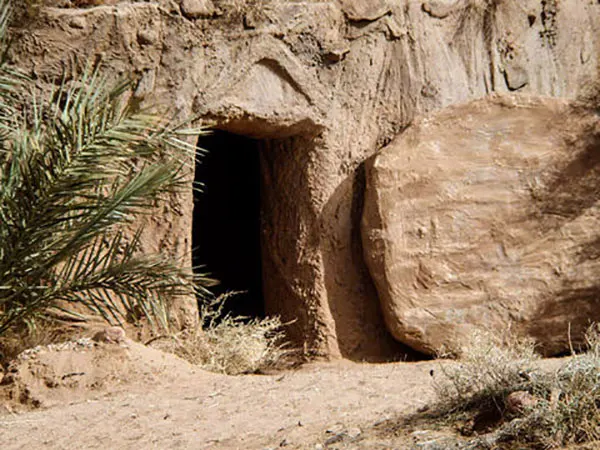
Herbert W. Armstrong BookletThe day of the crucifixion was called the preparation, the day before a Sabbath, according to all four Gospels. But John shows which Sabbath it prepared for: "It was the preparation of the Passover. For that sabbath day was an high day." A high day is one of the seven annual holy days, each called a Sabbath, and these fall on fixed calendar dates, so they land on different days of the week in different years. The Passover lamb was killed on the 14th of Abib, the first Hebrew month, and the 15th was the Feast, an annual high-day Sabbath. Christ is our Passover, so Jesus was slain on the same day the Passover lambs were slain, the 14th of Abib. That day was the preparation for the annual Sabbath on the 15th. In the year of the crucifixion, the 14th fell on Wednesday and the high-day Sabbath on Thursday. Joseph of Arimathea hurried to bury Jesus late Wednesday afternoon because that annual Sabbath was drawing on. The "Sabbath" after the crucifixion was therefore not the weekly Sabbath, and two separate Sabbaths fell that week with a day between them. Matthew 28:1 has the Greek plural "Sabbaths." Mark 16:1 and Luke 23:56 show the women bought spices after the first Sabbath and rested on the weekly Sabbath.
Chronic Difficulties
Sermon by Richard T. RitenbaughHuman tradition and Bible truth regarding the timing of Christ's crucifixion and resurrection do not square. Here is the overwhelming chronological evidence.
Proofs of Christ's Resurrection
Sermon by Richard T. RitenbaughThere is more corroboration of evidence for the existence of Jesus Christ and His life experiences than that regarding Alexander the Great or Julius Caesar.
Christ's Death, Resurrection, and Ascension
Sermon by Richard T. RitenbaughJesus perfectly fulfilled the Old Testament types, slain as the Passover Lamb, resurrected with the cutting of the wavesheaf, and ascended to His Father at the time of the waving of the sheaf.
Remember: Truth and the Real Torch of Freedom
Sermon by Mark SchindlerThe Night to be Much Observed emphasizes that Jesus Christ is the true Torch of Freedom, extricating us from Satan and his multiple deceits.
Our Bread of Life
Sermon by Richard T. RitenbaughThe world is confused on the timing of Christ's death and resurrection. It becomes clear by a proper understanding of the holy days, preparation days, and Sabbaths.
John 7:37 Examined (Part One)
Feast of Tabernacles Sermon by John W. Ritenbaugh (1932-2023)The Eighth Day (or Last Great Day) is a separate festival from the Feast of Tabernacles, which can only derive its significance in the New Testament.
How Do We Keep God's Festivals?
'Ready Answer' by Richard T. RitenbaughHere are the foundational principles to keep in mind in observing the Feasts of God throughout the year.
Counting to Pentecost: A Simple Approach
Sermon by Richard T. RitenbaughAccording to the Scripture, the count to Pentecost must begin on the day after the Sabbath in the Days of Unleavened Bread, even in 'anomalous' years.