


Filter by Categories
Christ's Second Coming
Sermon by Richard T. RitenbaughThe Second Coming of Jesus Christ is the pivotal event in history and the fulfillment of the Feast of Trumpets, which means peace and salvation for the saints but violent judgment for God's enemies. Christ promises in John 14:1-3 to return and receive His people. His coming will be open and visible, like lightning, not a secret rapture (Matthew 24:27-31). It is announced by the seventh trumpet and preceded by the Seven Last Plagues, which "soften up" the earth and end in a worldwide earthquake and giant hail. Christ then returns as Righteous Judge, Warrior King, Redeemer, and Husband of the church, leading the saints in a great slaughter of the Beast, the False Prophet, and the armies gathered against Him (Revelation 19; Isaiah 63; Joel; Zechariah 14). The trumpet regulations of Numbers 10 (assembly, marching, war, gladness, feasts, coronation) all find fulfillment in that day. Vengeance must come first, because Christ will not rule a kingdom full of rebellion. Then the dead in Christ rise in the First Resurrection and living saints are changed to immortal spirit beings at the last trumpet (1 Corinthians 15; 1 Thessalonians 4). The saints are judged favorably and given an everlasting kingdom (Daniel 7). Immortality is necessary so they can rule and perpetuate righteous institutions forever. Believers should wait patiently for His coming to judge, reward, and rule.
Jesus on His Second Coming
Sermon by Richard T. RitenbaughChrist's return is the center of the church's prophetic hope and the pivotal event of history, pictured by the Feast of Trumpets (Leviticus 23:24-25), whose blasts announce a loud, unmistakable proclamation heard by the whole world, as the repeated loud voices and trumpets in Revelation show. Interpretation should begin with Jesus' own words as the baseline, with the apostles and prophets filling them out. His second coming began with His first, which laid the groundwork, as Isaiah 61 shows. He will return suddenly, like lightning, after the great Tribulation, in His Father's glory with an army of angels. He will reward His people according to their works and judge His enemies (Matthew 16, 24; Revelation 19). Most of the world will mourn. He calls the time "the regeneration" (palingenesia), when the apostles will judge Israel and the saints receive a hundredfold and a permanent place in God's Family (Matthew 19; John 14:1-3). Since no one knows the hour, believers should not fixate on timing or be deceived by false christs. They must keep watching, being faithful, and growing spiritually (Luke 12), and in doing so they can hasten that day (II Peter 3).
What Does Jesus Mean by the Parable of the Fig Tree (Matthew 24:32)?
Bible Questions & AnswersWe will know Christ's return is near when we see the events He mentions earlier in the chapter begin to occur. Verse 33 provides the key to His parable.
Where Is the Promise of His Coming?
'Prophecy Watch' by Richard T. RitenbaughAs the first century waned, some in the church grew anxious, wondering why Jesus Christ had not returned to establish His Kingdom. In Thessalonica, concerns arose that the day of His second coming had already passed. Despite apostolic reassurances that certain events must precede His return, many heeded cynics and mockers, leading to a crisis of faith. In our time, scoffers both within and outside the church spread notions that Christ's return as King of kings is far off, causing some members to doubt, lower their guard, and drift away. Believing that the Lord delays His coming exacts a heavy spiritual toll, sapping the motivation to overcome sinful nature and prepare for God's Kingdom. Presently, the world scene does not seem to herald the imminent return of Christ, with many biblical signs of the end not fully in place. Despite global conflicts and issues, secular voices often claim conditions are not dire. Yet, warnings persist in Scripture. The book of Revelation declares that the time is near, proclaiming, "Behold, He is coming with clouds, and every eye will see Him." Repeatedly, it emphasizes His swift return, with Jesus Himself warning, "Behold, I am coming quickly!" Jesus instructed His disciples that His physical presence in Judea did not mark the establishment of His Kingdom, promising instead, "I will come again and receive you to Myself." In the Olivet Prophecy, He outlined signs preceding His return and the divine power that will accompany Him. He urged vigilance with three principles: to read the signs to recognize the nearness of His return, to understand that the exact time is known only to the Father, and to continue faithfully in the tasks given, regardless of apparent delays. Believing His return is distant risks straying from righteousness and neglecting transformation into His image. Christ's return will be sudden and surprising to many, akin to a thief's unexpected arrival, when the world is preoccupied with daily life. Christians, however, should not be caught off guard but remain aware of the signs, grow in grace and knowledge, and be prepared to meet Him at any moment. Like His Master, Paul advises to watch and be sober, maintaining clear judgment and seriousness in these times, regardless of claims about the timing of Christ's return. God's plan advances steadily, positioning events and individuals for the most remarkable prophetic fulfillments in history, and we must remain vigilant and ready for His coming.

Where is the Promise of His Coming?
Sermon by Martin G. CollinsThe Feast of Trumpets heralds a profound shift in world history, marking the transition from the age of man, darkness, and satan to the age of God, the Millennium, and the Kingdom of God. Jesus Christ returns as the conquering King of kings and Lord of lords, intervening to halt humanity's path to self-destruction. In Matthew 24, Jesus warns of the great tribulation preceding His coming as the Son of Man, a worldwide crisis of unprecedented suffering, from which only God's intervention through His Son can save humanity. Our Holy Father sends His Son to prevent the annihilation of His people amidst this catastrophic threat to all life on earth. In II Peter 3, the apostle Peter addresses scoffers who deny the promise of Christ's triumphant return in the final judgment. He asserts that just as God once destroyed the earth with water, He will one day destroy it with fire. Peter counters the scoffers' arguments that the promise of the second coming has been delayed so long it will never happen, and that the world remains stable without such upheavals. He responds that the universe is not stable, having been destroyed by water in the Flood, and a second destruction by fire awaits. Peter explains that God's apparent delay is not negligence but mercy, giving sinners time to repent, as with the Lord, one day is as a thousand years, and a thousand years as a day. Peter warns that the second coming will arrive suddenly with terror and destruction, dissolving the universe in melting heat. He urges believers to live holy, godly lives in preparation for this terrible day, emphasizing that the second coming is a powerful motive to correct character flaws and be ready to meet our God. He describes the Day of the Lord as a time of universal upheaval, with the heavens passing away with a great noise and the elements melting with fervent heat, echoing Old Testament prophecies of a fiery crisis when God comes. Peter encourages looking forward to a new heaven and a new earth where righteousness dwells, motivating believers to live righteously now in anticipation of this renewal. He stresses that God's patience before Christ's return allows time for His people to prepare, and that time is an opportunity for repentance and growth. The second coming, as depicted in I Thessalonians 4, will see Christ descend from heaven, with the trumpet of God awakening the dead saints to rise, and both the dead and living saints being caught up to meet Him, uniting with Him forever in great hope and comfort.
Jerusalem's Fall and Christ's Return
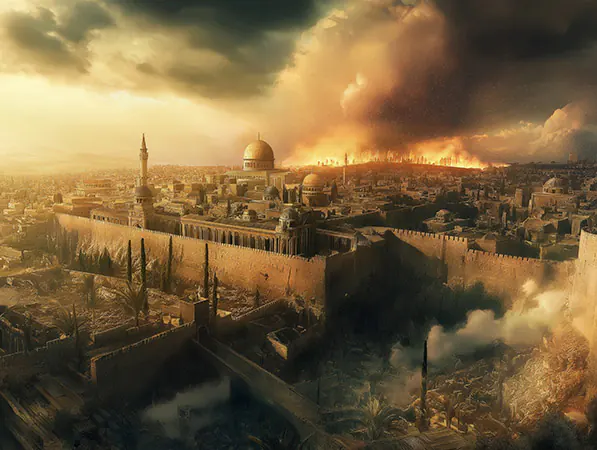
'Prophecy Watch' by Charles WhitakerThe Second Coming of Jesus Christ is intricately linked to the Day of the Lord, a year-long period of great wrath during which He takes vengeance on His enemies. This time of divine judgment, as understood in the prophetic timeline, culminates at the end of the Day of the Lord when Christ returns to rule, His wrath spent. At this revealing, He will assume the throne of David and set His hand to establishing Jerusalem as a city of worldwide acclaim, regathering scattered Israel, drawing all peoples to Himself, and teaching the law from Zion. His reward is with Him, and His work is before Him upon His return, marking the beginning of the Millennium, a time distinct from the destruction that characterizes the Day of the Lord. In the Olivet Prophecy, Christ speaks of the Son of Man coming in a context of intense apocalyptic rhetoric, focusing on clouds and days of vengeance that point to the year of the Lord's vengeance, not the historical destruction of Jerusalem in AD 70. He emphasizes that these are the days of vengeance when all things written must be fulfilled, aligning with the Day of the Lord. Furthermore, in various prophetic passages, the formulaic phrase "coming of the Son of Man" is tied to the day of God's vengeance, underscoring a future event of divine judgment and redemption far beyond past historical events.
Psalms: Book Four: He Is Coming!
Sermon by Richard T. RitenbaughThe Day of Trumpets centers on the return of Jesus Christ as the primary theme that fulfills the prophecies inherent in the fall festivals. This return is heralded by trumpet blasts that proclaim His descent from heaven to assume rulership over the kingdoms of the world. At the sounding of the seventh trumpet, loud voices declare that the kingdoms have become those of the Lord and of His Christ, who shall reign forever, while the nations face wrath and judgment and His servants receive reward. This event initiates the Day of the Lord, a period of severe destruction marked by earthquakes, hail, darkness, and the outpouring of divine wrath upon those who have rejected God, yet it simultaneously announces the resurrection of the dead in Christ and the gathering of the living saints to meet Him. Jesus Christ appears as Faithful and True, riding a white horse to judge and make war in righteousness, striking the nations with the sword from His mouth and ruling them with a rod of iron. He is revealed as King of kings and Lord of lords who puts down the beast and false prophet, binds Satan, and reigns with His saints. Parallel descriptions emphasize His role as avenger of His people, husband of the church whose wife has prepared herself in righteous acts, and the Lamb whose marriage supper follows the judgments. The return is not limited to a single day but encompasses the broader Day of the Lord, during which God protects and delivers the faithful while they endure tribulation. Psalms associated with the season develop these connections by portraying God rising to judge the earth, shielding His people amid widespread death and persecution, and responding to their pleas for His intervention. The faithful maintain covenant loyalty and grow in knowledge of His name, receiving deliverance, honor, and salvation as He establishes His righteous rule and brings relief to creation. This unified message underscores that Christ's coming fulfills the trumpet themes of kingship, judgment, protection, and reward while calling believers to active preparation through faithful living.
When Our Change Comes
Sermon by Richard T. RitenbaughThe Day of Trumpets points to the return of Jesus Christ as the pivotal event that fulfills the holy day and serves as the hinge of God's plan, after which the remaining holy days can be accomplished. At that time Christ descends from heaven with a shout, the voice of an archangel, and the trumpet of God. The dead in Christ rise first, and those saints still alive are instantly changed from corruptible flesh and blood into incorruptible spirit beings, putting on immortality in the twinkling of an eye. Together they ascend to meet Christ in the air and return with Him as the armies of heaven, clothed in fine linen that represents their righteous acts. This return brings sweeping change. Christ stands on the Mount of Olives, defeats the nations gathered against Jerusalem, and establishes His rule as King over all the earth. Justice and righteousness become the constant standard, animal natures are altered so that predators and prey dwell together in peace, Satan's influence is removed, and the nations gradually seek God. The saints themselves receive bodies like His glorified body, able to appear solid and eat yet also pass through walls, become visible or invisible, travel instantly between earth and heaven, and be fully revealed in radiant glory. The same day therefore unites a present and a future aspect of change. While the ultimate transformation awaits the last trumpet, the process has already begun through the Holy Spirit given at baptism, which renews the mind, produces godly character, and guarantees the coming inheritance of eternal life and glorification. Thus the Feast of Trumpets both memorializes the call to ongoing personal conversion and proclaims the certainty of Christ's return, when all things will be made new and the saints will be like Him.
Preparations For Christ's Return
Sermon by Richard T. RitenbaughGod prepares extensively for the second coming of Jesus Christ, much as extensive arrangements precede a presidential visit, though on a far grander scale. Unlike the first coming, when John the Baptist prepared a limited audience through a message of repentance while God arranged political, cultural, and religious conditions for the Messiah's arrival at the fullness of time, the second coming will involve a monumental, catastrophic intervention. Isaiah 40 describes valleys being exalted, mountains brought low, crooked places made straight, and rough places smoothed so that the glory of the Lord may be revealed to all flesh. Jesus Christ will return not as a refiner and purifier but as King and Judge, accompanied by the sound of a trumpet, the voice of an archangel, and a shout, as foretold in Matthew 24, 1 Thessalonians 4, and 1 Corinthians 15. The final sequence of events begins with the seventh trumpet in Revelation 11, announcing that the kingdoms of the world have become the kingdoms of the Lord and of His Christ. Seven last plagues follow, culminating in the seventh bowl poured into the air, accompanied by the greatest earthquake in human history, the collapse of cities and mountains, and massive hail. These judgments soften humanity, leaving the earth and its inhabitants ready for the arrival of the King of kings and Lord of lords. Revelation 19 then depicts heaven opened and Jesus Christ descending on a white horse, clothed in a blood-dipped robe, with a sharp sword proceeding from His mouth to strike the nations. He comes to judge, make war in righteousness, tread the winepress of God's wrath, and establish His rule. Throughout these events God sovereignly positions every element, including the humbling of Israel through captivity so that survivors return repentant to the Holy Land. For the church He likewise prepares vessels of mercy, working in them to produce the character of Jesus Christ. Believers are therefore charged to cooperate by working out their own salvation with fear and trembling, denying ungodliness, living soberly, righteously, and godly, holding fast the word of life, and purifying themselves even as He is pure. In this way the remnant will be saved, the work finished, and the saints made ready to receive their reward when Jesus Christ descends to reign.

Recognizing the Second Witness
Article by Charles WhitakerAt the threshold of the second half of Christ's seven-year ministry, which constitutes His second coming, many will fail to recognize the Messiah when He stands before them, just as occurred during His first visit nearly two millennia ago. His message across these two visits forms two witnesses that establish the truth of the gospel of the Father's Kingdom. At this second visit, many unable to identify Him as Messiah will again respond with wrath and seek to destroy Him. Events and people from the first witness illustrate how recognition occurs or fails. Two groups in Jerusalem during the Feast of Tabernacles did not do the right things and therefore missed their Messiah. The first group expected Him to appear suddenly out of nowhere without known origins. The second group rejected Him because of prejudice against His residence in Galilee, mixing partial truth about His Davidic descent and Bethlehem origins with fallacy while neglecting prophecies of His Galilean ministry. In contrast, a different group near the time of His birth did the right things and recognized the infant Jesus as Messiah. These individuals possessed God's Spirit, heard His Word regularly, fellowshipped with others of like mind, fasted often, prayed consistently, made correct connections from prophecy such as the seventy weeks, and assembled together as the day approached. As a result, they received understanding and identified their Savior. Standing now before Christ's second witness, the same choices determine recognition. Those who follow the example of receiving the love of the truth through the Spirit, study, fellowship, fasting, and prayer will recognize Him for what He is, receive worthiness to escape the coming great distress, and stand before the Son of Man.
Caught Up in the Rapture
'Prophecy Watch' by Richard T. RitenbaughThe material presents Jesus Christ's second coming as the pivotal future event at which the first resurrection occurs. At that time the Lord Himself descends from heaven with a shout, the voice of an archangel, and the trumpet of God. The dead in Christ rise first, after which those who remain alive and converted are caught up together with them in the clouds to meet Him in the air. This meeting is not a departure to heaven but the immediate prelude to the saints' return to earth as spirit beings in Christ's heavenly army. They join Him to defeat the Beast and False Prophet in the Valley of Jehoshaphat and to establish the Kingdom of God over all the earth. The timing is fixed by multiple scriptures. Paul states that the resurrection and change take place at the coming of the Lord and at the last trumpet. The seventh trumpet in Revelation simultaneously announces Christ's return, the establishment of His Kingdom, the judgment of the nations, and the rewarding of the saints. This places the event after the tribulation rather than before it. The destination of the resurrected saints is likewise the earth. Zechariah shows the Lord standing on the Mount of Olives with all the saints, after which He becomes King over all the earth. The reward of the saved is eternal life as kings and priests ruling and teaching on the earth. Although the saints may later travel between earth and the third heaven, their permanent sphere of service remains the earth, culminating in the Father's own descent to dwell with humanity on the renewed earth. This understanding of the second coming underscores that God has not appointed His people to wrath but to obtain salvation through Jesus Christ. Those who watch, pray, and endure to the end will be counted worthy to participate in this resurrection and to stand before the Son of Man when He returns.

The End Is Not Yet
'Prophecy Watch' by Richard T. RitenbaughWe must make sure that our understanding and interpretation of natural disasters and heavenly spectacles align with what the Bible says about them.

The Rapture and Trumpets
Sermon by Richard T. RitenbaughThe delusion of the pre-Tribulation 'rapture' concept, made popular by the Left Behind books and movies, hopelessly messes up the timing of Bible prophecy.
How Much Longer Do We Have?
'Prophecy Watch' by David C. GrabbeHow often have we heard—or cried ourselves—'How long, O Lord?' Our great hope is in Christ's return, but it seems as if that time is delayed.
Shock and Awe - and Speed
Sermon by Richard T. RitenbaughThe world will experience the ultimate 'shock and awe campaign' at the second coming of Christ. When these events start, they will occur at meteoric speed.
Don't Be a Prudent Agnostic
Sermon by John W. RitenbaughSome of us, facing the stress of the times, may simply be going through the motions but losing every vestige of faith. We must strengthen our convictions.
What Is the Book of Revelation?
'Prophecy Watch' by David C. GrabbeThough the book of Revelation speaks of the end of the world using strange and fearsome symbols, the real subject of Revelation is readily apparent.

Watch and Vigilantly Prepare
Sermon by Martin G. CollinsWe are ambassadors in a foreign land, awaiting the return of Christ, when we will help our Warrior King subdue all the rebellious nations of the earth.
Trumpets Is a Day of Hope
Sermon by John W. RitenbaughWe are on the threshold of the greatest period of testing ever to come upon mankind. We need a sense of hope and faith to stay focused on our calling.
Would Our God Do That?
Sermon by Richard T. RitenbaughThe distorted perception of Jesus as an effeminate and ineffective Savior fails to understand that He is the so-called stern God of the Old Testament.
Basic Doctrines: The First Resurrection
Bible Study by Martin G. CollinsThe doctrine of resurrection is a chief teachings of Christianity. For those called and chosen in this age, the first resurrection is especially vital.
Famine (Part Two): Behold, a Black Horse
Sermon by Martin G. CollinsVarious famines in the last century were caused by the despicable cruelty, greed, and corruption of human beings, bringing about large scale death.
Famine (Part Three): The Abundance of God's Salvation
Sermon by Martin G. CollinsAfter Christ's return, famine will be the penalty for not keeping His Feast of Tabernacles. God will establish conditions in which famine will never occur again.