


Filter by Categories
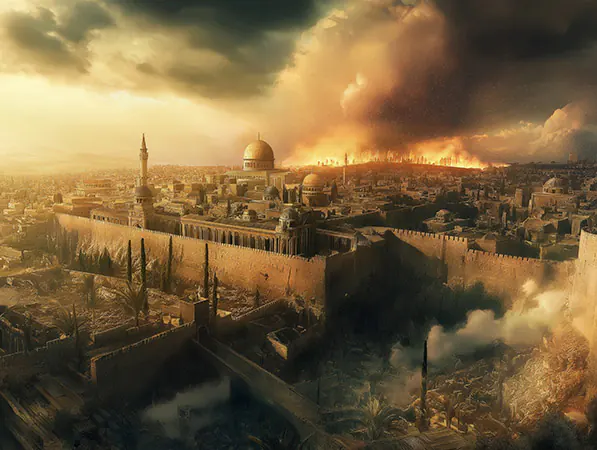
Jerusalem's Fall and Christ's Return
'Prophecy Watch' by Charles WhitakerThe return of Jesus Christ, often referred to as the coming of the Son of Man, is a central theme in prophetic teachings. Christ Himself speaks of this event, indicating that His disciples will not have gone through all the cities of Israel before the Son of Man comes, pointing to a time of divine vengeance known as the Day of the Lord. This period is understood as a year-long time of great wrath, during which Christ takes vengeance on His enemies, culminating at the end of the Day of the Lord when He assumes rule. At the conclusion of the Day of the Lord, Christ will be revealed, taking the throne of David and setting His hand to significant works. He will establish Jerusalem as a city of worldwide acclaim, regather scattered Israel, draw all peoples to Himself as nations flow to Jerusalem, and teach the law from Zion. His return brings with it His reward and His work, marking the beginning of the Millennium, a time of peace distinct from the destruction that characterizes the Day of the Lord. In the Olivet Prophecy, Christ connects His return to the days of Noah and speaks of a future time of vengeance when all written prophecies will be fulfilled. This coming is associated with apocalyptic signs, including clouds, emphasizing a day of the Lord's vengeance far beyond the historical destruction of Jerusalem in AD 70. His words to the Sanhedrin also point to a future event after the Day of the Lord, where they will see the Son of Man in His glory, underscoring a prophetic fulfillment yet to come.

Establishing Our Hearts Before Christ's Return
Sermon by Martin G. CollinsJesus Christ's return is a central theme of hope and urgency for us as spiritual conquerors. The Feast of Trumpets looks forward to His second coming as the ultimate Conqueror and Deliverer, intervening in world affairs, resurrecting the firstfruits, and establishing the Kingdom of God on earth. This event marks a pivotal change from the age of man and darkness under satan to the age of God, heralding the Millennium, and God's Kingdom. As part of God's redemptive plan, Christ will return in clouds, with a shout, the voice of an archangel, and the trumpet of God. At the seventh and last trump, His direct intervention will demolish the world's Babylonian system of government, replacing it entirely with God's government. Despite the somber and destructive aspects tied to this day, it fills us with great hope, lifting, encouraging, and inspiring us with purpose and direction. Jesus repeatedly warned us to wait and watch for His second coming, correcting the impatience seen in His disciples nearly 2,000 years ago and still present in the church today. This waiting is not passive but a virtue requiring patience, resignation, submission, dependence, and contentment amid challenging circumstances. The early church lived in expectation of His immediate return, and James, in the late AD 50s, exhorted scattered members to wait patiently, emphasizing patience five times in his writings as a moderating force against urgent tendencies for immediate action. We must establish our hearts, strengthening our faith to stand firm during trials as we await His return, knowing that the exact date cannot be known in advance. Signs of the end times, such as wars, earthquakes, famines, pestilences, persecutions, and false prophets, have occurred over the last 2,000 years, but their global scale and impact are increasing, signaling that the Great Tribulation and the Day of the Lord are imminent, with Christ's return to follow. This return will be sudden, like lightning, and unexpected, like a thief in the night, yet God reveals more to those in His church who watch, urging us to hold fast, repent, and remain vigilant. We must be ready at any moment, as human speculation about the timing is vain, and only the Father knows the day and hour. This uncertainty fosters a daily urgency to live God's way of life, balancing waiting with active spiritual growth and character development. As we patiently wait for Christ's return, we are responsible for watching and praying, ensuring everything is ready for His arrival at any time. We must not let delays produce hopelessness or depression but remain steadfast, working with God to establish our hearts with godly love and fellowship, enduring trials to the end. Shared encouragement and selfless help among believers become increasingly vital as His return nears. Christ promises protection to those who endure patiently, safeguarding us from His wrath during the hour of trial coming upon the world, transforming suffering into triumph. The indwelling of God's Spirit empowers us to endure trials, refining us into pure and righteous beings worthy to meet Him at His return.
Patiently Waiting for Christ's Return
Sermon by Martin G. CollinsIn the late 1960s, many members of the Worldwide Church of God anticipated that Jesus Christ would return on the Feast of Trumpets in 1975, following a period of fleeing to a place of safety in 1972. This expectation arose from human impatience and speculation, fueled by earlier writings and the turbulent events of the era, including the Cold War, assassinations, race riots, and the Vietnam War. The church's urgency for God's way of life to replace satan's world turned into impatience for the return of Jesus Christ. Nearly two thousand years ago, Jesus Christ's disciples also displayed impatience regarding the timing of His return, living under Roman occupation and facing turmoil. He corrected them for their eagerness to know the exact time of His coming. The early church, for decades, lived in expectation of an immediate second coming, and even as late as the 50s AD, James exhorted scattered members to wait patiently for the few remaining years. James, in his epistle, addressed the impatience within the church, emphasizing the need for patience in waiting for the Second Coming of Jesus Christ. He highlighted principles such as establishing hearts, not grumbling against one another, suffering affliction, and enduring trials, all of which require active, God-given restraint and contentment while facing challenges. The urgency for Christ's return must not turn into impatience, as seen in historical schisms within the church when members became frustrated with God's timetable. Human speculation about the exact time of Christ's second coming is vain, as the date cannot be known in advance and resides only in the mind of God the Father. While the church may have a general sense of the timing through signs of the times, impatience from obsessing over specific dates can lead to division and deception. James urges patience through illustrations like the farmer waiting for rains, the prophets enduring mistreatment, and Job persevering through trials. These examples show that waiting for Christ's return requires active faith, obedience, and submission to God's will, not passive idleness. Believers must establish their hearts with conviction, avoid grudging against others, and endure trials with longsuffering patience, trusting that Jesus Christ will return according to the Father's plan. The responsibility while waiting for Christ's second coming includes watching and praying, avoiding despair from delays, establishing hearts with godly love, fellowshipping sincerely without grudging, and patiently enduring trials to the end. True urgency for His return is based on action rooted in truth, not desperate impatience driven by annoyance at delays. The best preparation for meeting Christ is to patiently develop an intimate relationship with Him, establishing hearts in love and faith, and enduring trials to be refined as worthy to meet Him at His return.
Politics and Christ's Return
Sermon by Richard T. RitenbaughWe in the church are forward-looking, eagerly anticipating the return of Jesus Christ and His establishment of the Kingdom of God. We look forward to being part of the first resurrection and becoming very God, transformed from mortal to immortal, from corruptible to incorruptible. This hope shapes our perspective, setting us apart from worldly categories of liberal or conservative, as our ultimate focus is on the heavenly citizenship and the divine transformation that awaits us at His return.
Would Jesus Christ Vote? (Part Two)
Bible Study by Martin G. CollinsDespite this evil world being full of selfish, abusive leaders and sinful, miserable people, God has a well-organized plan for the eventual salvation of humanity. When Jesus Christ returns to earth, He will take up rule over all humanity as King. At His return in all His power and glory, satan will be chained, unable to deceive the world any longer. Christ, King of kings and Lord of lords, will rule through His now-immortal saints, forming the world-ruling Kingdom of God. God's benevolent government will replace every government on earth and its evil religions, economies, and society. Then, His future political policies will be established forever. Even though He was born to be King, His Kingdom is not of this world, but He will establish His rule on earth as King of the world at the appointed time of His return.
What Does Jesus Mean by the Parable of the Fig Tree (Matthew 24:32)?
Bible Questions & AnswersJesus Christ uses the parable of the fig tree to illustrate a point about His second coming. When the fig tree's branch becomes tender and puts forth leaves, we know summer is near. Similarly, when we see the events described in Matthew 24:4-29 begin to occur, we will know that Christ's return is near, at the very doors. However, Jesus warns that only an approximate time can be known, as He states that no one knows the day or hour of His return, not even the angels of heaven, but only His Father.
Christ's Second Coming
Sermon by Richard T. RitenbaughThe return of Jesus Christ stands as the pivotal event in God's plan, marking the great dividing line in all of history. His Second Coming as King of Kings and Lord of Lords will herald the establishment of His government on earth. Before this, He must engage in battle against His enemies and execute great judgments, a time of violent and tragic judgment for those opposed to God, signaling the end of human plans against Him. This seminal event, the return of Jesus Christ, will not occur in secret but openly, like lightning striking or the dawn of a new day, visible to every eye. As He returns, He will come on a cloud, accompanied by the sound of a great trumpet or shout, sending His angels to gather the saints from the four winds. This gathering signifies the assembly of His elect and the beginning of all that the saints have hoped for and been promised—salvation and its accompanying blessings. Upon His return, He will first act as Righteous Judge and Warrior King, bringing great carnage and judgment long in coming. He will go straight to where the action is, engaging in war against His enemies with a sword, striking down opposition in great fury. This period will involve utter destruction, requiring rebuilding, though Jerusalem will be safely inhabited under His protection. As part of His army, the saints will participate in this judgment, trampling enemies underfoot. Following this, He will establish His rule as God and King, announced as the Husband of the church and the Lamb of God, the Redeemer who saved by His blood. He will subdue His enemies, ensuring their fate endures forever, and then bring prosperity and peace to His people, feeding them with the finest wheat and honey from the Rock in a millennial setting where the knowledge of the Lord covers the earth like waters cover the sea. At His return, a trumpet will sound for various reasons, fulfilling ancient statutes: to call an assembly as the saints are gathered, to direct the movements of His army against enemies, to sound the advance in war, and to mark a day of gladness on this appointed feast. It will also signify the coronation of Christ as King, a day of worship, and the spirit of jubilee. His coming will be preceded by heavenly signs and the Seven Last Plagues, softening up the earth through terrible afflictions before the final attack. These events, announced by the seventh trumpet, include lightnings, noises, thunderings, earthquakes, and great hail, proclaiming the reign of God beginning. A massive earthquake, unlike any before, will shake the entire earth, accompanied by hundred-pound hailstones, as God unleashes His power to herald the coming of His Son. Christ's return will also bring the resurrection of the dead saints and the transformation of the living into immortal, incorruptible beings with bodies like His, shining like the Son. They will meet Him in the air as He descends amid shouting, the voice of an archangel, and a trumpet blast. This is the First Resurrection, a time of ultimate salvation and glorification, where the saints will be healed, changed to be like Him, free from sickness, death, or affliction, and ready to rule. Finally, His return on the Day of Trumpets encapsulates both vengeance and comfort, judgment and reward. For the saints, it will be a day of consolation, beauty, joy, and praise, as they receive their mansions and rewards, gathered to Him to abide forever. Together with Christ, they will establish a Kingdom in righteousness, starting fresh, rebuilding, and ruling over the whole earth and universe under Him, a Kingdom that lasts forever, free from rebellion and sin.
Jesus on His Second Coming
Sermon by Richard T. RitenbaughThe return of Jesus Christ is a central hope and a pivotal event in history. We believe that He will return in great power and glory to this earth in the near future, though the exact time remains unknown. His coming will mark the defeat of His enemies and the establishment of His Kingdom on earth, a time we yearn for amidst the world's current turmoil. This second coming has been a core focus of prophetic preaching since the founding of the church, as evidenced by the apostles' early inquiries and Peter's sermons about God sending Jesus back to inaugurate the restoration of all things. The hope of Christ's return permeates nearly every page of the New Testament and many in the Old Testament, culminating in Revelation with His declaration of coming quickly. This event is also the centerpiece of the holy days, symbolizing a great turn from humanity's disastrous self-rule to the blessed rule of God. The Feast of Trumpets, identified by the blowing of trumpets or the shout of a shofar, prefigures this return, serving as a loud proclamation to grab attention and signal readiness for a dramatic change. Christ's return will be unmistakable and loud, as described in Revelation with trumpets and voices proclaiming His arrival to all the earth. It will not occur in a quiet corner but front and center, explosive and magnificent, evoking visceral reactions and forcing everyone to take notice. This event will be a time of great opposites—war bringing peace, death opening the way for better life, dread ushering in hope, gloom ending in light, destruction concluding with restoration, and chaos giving way to order under God's governing wisdom. Jesus Himself emphasized listening to His words as the foundation for understanding His second coming. He described it as a time of astonishing glory, accompanied by a multitude of angels, coming to reward His people and punish His enemies. His face will shine like the sun, His clothes white as light, a stark contrast to His humble first coming. He called this time the regeneration, a new beginning or renewal, where His followers will receive eternal life, positions of authority, and a permanent place in His Father's house with many dwellings prepared for them. His return will follow a period of great tribulation and war, marked by suddenness, brightness like lightning, and heavenly signs. Most of the world will mourn, aware of the judgment He brings with a rod of iron, while His people will rejoice. A great trumpet blast will sound, and angels will gather His elect to meet Him in the air, returning with Him in glory. Jesus warned that no one knows the timing of His return, urging constant readiness, vigilance, and focus on spiritual growth rather than speculation, ensuring faithfulness until that day arrives.
The Love of Christ
Sermon by Martin G. CollinsBefore Jesus Christ's return, a great tribulation will occur, such as has not been since the beginning of the world, a time of unparalleled horror with destruction and war unlike anything humanity has ever experienced. Unless those days were shortened, no flesh would be saved alive, but for the elect's sake, those days will be shortened. This event directly precedes Christ's second coming, when He lovingly returns in power and glory to save mankind from its own destruction. Extraordinary cosmic disturbances, never before experienced in human history, will terrify people, with men's hearts failing them from fear and expectation of what is coming on the earth as the powers of heaven are shaken. At this point, we are told to look up and lift up our heads, for our redemption draws near. Only then does the sign of the Son of Man appear, marking Christ's return with great events in the skies, followed by worldwide catastrophes and His appearance in glory. Christ's Second Coming, celebrated on the Feast of Trumpets, depicts His intervention in world affairs to establish the kingdom of God on earth. It is a solemn day yet a time of rejoicing, with the love of Christ as the underlying foundation of glory and excellence. On one hand, it pictures terrifying world events culminating in warfare that threatens the extinction of all life on this planet, but the loving Christ intervenes to prevent annihilation and ongoing suffering due to satan's influence and human sins. On the other hand, it is a day of great rejoicing for the faithful firstfruits who have answered God's calling and submitted to His government, as the loving Christ begins to set up and reward them as kings and priests of the Kingdom of God. The Day of the Lord, a process culminating in Christ's return, refers to a period when God intervenes in human affairs to save and judge, often marking cataclysmic events that end an age of the world. Up until Jesus Christ's return, God the Father and His Son lovingly offer forgiveness to the war-ravaged people still alive on earth who may be willing to repent. Jesus warned that love will wax cold in the wicked world, but for the faithful who endure to the end, the love of Christ will dwell in their hearts, its glory beyond human comprehension. On the Feast of Trumpets, we envision the return of Jesus Christ with His army of saints as a magnificent, conquering event, yet the internal glory of His love remains a far more impressive attribute than anything visible.
Trumpets, Christ's Coming, and Works
Sermon by John W. RitenbaughThe Feast of Trumpets brings to mind the return of Jesus Christ to rule the earth, a time of resurrection and rulership. It marks the end of satan's invisible domination of mankind and the beginning of God's Sabbath rest, a period of receiving rewards for sacrifices made in service to God and man. The time leading up to this event is critical, as seen in the parables of Matthew 24 and 25, which provide instruction for those living in this period. These parables emphasize the importance of faithfulness, wise conduct, and energetic use of time until the Master's return. They warn against mistreating fellow servants and ignoring the signs of the times, which can lead to a lack of full-time awareness of God in daily life. Christ stresses that unacceptable conduct toward each other during this time could result in severe consequences, indicating the ultimate despair for those who fail to measure up. In the parable of the ten virgins, Christ warns of a spiritually dangerous malaise that can develop within the church at His return. This malaise stems from the monotonous regularity of daily life, which can lull individuals into spiritual sleep, despite the stressful times described as people running to and fro with increasing knowledge. At the cry of the Bridegroom's coming, all virgins were asleep, symbolizing a lack of awareness and alertness to the times. The wise virgins, through vision and discipline, prepared thoroughly, while the foolish squandered their time and were caught unprepared, lacking oil for their lamps. Christ urges all to be alert and prepared for His coming, as the exact time remains unknown. Paul, in I Thessalonians, reinforces this message, believing Christ's return was imminent during his time. He comforts believers with the knowledge of living in the period before Christ's return, a gift that provides direction and motivation to act. Paul echoes Christ's teaching that no one knows the exact time of His return, emphasizing that knowing a date is not the solution. Instead, he urges believers to be on alert, not deceived, and to avoid resting on their laurels. The suddenness of Christ's return, likened to a thief in the night, underscores the need for constant preparation, as the world will be caught unaware, focused on carnal life. Paul warns church members not to let the days of darkness lull them into unpreparedness, using symbolism of light and day to represent truth and understanding, contrasting with darkness, night, and drunkenness, which symbolize ignorance and deception under satan's dominion. Believers, being of the light, have the tools to navigate this world and must remain alert and self-controlled. In various epistles, Paul consistently counsels believers to make the best use of their time, reflecting a sense of urgency as if Christ's return were imminent. He advises against distractions like marriage to maintain single-minded devotion to Christ, urging believers to focus on their responsibility to the One who called them. Paul admonishes against spiritual sleep, which indicates unproductiveness and unawareness, and encourages casting off sinful lifestyles for righteous conduct. He repeatedly calls for believers to wake up, take care of their responsibilities to God, and make the most of every opportunity in the time remaining, keeping life focused on God's purpose. Paul exemplifies this dedication in his own life, striving with all his might despite personal challenges, driven by the love of Christ to give himself unreservedly to his calling. In summary, Paul's writings urge believers to dedicate themselves fully to their calling, regardless of whether the time of Christ's return seems long or short. He emphasizes the importance of preparation, ensuring that one is not found beating fellow servants or lacking oil for their lamp. By following this advice, believers will be ready for Christ's return, whenever it may occur.

Clouds (Part Three): The Revealing of Christ
'Prophecy Watch' by Charles WhitakerThe return of Jesus Christ, often linked to the Day of the Lord, is a pivotal event marked by the presence of clouds, symbolizing both concealment and revelation. This period, understood as the final year of Jacob's Trouble, culminates in Christ touching down on the Mount of Olives. Prophecies describe the Day of the Lord as a time of darkness and gloom, with clouds and thick darkness enveloping the earth, as seen in Joel's depiction of morning clouds spreading over the mountains. Ezekiel similarly portrays this day as one of clouds and doom for the nations, emphasizing a worldwide impact with heavens covered and celestial lights obscured by a cloud. In the account of Christ's ascension, a cloud took Him out of sight, illustrating how clouds can hide and obscure. Angels confirmed that He will return in the same manner, descending in a cloud, aligning with prophecies of His return during the Day of the Lord. Christ Himself spoke of this future event, stating that the Son of Man will be seen coming on the clouds of heaven with power and glory, a vision echoed by John who declares that He is coming with clouds, visible to every eye, even those who pierced Him, causing all tribes of the earth to mourn. During the Day of the Lord, Christ will spend much of a year in His cloud, amidst gloom and darkness, riding His portable throne. He will search out His enemies, taking vengeance on those who oppose Him, while simultaneously destroying and creating. As He destroys those who corrupt the earth, He will terraform it, leveling mountains, raising valleys, and altering rivers, ensuring no corruption remains in His Kingdom. Throughout this tumultuous period, He will protect those He has chosen, displaying precise selectivity in His judgments, covering His people with a glorious canopy as a shelter and refuge. The darkness of the Day of the Lord contrasts starkly with the brilliance of His revealing. Zechariah, father of John the Baptist, alludes to Christ as the Dayspring, who will shine on those in darkness and guide them into peace. Before the thousand-year day of God begins, a short year of deep darkness will cover the earth, yet the promise of peace and fellowship at His revealing inspires a longing for His return, echoing the sentiment to come, Lord Jesus.
Reconciliation (Part Two): Christ's Work
Sermon by Richard T. RitenbaughThe return of Jesus Christ is a pivotal event in the process of reconciling all things to the Father. His descent from heaven, accompanied by a shout, the voice of an archangel, and the trumpet of God, marks the day of the first resurrection, when the dead in Christ and the living in Christ will rise to meet Him in the air, transformed from mortal to immortal. This day, celebrated as the Feast of Trumpets, also heralds a great battle where Christ and those with Him will defeat the forces of the Beast and the False Prophet, casting them into the Lake of Fire, and soon after, satan will be confined to the bottomless pit. This event signifies the beginning of the end for the evil of this world, though not its complete eradication at once. When Christ returns, His coming will be marked by extraordinary displays of natural forces—sun, moon, stars, clouds, and winds—making it evident that a Being of awesome power and glory is descending. Yet, the response of the world will be one of mourning and terror, not worship, as carnal minds resist submission to God. Many will choose to fight rather than surrender, facing dire consequences for their hostility, as the carnal mind remains irreconcilable to God without the transformative work of His Spirit. Following His return, Christ will begin His reign with decisive acts of judgment against rebellious mankind, clearing out enemies and pacifying the land of Israel. This will allow the remnant of Israel, humbled and repentant, to return to their land, where God will grant them grace, justify them through Christ's blood, and give them a new heart through His Spirit. At this point, Israel will be reconciled to the Father, becoming one with the greater Israel of God. The reconciliation process will expand beyond Israel, gradually encompassing nations and eventually the whole earth, through stages that span centuries or millennia. Despite challenges, such as the release of satan and tests of true reconciliation, Christ will ultimately deliver all things to the Father, achieving complete harmony in the New Heaven and New Earth where righteousness dwells, and sin, death, and sorrow will be no more. This eternal state of unison with God is the ultimate goal of Christ's return and His sacrificial work.
The Return of the Clouds
Feast of Tabernacles Sermon by Charles Whitaker (1944-2021)The return of Jesus Christ is intricately linked with the imagery of clouds, symbolizing both concealment and revelation during the Day of the Lord. This period, understood as a year-long culmination, ends with Christ touching down on the Mount of Olives, marking the final year of Jacob's trouble. As witnessed in His ascension, where a cloud hid Him from sight, two angels affirmed that He will return in the same manner, enveloped by clouds. This return, associated with the Day of the Lord, is further depicted in prophecies where Christ appears in the clouds of heaven, drawing attention and awe from all who witness it. Scriptures reveal that everyone will see Him, despite the obscuring clouds, as He travels across the earth in His cloud, much like during the time of Noah's flood, presiding over destruction and renewal. During this time, hidden in gloom and darkness, He will search out His enemies, take vengeance on those who oppose Him, and terraform a new world by leveling mountains, raising valleys, and altering rivers. Simultaneously, He will protect chosen individuals under His glorious canopy, sheltering them from heat and storms, preparing them to help build a new civilization. This profound period of darkness and transformation will precede the revelation of Christ, ushering in a new era of peace and fellowship as the Dayspring from on high.
Jesus in the Feasts (Part Three): Divine King
Sermon by Richard T. RitenbaughThe Feast of Trumpets carries profound significance in announcing the return of Jesus Christ as King. This holy day, marked by the blaring of trumpets and shouting, serves as a memorial that recalls the awesome presence of God and points forward to the day when Christ will appear as the divine Sovereign. On this day, trumpets herald His war of wrath, signaling a time of great intervention in history. It is a day of gladness, a feast day occurring on the new moon, where worship and offerings are made, reflecting the joy and reverence due to Him. Above all, the Feast of Trumpets proclaims Christ as the King of kings, a kind of coronation announced to the whole world upon His return. The sound of the shofar and the shouting associated with this feast echo the thunderous events at Mount Sinai, where God descended in power to establish His covenant. Similarly, the return of Christ will be accompanied by loud noises of praise and awe, as seen in the visions of Revelation, where constant din of acclamation surrounds His throne. These loud voices, thunders, and trumpet blasts signify the arrival of the King, compelling all to rejoice and praise Him as the Sovereign Lord. The triumphal entry of Jesus into Jerusalem further illustrates this theme, with the multitude shouting loudly in recognition of Him as King, fulfilling prophecies and demonstrating His divine authority. This event foreshadows His second coming, where, as Revelation depicts, He will return as King of kings and Lord of lords, riding down to intervene in the lives of His people. The innumerable multitude will cry out in praise at His return, echoing the joyous noise that cannot be silenced, for even the stones would cry out if the people were silent. The Feast of Trumpets reminds us annually of our allegiance to the true King who lives in us by His Spirit. It is not merely a historical or future event but a present reality, as He reigns in our lives every minute. This day calls us to remember that we serve the One who must reign until all enemies are under His feet, and to act accordingly under His sovereign rule.
Holy Days: Trumpets
Bible Study by StaffAs we approach the Feast of Trumpets, our exuberant mood reflects the anticipation of Jesus Christ's return as King of kings and Lord of lords, along with our resurrection to glory, which this festival depicts. What a joyous day that will be! Yet, this holy day also carries sobering and even terrifying meanings, portraying a time of judgment upon the world. The Feast of Trumpets, as described in Revelation 8-9 and 11:15-19, announces the Day of the Lord and the return of Jesus Christ, with the resurrection occurring at the last trumpet, as noted in I Corinthians 15:52, and I Thessalonians 4:16 affirming that Christ will descend from heaven with a shout and the trumpet of God, raising the dead in Christ first. The church bears a responsibility to prepare for Christ's return, cooperating with God to become holy, righteous, godly saints worthy to marry His Son, as highlighted in II Peter 3:10-18 and Revelation 19:7-9. The great mystery, revealed in I Corinthians 15:50-58, is that we will become immortal and incorruptible spirit beings at Christ's return, a vision that motivates us with the promise of being just like the returning Christ. However, God's plan does not conclude with Christ's return; I Corinthians 15:23-28 and Revelation 20 indicate that the resurrection at His second coming is only the beginning of God's reign on earth, with all who have lived being given an opportunity, in proper time and order, to repent and enter His glorious Kingdom as sons of God. While the Feast of Trumpets pictures Christ's return, and it is supposed that He may return on that day, no specific verse unequivocally states this. Because we know that He will return soon, we must be prepared, focusing on repenting, overcoming, praying, and fasting as His return approaches, ensuring we are ready to help others recover from the terrible times of the Great Tribulation and the Day of the Lord, and to teach and guide them as they strive to enter God's Kingdom.
Caught Up in the Rapture
'Prophecy Watch' by Richard T. RitenbaughThe return of Jesus Christ is a pivotal event marked by clear timing and destination. At the coming of the Lord, as described in I Thessalonians 4:15-16, Christ descends from heaven with a shout, with the voice of an archangel, and with the trumpet of God. This last trumpet, the seventh, announces His return, the establishment of God's Kingdom, the judgment upon the nations, and the rewarding of the saints, all occurring simultaneously. The timing is further confirmed as immediately after the tribulation of those days, when the trumpet sounds to gather the elect from all over the earth to meet Him upon His return. Regarding the destination, those who rise to meet Christ in the air will return with Him to earth. The saints are not destined for heaven but will settle on earth to rule as kings and priests alongside our Savior, who will rule over all the earth. This is supported by the promise of eternal life ruling and teaching here on earth, and the assurance that faithful servants will be caught up together in the clouds to meet the Lord in the air, finding great comfort in these words.
A Swift End
CGG Weekly by Richard T. RitenbaughJesus Christ offers both hope and a solemn warning regarding His return. In Matthew 24:32-33, He teaches through the parable of the fig tree that when its branch becomes tender and puts forth leaves, summer is near; likewise, when the signs of His coming appear, it is near at the doors. The brevity of time is evident, as opening and stepping through a door takes mere seconds, indicating that the events at the close of the age will unfold swiftly. In Matthew 24:22, He states that unless those days were shortened, no flesh would be saved, emphasizing the rapid progression of end-time events. Throughout Scripture, warnings of this swift conclusion are repeated. Zephaniah 1:14 declares that the great day of the LORD is near and hastens quickly, with events transpiring with intense rapidity. Malachi 3:5-6 reinforces this urgency, as God promises to come near for judgment and act as a swift witness against sin, mercifully intervening before humanity destroys itself. In Revelation, multiple exhortations underscore the suddenness of His return. Revelation 22:7, 22:12, and 22:20 each affirm, "Behold, I am coming quickly," highlighting the urgency and the blessing for those who keep His words, as well as the reward He brings with Him. Jesus warns of His return being unexpected, like a thief in the night, and urges readiness in Matthew 24:44 with the command to be prepared. He illustrates this in the Parable of the Wise and Foolish Virgins, where readiness for the Bridegroom's sudden appearance is crucial. Recognizing the challenging world we face, He exhorts us to prepare now, while there is still time, to build the Christian character needed to endure the turmoil of the end, as spiritual growth cannot be rushed when the signs begin to fulfill.

The End Is Not Yet
'Prophecy Watch' by Richard T. RitenbaughFor true Christians who believe the return of Jesus Christ is near, the increasing disasters and media hype present a challenge. We yearn for Him to return soon, to establish God's Kingdom of peace, security, and prosperity. Yet, we must avoid being swayed by the media's negative exaggerations or placing our desires above what Scripture reveals about His return. The world offers no true insight into His second coming; all that is worth knowing is found in Scripture. We must base our hope on truth to await His return with faithful endurance. Jesus Christ Himself provides ground rules for His return. It will not be a secret or hidden event; He warns against false christs and false prophets who will attempt to deceive even the elect with great signs and wonders. His return will be a worldwide phenomenon, unmistakable, like a massive flash of lightning and thunder encompassing the sky, occurring during a time of war. After building His church, the Bride, to readiness for the Marriage Supper of the Lamb, He will return in wrath and power as the great Judge to slay His enemies and establish His Kingdom. This Day of the Lord will be a time of darkness, death, and destruction, a great and dreadful day, not one to be desired. As the days darken toward His return, true Christians must heed the warnings in recent disasters, repent of their sins, and draw closer to God to be prepared for His glorious appearing.

Is the Kingdom of God Within You?
'Ready Answer' by Richard T. RitenbaughJesus Christ's return is central to understanding the establishment of His Kingdom on earth. When He returns, He will set up His Kingdom with power and great glory, as a literal government that will grow to fill the whole earth. His second coming will be unmistakable, like a flash of lightning that everyone will see, and no one should be deceived by false claims of His arrival. Before this happens, He had to be tortured and crucified as man's Redeemer, a condition already fulfilled. The conditions of the world at His return will mirror the days of Noah and Lot, marked by significant tests of faith for His disciples. They must be willing to leave everything behind—homes, possessions, even loved ones—to obey God's call, and may even have to give up their lives for salvation. Christ will judge each person individually, and no one's obedience or good works will deliver another, as each must prove themselves to the righteous Judge. His return will occur at a place of great carnage, where the vultures gather, reflecting real circumstances, people, and places tied to the establishment of His literal Kingdom.

The Duality of Prophecy
'Prophecy Watch' by Earl L. HennThe return of Jesus Christ is a central theme in understanding the dual nature of biblical prophecy. At His first coming, He appeared in the weakness of flesh, but when He returns, He will come as a powerful spirit Being. The Olivet Prophecy, recorded in Matthew 24, Mark 13, and Luke 21, exemplifies this duality, with the destruction of Jerusalem in AD 70 serving as a type of the Great Tribulation that will precede His second coming. This end-time Tribulation is the antitype, the major event symbolized by the earlier, lesser occurrence. Many early Christians, not grasping this duality, expected Christ to return immediately after Jerusalem's destruction, and their disappointment when He did not appear contributed to apostasy in the early church. Similarly, the Jews' misunderstanding of prophecies about His second coming as a conquering king led to their rejection of Him during His first coming. Jesus Himself highlighted this dual fulfillment in Luke 4:16-21, reading from Isaiah 61:1-2 and stopping before mentioning events tied exclusively to His return, indicating that only part of the prophecy was fulfilled during His earthly ministry, with the complete fulfillment to occur during His millennial reign. As the end time approaches, the dual nature of prophecies, including those predicting apostasy within the church, underscores the need for vigilance among believers, watching for the signs of His imminent return.

Watch What?
'Prophecy Watch' by Pat HigginsJesus Christ, in Mark 13:37, issues a powerful command to all: Watch! This directive, spoken with authority, demands strict attention and obedience from everyone. He emphasizes the urgency of being vigilant, as we do not know the moment of His return. For each individual, His return could be at the moment of death, which may come unexpectedly, as it has for many who have passed without warning. Therefore, watching is a serious matter, essential to being ready for His immediate return in our lives. Christ's command to watch is not merely about anticipating a future event but about spiritual preparation. He demonstrates this through His own actions, spending His life vigilantly guarding against sin and intensifying His watch through fervent prayer in His final hours. In contrast, His disciples failed to watch, falling asleep and subsequently faltering in their readiness. This serves as a lesson for us to prioritize spiritual vigilance over misplaced focus on world events or prophecy. The vital question is not whether we are prepared for future events leading to Christ's return, but whether we are prepared for His return in our lives today. Thus, He urges us in Mark 13:37 to heed His command daily: And what I say to you, I say to all: Watch!
The Fall of Jerusalem and the Coming of the Son of Man
Sermonette byThe formula 'the coming of the Son of Man' is code for 'the Day of the Lord.' The formula does not refer to the fall of Jerusalem in 70 AD, but the days ahead.
Where the Eagles Are Gathered
Sermonette by David C. GrabbeThe Olivet Prophecy foretells a gathering of eagles or vultures in anticipation of God's judgment. Will they mistake us for the nearly-dead?
'I Will Come Again'
CGG Weekly by Richard T. RitenbaughThe Feast of Trumpets holds a profound significance as a day to remember that God is sovereign and King, while also looking forward to future events in His plan. This holy day anticipates the next great event tied to His sovereignty: the return of Jesus Christ. The apostle Paul declares that the Lord Himself will descend from heaven with a shout, with the voice of an archangel, and with the trumpet of God, raising the dead in Christ. Jesus Himself foretells that the sign of the Son of Man will appear in heaven, and all tribes of the earth will mourn as they see Him coming on the clouds with power and great glory, sending His angels with a great sound of a trumpet to gather His elect from the four winds. In Revelation, the seventh trumpet announces the beginning of Christ's reign, with loud voices in heaven proclaiming that the kingdoms of this world have become the kingdoms of our Lord and of His Christ, and He shall reign forever and ever. Jesus assured His disciples that He will come again to receive them to Himself, so they may be where He is. After rising from the grave and ascending to heaven, He awaits His Father's signal, the blast of the last trumpet, to return in power and glory, resurrect the saints, defeat His enemies, and establish His Kingdom. Thus, the Feast of Trumpets serves as an annual reminder that God is in complete control, and soon, His Son will return to take up power as King of kings and Lord of lords.
What Is the Feast of Trumpets, Anyway?
'Ready Answer' by StaffThe Feast of Trumpets holds profound significance as it symbolizes a vast turning point in world history, marking the changeover from the age of man, darkness, and satan to the age of God, the World Tomorrow, the Millennium, and the Kingdom of God. Bible symbolism and prophecy indicate that Jesus Christ may well return to this earth on the Feast of Trumpets in some future year. Many scriptures reveal that trumpet blasts will accompany the major, tumultuous events of the end times, heralding His return and the resurrection of the dead. On this feast, God commands us to stop our daily routines and concentrate for 24 hours on the truly eternal things, including the return of Jesus Christ, the resurrection of the dead, and the establishment of the Kingdom of God. The name of the seventh month, Ethanim, meaning strong or valiant, may also refer to the return and intervention of the supremely strong and valiant Captain of our salvation, Jesus Christ.
The Appointed Time of the Resurrection
Sermonette byThe time of Christ's return appears to be soon in the light of recent events. Watch for the gathering of armies around the future capital of the world.
Where Is the Promise of His Coming?
'Prophecy Watch' by Richard T. RitenbaughAs the first century drew to a close, some in the church grew concerned that Jesus Christ had not yet returned to establish His Kingdom, with members in Thessalonica fearing they had missed His second coming. Despite apostolic reassurances that certain events must precede His return, many were swayed by cynics and mockers, leading to a crisis of faith. In our day, similar scoffers, both within and outside the church, proclaim that the return of Jesus Christ as King of kings is far off, causing some members to doubt, lower their guard, and drift away. Believing that the Lord delays His coming takes a heavy spiritual toll, diminishing the drive to overcome sinful nature and prepare for God's Kingdom. Presently, the world scene does not seem to signal the imminent return of Christ, with ongoing wars, disasters, and societal decline appearing as typical human struggles, and many biblical end-time signs not yet fully in place. Secular voices often claim that global conditions are not as dire as they seem. Yet, the New Testament repeatedly warns of Christ's swift return. In Revelation, the opening verses declare that the events described must shortly take place, emphasizing that the time is near, and proclaiming, "Behold, He is coming with clouds, and every eye will see Him." Multiple references in the letters to the seven churches mention His coming, and the final chapter contains Jesus Himself warning, "Behold, I am coming quickly!" Jesus instructed His disciples about His return, saying, "I go to prepare a place for you. And if I go and prepare a place for you, I will come again and receive you to Myself; that where I am, there you may be also." He made it clear that His physical presence in Judea was not the establishment of His Kingdom, often stating He came to die. In the Olivet Prophecy, He outlined signs preceding His return and the divine power that will accompany Him. He provided three key principles: first, to read the signs to recognize the generation of His return; second, to understand that the exact timing is known only to the Father, urging constant watchfulness and preparation; and third, through the Parable of the Faithful and Evil Servants, to persist in the work He assigned, regardless of perceived delays. Believing His return is far off can lead to neglecting righteousness, reducing anticipation for His Kingdom, and ignoring personal sins. Jesus further taught that His return will be sudden and unexpected to most, akin to a thief in the night, when the world is preoccupied with daily life and false assurances of peace. Christians, however, should not be caught off guard, remaining aware of the signs of the times, evaluating events, and growing in grace and knowledge to be prepared to meet Christ in the air. Our focus must remain on God's Kingdom and His righteousness during these troubled times. Like His Master, Paul urges us to watch and be sober, maintaining clear judgment, weighing matters carefully, and choosing the wisest course. The promise of His coming is not delayed; God's plan advances, positioning events and individuals for the most astounding prophetic fulfillments in history, and we must watch, be sober, and prepare for the return of Jesus Christ.
Trumpets: Soon To Be Fulfilled?
Sermon by Richard T. RitenbaughThe Feast of Trumpets holds profound significance as it symbolizes the eagerly awaited return of Jesus Christ to establish His Father's Kingdom on earth. This holy day, central to our daily thoughts and prayers as reflected in the Lord's Prayer, "Thy Kingdom come," represents the ultimate goal of God's plan. The anticipation of Christ's return stirs deep yearning among us, prompting questions about the timing of this monumental event. Some speculate it could be centuries, others believe it might be within decades or even imminent, on this very Feast of Trumpets. The urgency of these last days is underscored by the signs Christ Himself provided, indicating that His return is near, within the generation witnessing these events. Scriptures affirm that we are indeed in the last days, a period marked by mankind's unprecedented ability to annihilate all life on earth, a reality only possible since the advent of nuclear weapons. Christ warned that if God does not intervene, no flesh would survive, highlighting the critical nature of these times. The generation that has seen the development and stockpiling of such destructive power—over 40,000 nuclear weapons known to exist—is likely the one that will witness His return. This generation, having experienced global conflicts and the rise of catastrophic technologies, stands at the threshold of His coming. The return of Jesus Christ, as celebrated on the Day of Trumpets, is not only a time of rejoicing but also a solemn occasion of judgment, war, destruction, and death. It marks the moment when He will return as Lord, Savior, King, and High Priest to establish God's government, quell all rebellion, and bring relief from the trials of these last days. The joy of being transformed into immortal spirit beings and aiding Him in governing the earth is tempered by the seriousness of the impending judgment. As the scriptures urge, this is a time to repent and turn fully to the Lord, preparing to stand worthy before the Son of Man when He returns.
Do You Recognize This Man? (Part Five)
Sermon by Richard T. RitenbaughThe popular conception of Jesus Christ's return often focuses on two main emphases. The first view centers on Armageddon and the end of the world, portraying Jesus as a Conquering Warrior who returns to stop fighting and destruction, destroying all the wicked. In this perspective, the events leading up to His return are highlighted, with little clarity on what follows, often seen as the end of human history where Christians are taken to heaven and the wicked are condemned. The second emphasis, common among some fundamentalists, focuses on the aftermath of His return, envisioning a peaceful utopia and a rapture of the faithful, often tied to a Millennium of peace and prosperity under Christ as King of kings and Lord of lords. However, this view lacks detail on the actual events of His return, imagining a vague life of ease without the normal routines of life during the 1000 years. Both views miss the core of Jesus Christ's actual return, failing to address why He is coming back and what His return signifies. In the gospel accounts, particularly in the Olivet Prophecy of Matthew 24, Jesus Himself describes His second coming with dramatic signs, such as lightning flashing from east to west, visible to all, and the sun darkening, the moon losing light, and stars falling from heaven. He speaks of His return on Ascending on the clouds of heaven with power and great glory, accompanied by a great sound of a trumpet as angels gather His elect from the four winds. Yet, He does not emphasize battling armies or conquering as a warrior; instead, His focus is on judgment and separation, dividing the righteous from the wicked based on individual character and works. Jesus urges His followers to watch and be ready, for the Son of Man will come at an unexpected hour, like a thief in the night. He stresses the importance of being a faithful and wise servant, prepared for His return, which He presents as a time of judgment and reward according to each person's works. His primary concern is to welcome His brothers and sisters into the fullness of His kingdom, a time of great rejoicing and the blessed hope of His glorious appearing. He assures His disciples that He goes to prepare a place for them and will come again to receive them to Himself, so they may be where He is.

Where the Eagles Are Gathered
'Prophecy Watch' by David C. GrabbeWoven throughout Jesus' parables and prophecies are numerous descriptions of the end times, highlighting significant aspects His followers must heed as they await His return. He warns of increasing deception and false messiahs, cautioning against rumors of secret returns that might mislead the faithful. His return will be unmistakable, as emphasized in Matthew 24:36-44, where Christ reiterates the warning against deception by false returns. In the Olivet Prophecy, Christ uses the imagery of vultures gathering where there is a fallen body, implying that His return will be highly visible, akin to lightning. This sign, linked to the disciples' question about His coming and the end of the age, underscores the clarity of His arrival. Further, in Luke 17:26-32, Jesus draws on the stories of Noah and Lot to illustrate that, despite life seeming normal, God's judgment will be sudden and complete when He intervenes. He advises against lingering or looking back when warned to flee, emphasizing the swiftness of His action. Luke 17:34-37 parallels this with the gathering of vultures, indicating that the followers of the Beast and False Prophet will face judgment, with carrion birds called for a gruesome feast. Any alleged return of the Messiah lacking this judgment on God's enemies is deemed a lie. Christ will return at a time when opposition to Him peaks and human governments assemble against Him, marked by a gathering of scavengers as a sign of God's judgment of shame. Revelation 18:2 describes end-time Babylon as a dwelling place of demons and a cage for every unclean and hated bird, likening demonic spirits to vultures that prey on the spiritually sick and injured. This serves as a warning to remain spiritually prepared, as the greatest threat is not the Tribulation but being judged unworthy when Christ returns. Jesus cautions against neglecting salvation and being led astray by worldly cares, urging His followers to stay on the path of life and avoid falling prey to spiritual predators. The Parable of the Ten Virgins reinforces this urgency, showing the foolish virgins unprepared for Christ's sudden return, assuming they had more time. This parable warns that delaying spiritual preparation could result in missing the opportunity to enter the Kingdom. Christ's return, likened to a thief in the night, will come unexpectedly, and a wake of vultures symbolizes God's judgment on those resisting alignment with Him. With numerous warnings and prophecies, Christ ensures His followers are equipped to avoid such judgment if they heed His call to come out of Babylon and not share in her sins.

The Rapture and Trumpets
Sermon by Richard T. RitenbaughThe delusion of the pre-Tribulation 'rapture' concept, made popular by the Left Behind books and movies, hopelessly messes up the timing of Bible prophecy.

'Behold, He is Coming with Clouds'
'Prophecy Watch' by David C. GrabbeThe passages that describe Christ's return in power and glory contain the same detail: that He will come in, on, or with clouds. Here is the significance.
How Long, O Lord?
Sermon by John W. Ritenbaugh (1932-2023)The Seventh Trumpet is a call to assemble, a call to battle, and announces the arrival of a new ruler, Jesus Christ, separating the wheat from the tares.
Coming to Know Him
Sermon by Richard T. RitenbaughWhen the fulfillment of the Feast of Trumpets occurs, we will see God directly when Jesus Christ returns, an event which will get everyone's attention.

The Unknown Deadline
'Prophecy Watch' by David C. GrabbeGod gives His elect two unknown deadlines: Christ's return and the Christian's lifespan. They focus His people on becoming spiritually rich toward God.
The Unknown Deadline
Sermonette by David C. GrabbeWe do not know how long the project (our sanctification process) will take. Each day is critical in doing our part to be of the same mind as God.
Land of Milk and Honey
Sermonette by Ronny H. GrahamJesus Christ will accomplish what no politician has ever been able to accomplish, to drain the putrid corrupt swamps of all failed man-made government.

Where is the Promise of His Coming?
Sermon by Martin G. CollinsDoubting that Christ will return has always been problematic for the faithful weak as well as a tool of the heretics denying the second coming of Christ.

The Fall Holy Days
Article by John ReissThe four autumnal holy days - Trumpets, Atonement, Tabernacles, and the Eighth Day - generally represent God's plan of salvation for humanity.
It's Worth the Wait
Sermonette by Ryan McClureIn Psalm 37:4, we are admonished to patiently wait for the Lord, with the promise that those who trust God's timetable will eventually inherit the earth.
Shock and Awe - and Speed
Sermon by Richard T. RitenbaughThe world will experience the ultimate 'shock and awe campaign' at the second coming of Christ. When these events start, they will occur at meteoric speed.
The End Is Not Yet
Sermon by Richard T. RitenbaughGod's people do a disservice to the cause of truth when they allow the media-hype to trigger a false hope about Jesus Christ's return being imminent.
How Long, O Lord? (1994)
Sermon by John W. RitenbaughThe references to trumpets suggest an announcement of a specific event or an alarm of what is to follow. Typically, the events themselves are figurative trumpet blasts.
Shrugging Off Scoffers (Part One)
Sermon by Martin G. CollinsPeter warns of scoffers in the church, apostate tares, devoid of God's spirit, ridiculing the doctrine that Christ would return or doctrines of judgment.
The Book of Daniel (Part Eight)
Sermon by Martin G. CollinsSeveral types of the abomination of desolation have occurred in history, including the desecration of the temple by Antiochus Epiphanes and the Roman legions.
The Fifth Seal (Part Two)
'Prophecy Watch' by Richard T. RitenbaughPersecution and martyrdom are not popular topics among Christians, but they are facts. The fifth seal shows the cry of the martyrs and God's response.
The Removal of the Originator of Sin
Sermonette by Clyde FinkleaOne of the blessings which occurs at the beginning of the Millenium will be the removal of the originator of sin, the dragon, serpent, Satan the devil.
1335
Feast of Tabernacles Sermon by Charles WhitakerTwo of Daniel's prophecies differ by 75 days, perhaps paralleling the 75 dramatic days between the resurrections of Lazarus and Jesus Christ.
The Seventh Trumpet
Sermon by Richard T. RitenbaughThe Feast of Trumpets is a memorial of blowing of trumpets, symbolizing the Day of the Lord, the real war to end all wars, when Christ will subdue the earth.
Don't Be a Prudent Agnostic
Sermon by John W. RitenbaughSome of us, facing the stress of the times, may simply be going through the motions but losing every vestige of faith. We must strengthen our convictions.
The Paradox of Terror and Rejoicing
Sermon by Martin G. CollinsThe fullness of evil leads to destruction and divine judgment, describing the Great Tribulation caused by humanity's sin, culminating in the Day of the Lord.
How Much Longer Do We Have?
Sermonette by David C. GrabbeWhen Christ returns, we cannot be at odds with Him at all, but must have been attending to the salvation process, putting our spiritual houses in order.
'As a Thief in the Night'
'Prophecy Watch' by David C. GrabbeChrist's second coming is described as being like 'a thief in the night.' Here is what it means for Christians living in the end times.
Trumpets and Hope
Sermon by Richard T. RitenbaughOur hope is founded on Jesus rising from the dead. If there is no resurrection, our faith is worthless; if Christ did not rise, we are still under condemnation.

1335 (Part Two)
'Prophecy Watch' by Charles WhitakerThe apostle Paul, writing to Timothy, suggests loving Christ's appearing on day 1,335 (Daniel 12:12) should come first in our understanding of prophecy.

Do You Desire the Day of the Lord?
'Prophecy Watch' by David C. GrabbeAmos describes the Israelites as proud and secure in their special relationship with God, while God castigates them for presuming He approved of them.
Psalms: Book Four: He Is Coming!
Sermon by Richard T. RitenbaughThe Feast of Trumpets is like the opening salvo of the fall feasts, beginning with a blast of the trumpet or shofar, reminiscent of the event on Mount Sinai.
When Our Change Comes
Sermon by Richard T. RitenbaughRepentance and conversion leading to transforming into Christ's image depend on change. Christianity is a force for personal change, leading to universal change.
The Second Exodus (Part Two)
'Prophecy Watch' by David C. GrabbeThe timing of the regathering of Israel is uncertain, but here are the Scriptural markers that narrow the time frame to a significant prophetic event.
The Kingdom of God Scepter Bearer
Sermon by Martin G. CollinsThe seventh trumpet announces the decisive transition from human rule to the everlasting Kingdom of God, when Jesus Christ returns as King of Kings and reigns with a scepter of righteousness. Scripture traces this royal authority through God's promises to Abraham, Judah, and David, culminating in Christ, whose rule will replace the world's corrupt systems with perfect justice, mercy, and authority. While awaiting His return, believers are called not to obsess over when He will come, but to prepare by allowing the King to reign within them now. Through trials, perseverance, character, and hope, God shapes His people into the likeness of Christ. This living hope motivates holiness, obedience, and overcoming, so that when the King appears, His faithful followers may share in His eternal Kingdom.
What Is the Book of Revelation?
'Prophecy Watch' by David C. GrabbeThough the book of Revelation speaks of the end of the world using strange and fearsome symbols, the real subject of Revelation is readily apparent.
Don't Be Indifferent (1995)
Sermon by John W. RitenbaughWe cannot allow ourselves to become surfeited with the world's distractions, being lulled off to sleep as the foolish virgins, wasting our precious time.
A Place of Safety? (Part 4)
Sermon by John W. RitenbaughThe prophecies concerning the Man of Sin refer to a person with great political power with global significance rather than to a leader of a small church.

Watch and Vigilantly Prepare
Sermon by Martin G. CollinsWe are ambassadors in a foreign land, awaiting the return of Christ, when we will help our Warrior King subdue all the rebellious nations of the earth.
The Wrath of God
Sermon by Richard T. RitenbaughLove motivates the two intrinsic parts of God's holy character—goodness and severity, as He seeks to rescue humanity from the consequences of sin.
Trumpets Means War!
Sermon by Richard T. RitenbaughWhen Jesus Christ returns, He will marshal an army of resurrected saints who will wage a just war against the Satan-inspired end-time rebellion.
Our Time For War
Sermonette by Austin Del CastilloAs God's resurrected saints and part of the 144,000, we will assist the Captain of our Salvation to bring an end to Satanic world rule forever.

Zephaniah (Part One): The Day of the Lord Is Near!
Sermon by Richard T. RitenbaughZephaniah's prophecy is sharply focused on Judah and Jerusalem because they should have known better. They are ordered to keep silent and consider their sins.
The Doctrine of Israel (Part Thirteen): Jacob's Trouble
Sermon by Richard T. RitenbaughDuring Jacob's Trouble, a confederacy of gentile peoples (particularly the offspring of Ishmael and Esau) will destroy the nations of modern-day Israel.
God and Reality
Sermon by John W. RitenbaughWhat God puts us through is designed to reveal reality to us. Accepting His doctrine without looking for loopholes will keep us true.
Trumpets Is a Day of Hope
Sermon by John W. RitenbaughWe are on the threshold of the greatest period of testing ever to come upon mankind. We need a sense of hope and faith to stay focused on our calling.

Recognizing the Second Witness
Article by Charles WhitakerJesus Christ has and will make a witness in His two advents. Will we devoutly accept Him or reject Him because He does not fit our preconceptions?
Intensity is Increasing: Are You Listening?
Feast of Tabernacles Sermon by John W. Ritenbaugh (1932-2023)It is far more important for God's called-out ones to be ready than to know the time of Christ's return, an event to which even He is not privy.
Shouting Gleanings and Singing Olives (Part One)
Sermon by Charles Whitaker (1944-2021)Isaiah 24 prophesies that God will preserve a remnant made up of grape gleanings (the His Church) and of olives (national Israelites) who will sing together.
Antichrist Deceptions
Sermon by Martin G. CollinsAntichrists manifest several characteristics, including fostering deception and confusion, preventing fellowship, and creating intense spiritual conflict.
Psalms 90-100
Sermon/Bible Study by Richard T. RitenbaughPsalms 90-100 are prophetic, having a definite time progression, especially referencing the time frame between the Feast of Trumpets to the Last Great Day.
Preparing to Rule!
'Personal' from John W. RitenbaughHave you ever considered what it will be like right after Christ returns? What will you do, as a king, to help and govern the people placed under you?