


Filter by Categories
The Other Great Tribulation
'Prophecy Watch' by Charles WhitakerChrist prophesies in Matthew 24:21 about a coming Great Tribulation, such as has not been since the beginning of the world until this time, nor ever shall be. He speaks of an extraordinary end-time event, the greatest of all tribulations, surpassing any that have occurred in the past or will occur until this final, consummate one brings an end to all distress. This passage points to the Tribulation to end all tribulations. In contrast, Stephen in Acts 7:11 describes another great tribulation from the past, using the same words as Christ in Matthew 24, referring to a famine and great trouble that came over Egypt and Canaan in Joseph's time. This tribulation, caused by famine, led to economic, social, and political upheaval, ultimately resulting in revolution. The Egyptians, once a free people with a complex society and monetary system, saw their freedoms vanish within seven years of famine. Their monetary system collapsed, the government took control of the money supply, and the people lost their land, livestock, and eventually themselves, becoming slaves to Pharaoh. This great distress transformed a capitalistic system into feudalism, marking a time of profound social and economic revolution. Parallels exist between the Egyptian tribulation in Joseph's time and the American experience in the 1900s, particularly during the 1930s. Like Egypt, America faced monetary failure starting on the farm, with agricultural failures during the Dust Bowl years leading to revolutionary changes in money supply and social policy. Federal bureaucracy grew, freedoms were abridged, and Americans witnessed increased government control over their lives. Urbanization forced farmers off their land, government policies controlled monetary systems, and the word of the ruler became law, reshaping society. While these historical and modern tribulations are significant, they are not the final distress Christ spoke of in Matthew 24. That ultimate Tribulation will occur later, characterized by precursors such as famines, pestilences, earthquakes, and wars. In that final distress, Israelites will be bereft of money, property, homes, and personal freedoms, becoming slaves to a malevolent state that owns them with terrible efficiency.
Are These the Last Days? (Part 1)
'Prophecy Watch' by Richard T. RitenbaughThe Great Tribulation is a critical sign of the last days, as highlighted in Matthew 24:22, where it is stated that unless those days were shortened, no flesh would be saved; but for the elect's sake, those days will be shortened. This period of intense suffering and turmoil is a key indicator of the nearing return of Jesus Christ, marking a time when world events will shift dramatically and suddenly. As God's children, we must be prepared for these terrible changes that will occur when His time comes, despite the apparent normalcy of global affairs leading up to this event. The Great Tribulation underscores the urgency of remaining vigilant and steadfast in the face of deception and apostasy that characterize the last days.
Will God Shorten the Day of the Tribulation?
Sermonette by Clyde FinkleaZephaniah suggests that 'elect' may refer to a remnant called around the time of Christ's return, which God will give His Spirit and hide from the holocaust.
The Great Flood (Part Four)
Sermon by Richard T. RitenbaughThe Great Flood serves as a type of the coming Great Tribulation and Day of the Lord. The corruption that provoked the Flood—demonic influence upon men that objectified women, perverted marriage and family, and produced widespread violence and immorality—will be repeated at the end time through deceiving spirits and doctrines of demons. These spirits will attack the same institutions, promoting lies, hypocrisy, and seared consciences while forbidding marriage and commanding abstinence from foods. Christ Himself stated that the final period would resemble the days of Noah, with the apostle Paul confirming that such apostasy will occur in the latter times. The Flood demonstrates that universal sin brings universal punishment, as God responded to global corruption with global destruction. Yet the coming tribulation will exceed even that catastrophe in severity, producing suffering without parallel since creation and requiring the days to be shortened for the elect's sake. Prophetic imagery of the winepress of God's wrath, with blood flowing for 184 miles to the height of horses' bridles, illustrates the scale of the future judgment. The Flood account therefore functions as both warning and assurance: those who remain faithful, as Noah did, will experience God's protection and deliverance amid the judgment, while the unrighteous face total destruction.
Why the Last Great Day?
Feast of Tabernacles Sermon by Richard T. RitenbaughThe concept of the Great Tribulation, as it relates to the overarching narrative of God's plan, emerges in the discussion of vast multitudes and transformative periods of trial and salvation. In Revelation 7, there is mention of a great multitude who come out of "the tribulation, the great," a phrase distinct from other references, suggesting ongoing trials rather than a singular event. This construction implies the normal, yet terrible, trials of human life under the influence of satan, from which these people are finally liberated to live great, wonderful lives during the Great White Throne period. This time is depicted as larger than life, a magnificent and awesome event at the culmination of God's plan, where billions may be added to His family. It marks a period of unprecedented magnitude, where humanity's struggles are transformed into a glorious opportunity for salvation, reflecting the immense scale and wonder of God's ultimate purpose.

The Duality of Prophecy
'Prophecy Watch' by Earl L. HennThe Great Tribulation is a significant aspect of biblical prophecy, embodying the principle of duality where a historical event serves as a type for a future, greater fulfillment known as the antitype. In the Olivet Prophecy, recorded in Matthew 24, Mark 13, and Luke 21, the destruction of Jerusalem in AD 70 acts as the type, prefiguring the Great Tribulation that will occur in the time immediately preceding Christ's second coming. This end-time event represents the antitype, a period of immense trial and suffering that will surpass the historical destruction in scope and impact. Understanding this duality is crucial, as many early Christians failed to grasp it, leading to disappointment and disillusionment when Christ did not return after Jerusalem's fall, contributing to apostasy in the early church. The principle of duality underscores the importance of recognizing both the historical and future fulfillments of prophecy, particularly in relation to the Great Tribulation, as a key to comprehending the unfolding of God's plan.
What Is Joel 2 Really About?
'Prophecy Watch' by Mike FuhrerThe material presents the Great Tribulation as the climactic period of divine judgment that follows a preparatory locust invasion and agricultural restoration. In a speculative sequence drawn from Joel 2, the locust plague and associated drought strike years before the Tribulation begins, allowing time for vines, fruit trees, and grain crops to recover and produce abundantly. This interval ends with heavenly signs—blood, fire, pillars of smoke, a darkened sun, and a blood-red moon—that immediately precede the great and awesome day of the Lord. At that point the abomination of desolation appears in the holy place, prompting those in Judea, including members of the church, to flee into the mountains. The same group is described as escaping Satan's persecution and being taken to a place of safety where they are protected and nourished for a time, times, and half a time. The text links this flight directly to the warning in Matthew 24 that the Tribulation will be unparalleled in severity. Because modern Judah fails to repent after the locust devastation and restoration, the prophecy moves without interruption into the gathering of nations for final judgment, confirming that the Tribulation itself remains the decisive, unrepented-of ordeal that ushers in the day of the Lord.
Do You Recognize This Man? (Part Five)
Sermon by Richard T. RitenbaughIn Exodus 19, there are 12 parallels with Christ's dramatic return illustrated in Matthew 24. All of these events will culminate in a blast of a trumpet.
Caught Up in the Rapture
'Prophecy Watch' by Richard T. RitenbaughIs the rapture biblical? If so, when will it occur? Is it different from the promised resurrection? Here is what the Bible teaches, without the traditions of men.

The End Is Not Yet
'Prophecy Watch' by Richard T. RitenbaughWe must make sure that our understanding and interpretation of natural disasters and heavenly spectacles align with what the Bible says about them.
The Love of Christ
Sermon by Martin G. CollinsOnly with the help of God's Holy Spirit are we able to fathom the dimensions of width, breadth, length, and depth of Jesus Christ's and the Father's love.
Matthew 24:34: 'This Generation'
Sermon by Richard T. RitenbaughPreterists hang their entire philosophy on the interpretation (or misinterpretation) of 'this generation' in Matthew 24:34. Here is what it means.

The Rapture and Trumpets
Sermon by Richard T. RitenbaughThe delusion of the pre-Tribulation 'rapture' concept, made popular by the Left Behind books and movies, hopelessly messes up the timing of Bible prophecy.
A Place of Safety? (Part 3)
Sermon by John W. RitenbaughPaul gives two signs of the Tribulation: The falling away and the appearance of the man of sin who sits in the temple in Jerusalem (II Thessalonians 2:3-4).
A Place of Safety? (Part 1)
Sermon by John W. RitenbaughGod has the ability to protect and save in a variety of methods. The Scriptures reveal various purposes for intervention, protection, and prudent escape.
Coming to Know Him
Sermon by Richard T. RitenbaughWhen the fulfillment of the Feast of Trumpets occurs, we will see God directly when Jesus Christ returns, an event which will get everyone's attention.
Land of Milk and Honey
Sermonette by Ronny H. GrahamJesus Christ will accomplish what no politician has ever been able to accomplish, to drain the putrid corrupt swamps of all failed man-made government.
Christ's Second Coming
Sermon by Richard T. RitenbaughThe Feast of Trumpets memorializes God's deliverance of Israel beginning with Joseph, and looks forward to Christ's return when God will deliver His people.
The Book of Daniel (Part Eight)
Sermon by Martin G. CollinsSeveral types of the abomination of desolation have occurred in history, including the desecration of the temple by Antiochus Epiphanes and the Roman legions.
The Olivet Prophecy Paradox
Sermon by David C. GrabbeThe Great Tribulation, as described by Jesus in the Olivet Prophecy, represents a time of unprecedented pressure and persecution, unlike any period in history. It is foretold as the very worst of times, so severe that unless God had placed a limit on the duration, no flesh would be saved. For the sake of the elect, however, those days will be shortened. This time of great tribulation is linked to maximal language found in prophecies, indicating a period of intense suffering and danger. Jesus also presents an apparent paradox by likening this time to the days of Noah and Lot, where people engaged in normal activities such as eating, drinking, marrying, buying, selling, planting, and building, seemingly unaware of impending destruction. The emphasis is on the unexpected nature of God's judgment, which will fall suddenly, just as it did in those earlier times. The reference to these days does not contradict the warning of intense trouble but underscores that the return of Christ will be unforeseen, even amidst the worst of times. This period is also described as the days of vengeance, a time when God's wrath will be fulfilled as prophesied. It is not arbitrary but a culmination of divine warnings previously given. God's vengeance will target both His own people for their rebellion and other nations for their wickedness, particularly in oppressing His people. The intensity of this vengeance is such that without divine intervention to limit the days, no flesh, whether Israelite or Gentile, would survive. Jerusalem and its environs will be the epicenter of this turmoil, with the city trampled by Gentiles until the time of the Gentiles is fulfilled.
Places of Safety (Part One)
Sermonette by Ryan McClureGod see His Holy Days (include the weekly Sabbath) as typical places of safety. Such occasions foreshadow a time when the wolf and lamb dwell together.
Winners Never Quit
CGG Weekly by Clyde FinkleaChrist's admonition to endure to the end is in itself a solemn prophecy that Christians will have difficult times. How can we make sure that we will endure?
The Fifth Seal (Part Two)
'Prophecy Watch' by Richard T. RitenbaughPersecution and martyrdom are not popular topics among Christians, but they are facts. The fifth seal shows the cry of the martyrs and God's response.
Revelation 10 and the Laodicean Church
Sermon by John W. RitenbaughRevelation 10 and 11 describe a time before the Tribulation and the Day of the Lord, a time when the last of the seven thunders rumbles to a faint whimper.
'Seventy Weeks Are Determined...'
'Prophecy Watch' by Richard T. RitenbaughThe Seventy Weeks Prophecy is contentious among prophecy experts. But simply taking the Bible at face value makes the meaning of this prophecy crystal clear.

Where is the Promise of His Coming?
Sermon by Martin G. CollinsDoubting that Christ will return has always been problematic for the faithful weak as well as a tool of the heretics denying the second coming of Christ.
The Removal of the Originator of Sin
Sermonette by Clyde FinkleaOne of the blessings which occurs at the beginning of the Millenium will be the removal of the originator of sin, the dragon, serpent, Satan the devil.
The Doctrine of Israel (Part Thirteen): Jacob's Trouble
Sermon by Richard T. RitenbaughDuring Jacob's Trouble, a confederacy of gentile peoples (particularly the offspring of Ishmael and Esau) will destroy the nations of modern-day Israel.
The Paradox of Terror and Rejoicing
Sermon by Martin G. CollinsThe Great Tribulation, as a significant event preceding Jesus Christ's return, marks a time of unparalleled horror due to the fullness of evil. It will bring destruction and war unlike anything humanity has ever experienced, serving as a direct precursor to Christ's second coming. He will return in power and glory to save mankind from its own destruction. This terrifying scenario continues with the Day of the Lord, involving cosmic disturbances never before seen in human history, which will instill terror in their fullness. Only after these events will the sign of the Son of Man appear, heralding Christ's return. The Feast of Trumpets commemorates this second coming, depicting Christ's intervention in world affairs to establish God's Kingdom on earth. It portrays both terrifying world events culminating in warfare that threatens the extinction of all life and a day of great rejoicing for the faithful firstfruits who have submitted to God's government. The loving Christ will intervene to prevent annihilation and ongoing suffering caused by satan's influence and human sins, while beginning to set up and reward the firstfruits as kings and priests in God's Kingdom.

Where the Eagles Are Gathered
'Prophecy Watch' by David C. GrabbeJesus' statement that 'Wherever the carcass is, there the eagles will be gathered together' is a warning that He will judge those who resist Him.
The Future's So Bright I Gotta Wear Shades
Feast of Tabernacles Sermon by Richard T. RitenbaughThe Millennium will come about because Jesus Christ is faithful to rescue mankind from its own stupidity, putting an end to sin and rebellion.
A Place of Safety? (Part 5)
Sermon by John W. RitenbaughObsessing about the Place of Safety is a sure way to disqualify oneself from it. God calls some faithful, zealous ones for martyrdom during the Tribulation.
The Book of Joel (Part Three)
Sermon by Martin G. CollinsIn the fullness of time, God will pour His spirit on all peoples, including those who had formerly directed their hostility on God and His chosen people.

God's Two Witnesses
'Prophecy Watch' by Richard T. RitenbaughWho fulfills the roles of the Two Witnesses? Revelation 11 and Zechariah 4 shed light on the early work and fundamental character of these end-time prophets.
The End Is Not Yet
Sermon by Richard T. RitenbaughGod's people do a disservice to the cause of truth when they allow the media-hype to trigger a false hope about Jesus Christ's return being imminent.
Psalms 90-100
Sermon/Bible Study by Richard T. RitenbaughPsalms 90-100 are prophetic, having a definite time progression, especially referencing the time frame between the Feast of Trumpets to the Last Great Day.
Don't Be a Prudent Agnostic
Sermon by John W. RitenbaughSome of us, facing the stress of the times, may simply be going through the motions but losing every vestige of faith. We must strengthen our convictions.
All About Edom (Part Five): Obadiah and God's Judgment
'Prophecy Watch' by Richard T. RitenbaughThe latter half of the prophecy of Obadiah provides clues to the timing and extent of Edom's prophesied demise for its hatred of the people of Israel.
God and Reality
Sermon by John W. RitenbaughWhat God puts us through is designed to reveal reality to us. Accepting His doctrine without looking for loopholes will keep us true.
Places of Safety (Part Two)
Sermonette by Ryan McClureGod has warned us what is to come; we now have time to refine our character, allowing God's Spirit to transform us into the image of Jesus Christ.
The Two Witnesses (Part Five)
Sermon by Richard T. RitenbaughThe olive trees in Zechariah 4:11 refer to the Two Witnesses who pour oil (spiritual instruction) into a golden bowl, supplying the churches with nourishment.
The Patterns of God
Sermon by John O. ReidThe concept of God's wrath is a profound warning that reverberates through the prophetic messages of the scriptures, signaling the consequences of disobedience for Israel and the world. In Ezekiel 7:1-15, the Lord declares an end to the land of Israel, proclaiming, "Now has the end come upon you, and I will send My anger against you; I will judge you according to your ways, and I will repay you for all your abominations." His fury is unleashed as a singular disaster, with no pity spared, ensuring that all shall know that He is the Lord who strikes. This wrath manifests in violence, doom, and desolation, leaving none to escape the judgment. Further, in Ezekiel 7:19-27, God's wrath renders wealth useless, as silver and gold cannot deliver in the day of His anger. He turns His face from His people, allowing strangers to plunder and defile, bringing destruction and despair with no peace to be found. The Lord asserts, "I will do to them according to their way, and according to what they deserve I will judge them; then they shall know that I am the LORD!" Jeremiah 6:9-17 reveals the depth of God's fury due to Israel's refusal to heed His word. He is weary of holding back His anger and will pour it out on all, from children to the aged, for their covetousness and falsehood. Their unashamed abominations lead to their downfall, as the Lord declares, "At the time I punish them, they shall be cast down." In Zechariah 7:1-14, the great wrath of the Lord of hosts comes upon His people for refusing to hear His law and hardening their hearts. Their disobedience results in desolation, as He scatters them among unknown nations, making the pleasant land desolate. The Lord states, "Just as He proclaimed and they would not hear, so they called out and I would not listen." Amos 3:1-3 underscores the special relationship with Israel, saying, "You only have I known of all the families of the earth; therefore I will punish you for all your iniquities." This unique bond heightens the severity of His judgment due to their failure to walk in agreement with Him. In the book of Revelation, God's wrath reaches its culmination with the opening of the seals and the sounding of the trumpets. Revelation 6:16-17 depicts men hiding in fear, crying out, "Fall on us and hide us from the face of Him who sits on the throne and from the wrath of the Lamb! For the great day of His wrath has come, and who shall be able to stand?" The trumpet plagues, as detailed in Revelation 8 and 9, bring catastrophic destruction, with hail, fire, blood, and immense armies killing a third of mankind, yet survivors refuse to repent. Revelation 16:1-9 describes the bowls of God's wrath poured out, bringing sores, blood-filled seas and rivers, and scorching heat, yet men blaspheme His name, unyielding in their rebellion. The final battle at Armageddon, as foretold in Revelation 16:10-16, gathers the nations for the great day of God Almighty, where His indignation consumes the earth, as Zephaniah 3:8 warns, "All the earth shall be devoured with the fire of My jealousy." Joel 2:1-11 and 3:1-14 paint a vivid picture of the day of the Lord, a time of darkness and terror, with a great army bringing desolation, as the Lord judges the nations in the Valley of Jehoshaphat for their wickedness against His heritage Israel. Revelation 14:17-20 and 19:11-21 depict the winepress of God's wrath, with blood flowing up to the horses' bridles, and the return of the King of Kings to strike the nations with a sharp sword, treading the fierceness of Almighty God's wrath. Finally, in Revelation 16:17-21, the seventh bowl is poured out, concluding with a mighty earthquake and hailstones of immense weight, as God's wrath fully captures the world's attention, stripping away all false beliefs and hatreds. Through these dire warnings, the sound of the trumpet, though not literal today, should ring loud in our minds, urging urgency and change to avoid the impending tribulation and to recognize the gravity of His
What Do the 1,290 and 1,335 Days Represent (Daniel 12:11-12)?
Bible Questions & AnswersThe 1,290-day and 1,335-day time periods refer to events that will happen in this generation. Each period begins with a significant prophetic event.
'Unless Those Days Were Shortened . . .'
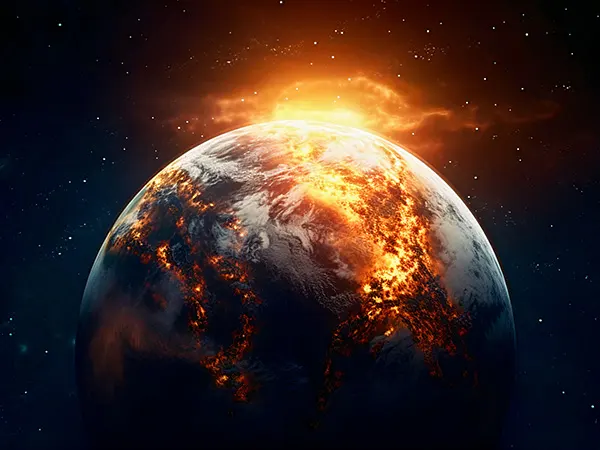
'Prophecy Watch' by David C. GrabbeJesus warns in Matthew 24:21-22 that a coming Great Tribulation will be so severe—paralleling Jeremiah's "Jacob's Trouble" and Daniel's unprecedented "time of trouble"—that no flesh would survive unless God shortened those days for the elect's sake. While modern minds instinctively locate this threat in nuclear weapons, engineered pathogens, or AI-enhanced weaponry, Luke's parallel account of the Olivet Prophecy reveals a different focus: the epicenter of tribulation is Jerusalem and Judea, with Gentile armies as the troublers, and Jerusalem trampled until "the times of the Gentiles are fulfilled" (Luke 21:20-24), echoing Revelation 11:2's forty-two months. The overlooked key is Luke 21:22: these are "days of vengeance, that all things which are written may be fulfilled." This phrase parallels Matthew's "no flesh would be saved," redirecting the true end-time peril away from technology and toward divine vengeance—a theme the Bible discusses extensively and even praises (Deuteronomy 32:35-36; Psalm 94; Isaiah 34:8; 61:2). Leviticus 26:25 identifies the cause: covenant unfaithfulness. God's vengeance falls first on Israel and Judah for breaking His commandments, then on the Gentile nations He uses as instruments of judgment, since their hearts are also evil. This explains why "no flesh" would survive—universal iniquity merits universal judgment, as demonstrated by precedents like the Flood (Genesis 6-7) and near-annihilation threats against Israel (Exodus 32:10; Numbers 16:21). Zechariah 14:1-4 illustrates this two-stage vengeance: nations gather against Jerusalem and take the city, but afterward the Lord fights against those same nations. Jesus Himself alluded to this coming vengeance in Luke 4:18-19, deliberately stopping His reading of Isaiah 61 before "the day of vengeance of our God" (Isaiah 61:2)—reserved for His second coming. New Testament passages reinforce this: II Thessalonians 1:6-10 describes Christ returning in flaming fire to take vengeance on those who reject the gospel, while Acts 17:30-31 ties this coming judgment to Christ's resurrection, which proves He will return as Judge. Since the gospel of the Kingdom will have been preached worldwide (Matthew 24:14), humanity will be without excuse. Revelation amplifies this vengeance chiefly through the language of divine wrath—the sixth seal, the seventh trumpet, the bowls of wrath, and the great winepress (Revelation 6:16-17; 11:18; 14:10, 19-20; 16:1, 19; 19:15)—confirming Isaiah 13:11-13's prophecy that God will punish worldwide evil and pride. Ultimately, the true danger is not human invention but humanity's persistent refusal to obey its Creator, a rebellion dating to Eden (Genesis 2:16-17) and earning death as its wage (Romans 6:23). Far from contradicting God's love, this judgment expresses it: allowing unrepented evil to continue unchecked would itself be unloving. As Ecclesiastes 8:11-13 observes, delayed justice only hardens hearts toward evil. Thus the Great Tribulation stands as the culmination of long-forborne divine patience, finally executing justified vengeance—tempered by mercy for the elect—upon a creation that persists in rebellion even amid the final plagues (Revelation 9:20-21; 16:8-11).
Hope to the End (Part Two)
Feast of Tabernacles Sermon by John W. Ritenbaugh (1932-2023)We need these horrific times and conditions to learn the consequences of foolish decisions in order to ensure that nothing like this ever happens again.
Back to Basics
Sermon by Richard T. RitenbaughIncreasing knowledge without the capacity to process it leads to insanity. To combat information overload, we must get back to the basics of Christianity.
Does Doctrine Really Matter? (Part Four)
Sermon by John W. RitenbaughEven with Christ's sacrifice, God does not owe us salvation. We are called to walk, actively putting to death our carnal natures, resisting the complacency.
Preparing to Rule!
'Personal' from John W. RitenbaughHave you ever considered what it will be like right after Christ returns? What will you do, as a king, to help and govern the people placed under you?
Trumpets Is a Day of Hope
Sermon by John W. RitenbaughWe are on the threshold of the greatest period of testing ever to come upon mankind. We need a sense of hope and faith to stay focused on our calling.

Who Will Be Kept from the Hour of Trial?
'Prophecy Watch' by David C. GrabbeGod promises some Christians that He will keep them from the Tribulation, the 'hour of trial.' Here are the characteristics of those whom God will protect.
Revelation 10 and the Church's History
Feast of Tabernacles Sermon by John W. RitenbaughRevelation 10 contains the seven thunders and the little book. It serves as an inset, not following a linear time sequence of the book of Revelation.