


Filter by Categories
Passover and the Blood of Jesus Christ
Sermonette byThe Hebrew word for Passover, Pesach, means an exemption, to pass by without mention or notice. As shown in Ezekiel 20, many Israelites in Egypt were unrepentant idolaters, and God nearly destroyed the nation at that time. Yet, due to His faithfulness to His covenant with Abraham, He made an exemption for one nation of idolaters, the Israelites, while destroying another, the Egyptians. This exemption allowed Him to bring Israel out of Egypt and into a covenant within which sins could be addressed. Israel required the law that was added because of transgressions, as they lacked the faith of Abraham. This aspect of Passover underscores God's commitment to His covenant, providing a framework for dealing with sin as part of a broader relationship with Him.

Passover: An Extraordinary Peace Offering
Sermon by David C. GrabbeThe Hebrew word for Passover, pesach, means a pretermission, an exemption: letting something pass without notice. At the Exodus, God passed over Israel and spared their houses when He struck Egypt (Exodus 12:27). This was an act of mercy rather than justice, and it did not pay for or remove Israel's sins. Israel was not redeemed from sin through the Passover, only purchased from Pharaoh. The blood on the doorposts represented the life of the lamb given to redeem the firstborn of each household, and it was the sign that Israel wanted to be separate from the Egyptians. It did not symbolize forgiveness. No Old Testament Passover mentions forgiveness or atonement. Israel was sinning grievously, since many still carried Egyptian idols while keeping the Passover (Ezekiel 20:5-9), and God nearly destroyed them. He overlooked their sins for the sake of His covenant loyalty to Abraham, a mercy that showed His gracious acceptance. That is why the Passover differs from the sin offering in its eating, its preparation, and its place, and why it resembles the peace offering, a fellowship meal. Covenants are made with those whose transgressions God has passed over. Atonement and forgiveness come within the covenant, after repentance and baptism, not before it. This is why Jesus proposed the New Covenant at the Passover before He died to provide atonement.

The Bread and Wine of Passover
Sermon by David C. GrabbePassover, as an exemption, embodies God's act of overlooking Israel's sins in Egypt, not providing atonement but demonstrating His acceptance through grace for the sake of His covenant with Abraham. This exemption, rooted in the Hebrew meaning of Passover, signifies a sparing rather than a removal of sins, highlighting God's mercy as the foundation for fellowship rather than focusing on sin or sin offerings. The bread and wine, central to this observance, trace back to the fellowship meal between Melchizedek and Abraham, underscoring God's inclination to spare Israel due to His faithfulness to that covenant. This act of exemption is not about justification but about initiating an ongoing relationship with Him, where sins are addressed within the covenant's framework. Passover thus serves as a memorial of Christ's death that sealed the New Covenant, while also being a grateful celebration of spiritual abundance, peace, well-being, and acceptance by God through Jesus Christ.
Is the Passover Just a Sin Offering? (Part Two)
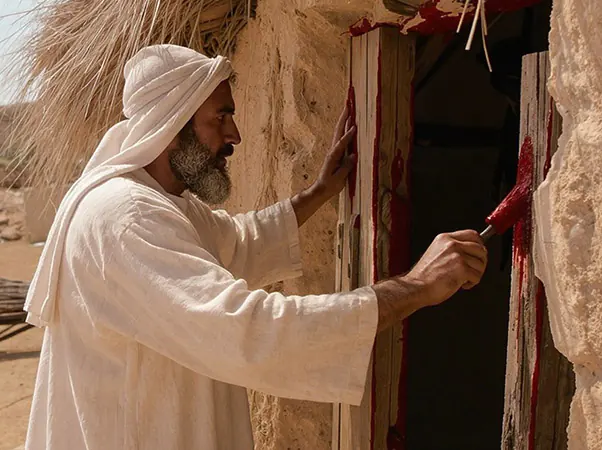
Article by David C. GrabbeThe Passover observance centers on exemption rather than atonement, as the Hebrew term pecach denotes a pretermission in which God passes over without mention or notice of sin. In the original instructions the blood on the doorposts served as the sign that prompted the LORD to spare the Israelite households from the destroyer, granting life where judgment otherwise would have fallen on every firstborn in the land. This sparing constituted redemption from Pharaoh's legal claim on Israel, not payment for transgressions, since the blood represented the life of the lamb given as a pledge of deliverance from bondage. God acted on the basis of His covenant with Abraham, choosing to protect and extract the nation for the sake of His name even though the people remained steeped in idolatry. The repeated scriptural emphasis on consuming the specially prepared lamb underscores that the observance was a meal of redemption rather than a sin offering, with the blood functioning as testimony to promised protection rather than as a symbol of forgiveness. Consequently the Passover demonstrates God's gracious acceptance of His covenant people, overlooking their condition to fulfill earlier promises of deliverance and nationhood while withholding the legal justification that would later be associated with other sacrifices.
Unleavened Bread and the Holy Spirit (Part Two)
Sermon by John W. Ritenbaugh (1932-2023)Our exodus from the bondage of sin begins and ends with God. He commanded Israel to mark their escape with unleavened bread because of what He did.