


Filter by Categories
The Law of the Firstborn
Article by StaffGod claimed all the firstborn of Israel as His own, marking them as special to Him, even after the establishment of the Levitical priesthood. As recorded in Exodus 13:12, He instructed that all firstborn males of clean animals were to be sacrificed to Him, while the firstborn of human sons were to be redeemed by offering a lamb in their place. This act of redemption symbolized God's deliverance of His people from Egypt, as He explained that by His strength, He brought them out of bondage. In the context of the New Testament, these firstborn children represent the people of God's church today, with the redeeming lamb symbolizing Jesus Christ. As members of the church of the firstborn, registered in heaven, we hold a unique and precious position before God, seen not as we are, but as what we can become. Our responsibility is to remain true and dedicated in lifelong service to Him.
Is the Passover Just a Sin Offering? (Part Two)
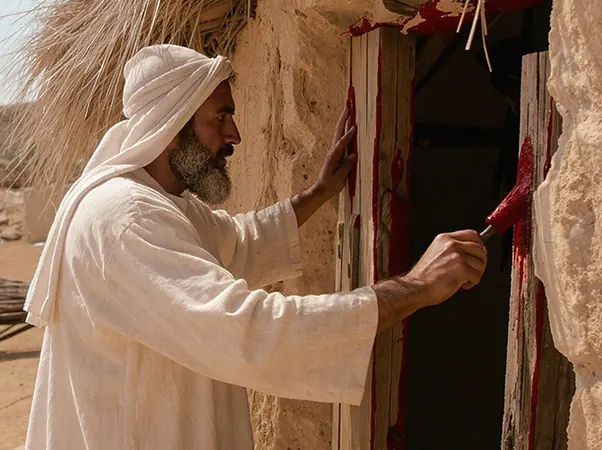
Article by David C. GrabbeThe Passover instructions center on God's declaration to Pharaoh that Israel is My son, My firstborn, establishing the festival as the means by which He redeems this nation from Egyptian bondage. The blood on the doorposts served as the sign that protected Israel's firstborn from the plague that struck every other firstborn in the land, demonstrating that the lamb's life was given to purchase them out of Pharaoh's legal claim rather than to atone for sins. This redemption extended to the firstborn of each Israelite household, later replaced by the Levites as God's portion, and was reinforced by the requirement to redeem unclean animals and sons with a lamb in connection with the ongoing observance. God acted because of His covenant with Abraham, Isaac, and Jacob, choosing to spare and deliver the nation despite its idolatry in order to fulfill His promise that Abraham's descendants would become a great nation and receive the land. The emphasis throughout the Exodus account remains on this purchase from Pharaoh and the sparing of the households, underscoring that the blood represented God's pledge to redeem His firstborn nation and bring it out to serve Him.
Why We Observe Passover and the Days of Unleavened Bread
Sermon by John W. RitenbaughGod established the sanctification of Israel's firstborn as a perpetual reminder that He alone spared them while striking Egypt's, declaring in Exodus 13 that they belonged to Him. This command appears within the instructions for the Days of Unleavened Bread, linking the annual observance directly to what He had done in delivering His people. Centuries earlier the same principle surfaces when He instructs Moses to tell Pharaoh that Israel is His son, even His firstborn, thereby identifying the entire nation as set apart by His sovereign choice rather than by anything the people themselves had accomplished. The imagery shifts from the physical nation to its spiritual counterpart. The church becomes the Israel of God, the assembly of the firstborn written in heaven, and the firstfruits redeemed from among men. Members are one with the Firstborn, sharing His life through the indwelling Spirit and bearing His Father's name in their minds. This spiritual Israel stands in contrast to the physical, unconverted Israel; God Himself creates the distinction, just as He once placed a difference between the Egyptians and the children of Israel. The development of the theme underscores the sermon's central message that the Days of Unleavened Bread exist first of all to focus attention on what God does. He initiates the calling, sanctifies His people, fights their battles, supplies their needs, and brings them into His family. Israel's release from Egypt required little more than walking out after the lamb had been slain; likewise the church contributes chiefly by yielding to the One who works within to will and to do. Because God alone makes the difference and sustains the relationship, every observance of the feast must begin with recognition of His preeminence rather than with human effort to overcome.
The Priesthood of God (Part Two)
Sermon by John W. Ritenbaugh (1932-2023)The firstborn privileges indicate prominence, carrying the birthright promises. In the New Testament, the firstborn did not always correspond to actual birth order.

Born Again or Begotten? (Part Three)
'Personal' from John W. RitenbaughThe concept of a spiritual birth has confused many. The Bible consistently compares Christians to already-born children or adults, not fetuses.
Wilderness Wandering (Part Three)
Sermon by John W. Ritenbaugh (1932-2023)We are being fitted as lively stones into an already formed Kingdom, being conformed to the image of Christ, who has been designated as the Cornerstone.

The Lamb of Revelation (Part One)
'Prophecy Watch' by David C. GrabbeIn most minds, lambs do not correspond to ideas of wrath and judgment, but the Lamb of God in Revelation is just that as our almighty Redeemer.
Who Are the Firstfruits?
Sermonette byWe may take it for granted that 'firstfruits' are synonymous with 'Christians.'" However, 'firstfruits' is very general, referring to surprising things.
The Father-Son Relationship (Part Three)
Sermon by John W. RitenbaughThe Father and Son are separate; the Father is the source of all power, while the Son serves as the channel through which we interface with the Father.
New Covenant Priesthood (Part One)
Sermon by John W. RitenbaughOld Testament activities picture New Testament realities, elevated to their spiritual intent. The church has been chosen as a royal and holy priesthood.

Jesus and the Rebellious Son
Sermon by Richard T. RitenbaughThe law for stoning a rebellious son was never recorded as having been carried out, but ironically the nation put to death the maximally obedient Son.