


Filter by Categories
Healing the Breach
Sermon by Richard T. RitenbaughThe Napoleonic-era practice of assaulting a breach in a besieged wall provides the controlling image for understanding how God works to restore what sin has broken. When cannon fire finally opened a gap in a fortress wall, a chosen regiment—called by the Dutch term verloren hoop, "the lost band"—was sent to storm that exact spot, facing near-certain death because the defenders knew precisely where the attack would come. Jesus Christ functioned as this Forlorn Hope: through His bloody death He secured the breach separating humanity from the Father, tearing the temple veil and opening, as Hebrews states, "a new and living way" into God's presence. A breach is defined as a violation of law or obligation, a ruptured condition, a gap made by battering, or a break in friendly relations—and all these senses apply spiritually. The pattern begins before mankind existed, when the covering cherub Helel (Satan) introduced iniquity, violence, and pride into heaven, drawing one-third of the angels into rebellion—a breach with no possibility of healing, ending only in eternal imprisonment. This same pattern recurs with Adam and Eve, whose sin brought shame, hiding, fear, and blame-shifting, prompting God to expel them from Eden—not out of cruelty but to prevent permanent separation, since death became a temporary remedy allowing future resurrection and repair. Further breaches follow: the scattering at Babel, where humanity sought glory for its own name rather than God's, resulting in confused languages that God promises to reverse in Zephaniah so that a purified people may call on His name in unity; the exile of Israel to Assyria and Judah to Babylon for covenant-breaking idolatry; and even the Laodicean church, spiritually lukewarm, whom Christ threatens to "vomit" out—showing that breaches continue even within God's own people, rooted always in sin and iniquity (Isaiah 59). Against this backdrop, the Church's calling emerges as participation in Christ's breach-healing work. Having secured access to the Father through His death, Christ commissioned His disciples to preach repentance, sending the Holy Spirit so that His work could be multiplied through many. This Spirit convicts of sin, righteousness, and judgment, uniting believers to Christ's mind and reconciling them—as Colossians 1 declares—to present them holy and blameless. This reconciliation is not merely personal; the Church, as Christ's Body and firstfruits, is being trained to reign as kings and priests, judging and perfecting all mankind, extending healing of the breach to all who have ever lived. Pentecost itself symbolizes this calling—the formation of an elite company empowered to assist the Son in permanently closing the gap between God and man, culminating in Revelation's vision of a new heaven and earth where God dwells with humanity, tears are wiped away, and all things are made new.
A New Beginning
Sermon by Martin G. CollinsAtonement represents a new beginning when people of the world would be reconciled to God and freed from their bondage, reflecting the year of Jubilee.

The Model Prayer (Part Seven): Forgive Us Our Debts
Bible Study by Richard T. RitenbaughIn His Model Prayer, Jesus states that God's forgiveness of us depends on our forgiving others. Forgiveness spurs reconciliation among God's people.
Grateful For Reconciliation
Sermonette by Richard T. RitenbaughWe must remember what we were and how far God has brought us out of that place, pulled out of the muck and brought into His glory.
Reconciliation and the Day of Atonement
Sermon by John W. RitenbaughRepentance is something we must do with our God-given free moral agency. Reconciliation is an ongoing process that enables us to draw closer to what God is.
What is Atonement?
Sermon by John W. Ritenbaugh (1932-2023)Man's estrangement from God is wholly man's fault. Atonement denotes the way harmony is achieved, making the entire world at one or reconciled with God.

Afflicting Our Souls
Sermon by Richard T. RitenbaughJesus taught that fasting is an internal, spiritual good work, done in the inner self. Any other kind of fasting has little or no spiritual value.
A Millennium of Preparation
Feast of Tabernacles Sermon by Richard T. RitenbaughGod has been preparing His plan from before the foundation of the world, and life's complexity and symbiosis reveal a super-competent Designer and Planner.
Preparations For Christ's Return
Sermon by Richard T. RitenbaughBecause of its intractability, the earth will require softening up through earth-shaking events before Christ's return, symbolized by the Feast of Trumpets.
The Intercessory Character of Christ
Sermon by Martin G. CollinsJesus demonstrated the importance of intercessory prayer, a practice urged by Paul for spiritual siblings, family members, rulers, and even enemies.
From Rubble to Utopia
Feast of Tabernacles Sermon by Richard T. RitenbaughThe World Tomorrow is not going to happen because of an instantaneous miracle. God takes His time to produce both physical and spiritual changes.
Reconciliation (Part One)
Sermon by Richard T. RitenbaughJesus Christ placed a high priority on reconciliation, warning us that before we engage God at the altar, we had better make peace with our brother.
What Is the Work of God Now? (Part Four)
Sermon by John W. RitenbaughThe scattering of the church was an act of love by God to wake us from our lethargic, faithless condition. The feeding of the flock is the priority now.
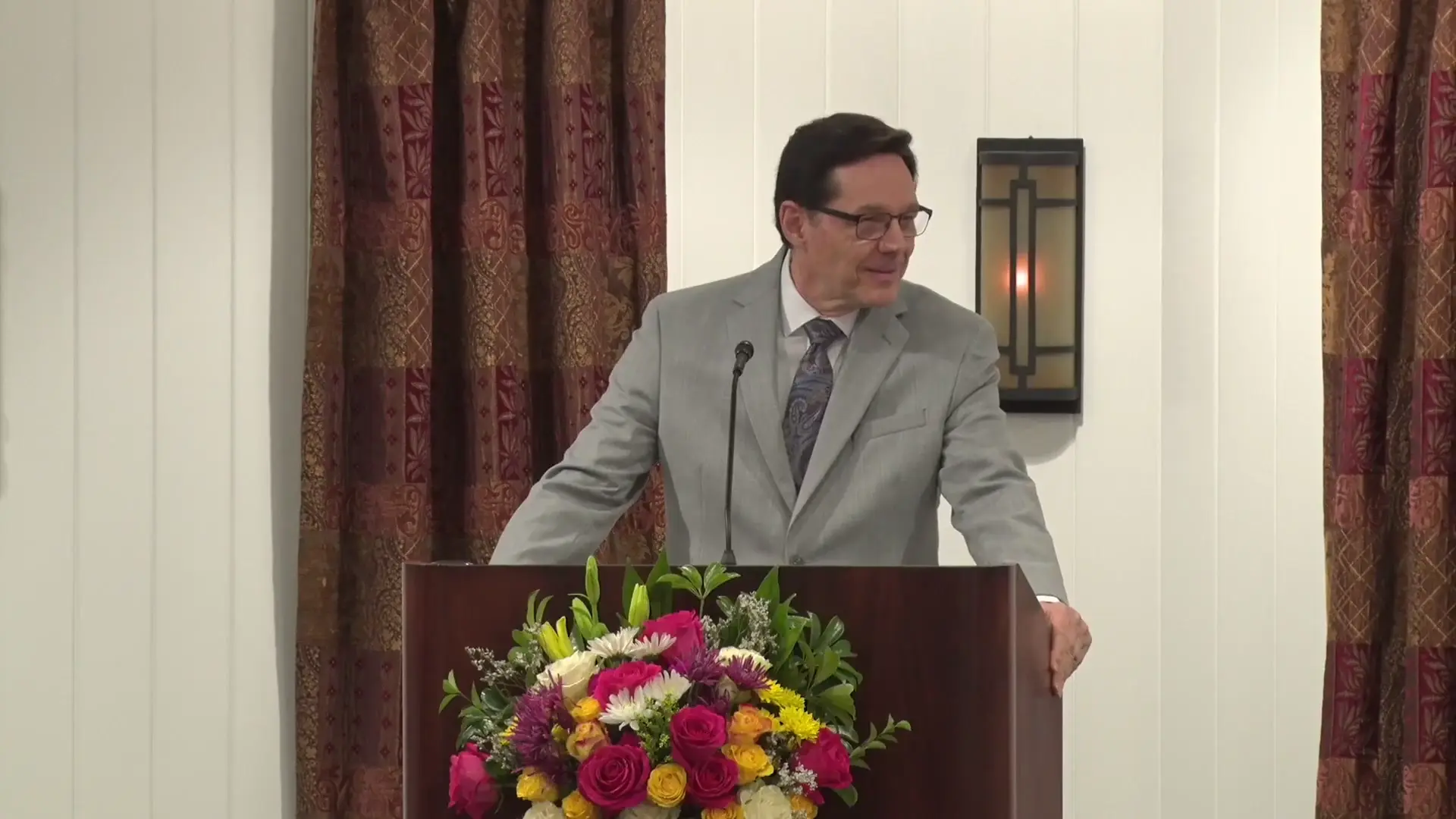
The Kingdom of God Scepter Bearer
Sermon by Martin G. CollinsThe seventh trumpet announces the decisive transition from human rule to the everlasting Kingdom of God, when Jesus Christ returns as King of Kings and reigns with a scepter of righteousness. Scripture traces this royal authority through God's promises to Abraham, Judah, and David, culminating in Christ, whose rule will replace the world's corrupt systems with perfect justice, mercy, and authority. While awaiting His return, believers are called not to obsess over when He will come, but to prepare by allowing the King to reign within them now. Through trials, perseverance, character, and hope, God shapes His people into the likeness of Christ. This living hope motivates holiness, obedience, and overcoming, so that when the King appears, His faithful followers may share in His eternal Kingdom.
The Scepter of the Kingdom of God (Part Two)
CGG Weekly by Martin G. CollinsWhen Christ returns, He will take over an existing throne. Jesus is the "Root" and the "Offspring" of David, and He will continue David's dynasty forever.
Rebuilding the Wall
'Prophecy Watch' by StaffA wall is a defense against undesirable forces gaining entrance to what is inside it. Spiritually, we need walls to keep Satan's world out of our lives.
What Is the Work of God Now? (Part Three)
Sermon by John W. RitenbaughTo preach to the world and ignore a disintegrating flock is like a husband and wife paying attention to other people while the family is falling apart.
Why did the Worldwide Church of God break up? What does this mean prophetically?
Frequently Asked QuestionsThe Worldwide Church of God splintered into different church groups because of apostasy. Scattering happens when God's people fail to keep His commandments.