


Filter by Categories
Death: The End of the Beginning
Feast of Tabernacles Sermon by Richard T. RitenbaughThe Last Great Day heralds a time of profound transformation, where God will enact His perfect justice and fairness. In this fulfillment, a significant aspect is the ultimate destruction of death and evil. God will wipe away all evil and evildoers from the earth for eternity through what is often termed the second death or the Lake of Fire. This cleansing will allow God Himself to dwell with humanity in a world free from sin, a reality unimaginable to those accustomed to the presence of wrong in the world. To reach this utopian state, vast numbers must pass through death. Billions have already died, and billions more will die before they rise in the second resurrection for their chance at salvation. Death, though a somber reality, is integrated into God's plan as a necessary transition. From His perspective, death holds a positive purpose, serving as a step toward a far better existence. Jesus Christ and the apostle Paul exemplify a calm acceptance of death, viewing it not with fear but as a natural part of God's will. Christ approached His own death with purpose, seeing it as essential to the divine plan, and showed no dread over the death of others, such as Lazarus, but rather indignation at unbelief. Similarly, Paul regarded death as gain, desiring to depart and be with Christ, while maintaining composure in the face of others' deaths, as seen with Eutychus. Both demonstrate that death is merely a doorway to a greater life, with rewards outweighing its pains. Death, often seen as a permanent cessation of bodily functions, is not final in God's design. He holds the power to grant life after death, as reflected in the musings of Solomon and Job, who ponder the spirit's fate and express hope in a future awakening by God's call. In the fulfillment of the Last Great Day, as depicted in Revelation, God will raise all the dead—small and great—in a general resurrection. This event offers the best chance for salvation under ideal conditions, free from satan's influence, where God's mercy and grace will be evident. Ultimately, God, the Eternal One, is the Master of deliverance from death. He uses death as part of His salvific process, allowing rest in the grave before awakening to a refreshed, vigorous life in the resurrection. Death holds no lasting power, for God will destroy it with His might, swallowing it up in victory. As proclaimed, death will lose its sting, and through God's strength, humanity will stand triumphant over it.
Christ's Death and the 'Immortality' of the Soul
Sermon by John W. RitenbaughDeath is a tool of Satan and an enemy. Death is not a friend. The Bible portrays death as a hostile force that has continued since Adam and Eve's sin. It is a power foreign to God's purpose for humanity. It is a power that demonic forces use to exercise authority over us through sin, keeping us always in fear. Death absolutely does not express the will of the Holy God. In God's purpose death is an accommodation to the outworking of His plan. Death is God's, Jesus', and mankind's enemy, because it separates us from God and the fullness of God's purpose for creating us. Therefore death must be overcome and destroyed. Jesus conquered death by dying without ever sinning. Jesus had to meet and overcome death itself. Jesus must conquer death by invading it on its own turf. Death's own turf is absolute nothingness. Death is the worst enemy because it is nothing. Death rifts the complete loss of everything God has created for us. In death nothingness there is no awareness, no love, no relationships at all, no hope, no joy, no creativity, no future, no sound, no tasting, no anticipation. Nothing. Jesus' resurrection to God-life was the first act of God's promise to create all things new. The resurrection of the remainder of the firstfruits will be the next step in the fulfilling of that promise. It is death and not the body that must be conquered by the resurrection. The death and resurrection of Jesus Christ has rendered death powerless for those who truly believe and steadfastly practice the way of life that Jesus pioneered.

Ecclesiastes Resumed (Part Thirty-Four): Ecclesiastes 9:2-12
Feast of Tabernacles Sermon by Richard T. RitenbaughDeath is introduced as the implacable enemy of all humanity, the penalty for sin that claims every person regardless of righteousness or wickedness. Scripture shows that the Great White Throne Judgment period begins with the resurrection of the physically dead, yet this same period supplies the process by which death itself is finally overcome. Paul explains in I Corinthians 15 that Christ's resurrection guarantees that all will be made alive in their appointed order, culminating in the moment when He delivers the kingdom to the Father after every enemy has been subdued. The last of these enemies is death, which is swallowed up in victory when the corruptible puts on incorruption and the mortal puts on immortality. At that point the saying is fulfilled: death loses its sting because sin, its strength, has been removed through Christ. The same victory awaits those raised in the second resurrection once they repent, receive the Holy Spirit, and live righteously. In the new heavens and new earth that follow, only righteousness dwells; therefore death, the punishment for lawlessness, has no place and disappears forever. What had been mankind's universal terror becomes a mere memory, eradicated by God's completed work of salvation.
The End
Feast of Tabernacles Sermon by Richard T. RitenbaughNoah's flood was an end, the temple's destruction was an end, Christ's second coming will be an end, and the Last Great Day will be an end and a beginning.
An Abundant Spiritual Offering
Sermonette by David C. GrabbeThe number eight signifies a new start with abundance abundance following a period of time (a week, seven years, or a millennium) of preparatory activity.
He Lives, We Live
Sermon by Richard T. RitenbaughRedemption is useless to mortal beings without God's gift of eternal life (I Corinthians 15:19), which God made possible through Christ's resurrection.
Hebrews (Part Three)
Sermon/Bible Study by John W. RitenbaughJesus blazed a trail, giving a pattern for qualifying (through suffering and resisting sin) for our responsibility as priests, reconnecting man and God.
Let Him Who Glories Glory in This (Part Two)
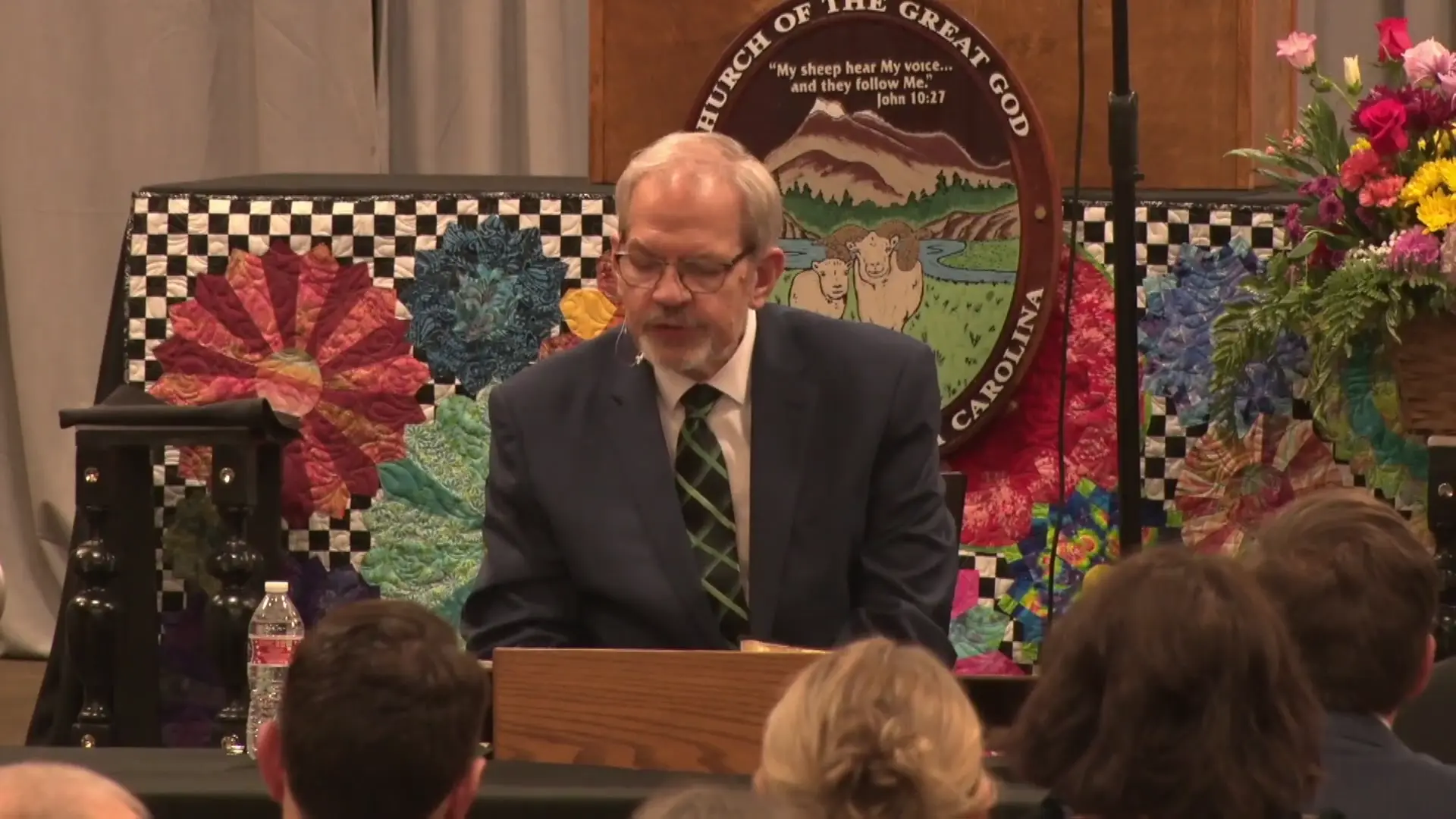
Feast of Tabernacles Sermon by Mark SchindlerJeremiah 9:23-24 redirects glory from human strength to knowing God's kindness and righteousness. David's spiritual evolution—from self-focused righteousness in Psalm 18 to dependent mercy in Psalm 51—illustrates this shift. True kingdom citizenship, affirmed in Matthew 25, is marked by serving others, while Jeremiah 7-11 warns against the stagnation of self-reliance. Grace and the kingdom are inseparable; though complex, the divine plan unfolds through simple, progressive faith. Ultimately, Christ's work culminates in delivering a perfected kingdom to the Father, destroying death and establishing eternal righteousness, a magnificent plan in which God's people currently play a vital role.
Then Comes the End
Sermonette by David C. GrabbeChrist's return marks the beginning of the end of mankind's problems. However, His return will not be the final end, which comes when God is all in all.
Satan (Part 5)
Sermon by John W. RitenbaughTo resist the Devil is to resist unlawful desires, not allowing him to manipulate our emotions. Satan works on fear of being denied something pleasurable.